

 Preview
 Send
Send Share
Share
 Details

 Download
 Similars
 X-Ray
X-Ray Diaporama
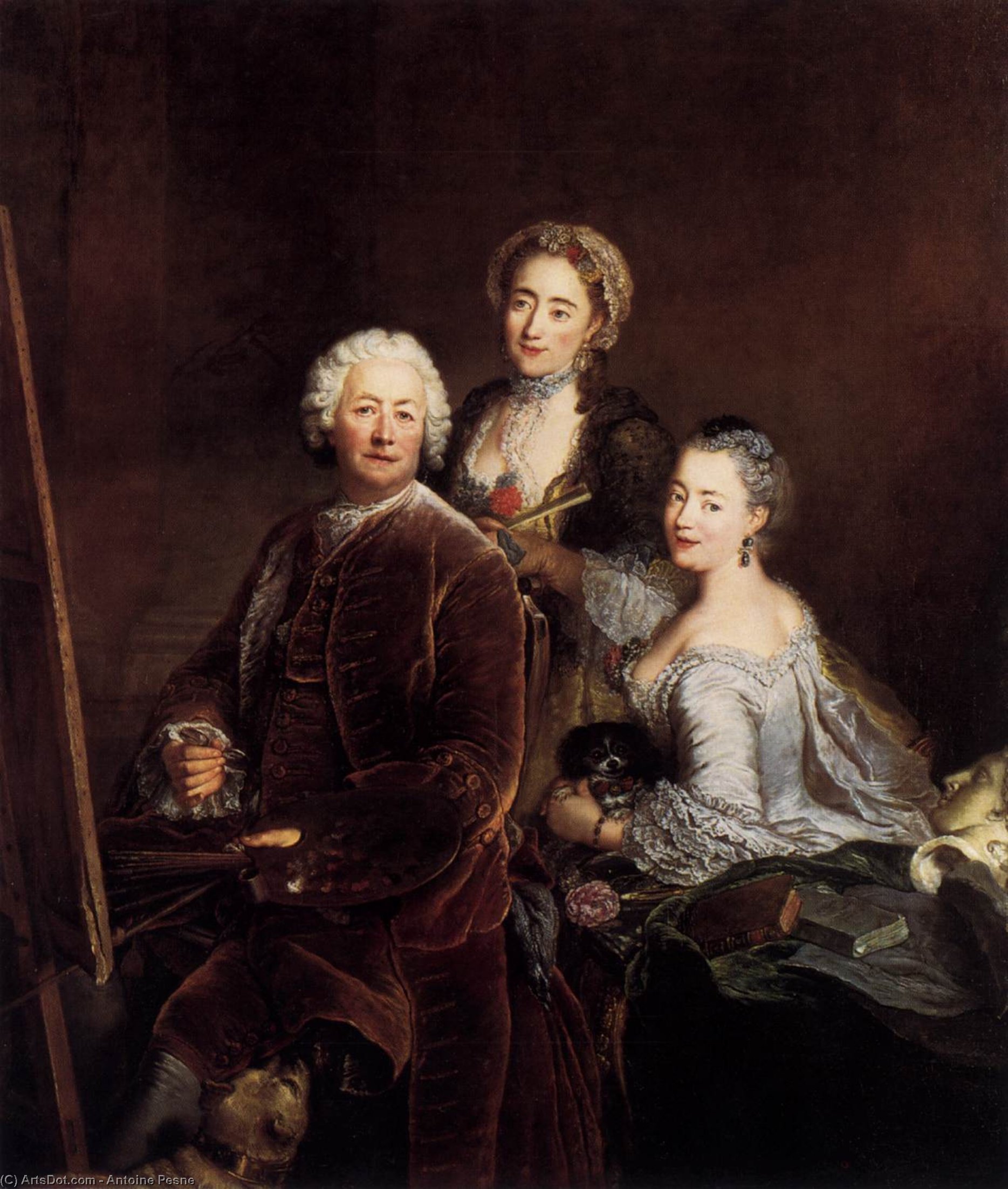
Self-Portrait with Daughters
 Oil On Canvas
- WallArt
- Rococo
 1754
1754 167.0 x 150.0 cm
 Staatliche Museen
 Read More
Purchase a high-resolution, enhanced digital image, far superior to the online preview.
Each file is meticulously prepared by our in-house specialists using advanced tools and expert manual retouching. We ensure every image has exceptional clarity, precise color accuracy, and fine detail.
The final file is delivered via email within 72 hours, optimized for immediate use in professional, editorial, and print environments. This is the same quality trusted by top-tier design studios, publishers, and galleries.
Digital Image
Download a high-resolution file for personal display, printing, and creative projects. ( Buy Print Buy Hand Made Painting)
Included in Every Digital Image Order
Expert Digital Delivery, Guaranteed
When you choose ArtsDot.com, you're not just getting an image - you're receiving a professionally enhanced digital artwork, crafted with precision and backed by a satisfaction guarantee. Here's everything that comes with your order, automatically:

Fast Email Delivery
Your high-resolution digital image file will be emailed to you within 72 hours of ordering - ready for immediate use.

AI-Enhanced Digital File
Your artwork is professionally optimized using advanced AI tools and manual editing, ensuring maximum detail, clarity, and color accuracy.

Free Lifetime Re-Delivery
Accidentally deleted or lost your file? No worries - we'll resend it to you anytime, free of charge.

No Import Fees - Ever
Enjoy your artwork instantly with zero customs, duties, or delivery fees - digital downloads are always tax-free.

Color Accuracy Guarantee
We ensure your digital image reflects the original colors as closely as possible using professional tools and color management.

60-Day Satisfaction Guarantee
If you're not satisfied with your digital image, we'll revise it or refund 100% within 60 days - no questions asked.

100% Money-Back Guarantee
Not satisfied? Get a full refund within 60 days of receiving your digital file - no questions asked.

Bulk Order Discounts
Buy 3 images, save 10% - Buy 5, save 15% - Buy 10+, save 20%. Great for creative projects, galleries, and agencies.
Collectible Description
A Window Into Rococo Splendor: Antoine Pesne’s ‘Self-Portrait with Daughters’
Antoine Pesne's “Self-Portrait with Daughters,” completed in 1754, stands as a quintessential emblem of the Rococo artistic movement—a vibrant testament to aristocratic elegance and refined sensibility. More than just a depiction of familial likeness, it embodies the spirit of its era, reflecting Prussia’s burgeoning cultural ambitions under Frederick II.
Painted in oil on canvas measuring 167 x 150 cm, Pesne skillfully employs techniques characteristic of Rococo style: delicate brushstrokes, luminous glazing, and a masterful manipulation of color palettes. The artist eschews the rigid formality of Baroque grandeur for an atmosphere imbued with playful asymmetry and pastel hues—primarily creams, pinks, and golds—creating a visual experience that prioritizes beauty and grace over austere realism.
The composition itself is meticulously crafted. Pesne presents himself seated on the left side of the canvas, flanked by his two daughters who stand behind him. Each figure is adorned in opulent fabrics and jewelry, reflecting the lavish tastes of Prussian nobility. Notably, Pesne’s daughter on the right wears a pearl necklace—a symbol of status and feminine virtue prevalent during the period—underscoring the importance of social conventions within artistic representation.
Beyond its aesthetic appeal, “Self-Portrait with Daughters” carries profound symbolic weight. The inclusion of a chair and a bowl serves as grounding elements, anchoring the figures in domestic space while simultaneously emphasizing the idealized portrayal of family life. Pesne’s gaze directs towards the viewer, establishing an intimate connection between artist and audience—a hallmark of portraiture intended to convey not merely physical likeness but also character and aspiration.
This artwork's enduring fascination stems from its ability to transport us back to a time of aristocratic patronage and artistic innovation. Its luminous colors, graceful lines, and subtle symbolism continue to inspire admiration and resonate with collectors seeking pieces that encapsulate the sublime beauty of Rococo art. Reproductions offer an opportunity to appreciate Pesne’s masterful artistry in a setting where it can be enjoyed by all.
- Artist: Antoine Pesne
- Year Created: 1754
- Medium: Oil on Canvas
- Dimensions: 167 x 150 cm
- Location: Staatliche Museen, Berlin
For further exploration and inspiration, visit WikiArt.org (https://www.wikiart.org/en/antoine-pesne/self-portrait-with-daughters-8Y3EZE-en) to discover more about Antoine Pesne and his contribution to the artistic landscape of Prussia.
Related Artworks

Artist Biography
From Parisian Beginnings to Prussian Court Painter
Antoine Pesne, born in Paris on May 29th, 1683, emerged from a family steeped in artistic tradition – his father and uncle both served as his initial mentors. This early grounding laid the foundation for a career that would see him become one of the most significant figures in transitioning European art from the grandeur of the Baroque to the delicate elegance of the Rococo. Pesne’s formal training continued at the Académie Royale, where he received a stipend from 1704 to 1710, allowing him to hone his skills and immerse himself in the Italian artistic landscape. This period proved crucial, shaping not only his technique but also his aesthetic sensibilities. It was during this time that his talent caught the eye of King Frederick I of Prussia, who summoned Pesne to Berlin in 1710 after admiring a portrait the artist had completed in Venice. The commission: a self-portrait of the king himself – a testament to Pesne’s burgeoning reputation and skill.A Royal Appointment and Artistic Evolution
Pesne's arrival in Prussia marked a turning point, not just for his career but also for the artistic direction of the court. Following Frederick I’s death in 1713, Pesne broadened his horizons, working in Dresden and Dessau before returning to Paris where he was elected as a full member of the Académie Royale in 1720. This recognition solidified his standing within the European art world. A particularly noteworthy portrait from this period is that of Pierre-Jean Mariette, a prominent collector whose extensive network proved invaluable for Pesne’s continued success and exposure. However, it was his second call to Prussian service, beginning in 1722 under Crown Prince Frederick (later Frederick the Great), that truly cemented his legacy. While Frederick William I, the soldier king, prioritized military matters over artistic pursuits, he nonetheless recognized Pesne's talent and appointed him director of the Berlin Academy of Arts – a position that allowed Pesne to shape the next generation of Prussian artists. This appointment also signaled a shift in focus for Pesne; he became increasingly renowned for his portraits of the Prussian royal family and their inner circle, capturing not just likenesses but also the personalities and power dynamics within the court.Master of Portraiture: Style and Technique
Pesne’s artistic style is characterized by a remarkable ability to blend formality with intimacy. Initially rooted in Baroque conventions – evident in his early works through dramatic lighting and opulent detail – he gradually embraced the lighter, more playful aesthetic of the Rococo. His portraits are not merely representations; they are carefully constructed narratives that reveal much about the sitter’s status, character, and aspirations. He possessed a masterful command of color and texture, rendering fabrics with exquisite realism and capturing subtle nuances in facial expressions. His technique involved meticulous layering of paint, creating a sense of depth and luminosity that brought his subjects to life. While he adhered to the conventions of court portraiture – emphasizing wealth, power, and social standing – Pesne also infused his work with a degree of psychological insight, making his portraits particularly compelling. He was adept at conveying both authority and vulnerability, creating images that were simultaneously imposing and relatable.Legacy and Historical Significance
Antoine Pesne’s influence extended far beyond the walls of the Prussian court. His work represents a crucial link between the French school of painting and the emerging Frederician Rococo style, shaping the artistic landscape of 18th-century Germany. Among his most celebrated achievements is his portrait of Frederick William I, the “Soldier King” (1733), which captures the ruler’s stern demeanor and unwavering dedication to military discipline. Numerous other portraits – including those of Frederick I and members of their families – adorn the walls of Berlin museums and Charlottenburg Palace, offering a fascinating glimpse into the lives of the Prussian aristocracy. Beyond his royal commissions, Pesne also left a lasting mark on religious art with his portrait of Gisela Agnes, Princess of Anhalt-Köthen, painted for St. Agnus Church in Köthen (1713). His role as director of the Berlin Academy ensured that his artistic principles were passed down to subsequent generations of artists, solidifying his position as a pivotal figure in Prussian art history. Pesne’s ability to adapt and evolve with changing aesthetic trends, combined with his technical mastery and psychological insight, continues to resonate today, making him a truly significant artist whose work deserves continued study and appreciation.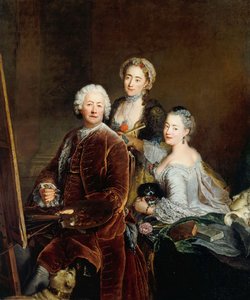
antoine pesne
1683 - 1757 , France
Quick Facts
- Artistic Movement Or Style: Rococo
- Artists Or Movements Influenced By This Artist: Frederican Rococo style
- Artists Who Influenced This Artist:
- His father
- His uncle
- Date Of Birth: May 29, 1683
- Date Of Death: August 5, 1757
- Full Name: Antoine Pesne
- Nationality: French
- Notable Artworks:
- Portrait of Frederick William I
- Pierre-Jean Mariette Portrait
- Gisela Agnes Portrait
- Place Of Birth: Paris, France

