 Preview
 Send
Send Share
Share
 Details

 Download
 Similars
 X-Ray
X-Ray Diaporama
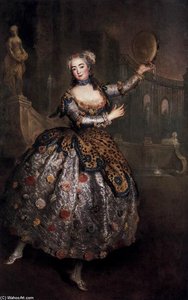
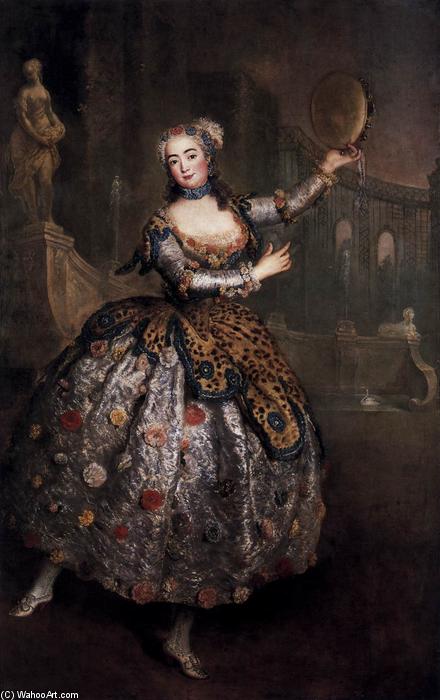
The Dancer Barbara Campanini
 Oil On Canvas
- WallArt
- Baroque Rococo
 1745
1745 221.0 x 140.0 cm
 Neues Palais
 Read More
Hand Made Oil Reproduction
Hand-painted oil on canvas in your size and frame, made to order by our artists. ( Buy Print Buy Image)




P118B $10

P118H $10

P118W $10

P438Z $10

P508JH $12

P508YH $12

P805H $10

P805Z $10

P919BZ $10

P919G $10

P919XJ $10

P959ZH $10

P968JZ $12

W106C $8

W218G $10

W218JH $8

W218Y $10

W307PJ $10

W316G $10

W316PJ $8

W316Y $10

W398PJ $8

W4111J $10

W500HY $15

W500JH $15

W692G $12

W849H $8

W940BG $15

W953PJ $8




Pick from our preset sizes that match the artwork's original proportions.

You may enter your own dimensions to fit a specific frame or space. If your selected size does not match the original image's proportions, we will either crop the artwork or extend the painting with additional hand-painted elements. A digital mockup will be sent for your approval before production begins.
Please note that the on-screen preview does not reflect the actual cropping or extension. Only the mockup will accurately show the final composition.
While custom sizes are available, we recommend selecting a dimension from the predefined list to preserve the original proportions.
After order, ArtsDot.com team will email client for instructions and provide a mockup preview
Worldwide Delivery () in 3/4 weeks instead of standard 5 weeks. (17 August). No compromise on quality.

Free Worldwide Express Shipping

High-Quality Linen Canvas

Full Shipping Insurance

Customs Tax Refund Guarantee

True Color Matching Guarantee

60-Day Return Policy (Defects Only)

100% Money-Back Guarantee

Bulk Discount Offer
 Glass option is only available in size under 110 CM

The Dancer Barbara Campanini
Reproduction Medium
Reproduction Size
-


Total Price
$ 263
Artwork Description
The Dancer Barbara Campanini: A Rococo Masterpiece
- Subject: Antoine Pesne’s “The Dancer Barbara Campanini” is an exquisite portrayal of the celebrated Italian ballerina, Barbara Campanini herself. The painting captures a moment of dynamic movement and theatrical grace, frozen in time with remarkable realism and elegance. It's not merely a portrait; it’s a window into the opulent world of 18th-century court entertainment.
- Style & Technique: Executed in oil on canvas around 1745, the work exemplifies the Rococo style – characterized by its emphasis on grace, elegance, and playful asymmetry. Pesne's meticulous brushwork is immediately apparent, particularly in the rendering of Campanini’s costume and the intricate details of her headpiece. The artist skillfully employs *sfumato*, a technique perfected during his time in Italy, to create soft transitions between light and shadow, adding depth and volume to the subject’s form. Notice the delicate modeling of her face, conveying both poise and a hint of playful confidence.
- Historical Context: Created during a pivotal transition in European art history, “The Dancer” reflects the shift from the grand, dramatic style of the Baroque period to the lighter, more intimate aesthetic of the Rococo. Pesne’s work was commissioned at a time when ballet was gaining immense popularity within royal courts across Europe, and artists were increasingly tasked with capturing these performances for posterity. The painting's setting – a classical architectural structure reminiscent of a bridge or archway – further reinforces this connection to the grandeur and sophistication of the era.
A Portrait of an Era: Pesne’s Prussian Patronage
Antoine Pesne’s journey is as fascinating as the artwork itself. Born in Paris in 1683, he benefited from a family legacy of artistic talent, learning directly from his father and uncle. His early training at the Académie Royale, coupled with extended stays in Venice – where he honed his skills under Italian masters – shaped him into a leading figure of the Rococo movement. The commission to paint King Frederick I of Prussia’s self-portrait in 1710 marked a significant turning point, relocating Pesne from Paris to Berlin and establishing him as a court painter. This move reflects the burgeoning artistic patronage within the Prussian monarchy, eager to embrace European trends and elevate its own cultural standing.
Symbolism & Composition
- Costume: Campanini’s costume is more than just clothing; it's a symbol of her profession and status. The intricate patterns and what appears to be leopard print (a fashionable detail at the time) speak to the extravagance and theatricality of ballet performance.
- Architectural Background: The classical architectural setting – a bridge or archway – symbolizes stability, order, and connection between realms. It elevates the subject, reinforcing her importance within the scene.
- Lighting & Composition: Pesne’s masterful use of lighting draws the viewer's eye directly to Campanini, emphasizing her beauty and grace while creating a sense of depth and dimensionality within the composition. The balanced arrangement of elements contributes to the painting’s overall harmony and visual impact.
Owning a Piece of History
Handmade oil paintings reproductions of “The Dancer Barbara Campanini” are now available at ArtsDot.com, allowing art lovers to own a tangible connection to this remarkable artwork and the artistic legacy of Antoine Pesne. Each reproduction is created with meticulous attention to detail, faithfully capturing the original’s beauty and historical significance. This piece offers an exceptional opportunity to bring a touch of Rococo elegance into your home or office – a timeless investment in art history.
Related Artworks
Artist Biography
From Parisian Beginnings to Prussian Court Painter
Antoine Pesne, born in Paris on May 29th, 1683, emerged from a family steeped in artistic tradition – his father and uncle both served as his initial mentors. This early grounding laid the foundation for a career that would see him become one of the most significant figures in transitioning European art from the grandeur of the Baroque to the delicate elegance of the Rococo. Pesne’s formal training continued at the Académie Royale, where he received a stipend from 1704 to 1710, allowing him to hone his skills and immerse himself in the Italian artistic landscape. This period proved crucial, shaping not only his technique but also his aesthetic sensibilities. It was during this time that his talent caught the eye of King Frederick I of Prussia, who summoned Pesne to Berlin in 1710 after admiring a portrait the artist had completed in Venice. The commission: a self-portrait of the king himself – a testament to Pesne’s burgeoning reputation and skill.A Royal Appointment and Artistic Evolution
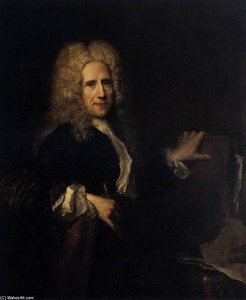
Pesne's arrival in Prussia marked a turning point, not just for his career but also for the artistic direction of the court. Following Frederick I’s death in 1713, Pesne broadened his horizons, working in Dresden and Dessau before returning to Paris where he was elected as a full member of the Académie Royale in 1720. This recognition solidified his standing within the European art world. A particularly noteworthy portrait from this period is that of Pierre-Jean Mariette, a prominent collector whose extensive network proved invaluable for Pesne’s continued success and exposure. However, it was his second call to Prussian service, beginning in 1722 under Crown Prince Frederick (later Frederick the Great), that truly cemented his legacy. While Frederick William I, the soldier king, prioritized military matters over artistic pursuits, he nonetheless recognized Pesne's talent and appointed him director of the Berlin Academy of Arts – a position that allowed Pesne to shape the next generation of Prussian artists. This appointment also signaled a shift in focus for Pesne; he became increasingly renowned for his portraits of the Prussian royal family and their inner circle, capturing not just likenesses but also the personalities and power dynamics within the court.Master of Portraiture: Style and Technique
Pesne’s artistic style is characterized by a remarkable ability to blend formality with intimacy. Initially rooted in Baroque conventions – evident in his early works through dramatic lighting and opulent detail – he gradually embraced the lighter, more playful aesthetic of the Rococo. His portraits are not merely representations; they are carefully constructed narratives that reveal much about the sitter’s status, character, and aspirations. He possessed a masterful command of color and texture, rendering fabrics with exquisite realism and capturing subtle nuances in facial expressions. His technique involved meticulous layering of paint, creating a sense of depth and luminosity that brought his subjects to life. While he adhered to the conventions of court portraiture – emphasizing wealth, power, and social standing – Pesne also infused his work with a degree of psychological insight, making his portraits particularly compelling. He was adept at conveying both authority and vulnerability, creating images that were simultaneously imposing and relatable.Legacy and Historical Significance
Antoine Pesne’s influence extended far beyond the walls of the Prussian court. His work represents a crucial link between the French school of painting and the emerging Frederician Rococo style, shaping the artistic landscape of 18th-century Germany. Among his most celebrated achievements is his portrait of Frederick William I, the “Soldier King” (1733), which captures the ruler’s stern demeanor and unwavering dedication to military discipline. Numerous other portraits – including those of Frederick I and members of their families – adorn the walls of Berlin museums and Charlottenburg Palace, offering a fascinating glimpse into the lives of the Prussian aristocracy. Beyond his royal commissions, Pesne also left a lasting mark on religious art with his portrait of Gisela Agnes, Princess of Anhalt-Köthen, painted for St. Agnus Church in Köthen (1713). His role as director of the Berlin Academy ensured that his artistic principles were passed down to subsequent generations of artists, solidifying his position as a pivotal figure in Prussian art history. Pesne’s ability to adapt and evolve with changing aesthetic trends, combined with his technical mastery and psychological insight, continues to resonate today, making him a truly significant artist whose work deserves continued study and appreciation.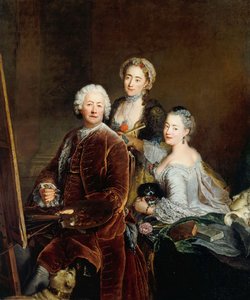
antoine pesne
1683 - 1757 , France
Quick Facts
- Artistic Movement Or Style: Rococo
- Artists Or Movements Influenced By This Artist: Frederican Rococo style
- Artists Who Influenced This Artist:
- His father
- His uncle
- Date Of Birth: May 29, 1683
- Date Of Death: August 5, 1757
- Full Name: Antoine Pesne
- Nationality: French
- Notable Artworks:
- Portrait of Frederick William I
- Pierre-Jean Mariette Portrait
- Gisela Agnes Portrait
- Place Of Birth: Paris, France
Related Articles

Rococo's Radiant Legacy: 10 Masterpieces for Your Home |
Indulge in the elegance of Rococo! Explore 10 masterpieces by Fragonard, Boucher & Watteau. Discover the stories behind these iconic paintings and bring timeless art to your home with museum-quality reproductions from .

The Rococo Aesthetic: Opulence, Rebellion & the Pursuit of Pleasure in 18th-Century Art
Explore the opulent world of Rococo art! Discover its origins, key artists like Watteau & Boucher, and lasting influence on design. Expert insights for collectors & enthusiasts.

Neo-Classicism's Greatest Hits: 10 Masterpieces for Your Home |
Journey through Neo-Classicism's finest! Explore 10 iconic masterpieces by David, Ingres & Canova. Discover art history, techniques & timeless beauty – perfect for inspiring your home decor. Find museum-quality reproductions at
The Enduring Legacy of Classicism: Principles, Evolution & Influence in Western Art
Explore the enduring legacy of Classicism in Western art! Discover its historical context, key principles, iconic masterpieces & lasting influence. Learn about Renaissance and Neoclassical movements with ArtsDot.
Timeless Resonance: Exploring Classic Vibe in Art – A Historical & Aesthetic Analysis
Explore the rich history & enduring aesthetic of Classicism art! Discover key movements, iconic artists like Raphael & David, and its lasting influence on Western art. Deepen your appreciation today.