 Preview
 Send
Send Share
Share
 Details

 Download
 Similars
 X-Ray
X-Ray Diaporama
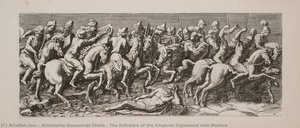
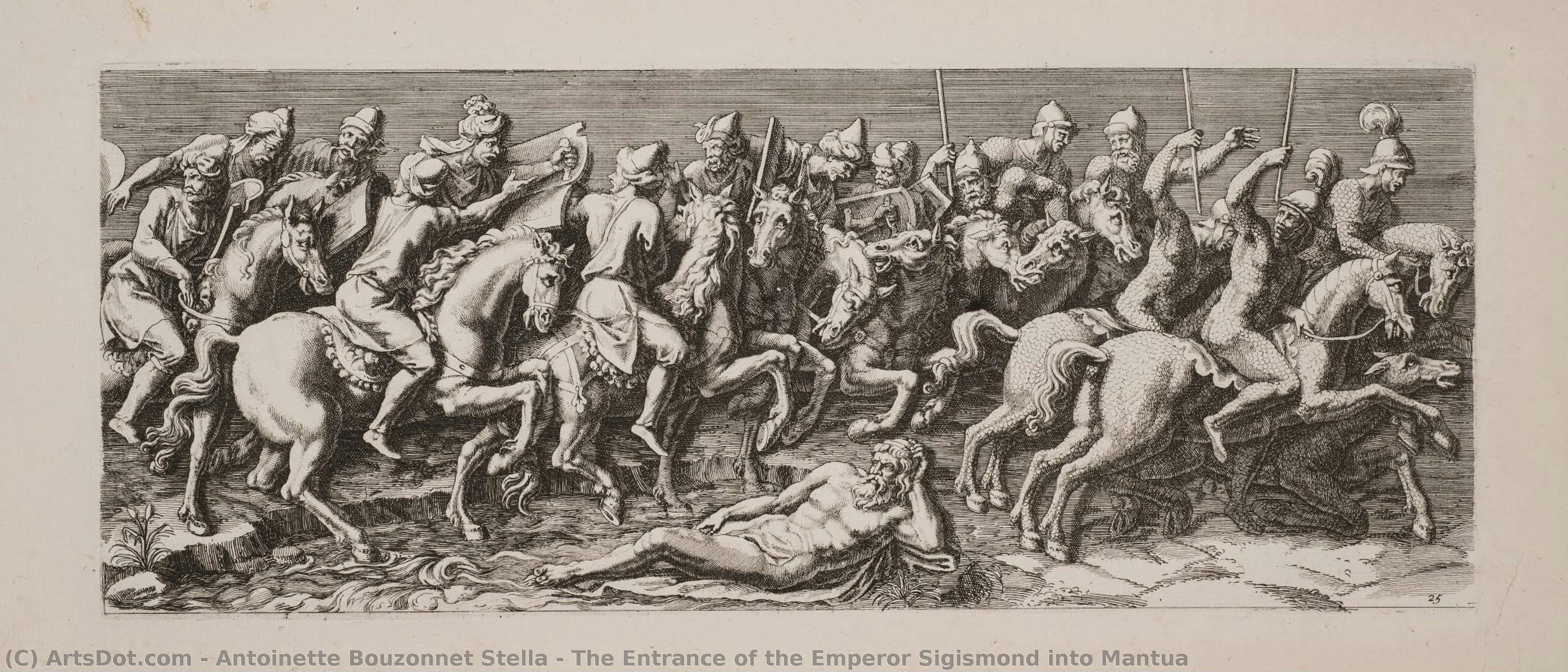
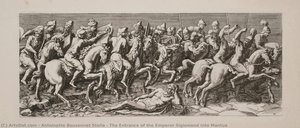
The Entrance of the Emperor Sigismond into Mantua

 Read More
Hand Made Oil Reproduction
Hand-painted oil on canvas in your size and frame, made to order by our artists. ( Buy Print Buy Image)




































Pick from our preset sizes that match the artwork's original proportions.

You may enter your own dimensions to fit a specific frame or space. If your selected size does not match the original image's proportions, we will either crop the artwork or extend the painting with additional hand-painted elements. A digital mockup will be sent for your approval before production begins.
Please note that the on-screen preview does not reflect the actual cropping or extension. Only the mockup will accurately show the final composition.
While custom sizes are available, we recommend selecting a dimension from the predefined list to preserve the original proportions.
After order, ArtsDot.com team will email client for instructions and provide a mockup preview
Worldwide Delivery () in 3/4 weeks instead of standard 5 weeks. (5 September). No compromise on quality.

Free Worldwide Express Shipping

High-Quality Linen Canvas

Full Shipping Insurance

Customs Tax Refund Guarantee

True Color Matching Guarantee

60-Day Return Policy (Defects Only)

100% Money-Back Guarantee

Bulk Discount Offer
 Glass option is only available in size under 110 CM

The Entrance of the Emperor Sigismond into Mantua
Reproduction Medium
Reproduction Size
-


Total Price
$ 263
Related Artworks






Artist Biography
A Silent Voice in Baroque Etching
Antoinette Bouzonnet Stella remains a figure shrouded in the delicate mists of artistic history, her life largely defined by the scarcity of biographical records that survived the passage of centuries. Yet, for those who look closely at the intricate lines of her engravings, her presence is unmistakable and powerful. Born in Lyon around 1641, Antoinette was part of a remarkable lineage of talent; she was the daughter of the goldsmith Étienne Bouzonnet and the artist Madeleine Stella. This familial environment, steeped in the meticulous traditions of craftsmanship and fine art, provided the fertile soil from which her extraordinary skill would grow.
Her artistic journey was profoundly shaped by her immersion in the classical traditions of the seventeenth century. Under the direct tutelage of her renowned uncle, Jacques Stella—a leading painter and printmaker who had found fame in Florence and Rome—Antoinette received a rigorous education. This mentorship brought her into the heart of the French artistic elite, eventually leading her to live within his prestigious lodgings in the Louvre. Within these walls, she was not merely a student but a practitioner of high art, producing sophisticated copies of works by her uncle and the legendary master Nicolas Poussin. This exposure to the grand pictorial language of antiquity instilled in her a deep reverence for classical composition and anatomical precision.
Mastery of Line and Texture
What truly distinguishes Antoinette’s hand from that of her contemporaries, including her talented sister Claudine, is her unique approach to the medium of etching. While many engravers of the era sought purely smooth finishes, Antoinette embraced a more dynamic tension between different techniques. She was particularly noted for her preference for the point technique, utilizing hardened needles to weave fine, delicate lines and intricate textures into her plates. Her genius lay in her ability to harmonize the raw, biting roughness left by aqua fortis with the controlled, precise strokes of the graver.
This technical dexterity allowed her to achieve a remarkable level of detail that breathed life into her subjects. Her drawings and prints were celebrated for their sensitivity, particularly in her rendering of the human form. She possessed an exquisite ability to capture the extremities of the figure—hands, feet, and limbs—with a grace and anatomical correctness that spoke to her profound understanding of the living body. In her work, the interplay of light and shadow becomes a narrative tool, creating a pleasing effect that balances the ruggedness of acid-etched surfaces with the elegance of classical draughtsmanship.
Legacy and Historical Significance
The zenith of Antoinette’s professional achievements can be seen in her monumental commissions, which served to bolster the cultural prestige of the French court. One of her most significant works, The Entrance of the Emperor Sigismond into Mantua, executed in 1675, stands as a testament to her ability to handle large-scale, complex narratives. Created for Louis XIV’s minister of finance, this engraving reproduced a sixteenth-century stucco frieze from the Palazzo del Te, effectively translating the grandeur of Italian Renaissance masters like Giulio Romano into a medium accessible to the French nobility.
Through such works, Antoinette Bouzonnet Stella acted as a vital conduit for the revival of classical motifs in France. Her ability to adapt and refine designs from various engravers ensured that her prints resonated with the contemporary tastes of an era obsessed with the glory of ancient Rome. Though her life was tragically short—she passed away in Paris in 1676 at the age of approximately thirty-five following a fall—her impact on the Baroque printmaking tradition remains. She stands not merely as a member of a family of engravers, but as a singular artist whose powerful style and technical innovation helped define the visual language of her age.
antoinette bouzonnet stella
1676 , France
Quick Facts
- Artistic Movement Or Style: Baroque etching artist
- Artists Or Movements Influenced By This Artist: ['Nicolas Poussin']
- Artists Who Influenced This Artist: ['Jacques Stella']
- Date Of Birth: Lyon, France ()
- Date Of Death: 1676
- Full Name: Antoinette Bouzonnet Stella
- Nationality: French
- Notable Artworks: ['The Entrance of the Emperor Sigismond into Mantua']
- Place Of Birth: Lyon