 Preview
 Send
Send Share
Share
 Details

 Download
 Similars
 X-Ray
X-Ray Diaporama
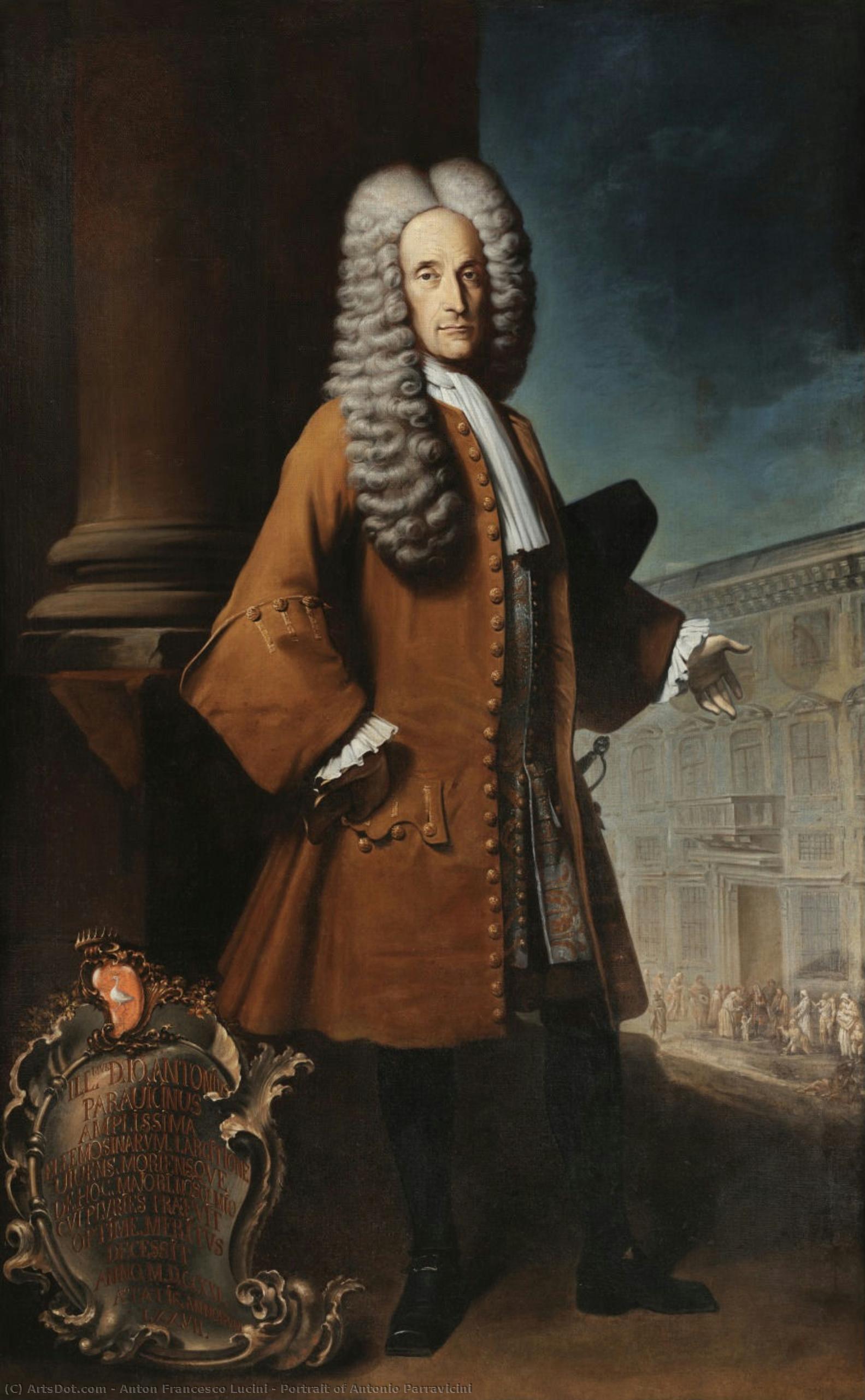
Portrait of Antonio Parravicini
 Oil On Canvas
- WallArt
- Baroque
 1721
1721- Early Modern
 222.0 x 138.0 cm
 Ca’ Granda – Ospedale Maggiore Policlinico
 Read More
Giclée / Art Print
Museum-quality giclée or canvas print with fast production and flexible finish options. ( Buy Hand Made Painting Buy Image)




P118B $10

P118H $10

P118W $10

P438Z $10

P508JH $12

P508YH $12

P805H $10

P805Z $10

P919BZ $10

P919G $10

P919XJ $10

P959ZH $10

P968JZ $12

W106C $8

W218G $10

W218JH $8

W218Y $10

W307PJ $10

W316G $10

W316PJ $8

W316Y $10

W398PJ $8

W4111J $10

W500HY $15

W500JH $15

W692G $12

W849H $8

W940BG $15

W953PJ $8




Pick from our preset sizes that match the artwork's original proportions.

You may enter your own dimensions to fit a specific frame or space. If your selected size does not match the original image's proportions, we will either crop the artwork or extend the image with a mirrored or solid-fill edge. A digital mockup will be sent for your approval before production begins.
Please note that the on-screen preview does not reflect the actual cropping or extension. Only the mockup will accurately show the final composition.
While custom sizes are available, we recommend selecting a dimension from the predefined list to preserve the original proportions.
Worldwide Delivery () in 2 weeks instead of standard 4/5 weeks. (25 August)

Free Worldwide Express Shipping

High-Quality Linen Canvas

Full Shipping Insurance

Customs Tax Refund Guarantee

True Color Matching Guarantee

60-Day Return Policy (Defects Only)

100% Money-Back Guarantee

Bulk Discount Offer
 Glass option is only available in size under 110 CM

Portrait of Antonio Parravicini
Giclée / Art Print
Reproduction Size
-


Total Price
$ 63
Collectible Description
A Vision of Baroque Grandeur
In the sweeping history of the Baroque era, few things capture the essence of nobility and social permanence quite like the Portrait of Antonio Parravicini. Painted in 1721 by the master Anton Francesco Lucini, this work serves as a profound window into an age defined by opulence, drama, and the meticulous display of status. The portrait presents a man of undeniable importance, captured with a dignity that commands the viewer's immediate respect. As one gazes upon the subject, the eye is first drawn to his commanding presence, centrally positioned within a composition that utilizes depth and architectural scale to elevate his persona. The setting—a grand architectural facade punctuated by distant, receding figures—suggests not just a man, but an era of structured power and sprawling estates.
The technical mastery of Lucini is on full display through the sophisticated use of chiaroscuro, the dramatic interplay between light and shadow that defines the Baroque spirit. The lighting is theatrical, acting as a spotlight that illuminates the intricate textures of the subject's face and the heavy, luxurious fabrics of his attire, while casting deep, velvety shadows that lend a sculptural three-dimensionality to the scene. This technique does more than create realism; it imbues the portrait with an emotional weight, evoking a sense of solemnity and timeless authority. Every brushstroke on the canvas contributes to a tactile experience, where the smoothness of fine silk meets the rugged, weathered texture of the stone architecture in the background.
Symbolism and the Language of Status
Beyond the mere depiction of a face, this masterpiece is a complex tapestry of symbolic elements designed to communicate lineage and wealth. The subject’s clothing is not merely decorative; it is a deliberate proclamation of his high-ranking station, featuring elaborate embroidery and rich, warm tones that suggest an atmosphere of unyielding luxury. Perhaps most striking is the inclusion of the ornate shield, likely bearing the Parravicini coat of arms. This heraldic element serves as a silent but powerful narrator, anchoring the individual to his ancestral history and legitimizing his social standing through the language of iconography.
For the discerning collector or interior designer, this painting offers more than just aesthetic beauty; it provides a focal point of historical gravity. The warm color palette, dominated by golds, deep ochres, and rich earth tones, makes it an ideal centerpiece for spaces that require a sense of warmth, sophistication, and classical elegance. Whether placed in a formal study, a grand hallway, or a curated gallery, the Portrait of Antonio Parravicini acts as a bridge to the past, inviting contemporary viewers to contemplate the enduring nature of legacy and the breathtaking artistry of the 18th-century Italian tradition.
Related Artworks




Artist Biography
Michelangelo Merisi da Caravaggio: A Revolutionary of Light and Shadow
Michelangelo Merisi da Caravaggio, more commonly known simply as Caravaggio, remains one of the most enigmatic and influential figures in the history of Western art. Born on September 29th, 1571, in Milan, Italy – though his birthplace is debated with some sources suggesting Caravaggio – he died tragically on July 18th, 1610, leaving behind a body of work that dramatically reshaped painting and continues to captivate audiences centuries later. His life was a turbulent blend of artistic genius, violent outbursts, and ultimately, a desperate flight from justice, all set against the vibrant backdrop of 17th-century Rome. Caravaggio’s legacy isn't just in his stunning paintings; it lies in his radical departure from established conventions, his masterful manipulation of light and shadow, and his profound impact on generations of artists who followed.Early Life and Artistic Beginnings
Caravaggio’s early life remains shrouded in some mystery. He was born into a modest family – his father was a notary – and received only rudimentary artistic training before entering the workshop of Simone Peteri, a Milanese painter. However, it wasn't in Milan that Caravaggio truly found his voice. In 1592, he moved to Rome, a city teeming with artists eager to absorb the legacy of the Renaissance and the grandeur of the Catholic Church. Initially struggling to establish himself, he began by specializing in still lifes – vibrant arrangements of fruits, flowers, and skulls – selling them on the streets to supplement his income. These early works, though seemingly simple, already hinted at the dramatic use of light that would become his signature. He also produced half-length figures, a popular format at the time, showcasing a nascent talent for capturing human emotion and character. The Cardinal Francesco Maria del Monte, a prominent patron of the arts, recognized Caravaggio’s potential and took him into his household, providing him with commissions and invaluable exposure within Rome's artistic circles.The Revolutionary Technique: Light, Shadow, and Realism
Caravaggio’s genius lay not just in his subject matter but fundamentally in his technique. He abandoned the traditional methods of painting – meticulous preparatory sketches, idealized forms, and carefully blended colors – embracing a far more spontaneous and immediate approach. He worked directly onto the canvas, often using a limited palette and applying paint with rapid, confident strokes. Crucially, he employed *tenebrism*, a dramatic use of light and shadow that plunged much of the scene into darkness while highlighting key figures in brilliant illumination. This technique created an intense sense of drama, immediacy, and psychological depth. His models were not idealized classical types but ordinary people – laborers, beggars, thieves – drawn from the streets of Rome. He depicted them with unflinching realism, capturing their imperfections and vulnerabilities, and placing them within religious narratives in a way that felt startlingly contemporary. This departure from established artistic conventions was both revolutionary and controversial.Key Works and Dramatic Episodes
Caravaggio’s most celebrated works are characterized by their emotional intensity and dramatic realism. *The Calling of St. Matthew* (1599-1600), housed in the Contarelli Chapel of San Luigi dei Francesi, is a prime example of his innovative approach. The scene depicts the moment when Jesus calls Matthew to follow him, with Christ’s hand reaching out to Matthew and his companions, bathed in an ethereal light. *The Death of the Virgin* (1604-1606), now at the Louvre Museum, is a profoundly moving depiction of Mary's death, rendered with unflinching realism and a palpable sense of grief. *Supper at Emmaus* (1605-1606) similarly breaks from convention by presenting a biblical scene – the resurrected Christ sharing bread with his disciples – in a contemporary setting, complete with a tavern interior and ordinary diners. These paintings, along with numerous other works including *David and Goliath*, *Bacchus*, and *Judith Beheading Holofernes*, demonstrate Caravaggio’s mastery of composition, color, and psychological insight.A Turbulent Life and Tragic End
Caravaggio's life was marked by a volatile temper and a series of violent incidents. He was known for his impulsive behavior, engaging in brawls and acts of aggression. In 1606, he became embroiled in a dispute with a young man – the details remain unclear but often attributed to a gambling debt or a romantic entanglement – and fatally stabbed him. Rather than face justice, Caravaggio fled Rome, seeking refuge in Naples and then Malta. In Malta, he continued to paint, securing patronage from the Knights of St. John, but his violent tendencies led to another altercation, resulting in injuries that left him permanently scarred. He eventually returned to Sicily, where he was involved in yet another brawl, sustaining further wounds. Despite numerous attempts at pardon, Caravaggio remained a fugitive until his death on June 21st, 1610, in Porto Ercole, Italy, likely from complications related to his injuries and a life of excess. His premature demise cut short a brilliant career and left behind a legacy that continues to inspire awe and debate.- Key Influences: Early Renaissance artists like Michelangelo and Raphael, as well as the dramatic conventions of Italian theatre.
- Major Achievements: Revolutionized painting with his use of *tenebrism*, introduced realism into religious art, profoundly influenced subsequent generations of artists (including Rembrandt, Rubens, and Velázquez).
- Historical Significance: Caravaggio’s work represents a pivotal moment in the transition from Renaissance to Baroque art, embodying the drama, emotion, and psychological intensity that would characterize the era.
anton francesco lucini
1610 - , Italy
Quick Facts
- Artistic Movement Or Style: Caravaggism
- Artists Or Movements Influenced By This Artist:
- Baroque
- Artemisia Gentileschi
- Artists Who Influenced This Artist:
- Leonardo da Vinci
- Michelangelo
- Date Of Birth: September 29, 1571
- Date Of Death: July 18, 1610
- Full Name: Michelangelo Merisi da Caravaggio
- Nationality: Italian
- Notable Artworks:
- The Calling of Saint Matthew
- Supper at Emmaus
- David and Goliath
- Death of the Virgin
- Place Of Birth: Milan, Lombardy
Related Articles

Baroque Drama: Bringing Opulence & Emotion into Contemporary Interiors
Explore the opulent world of Baroque interior design! Discover key elements, modern applications & how to bring dramatic elegance into your home with 's authentic reproductions.

Baroque Masterpieces: 10 Paintings That Defined an Era |
Journey through the drama & grandeur of Baroque art! Explore 10 masterpieces by Caravaggio, Rembrandt, Rubens & more. Discover stunning oil paintings, rich colors & timeless stories. Find museum-quality reproductions at .
Simon Vouet: A Baroque Master's Journey from Italian Influence to French Classicism
Explore the life & art of Simon Vouet, a pivotal French Baroque painter who introduced Italian styles to France. Discover his masterpieces and lasting influence on 17th-century art.

The Visceral Stage: Exploring Dramatic Narratives & Emotional Intensity in Baroque Art
Explore the dramatic world of Baroque art! Discover iconic masters like Caravaggio & Rembrandt, their techniques, and the movement's lasting impact. Expert insights for collectors & enthusiasts at ArtsDot.

The Dramatic Flourish: Exploring the Baroque Movement's Enduring Legacy in Art History
Explore the dramatic world of Baroque art! Discover iconic artists like Caravaggio & Rubens, defining techniques, and its lasting impact on art history. Expert insights for collectors & enthusiasts at ArtsDot.