 Preview
 Send
Send Share
Share
 Details

 Download
 Similars
 X-Ray
X-Ray Diaporama
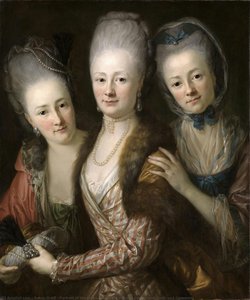
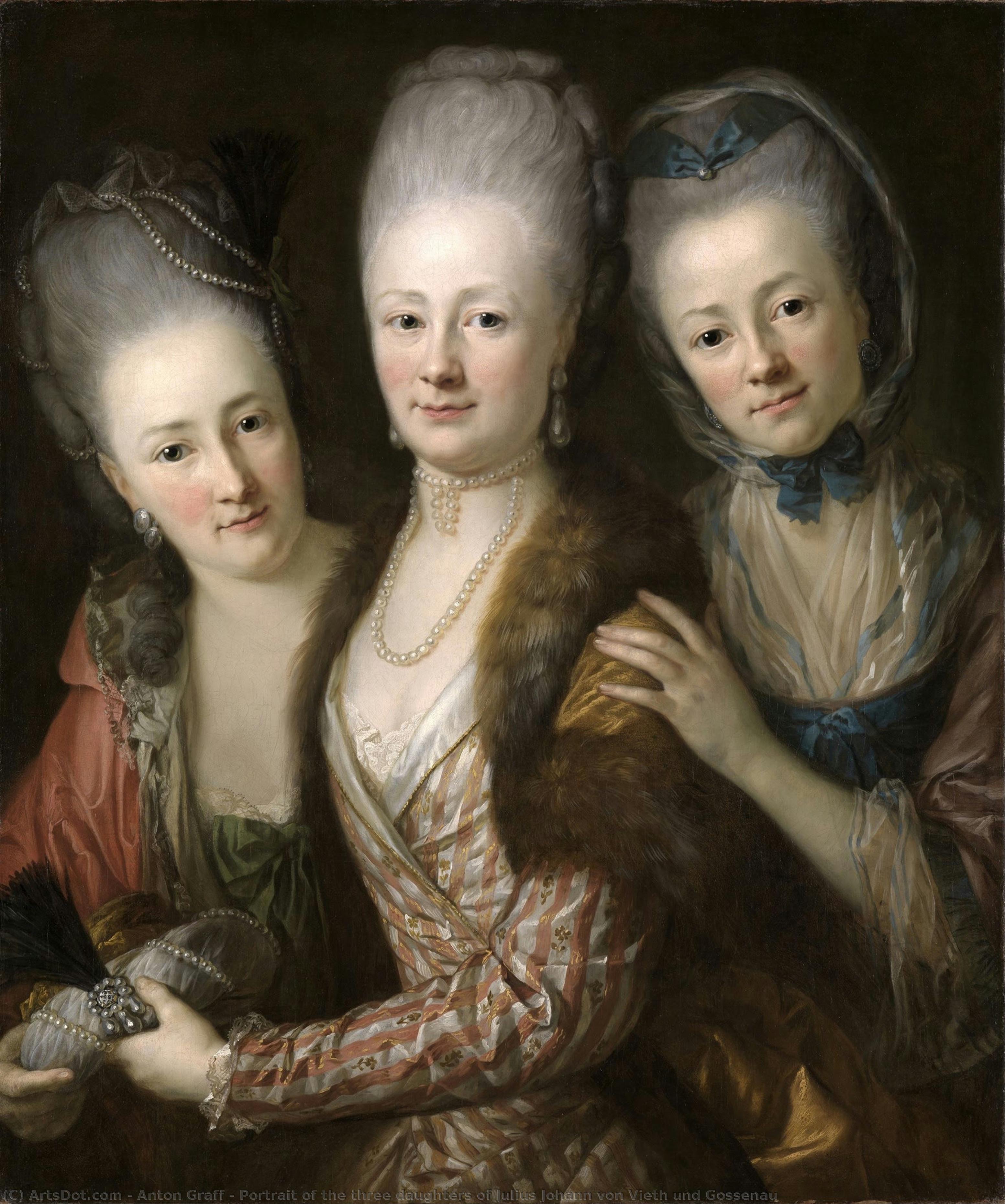
Portrait of the three daughters of Julius Johann von Vieth und Gossenau


 Read More
Giclée / Art Print
Museum-quality giclée or canvas print with fast production and flexible finish options. ( Buy Hand Made Painting Buy Image)




P118B $10

P118H $10

P118W $10

P438Z $10

P508JH $12

P508YH $12

P805H $10

P805Z $10

P919BZ $10

P919G $10

P919XJ $10

P959ZH $10

P968JZ $12

W106C $8

W218G $10

W218JH $8

W218Y $10

W307PJ $10

W316G $10

W316PJ $8

W316Y $10

W398PJ $8

W4111J $10

W500HY $15

W500JH $15

W692G $12

W849H $8

W940BG $15

W953PJ $8




Pick from our preset sizes that match the artwork's original proportions.

You may enter your own dimensions to fit a specific frame or space. If your selected size does not match the original image's proportions, we will either crop the artwork or extend the image with a mirrored or solid-fill edge. A digital mockup will be sent for your approval before production begins.
Please note that the on-screen preview does not reflect the actual cropping or extension. Only the mockup will accurately show the final composition.
While custom sizes are available, we recommend selecting a dimension from the predefined list to preserve the original proportions.
Worldwide Delivery () in 2 weeks instead of standard 4/5 weeks. (1 September)

Free Worldwide Express Shipping

High-Quality Linen Canvas

Full Shipping Insurance

Customs Tax Refund Guarantee

True Color Matching Guarantee

60-Day Return Policy (Defects Only)

100% Money-Back Guarantee

Bulk Discount Offer
 Glass option is only available in size under 110 CM

Portrait of the three daughters of Julius Johann von Vieth und Gossenau
Giclée / Art Print
Reproduction Size
-


Total Price
$ 63
A Symphony of Neoclassical Grace
In the quiet elegance of Anton Graff’s 1773 masterpiece, Portrait of the Three Daughters of Julius Johann von Vieth und Gossenau, we are invited into a world of refined aristocratic splendor. This painting is far more than a mere family record; it is a breathtaking window into the soul of the Enlightenment era in Saxony. Graff, a Swiss master of portraiture, captures the three daughters—Juliane Caroline von der Planitz, Sophie Juliane Elisabeth d’Argollo, and Juliane Charlotte von Todtleben—not just as individuals, but as embodiments of familial grace and virtue. As they gaze toward the viewer, there is an intimate, almost whispered connection established between the subjects and the observer, a hallmark of Graff's ability to breathe life into the formal conventions of his time.
The composition is a masterclass in Neoclassical balance. Graff arranges the three women with a deliberate symmetry that provides a sense of stability and eternal poise. Each sister occupies her own distinct plane, creating a subtle depth that draws the eye through the canvas, yet they are unified by a shared atmosphere of dignity. This careful arrangement reflects the intellectual currents of the late 18th century, where order, clarity, and classical ideals were held in the highest esteem. For the discerning collector or interior designer, this piece offers a sense of structured beauty that anchors a room with historical weight and sophisticated charm.
The Artistry of Texture and Light
To behold this work is to witness Graff’s extraordinary technical command over the medium of oil on canvas. The artist’s brushwork is nearly invisible, replaced by a meticulous precision that celebrates the tactile reality of the era's opulence. One cannot help but be captivated by the way light dances across the surfaces he has rendered: the soft, luminous sheen of silk gowns, the delicate luster of fine jewelry, and the intricate, airy texture of powdered wigs. These details are not merely decorative; they serve to ground the idealized figures in a palpable, physical reality.
Graff employs a palette of sophisticated, muted tones—creams, golds, and deep browns—which lends the painting a timeless, heirloom quality. This restrained color scheme avoids the distraction of garish hues, focusing instead on subtle tonal gradations and masterful modeling. The shadows are soft, providing a gentle contour to the faces that emphasizes their individual character and emotional depth. Such technical refinement makes this artwork an ideal centerpiece for spaces that demand a touch of understated luxury and classical sophistication.
A Legacy of Elegance for the Modern Collector
Beyond its visual splendor, the portrait carries a profound historical resonance. As a court painter in Dresden, Graff was intimately connected to the intellectual giants of his age, from Friedrich Schiller to Frederick the Great. This painting reflects that high-culture milieu, capturing a moment of peace and familial pride amidst a transformative period in European history. It is an evocative piece that speaks of lineage, status, and the enduring pursuit of beauty.
For those seeking to adorn their homes or galleries with works of significant historical and aesthetic value, a high-quality reproduction of this portrait offers a unique opportunity. It brings into a contemporary setting the quiet strength and luminous elegance of the 18th century. Whether placed in a formal study, a grand hallway, or a curated living space, Graff’s work serves as an enduring testament to the power of Neoclassical art to inspire awe and provide a sense of profound, historical continuity.
Related Artworks


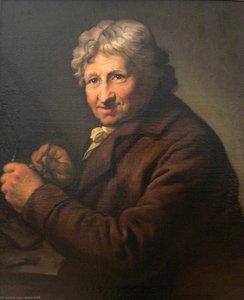
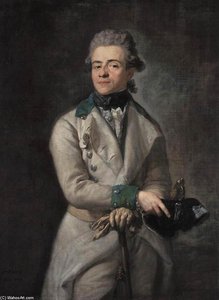
Artist Biography
A Life Etched in Likeness: The World of Anton Graff
Anton Graff, born in Winterthur, Switzerland in 1736, emerged as one of the most celebrated portraitists of his era—a period defined by the Enlightenment’s intellectual fervor and the burgeoning Neoclassical aesthetic. His story is not merely a chronicle of artistic skill but a fascinating journey through the social and cultural landscapes of 18th and early 19th century Europe, intimately connected with some of its most brilliant minds. Graff's beginnings were humble; he received his initial training in Winterthur under Johann Ulrich Schellenberg before venturing to Augsburg where his talent quickly outpaced the local guild’s comfort level. Forced to move on due to the anxieties of less gifted contemporaries, he found mentorship with Johann Jakob Haid and later, Leonhard Schneider in Ansbach, honing his skills while absorbing diverse artistic influences. These early experiences instilled in him not only technical proficiency but also a resilience that would characterize his career. Frequent trips to Munich allowed him to study masterworks, laying the foundation for his distinctive style—a blend of meticulous detail, psychological insight, and an emerging Neoclassical sensibility.From Dresden Court Painter to Chronicler of an Era
The pivotal moment in Graff’s career arrived with his appointment as court painter to the Saxon electorate in Dresden in 1766. This position provided him not only financial security but also access to a vibrant intellectual circle and a steady stream of prominent sitters. He quickly became *the* portraitist of choice for the leading figures of the German Enlightenment, immortalizing individuals like Friedrich Schiller, Christoph Willibald Gluck, Gotthold Ephraim Lessing, Moses Mendelssohn, and Johann Gottfried Herder on canvas. These were not simply likenesses; Graff possessed a remarkable ability to capture the inner lives of his subjects—their intellect, their passions, and their vulnerabilities. He wasn’t merely painting faces; he was documenting an intellectual revolution. His portraits became visual embodiments of the era's philosophical and artistic currents. The invitation from Christian Ludwig von Hagedorn, director of the Dresden Art Academy, initially met with Graff’s own self-doubt, speaks volumes about his humility despite undeniable talent. It was a self-portrait that ultimately secured his position, demonstrating a confidence and skill that resonated deeply within the court.A Master of Light, Shadow, and Social Nuance
Graff's artistic technique was characterized by a masterful command of light and shadow, influenced significantly by the work of Ján Kupecký, whose paintings he studied intently. He employed this skill to draw attention to the faces of his sitters, imbuing them with depth and psychological complexity. However, Graff wasn’t oblivious to the social conventions of his time; while focusing on the face for male subjects, he often subtly highlighted the décolletage of female sitters—a nod to prevailing aesthetic expectations. His attention to detail extended beyond the human form, encompassing the textures of fabrics and draperies with a precision reminiscent of French court painters like Hyacinthe Rigaud. Initially favoring monochrome backgrounds, Graff later embraced outdoor settings, reflecting the growing trend in English portraiture. The price of his portraits reflected not only his time but also the intricacy of the sitter’s attire—a testament to the importance placed on social status and material wealth during that period. He was a keen observer of human nature, famously noting Schiller's difficulty in remaining still for a sitting – a charming anecdote revealing both his patience and his perceptive eye.Legacy and Historical Significance
Anton Graff’s influence extended beyond the realm of portraiture. As a teacher at the Dresden Art Academy, he nurtured the talents of future generations of artists, including Emma Körner, Philipp Otto Runge, and Karl Ludwig Kaaz. His work represents a crucial bridge between the Rococo and Neoclassical styles, embodying both the elegance and ornamentation of the former with the clarity and restraint of the latter. He painted nearly 1,000 portraits during his lifetime, creating an invaluable visual record of the German Enlightenment and its leading figures. Perhaps his most celebrated work is the portrait of Frederick the Great, a masterpiece created without ever having the king pose for him directly. Graff cleverly observed the monarch during military parades, capturing his commanding presence and steely gaze with remarkable accuracy. This painting, housed at Schloss Charlottenburg, remains an iconic image of Prussian power and leadership. Anton Graff’s legacy endures not only through his stunning portraits but also as a testament to the power of art to capture the spirit of an age. He was more than just a painter; he was a chronicler, a social commentator, and a master of human representation whose work continues to resonate with audiences today.A Lasting Impression
Despite receiving lucrative offers from other academies, including one in Berlin, Graff remained committed to Dresden, solidifying his position as the leading portrait painter in Germany throughout the late 18th and early 19th centuries. His clientele extended beyond the German nobility to include Russian, Polish, and Baltic aristocrats, further cementing his international reputation. He was a favorite among poets, musicians, diplomats, and scholars—individuals who appreciated his ability to capture their essence on canvas. Graff’s portraits offer a unique window into a pivotal period in European history, providing invaluable insights into the lives, thoughts, and aspirations of those who shaped the Enlightenment and laid the foundations for the Romantic era. His work stands as a lasting tribute to the power of portraiture to transcend mere representation and become a profound expression of human experience.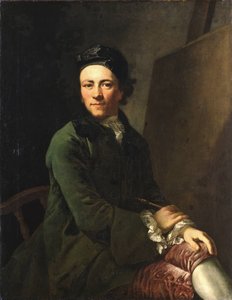
Anton Graff
1736 - 1813 , Switzerland
Quick Facts
- Artistic Movement Or Style: Neoclassical painting
- Artists Or Movements Influenced By This Artist:
- Emma Körner
- Philipp Otto Runge
- Karl Ludwig Kaaz
- Artists Who Influenced This Artist:
- Ján Kupecký
- Hyacinthe Rigaud
- Date Of Birth: 1736
- Date Of Death: 1813
- Full Name: Anton Graff
- Nationality: Swiss
- Notable Artworks:
- Frederick the Great
- Portrait of Schiller
- Place Of Birth: Winterthur, Switzerland
Related Articles
Anton von Werner: Imperial Painter, Historical Witness & Shifting German Identity
Explore the life & work of Anton von Werner, Imperial Germany's leading painter. Discover his dramatic depictions of war, unification, and court life – a fascinating insight into 19th-century German history & art.
18th Century Masters: 10 Artworks That Define an Era | ArtsDot
Journey through 18th century art! Explore 10 iconic paintings – from Rococo elegance to Neoclassical grandeur. Discover Fragonard, David & more. Find museum-quality reproductions and elevate your home decor on ArtsDot.com.
German Expressionism's 10 Defining Masterpieces | Art for Your Home
Explore 10 defining German Expressionism masterpieces – from Munch's 'The Scream' to Kandinsky’s abstracts. Discover the artists, stories & bold colors behind this powerful art movement. Find museum-quality reproductions at ArtsDot.com.
Reflecting Nobility & Nuance: 18th-Century Portraiture as a Window into Societal Values
Explore the world of 18th-century portraiture with ArtsDot. Discover symbolism, artistic innovation & societal values reflected in masterpieces by Reynolds, Hogarth & more. Expert insights for collectors.
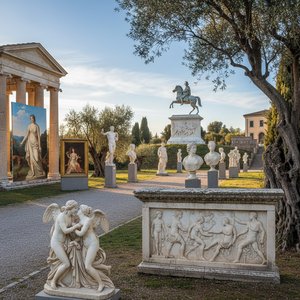
Neoclassical Art: 10 Masterpieces That Shaped History |
Explore 10 defining Neoclassical masterpieces by David, Ingres & Canova. Discover the history, symbolism & artistry behind these iconic paintings and sculptures. Find museum-quality art reproductions at – elevate your home with timeless beauty.