 Preview
 Send
Send Share
Share
 Details

 Download
 Similars
 X-Ray
X-Ray Diaporama
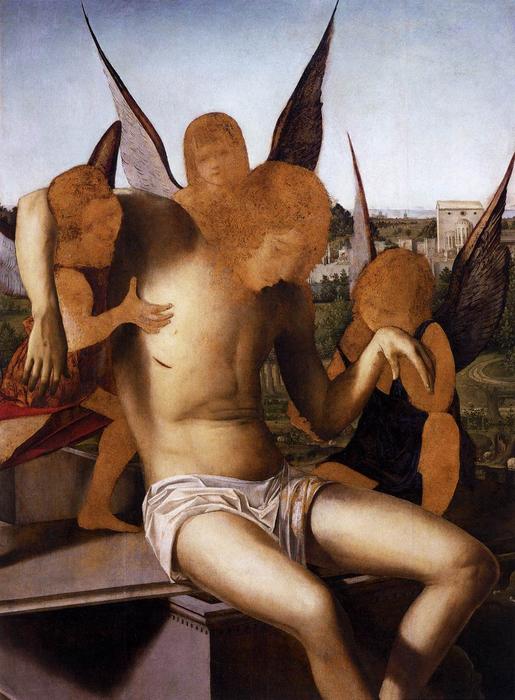
Pietà
 Oil On Panel
- High Renaissance
 1475
1475 115.0 x 86.0 cm
 Museo Correr
 Read More
Hand Made Oil Reproduction
Hand-painted oil on canvas in your size and frame, made to order by our artists. ( Buy Print Buy Image)




P118B $10

P118H $10

P118W $10

P438Z $10

P508JH $12

P508YH $12

P805H $10

P805Z $10

P919BZ $10

P919G $10

P919XJ $10

P959ZH $10

P968JZ $12

W106C $8

W218G $10

W218JH $8

W218Y $10

W307PJ $10

W316G $10

W316PJ $8

W316Y $10

W398PJ $8

W4111J $10

W500HY $15

W500JH $15

W692G $12

W849H $8

W940BG $15

W953PJ $8




Pick from our preset sizes that match the artwork's original proportions.

You may enter your own dimensions to fit a specific frame or space. If your selected size does not match the original image's proportions, we will either crop the artwork or extend the painting with additional hand-painted elements. A digital mockup will be sent for your approval before production begins.
Please note that the on-screen preview does not reflect the actual cropping or extension. Only the mockup will accurately show the final composition.
While custom sizes are available, we recommend selecting a dimension from the predefined list to preserve the original proportions.
After order, ArtsDot.com team will email client for instructions and provide a mockup preview
Worldwide Delivery () in 3/4 weeks instead of standard 5 weeks. (17 August). No compromise on quality.

Free Worldwide Express Shipping

High-Quality Linen Canvas

Full Shipping Insurance

Customs Tax Refund Guarantee

True Color Matching Guarantee

60-Day Return Policy (Defects Only)

100% Money-Back Guarantee

Bulk Discount Offer
 Glass option is only available in size under 110 CM

Pietà
Reproduction Medium
Reproduction Size
-


Total Price
$ 263
Artwork Description
The Pietà: A Renaissance Echo of Grief and Grace
Antonello da Messina’s 1475 “Pietà” is not merely a depiction of sorrow; it's a profound meditation on loss, faith, and the enduring power of maternal love. Born in Messina, Sicily, during a period of intense artistic exchange between Italy and Northern Europe, Antonello skillfully blended the meticulous realism championed by his Flemish predecessors with the burgeoning humanist ideals shaping Renaissance art. This masterful synthesis results in an image that transcends its subject matter, resonating with viewers across centuries.
A Composition Steeped in Symbolism
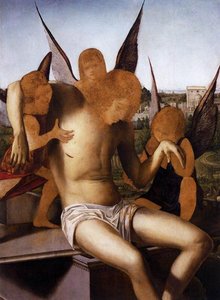
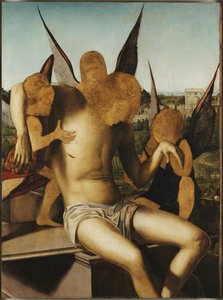
The painting immediately draws the eye to the central figure of Mary cradling the lifeless body of Jesus. Her posture is one of exquisite sorrow, yet her face retains a serene dignity—a testament to her unwavering faith and acceptance of God’s will. The two angels flanking the scene are not simply attendants but active participants in this poignant drama, their gestures conveying both comfort and solemnity. Notice how they gently support Christ's body, mirroring Mary’s own embrace. Beyond these central figures, the architectural backdrop—a simplified yet evocative representation of a Venetian cityscape—adds depth and context to the narrative. The inclusion of buildings and trees subtly suggests the earthly realm from which Jesus has been taken, further emphasizing the tragedy of his sacrifice.
- The Triangle Composition: Antonello employs a classic triangular composition, anchoring the scene with Mary at its apex and Christ’s body forming the base. This arrangement creates a sense of stability amidst the overwhelming emotion.
- Color Palette: The painting's rich color scheme—deep reds for the drapery, blues and greens for the background—evokes both sorrow and spiritual depth. The use of chiaroscuro (light and shadow) dramatically highlights Mary’s face and Christ’s body, drawing attention to their emotional states.
- Symbolic Details: The inclusion of a small, almost hidden, figure in the background – often interpreted as an angel collecting blood from Christ's wounds – adds another layer of symbolic complexity, referencing the biblical account of the Passion.
Technique and Innovation: A Masterful Blend
Antonello’s technical prowess is immediately apparent in the painting’s remarkable detail and realism. He demonstrates a mastery of oil paint, utilizing layering techniques to achieve subtle gradations of color and texture. The drapery—particularly Mary's voluminous robes—is rendered with astonishing precision, capturing the folds and creases with breathtaking accuracy. Crucially, Antonello was among the first Italian artists to fully embrace the use of oil paints, a technique that allowed for greater luminosity, richer colors, and more nuanced blending than traditional tempera or fresco methods. This innovation significantly influenced subsequent generations of Italian painters.
A Legacy of Emotion and Influence
The “Pietà” stands as a pivotal work in the transition from Early to High Renaissance art, demonstrating Antonello’s ability to synthesize diverse artistic influences. It shares stylistic affinities with both Flemish masters like Jan van Eyck and Italian humanists like Piero della Francesca, creating a uniquely compelling visual experience. Its profound emotional impact has resonated throughout history, inspiring countless artists and viewers alike. Reproductions of this iconic image continue to captivate audiences today, offering a glimpse into the heart of Renaissance spirituality and artistic genius. The painting’s enduring appeal lies in its ability to evoke empathy and contemplation—a timeless reminder of loss, love, and faith.
Related Artworks
Artist Biography
Antonello da Messina: A Pioneer of Renaissance Vision
Antonello di Giovanni di Antonio, more commonly known as Antonello da Messina (c. 1430 – February 1479), stands as a pivotal figure in the transition from Early Renaissance to High Renaissance art. Born and raised in the vibrant port city of Messina, Sicily, he forged a unique artistic identity, blending the meticulous realism of Early Netherlandish painting with the burgeoning humanist ideals of his time. While often overshadowed by his Venetian contemporaries, Antonello’s influence on subsequent generations of Italian painters—particularly those in Venice—is undeniable, marking him as a true innovator and a bridge between disparate artistic traditions.
His early life remains somewhat shrouded in mystery, though it's believed he received his initial training under Niccolò Colantonio in Naples. This encounter proved crucial, exposing Antonello to the sophisticated techniques of Flemish masters like Jan van Eyck and Rogier van der Weyden, whose work had been collected by Colantonio’s patron, Alfonso V of Aragon. These early influences—characterized by painstaking detail, luminous colors, and a profound understanding of optics—formed the bedrock of Antonello's distinctive style. Unlike many artists of his era who traveled extensively, Antonello remained primarily in Messina, creating a body of work that reflects both his Sicilian roots and his engagement with international artistic currents.
The Development of a Distinctive Style
Antonello’s artistic journey is marked by a gradual evolution. His early works, such as the 1455 “Sibiu Crucifixion,” demonstrate a clear debt to the Flemish masters—particularly in their use of oil paint and meticulous rendering of textures. The figures possess an almost photographic realism, capturing minute details with astonishing accuracy. However, Antonello quickly moved beyond mere imitation, imbuing his paintings with a distinctly Italian sensibility. He introduced a greater sense of spatial depth, employing atmospheric perspective to create a more convincing illusion of distance. Furthermore, he developed a refined technique for modeling forms through subtle gradations of light and shadow, anticipating the chiaroscuro effects that would become central to Renaissance painting.
A key turning point in Antonello’s development was his encounter with Giovanni Bellini in Venice around 1456. While the precise nature of their interaction remains debated, it's clear that Bellini profoundly influenced Antonello’s approach to color and composition. Bellini’s use of rich, saturated hues—particularly reds and blues—and his emphasis on lyrical beauty had a lasting impact on Antonello’s palette and style. The “Salting Madonna” (c. 1460), painted shortly after this encounter, exemplifies this shift, showcasing a more harmonious color scheme and a greater sense of elegance than his earlier works.
Key Works and Artistic Innovations
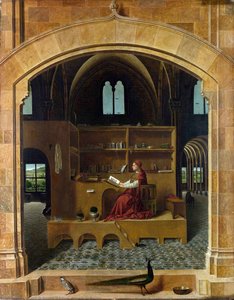
Antonello’s most celebrated paintings—including the “St. Jerome in His Study” (c. 1475) and the “Annunciation” (c. 1475)—are testaments to his artistic mastery. The “St. Jerome in His Study,” a small but remarkably complex panel, is considered a landmark achievement in Italian painting. It demonstrates Antonello’s innovative use of perspective, light, and detail—a synthesis of Flemish realism and Italian humanism. The meticulous rendering of the saint's anatomy, combined with the intricate architectural setting, creates a captivating illusion of depth and space.
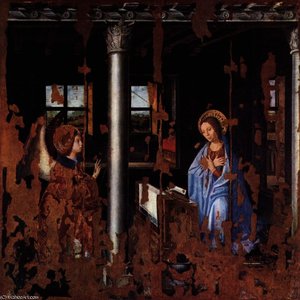
Similarly, the “Annunciation” showcases Antonello’s ability to capture fleeting moments of emotion and grace. The Virgin Mary’s serene expression and the angel Gabriel’s attentive posture convey a sense of profound reverence. Antonello's masterful use of oil paint allows him to achieve subtle gradations of color and texture, creating a remarkably lifelike depiction of these sacred figures.
Legacy and Influence
Despite his relatively short career—he died in 1479 at the age of only 49—Antonello da Messina left an indelible mark on the history of Italian art. He is widely credited with introducing oil painting to Italy, though this claim has been debated by scholars. Regardless, Antonello’s pioneering use of oil paint and his innovative techniques undoubtedly influenced a generation of Venetian painters, including Giorgione and Titian. His emphasis on realism, atmospheric perspective, and the integration of humanist ideals helped to shape the trajectory of Renaissance painting in Italy.
Antonello's work continues to be admired for its technical brilliance, emotional depth, and profound sense of beauty. He remains a vital figure in understanding the complex interplay between artistic traditions and the evolving cultural landscape of the Italian Renaissance.
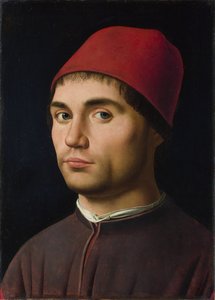
antonello di giovanni di antonio (antonello da messina)
1430 - 1479 , Italy
Quick Facts
- Artistic Movement Or Style: Early Renaissance, Flemish influence
- Artists Or Movements Influenced By This Artist:
- Venetian painting
- Early Netherlandish painting
- Artists Who Influenced This Artist:
- Giovanni Bellini
- Rogier van der Weyden
- Jan van Eyck
- Date Of Birth: c. 1430, Messina, Italy
- Date Of Death: 1479, Messina, Italy
- Full Name: Antonello di Giovanni di Antonio”
- Nationality: Italian
- Notable Artworks:
- Saint Jerome in His Study
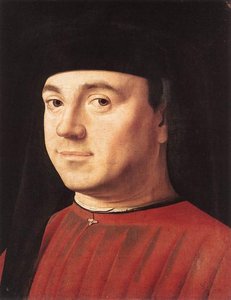
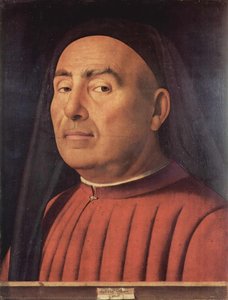
- Portrait of a Man
- Place Of Birth: Messina, Italy
Related Articles
Leonardo da Vinci's Masterpieces: Explore 25 Iconic Artworks for Your Home | ArtsDot
Journey through Leonardo da Vinci's genius with our curated selection of 25 iconic artworks. Explore the stories behind Mona Lisa, The Last Supper & more Renaissance masterpieces. Find museum-quality art reproductions for your home at ArtsDot.com.
Antonello da Messina: Innovation, Devotion & the Sicilian Renaissance Master's Enduring Legacy
Explore the groundbreaking art of Antonello da Messina, a pivotal figure of the Renaissance. Discover his innovative oil painting techniques, captivating portraits, and lasting influence on Italian masters. Learn more at ArtsDot.
Leonardo da Vinci: A Renaissance Master’s Synthesis of Art, Science & Human Observation – Reinterpreted for the Collector
Explore Leonardo da Vinci’s timeless masterpieces with ArtsDot. Discover insights into his art, science, and legacy – trusted expertise for discerning collectors seeking authentic reproductions & investment opportunities.
Uffizi's 25 Masterpieces: Renaissance Art & Timeless Decor Inspiration
Journey through the Uffizi Gallery's 25 most iconic Renaissance artworks! Explore Botticelli, Leonardo da Vinci & Michelangelo’s masterpieces. Find museum-quality art reproductions and curated decor ideas to bring timeless Italian beauty into your home. Discover all masterpieces on ArtsDot.com
Renaissance Humanism's Greatest Art: 10 Masterpieces for Your Home
Explore 10 Renaissance Humanism masterpieces by Leonardo da Vinci, Michelangelo & Raphael. Discover the stories behind these iconic paintings & sculptures and bring timeless art into your home with museum-quality reproductions from ArtsDot.com. Explore the full collection online!