 Preview
 Send
Send Share
Share
 Details

 Download
 Similars
 X-Ray
X-Ray Diaporama
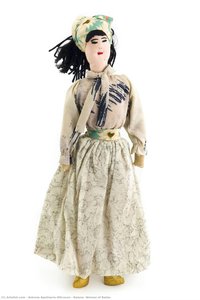
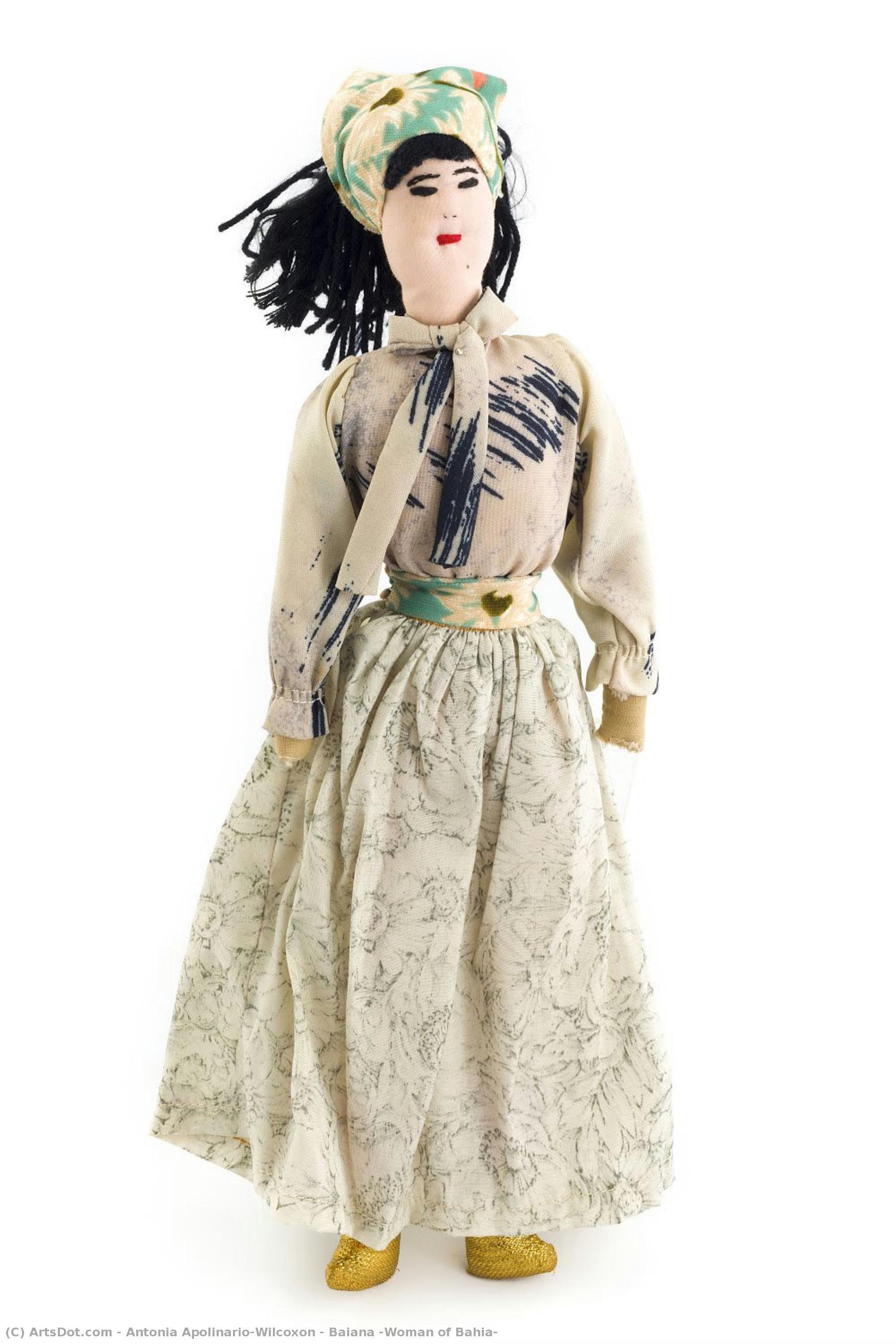
Baiana (Woman of Bahia)
 1900
1900 34.0 x 25.0 cm
 Museum of the Man of the Northeast
 Read More
Hand Made Oil Reproduction
Hand-painted oil on canvas in your size and frame, made to order by our artists. ( Buy Print Buy Image)




































Pick from our preset sizes that match the artwork's original proportions.

You may enter your own dimensions to fit a specific frame or space. If your selected size does not match the original image's proportions, we will either crop the artwork or extend the painting with additional hand-painted elements. A digital mockup will be sent for your approval before production begins.
Please note that the on-screen preview does not reflect the actual cropping or extension. Only the mockup will accurately show the final composition.
While custom sizes are available, we recommend selecting a dimension from the predefined list to preserve the original proportions.
After order, ArtsDot.com team will email client for instructions and provide a mockup preview
Worldwide Delivery () in 3/4 weeks instead of standard 5 weeks. (5 September). No compromise on quality.

Free Worldwide Express Shipping

High-Quality Linen Canvas

Full Shipping Insurance

Customs Tax Refund Guarantee

True Color Matching Guarantee

60-Day Return Policy (Defects Only)

100% Money-Back Guarantee

Bulk Discount Offer
 Glass option is only available in size under 110 CM

Baiana (Woman of Bahia)
Reproduction Medium
Reproduction Size
-


Total Price
$ 263
Related Artworks


Artist Biography
The Echoes of a Decade: Exploring the Art of Ad Reinhardt (1960-2011)
Ad Reinhardt, a figure often shrouded in enigmatic simplicity, remains one of the most compelling and influential artists of the mid-20th century. Born in 1915 in Brooklyn, New York, his artistic journey unfolded against the backdrop of a rapidly changing world – a period defined by both unprecedented technological advancement and profound social upheaval. While he initially explored figuration and abstraction with a keen eye for color and form, Reinhardt ultimately forged a singular path, becoming synonymous with “Black Paintings” and a deliberate rejection of representational art in favor of pure, reductive visual experience. His life and work are inextricably linked to the broader artistic currents of his time, particularly the rise of Minimalism and Conceptualism, yet he maintained an unwavering commitment to his own unique aesthetic vision.Early Years and Artistic Development
Reinhardt’s early career was marked by a diverse range of influences and stylistic shifts. He began as a painter of portraits and landscapes, exhibiting in New York galleries throughout the 1930s and 40s. His work during this period demonstrated an impressive technical skill and a sophisticated understanding of color theory – qualities that would later inform his minimalist approach. However, he grew increasingly dissatisfied with the perceived limitations of traditional painting, feeling it was too closely tied to the artist’s ego and subjective experience. This dissatisfaction led him to experiment with abstraction in the late 1940s, producing vibrant, geometric compositions characterized by bold colors and dynamic spatial arrangements. These works, often described as “color field” paintings, were exhibited at the Betty Parsons Gallery in Boston, gaining him recognition within the burgeoning abstract expressionist movement. Yet, Reinhardt remained distinctly separate from the more emotionally charged approach of artists like Pollock and Rothko, prioritizing clarity and intellectual rigor over expressive gesture.The Emergence of the “Black Paintings”
Around 1958, Reinhardt embarked on a radical departure from his previous work – the creation of what he famously termed "Black Paintings." These paintings, executed between 1958 and 1967, consisted of large-scale canvases painted entirely black. Initially met with skepticism and confusion by critics and collectors alike, they represented a profound shift in Reinhardt’s artistic philosophy. He argued that these works were not simply dark; rather, they were “pure” – devoid of all representational content and subjective expression. He described them as "a kind of visual music," suggesting that the black surface itself possessed an inherent aesthetic quality, capable of evoking a sense of stillness, contemplation, and even transcendence. The process of creating these paintings was equally significant; Reinhardt insisted on applying paint in multiple layers, meticulously building up the surface until it achieved a uniform, impenetrable blackness. This painstaking method underscored his commitment to reducing art to its most essential elements – color and form—and rejecting any notion of artistic virtuosity or personal expression.Influences and Legacy
Reinhardt’s work was profoundly shaped by several key influences. The writings of Ludwig Wittgenstein, particularly his concept of “language games,” exerted a significant impact on Reinhardt's thinking about art. He believed that art should be stripped of its descriptive function and reduced to a purely formal experience, akin to the way language functions without conveying specific meaning. Furthermore, he was influenced by the work of minimalist architects like Le Corbusier, who sought to eliminate ornamentation and create buildings based on geometric principles. The rise of Minimalism in sculpture also played a role, as Reinhardt recognized its shared commitment to reducing art to its most fundamental elements. Despite his deliberate rejection of representational imagery, Reinhardt’s work has had a lasting impact on contemporary art. His “Black Paintings” challenged conventional notions of beauty and artistic value, paving the way for subsequent generations of artists who explored abstraction and conceptual approaches. He demonstrated that art could be powerful simply through its sheer visual presence—a lesson that continues to resonate today.A Quiet Revolutionary: Reinhardt’s Enduring Significance
Ad Reinhardt died in 2011, leaving behind a body of work that is both deceptively simple and profoundly complex. He was an artist who resisted easy categorization, refusing to be defined by any particular movement or style. His “Black Paintings” remain among the most enigmatic and compelling works of art from the mid-20th century, prompting viewers to confront their own preconceptions about beauty, representation, and the nature of artistic experience. Reinhardt’s legacy lies not only in his unique aesthetic vision but also in his unwavering commitment to intellectual rigor and his willingness to challenge established norms—qualities that continue to inspire artists and critics alike. His work serves as a reminder that art can be both profoundly challenging and deeply rewarding, inviting us to engage with the world in new and unexpected ways.
antonia apolinario-wilcoxon
1960 - 2011 , United States of America
Quick Facts
- Artistic Movement Or Style: Hand-painted reproductions
- Artists Or Movements Influenced By This Artist: ['']
- Artists Who Influenced This Artist: ['']
- Date Of Birth: 1960
- Full Name: WahooArt
- Notable Artworks: ['Various famous artworks']
- Place Of Birth: WahooArt