 Preview
 Send
Send Share
Share
 Details

 Download
 Similars
 X-Ray
X-Ray Diaporama
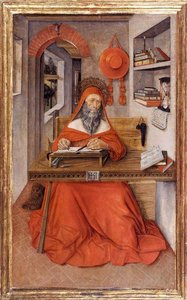
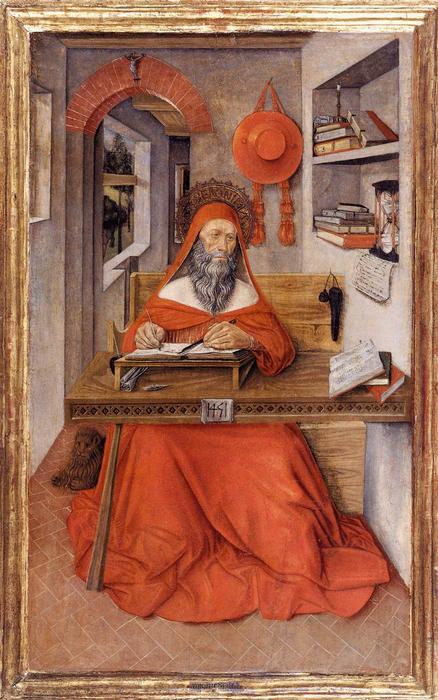
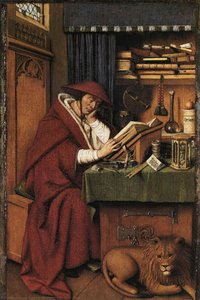
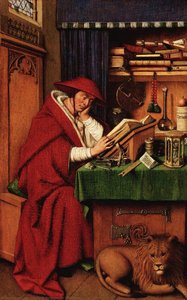
St Jerome in His Study
 1451
1451 88.0 x 52.0 cm
 Walters Art Museum
 Read More
Hand Made Oil Reproduction
Hand-painted oil on canvas in your size and frame, made to order by our artists. ( Buy Print Buy Image)




































Pick from our preset sizes that match the artwork's original proportions.

You may enter your own dimensions to fit a specific frame or space. If your selected size does not match the original image's proportions, we will either crop the artwork or extend the painting with additional hand-painted elements. A digital mockup will be sent for your approval before production begins.
Please note that the on-screen preview does not reflect the actual cropping or extension. Only the mockup will accurately show the final composition.
While custom sizes are available, we recommend selecting a dimension from the predefined list to preserve the original proportions.
After order, ArtsDot.com team will email client for instructions and provide a mockup preview
Worldwide Delivery () in 3/4 weeks instead of standard 5 weeks. (17 August). No compromise on quality.

Free Worldwide Express Shipping

High-Quality Linen Canvas

Full Shipping Insurance

Customs Tax Refund Guarantee

True Color Matching Guarantee

60-Day Return Policy (Defects Only)

100% Money-Back Guarantee

Bulk Discount Offer
 Glass option is only available in size under 110 CM

St Jerome in His Study
Reproduction Medium
Reproduction Size
-


Total Price
$ 263
Artwork Description
Artistic Significance
The central figure of St Jerome is depicted with a contemplative expression, sitting at a desk surrounded by various objects indicative of scholarly work. The use of symbolism is evident in the painting, with the lion at his feet representing courage and the taming of evil. The crown of thorns on St Jerome's head signifies his devotion to Jesus Christ and his role in translating the Bible into Latin.- The painting's attention to detail and use of perspective create a sense of depth and realism.
- The color palette is subdued, with earth tones dominating the background, which contrasts with the vibrant red of St Jerome's robes.
- The presence of books and a quill pen on the desk highlights St Jerome's scholarly pursuits and his importance as a translator and writer.
Comparison with Other Works
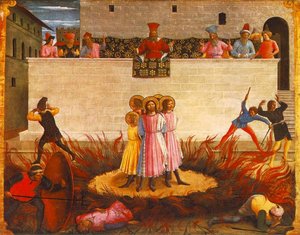
Antonio Da Fabriano's work can be compared to other notable artists of the Renaissance, such as Fra Angelico and Andrea Mantegna. For example, Fra Angelico's Flagellation of Christ showcases a similar attention to detail and use of symbolism. Similarly, Andrea Mantegna's Presentation at the Temple demonstrates a mastery of composition and narrative.The St Jerome in His Study painting is a testament to Antonio Da Fabriano's skill as an artist and his ability to create complex, meaningful works of art. As a handmade oil painting reproduction available on ArtsDot.com, this piece can be appreciated and enjoyed by art lovers around the world.
Related Artworks

Artist Biography
Early Life and Apprenticeship (1451-1470s)
The precise birthdate of Antonio da Fabriano remains shrouded in the mists of time, though most scholars place it around 1451. He was born in Fabriano, a thriving town nestled within the Marche region of Italy – a location that would profoundly shape his artistic vision and career. Fabriano at this period was experiencing a remarkable resurgence, fueled by its burgeoning paper-making industry and its strategic position as a crossroads for trade and culture. Antonio’s early life is largely undocumented, but it's believed he received his initial training under Gentile da Fabriano, a prominent master painter of the era known for his opulent frescoes and intricate details. Gentile’s workshop provided Antonio with a solid foundation in tempera painting techniques, perspective, and the depiction of religious figures – skills that would become hallmarks of his own style.
Crucially, Antonio's formative years coincided with a period of intense artistic innovation in Italy. The influence of Filippo Lippi’s refined realism and the burgeoning humanist movement were beginning to permeate the art world, encouraging artists to move beyond purely symbolic representations towards more naturalistic depictions of human form and space. Antonio undoubtedly absorbed these influences, developing his own distinctive approach that combined meticulous detail with a profound sense of spiritual devotion.
The Rise of a Master (1470s-1480s)
By the late 1470s and early 1480s, Antonio da Fabriano had emerged as a recognized master painter in his own right. He quickly gained commissions for religious works – altarpieces, panel paintings, and frescoes – catering to wealthy patrons throughout the region. His style during this period is characterized by an extraordinary level of detail, almost photographic in its precision. He meticulously rendered fabrics, jewels, architectural elements, and even the textures of skin and hair, creating a sense of immersive realism that was remarkably advanced for its time.
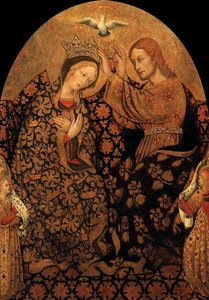
A particularly significant work from this era is the “Coronation of the Virgin” (circa 1451) housed in the Casa Morichi at Fabriano. This painting exemplifies Antonio’s mastery of composition and his ability to imbue a religious scene with a palpable sense of drama and emotion. The intricate details, the vibrant colors, and the carefully orchestrated spatial relationships all contribute to its enduring appeal.
Furthermore, he was involved in various other projects, including the “St Jerome” (circa 1451) now found in the Walters Art Gallery in Baltimore. This work showcases his skill in portraying a solitary figure within a richly detailed setting – a testament to his ability to convey both spiritual contemplation and material abundance.
Technique and Style
Antonio da Fabriano’s artistic style is often described as “meticulous realism” or “detailed naturalism.” He employed tempera on panel, a technique that allowed for exceptional clarity of color and detail. His compositions are typically balanced and harmonious, with a careful attention to perspective and spatial relationships. He was particularly adept at rendering fabrics – velvets, silks, and brocades – creating an illusion of tactile richness that captivated viewers.
A defining characteristic of his work is the use of *cartellini*—small, hand-painted labels—that often appear within his paintings. These labels, typically inscribed with dates or inscriptions, served not only as markers of time but also as integral elements of the composition, adding layers of meaning and context to the scene. The “St Jerome” painting is a prime example of this practice.
He was influenced by the work of Jan van Eyck, particularly in his use of detail and realism. However, Antonio’s style retained a distinctly Italian sensibility, characterized by a sense of grace, elegance, and spiritual devotion.
Legacy and Historical Significance
Antonio da Fabriano's career was tragically cut short; he died around 1489, likely at the relatively young age of thirty-eight. Despite his brief but prolific output, he left behind a remarkable body of work that continues to fascinate art historians and collectors today. His meticulous attention to detail, his masterful rendering of fabrics and textures, and his profound sense of spiritual devotion have earned him a place among the most important artists of the early Renaissance.
His influence can be seen in the works of later painters, particularly those who followed in the tradition of Italian realism. The “Coronation of the Virgin” and “St Jerome,” along with other surviving paintings, offer invaluable insights into the artistic practices and cultural values of 15th-century Italy. Antonio da Fabriano’s legacy endures as a testament to the power of observation, skill, and spiritual expression.
antonio da fabriano
1451 - 1489 , Italy
Quick Facts
- Artistic Movement Or Style: Early Renaissance
- Artists Or Movements Influenced By This Artist: ['Jan van Eyck']
- Artists Who Influenced This Artist: ['Gentile da Fabriano']
- Date Of Birth: 1451
- Date Of Death: 1489
- Full Name: Antonio da Fabriano
- Nationality: Italian
- Notable Artworks:
- St Jerome in His Study
- Coronation of the Virgin
- Place Of Birth: Fabriano, Italy