 Preview
 Send
Send Share
Share
 Details

 Download
 Similars
 X-Ray
X-Ray Diaporama
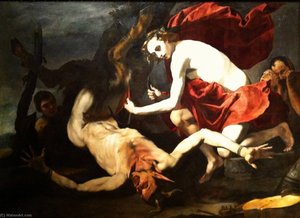
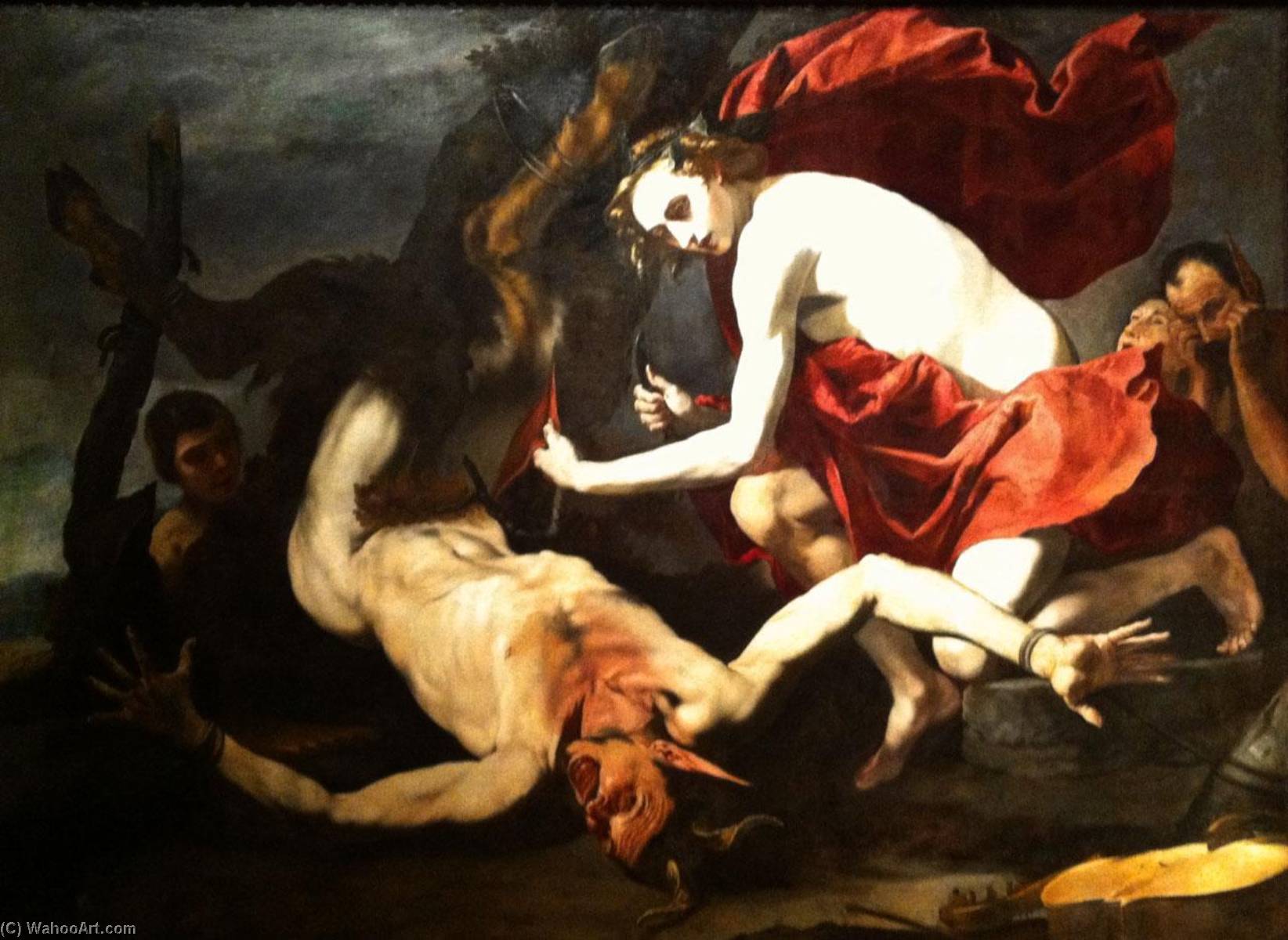
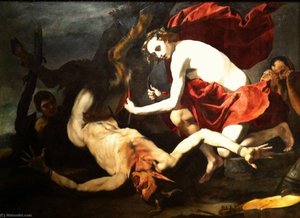
The Flaying of Marsyas by Apollo

 Read More
Giclée / Art Print
Museum-quality giclée or canvas print with fast production and flexible finish options. ( Buy Hand Made Painting Buy Image)




































Pick from our preset sizes that match the artwork's original proportions.

You may enter your own dimensions to fit a specific frame or space. If your selected size does not match the original image's proportions, we will either crop the artwork or extend the image with a mirrored or solid-fill edge. A digital mockup will be sent for your approval before production begins.
Please note that the on-screen preview does not reflect the actual cropping or extension. Only the mockup will accurately show the final composition.
While custom sizes are available, we recommend selecting a dimension from the predefined list to preserve the original proportions.
Worldwide Delivery () in 2 weeks instead of standard 4/5 weeks. (27 August)

Free Worldwide Express Shipping

High-Quality Linen Canvas

Full Shipping Insurance

Customs Tax Refund Guarantee

True Color Matching Guarantee

60-Day Return Policy (Defects Only)

100% Money-Back Guarantee

Bulk Discount Offer
 Glass option is only available in size under 110 CM

The Flaying of Marsyas by Apollo
Giclée / Art Print
Reproduction Size
-


Total Price
$ 63
Related Artworks








Artist Biography
A Shadowy Visionary of the Neapolitan Baroque
In the vibrant, tumultuous landscape of seventeenth-century Naples, few figures capture the dramatic tension of the Baroque era quite like Antonio de Bellis. Though he remains a somewhat enigmatic presence in art history—a shadowy figure whose biographical details are as elusive as the shadows in his own canvases—his impact on the Neapolitan school was profound. Born around 1616, de Bellis emerged during a golden age of creativity, a time when Naples was a crucible of intense religious devotion and revolutionary artistic experimentation. While much of what we know of his life is filtered through the historical accounts of Bernardo de’ Dominici, the surviving remnants of his work reveal an artist of immense technical skill and emotional depth, capable of translating the spiritual fervor of his age into visceral, human experiences.
The foundations of de Bellis’s artistry were laid under the watchful eye of Massimo Stanzione, one of the most celebrated masters of the Neapolitan Baroque. From Stanzione, de Bellis inherited a meticulous approach to realism and a sophisticated command of chiaroscuro—that breathtaking interplay of light and dark that defines the period. This training provided him with the tools to navigate the complex visual language of his time, allowing him to move beyond mere imitation toward a style that was uniquely his own. His early documented works, such as the cycle depicting the life of St. Charles Borromeo in the church of San Carlo alle Mortelle, demonstrate an emerging mastery of narrative and a burgeoning ability to use light to guide the viewer's eye through sacred histories.
The Echoes of Caravaggio and Ribera
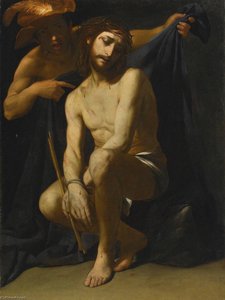
To understand the soul of de Bellis’s work, one must look toward the giants whose shadows loomed large over Naples: Caravaggio and Jusepe de Ribera. The revolutionary spirit of Caravaggio, with its unflinching naturalism and psychological intensity, acted as a guiding star for de Bell_is. This influence is most palpable in his use of tenebrism, where figures emerge from an impenetrable darkness, their faces illuminated by a harsh, singular light that emphasizes every wrinkle of pain or expression of cruelty. In masterpieces such as The Mocking of Christ, one can witness this Caravaggesque drama unfolding; the composition is tight and claustrophobic, forcing the viewer into an intimate, almost uncomfortable proximity with the tormentors and the tormented.
Yet, while Caravaggio provided the dramatic spark, it was the influence of Ribera that likely shaped de Bellis’s commitment to anatomical precision and a certain rugged, earthy realism. Like Ribera, de Bellis possessed an eye for the textures of human suffering—the coarseness of skin, the weight of heavy fabrics, and the raw emotion etched into the features of his subjects. This fusion of Stanzione’s grace, Caravaggio’s light, and Ribera’s grit allowed de Bellis to create works that were not merely religious icons but profound psychological studies. His ability to blend anatomical accuracy with a sense of divine or tragic invention ensured that his paintings resonated with both the intellect and the heart.
Legacy in the Golden Age of Naples
The career of Antonio de Bellis was relatively brief, as he passed away around 1656, yet the significance of his contribution to the Neapolitan school cannot be overstated. He stood at the center of a formidable circle of artists, including Bernardo Cavallino and Massimo Stanzione, collectively shaping a visual identity for Naples that was characterized by its theatricality, its emotional fervor, and its uncompromising realism. His work served as a vital link in the evolution of Baroque painting, bridging the gap between the intense naturalism of the early century and the more decorative, lyrical styles that would follow.
Today, when we look upon his surviving canvases, we see more than just relics of a bygone era; we see the pulse of a city in transition. His paintings remain powerful testaments to an age where art was used to provoke awe, to incite repentance, and to explore the deepest recesses of the human condition. Through his mastery of light and shadow, de Bellis ensured that even if his personal biography remained obscured by time, his artistic vision would continue to shine brightly within the annals of Italian Baroque history.
antonio de bellis
1616 - 1656
Quick Facts
- Artistic Movement Or Style: Baroque
- Artists Or Movements Influenced By This Artist:
- Hendrik Terbrugghen
- Georges de La Tour
- Artists Who Influenced This Artist:
- Caravaggio
- Jusepe de Ribera
- Massimo Stanzione
- Date Of Birth: c. 1616
- Date Of Death: c. 1656
- Full Name: Antonio de Bellis
- Nationality: Italian
- Notable Artworks:
- Mocking of Christ
- St Catherine Alexandria
- Flaying Marsyas Apollo
- Place Of Birth: Naples