 Preview
 Send
Send Share
Share
 Details

 Download
 Similars
 X-Ray
X-Ray Diaporama
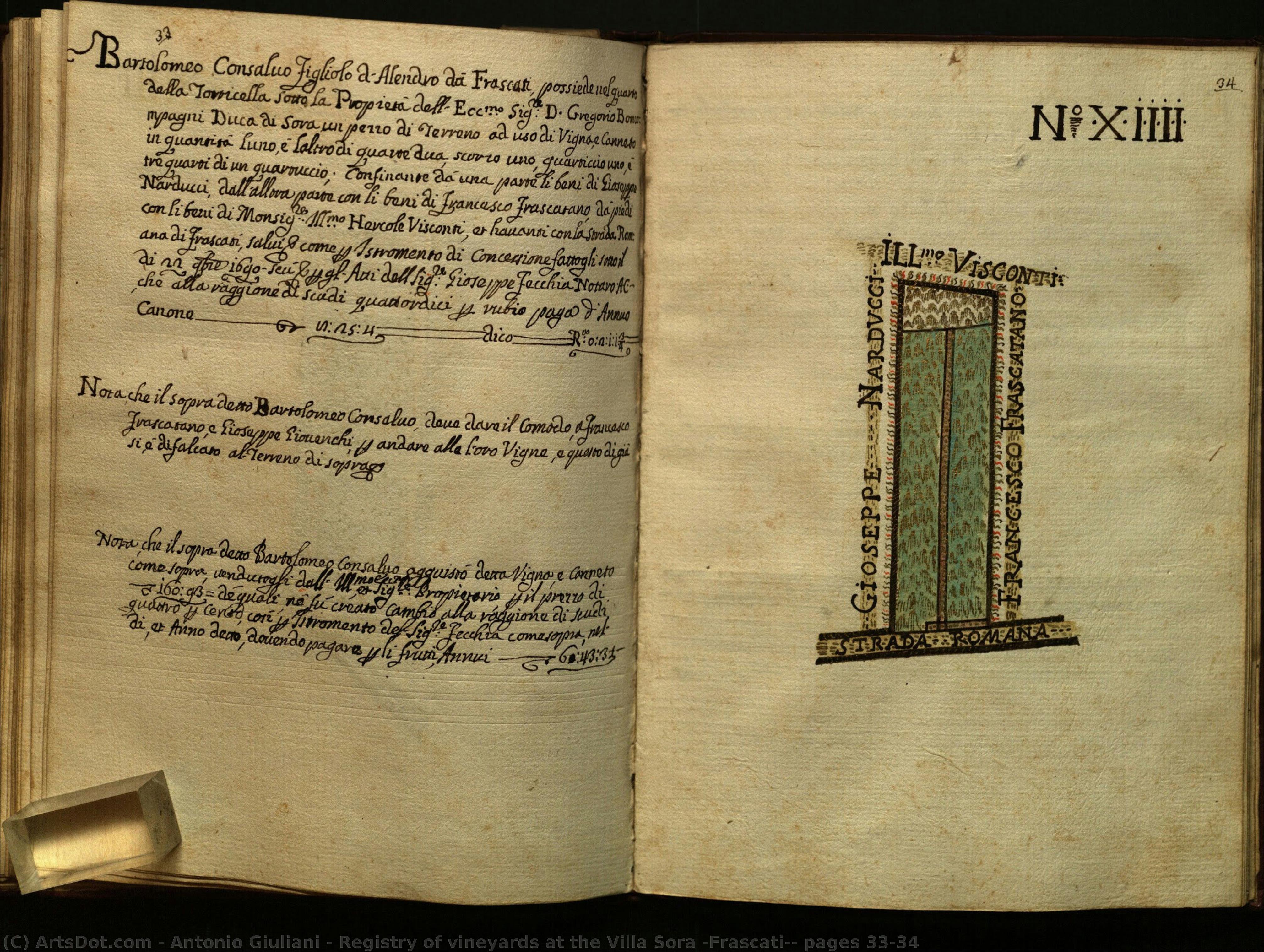
Registry of vineyards at the Villa Sora (Frascati): pages 33-34


 Read More
Hand Made Oil Reproduction
Hand-painted oil on canvas in your size and frame, made to order by our artists. ( Buy Print Buy Image)




































Pick from our preset sizes that match the artwork's original proportions.

You may enter your own dimensions to fit a specific frame or space. If your selected size does not match the original image's proportions, we will either crop the artwork or extend the painting with additional hand-painted elements. A digital mockup will be sent for your approval before production begins.
Please note that the on-screen preview does not reflect the actual cropping or extension. Only the mockup will accurately show the final composition.
While custom sizes are available, we recommend selecting a dimension from the predefined list to preserve the original proportions.
After order, ArtsDot.com team will email client for instructions and provide a mockup preview
Worldwide Delivery () in 3/4 weeks instead of standard 5 weeks. (2 September). No compromise on quality.

Free Worldwide Express Shipping

High-Quality Linen Canvas

Full Shipping Insurance

Customs Tax Refund Guarantee

True Color Matching Guarantee

60-Day Return Policy (Defects Only)

100% Money-Back Guarantee

Bulk Discount Offer
 Glass option is only available in size under 110 CM

Registry of vineyards at the Villa Sora (Frascati): pages 33-34
Reproduction Medium
Reproduction Size
-


Total Price
$ 263
A Whisper from the Past: The Chronicles of Villa Sora
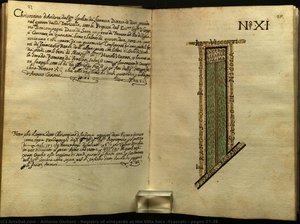
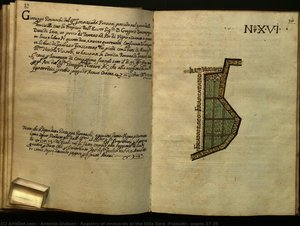
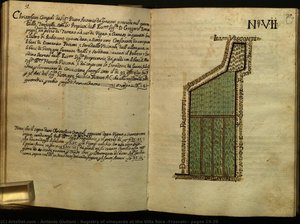
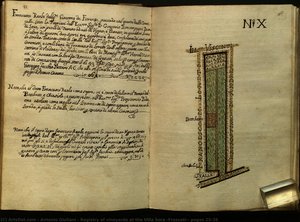
In the quiet, weathered pages of an ancient ledger, time seems to pause, inviting the viewer into a forgotten era of Italian viticulture and architectural grandeur. Registry of vineyards at the Villa Sora (Frascati): pages 33-34 is not merely a document; it is a visual portal into the historical soul of Frascati. The image captures the delicate intimacy of an open book, where the rhythmic dance of Latin script meets the precise, hand-drawn sketches of a bygone age. There is a profound sense of discovery in these pages, as if one has stumbled upon a secret archive hidden within the dusty corridors of a Roman estate. The texture of the aged paper, marked by the passage of centuries, provides a tactile backdrop to the delicate ink strokes that delineate the boundaries of vineyards and the silhouettes of majestic structures.
The composition draws the eye through a labyrinth of historical detail, where every stroke of the pen carries the weight of intention. On one side, the architectural sketches—reminiscent of a fortified castle or an elegant villa—stand as silent sentinels of the landscape, their outlines suggesting both strength and grace. These illustrations are interspersed with numerical notations that hint at the meticulous care taken by those who once managed these fertile lands. The interplay between the flowing, cursive Latin text and the structured geometric forms of the drawings creates a captivating visual tension, mirroring the relationship between the organic growth of the vines and the human order imposed upon the earth.
The Artistry of Documentation and Memory
While often categorized as a historical record, this piece transcends mere utility to become an evocative work of graphic art. The style is characterized by its raw, authentic elegance—a testament to the era of manual craftsmanship where every entry was a labor of devotion. The technique relies on the subtle variations in ink density and the organic imperfections of hand-drawn lines, which lend the work an incomparable depth. For the collector or interior designer, this piece offers a sophisticated layer of intellectual texture. It does not demand attention with loud colors; instead, it commands respect through its quiet, scholarly beauty and its ability to evoke a sense of nostalgia and reverence for heritage.
Integrating a reproduction of such a manuscript into a contemporary space can transform a room into a sanctuary of thought and history. Imagine this piece framed in a minimalist dark wood or set within a gallery wall of botanical prints; it serves as an anchor of authenticity, grounding modern aesthetics in the deep roots of European tradition. It is a piece that invites contemplation, sparking conversations about the lineage of the land, the evolution of agriculture, and the enduring human desire to record, preserve, and remember. To possess this work is to hold a fragment of the Frascati legacy, bringing the timeless charm of the Italian countryside into the heart of the modern home.
Related Artworks




Artist Biography
The Cinematic Soul of Antonio Giuliani
Born in the historic and vibrant heart of Rome in 1967, Antonio Giuliani embodies a unique intersection of performance and presence. While many recognize him through the flickering light of the silver screen, his essence is deeply rooted in the classical traditions of Italian storytelling. His journey began not with a brush, but with the profound ability to inhabit characters, a skill honed through years of rigorous engagement with the dramatic arts. From his early appearances on television programs designed to scout new talent, such as Stasera mi but butto on Rai 1, Giuliani demonstrated an innate magnetism that would eventually define his career in both film and theater.
The trajectory of his professional life is marked by a remarkable versatility, transitioning seamlessly between the sharp wit of comedy and the heavy emotional weight of dramatic roles. His early forays into the spotlight included notable appearances on Rai 2 and a triumphant moment on Canale 5, where he won an episode of Gran Caffè in 1997. This period of his life was characterized by a relentless pursuit of craft, working alongside legendary figures such as those from the Teatro Bagaglino and collaborating with directors like Pier Francesco Pingitore. These formative years allowed him to master the nuances of timing, expression, and the subtle art of character development, laying the groundwork for his later cinematic successes.
A Legacy in Motion and Performance
As his career matured, Giuliani moved into more complex narrative territories, leaving an indelible mark on Italian cinema and television. He became a recognizable face in gripping productions such as Suburra (2015) and the compelling series Arresti Domiciliari (2000). His ability to navigate the gritty realism of crime dramas while maintaining a profound human connection is what sets his work apart. In films like L'onore e il rispetto and Viso d'angelo, he brought a layer of psychological depth that resonated with audiences, proving that his talent extended far beyond simple performance into the realm of true artistic interpretation.
Beyond the camera, Giuliani has explored the directorial stage, most notably with his theatrical production Il rosso e il nero. In this endeavor, he stepped behind the scenes to shape the very narratives he once merely inhabited, showcasing a holistic understanding of dramatic structure. His career is a testament to the idea that art is not confined to a single medium; rather, it is a continuous flow of expression. Whether through the comedic timing of a stage play or the intense gaze captured in a cinematic close-up, Giuliani’s work serves as a bridge between the performer and the spectator, inviting them into a shared emotional landscape.
The significance of Antonio Giuliani lies in his ability to blend the boundaries of different artistic disciplines. His life's work reflects a deep commitment to the Italian cultural heritage, carrying forward the traditions of Roman drama into the modern era. Through his roles and his directorial ventures, he continues to contribute to the rich tapestry of Italian performing arts, ensuring that the art of characterization remains a vital and breathing force in contemporary culture.
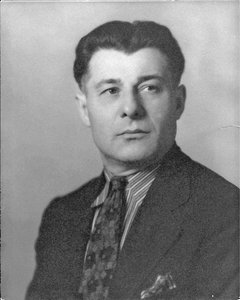
antonio giuliani
1967 - , Italy
Quick Facts
- Artistic Movement Or Style: Performance and film art
- Date Of Birth: 1967
- Full Name: Antonio Giuliani
- Nationality: Italian
- Notable Artworks: ['Il rosso e il nero']
- Place Of Birth: Rome, Italy
Related Articles

The Eloquent Line: Exploring the Artistic Significance of Sketches Across Movements and Media
Explore the profound artistic significance of sketches throughout history. From Renaissance masters to modern innovators like Van Gogh & Guston, discover how these foundational works reveal technique, emotion, and vision. Learn more at ArtsDot.
Echoes of Time: Nostalgia, Technique & Cultural Significance in Vintage Paintings
Explore the captivating world of vintage paintings! Discover key styles, cultural significance & collecting tips from art experts at ArtsDot. Find authentic reproductions and elevate your home décor.
Echoes of Time: Exploring the Enduring Appeal of Vintage Artwork
Explore the captivating world of vintage art! Discover its history, enduring appeal, & how to build your own collection. Expert advice, custom reproductions & museum-quality prints at ArtsDot.

Echoes of Time: Exploring the Enduring Appeal & Historical Context of Vintage Art Prints
Explore the captivating world of vintage art prints! Discover their history, collecting tips & enduring appeal. Expert insights on chromolithography and building a legacy collection with ArtsDot.

Echoes of Eras Past: Exploring Themes & Techniques in Vintage Art Collections
Explore the captivating world of vintage art! Discover historical movements, iconic themes & collecting tips. Find handmade reproductions & expert appraisal at ArtsDot.