 Preview
 Send
Send Share
Share
 Details

 Download
 Similars
 X-Ray
X-Ray Diaporama
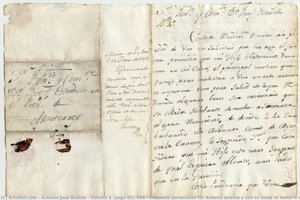
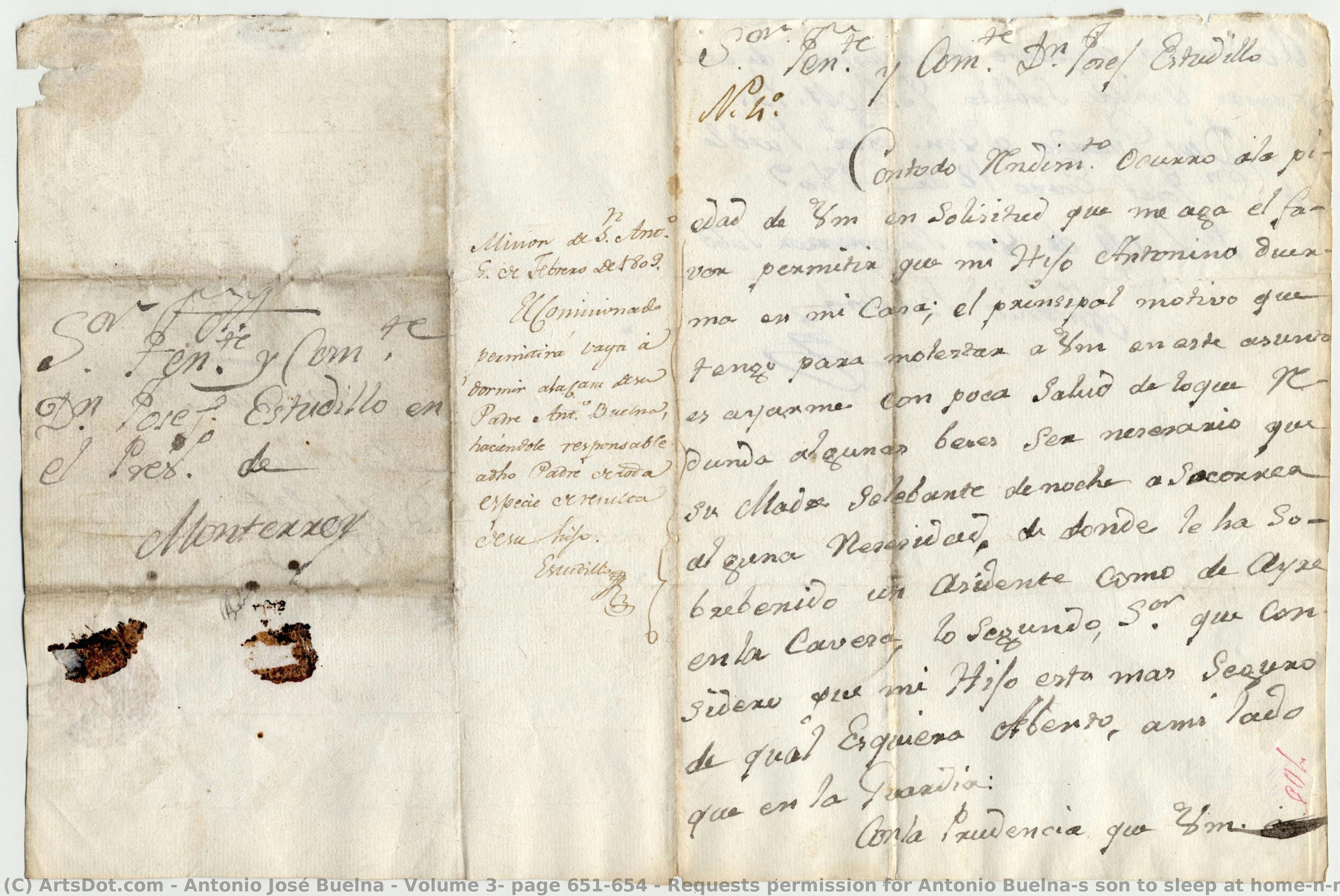
Volume 3, page 651-654 / Requests permission for Antonio Buelna’s son to sleep at home\n\nPage 1


 Read More
Hand Made Oil Reproduction
Hand-painted oil on canvas in your size and frame, made to order by our artists. ( Buy Print Buy Image)




































Pick from our preset sizes that match the artwork's original proportions.

You may enter your own dimensions to fit a specific frame or space. If your selected size does not match the original image's proportions, we will either crop the artwork or extend the painting with additional hand-painted elements. A digital mockup will be sent for your approval before production begins.
Please note that the on-screen preview does not reflect the actual cropping or extension. Only the mockup will accurately show the final composition.
While custom sizes are available, we recommend selecting a dimension from the predefined list to preserve the original proportions.
After order, ArtsDot.com team will email client for instructions and provide a mockup preview
Worldwide Delivery () in 3/4 weeks instead of standard 5 weeks. (23 August). No compromise on quality.

Free Worldwide Express Shipping

High-Quality Linen Canvas

Full Shipping Insurance

Customs Tax Refund Guarantee

True Color Matching Guarantee

60-Day Return Policy (Defects Only)

100% Money-Back Guarantee

Bulk Discount Offer
 Glass option is only available in size under 110 CM

Volume 3, page 651-654 / Requests permission for Antonio Buelna’s son to sleep at home\n\nPage 1
Reproduction Medium
Reproduction Size
-


Total Price
$ 263
Artwork Description
Related Artworks








Artist Biography
The Echoes of the Everyday: Exploring the Work of William Frederick Woodman
William Frederick Woodman (1817-1842), a name largely absent from mainstream art historical narratives, nevertheless represents a fascinating and poignant figure within the burgeoning artistic landscape of mid-19th century England. Born in the small village of Little Mapleton, Somerset, Woodman’s life was tragically short, yet his intensely personal and emotionally charged paintings offer a remarkably intimate glimpse into the anxieties and quiet struggles of rural Victorian society. His work, characterized by its stark realism, muted palette, and unsettling psychological depth, has recently experienced a resurgence of interest, prompting scholars to reconsider the role of provincial artists in shaping the broader artistic currents of the era. Woodman’s early life remains shrouded in some mystery, though it's believed he received limited formal training. He apprenticed as a carpenter before embarking on a solitary journey through the Somerset countryside, documenting its inhabitants and their daily lives with an almost obsessive dedication. Unlike many artists of his time who sought grand subjects or idealized beauty, Woodman focused relentlessly on the ordinary – farmers, laborers, widows, children – capturing them in moments of quiet contemplation, weariness, or profound sorrow. This deliberate choice to portray the marginalized and overlooked speaks volumes about his artistic vision and a deep empathy for those often ignored by society. His work wasn’t intended for public display; he primarily painted for himself, creating a vast, largely undocumented archive of rural life. The influence on Woodman's style is complex and multifaceted. While he resisted categorization, elements of the Dutch Masters – particularly Rembrandt’s masterful use of light and shadow to convey mood and emotion – are undeniably present in his paintings. The somber tones, the careful observation of texture and detail, and the emphasis on psychological realism all owe a debt to this earlier tradition. Furthermore, there's evidence suggesting an influence from the Pre-Raphaelites, though Woodman’s approach was far more restrained and less overtly symbolic than that of his contemporaries. The Pre-Raphaelites focused on romantic narratives and mythological subjects; Woodman, conversely, sought to capture the truth – however bleak – of everyday existence. The starkness of his compositions also echoes the social realism emerging in Europe at the time, a movement concerned with depicting the realities of poverty and hardship. Woodman’s artistic development can be traced through the evolution of his subject matter and technique. Early works depict simple scenes of rural life – a farmer milking his cow, a woman washing clothes by a stream – rendered with meticulous detail and a remarkable sensitivity to light. As he matured, his paintings became increasingly introspective, focusing on portraits of individuals consumed by melancholy or burdened by hardship. The most compelling examples of this shift are undoubtedly his “Widow” series (approximately 1835-1840), depicting women in various states of grief and resignation. These paintings are not merely representations of sadness; they are profound explorations of the psychological toll of loss, loneliness, and social isolation. The figures’ averted gazes, hunched postures, and the oppressive atmosphere surrounding them convey a sense of quiet desperation that is both haunting and deeply moving. Notably, Woodman often painted these subjects *en plein air*, directly observing them in their natural surroundings, which undoubtedly contributed to the immediacy and authenticity of his work. Despite his artistic talent, Woodman’s life was marked by poverty and isolation. He struggled financially throughout his career, relying on meager commissions and selling a small number of paintings privately. His health deteriorated rapidly in the final years of his life, likely exacerbated by his solitary existence and the emotional intensity of his work. Tragically, he died at the young age of 25, leaving behind an astonishingly large body of work – estimated to be over 300 paintings – largely unknown until relatively recently. The rediscovery of this collection in the early 21st century has dramatically altered our understanding of Victorian art and provided a powerful testament to the enduring power of observation and empathy. Woodman’s legacy lies not in grand exhibitions or critical acclaim, but rather in the quiet dignity and profound emotional honesty of his paintings. He offered a rare and poignant glimpse into the lives of ordinary people during a period of immense social change and economic hardship. His work serves as a reminder that beauty can be found even in the darkest corners of human experience, and that the most powerful art often arises from a deep connection to the realities of everyday life. Today, his paintings continue to resonate with viewers, prompting reflection on themes of loss, loneliness, and the enduring search for meaning in a world increasingly defined by industrialization and social upheaval.Key Works
- The Widow (various iterations, 1835-1840): These portraits are arguably Woodman’s most famous works, capturing the profound sadness and resignation of women who had lost their husbands to illness or accident. The series is a powerful meditation on grief and social isolation.
- Farmer Milking Cow (circa 1830): An early example of Woodman’s meticulous observation of rural life, showcasing his ability to capture the details of everyday labor.
- The Child (various dates): Woodman frequently depicted children, often portraying them with a sense of vulnerability and melancholy – a stark contrast to the idealized depictions of childhood common in other art of the period.
- Portrait of a Man (undated): A particularly haunting portrait demonstrating Woodman’s skill at conveying psychological depth through subtle gestures and expressions.
Further Resources
- Tate: Artist Biographies - The World Goes Pop (Relevant for context within a larger exhibition)
- How to Write an Artist Bio with Tips and Examples - Mid-America Arts Alliance (General guidance on writing artist biographies)
- City of Syracuse Artist Biographies PDF (Example of a biographical document)
antonio josé buelna
1842 , Mexico
Quick Facts
- Artistic Movement Or Style: World Goes Pop
- Date Of Death: 1842
- Notable Artworks:
- Evelyne Axell
- Joav BarEl
- Thomas Bayrle