 Preview
 Send
Send Share
Share
 Details

 Download
 Similars
 X-Ray
X-Ray Diaporama
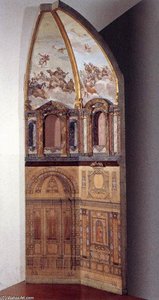
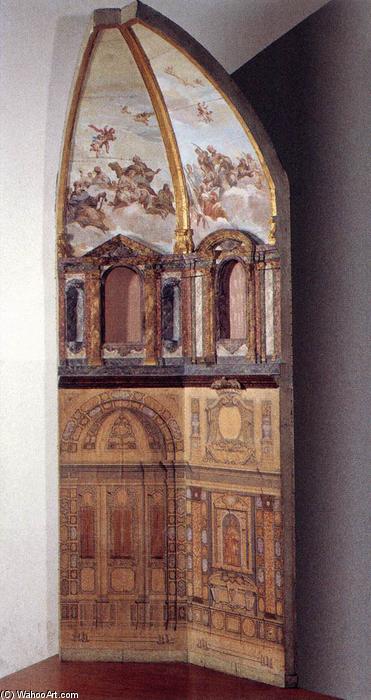
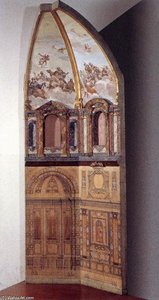
Model for Two Sides of the Cappella dei Principi
 1743
1743 230.0 x 49.0 cm
 Museo dell'Opificio delle Pietre Dure
 Read More
Hand Made Oil Reproduction
Hand-painted oil on canvas in your size and frame, made to order by our artists. ( Buy Print Buy Image)




































Pick from our preset sizes that match the artwork's original proportions.

You may enter your own dimensions to fit a specific frame or space. If your selected size does not match the original image's proportions, we will either crop the artwork or extend the painting with additional hand-painted elements. A digital mockup will be sent for your approval before production begins.
Please note that the on-screen preview does not reflect the actual cropping or extension. Only the mockup will accurately show the final composition.
While custom sizes are available, we recommend selecting a dimension from the predefined list to preserve the original proportions.
After order, ArtsDot.com team will email client for instructions and provide a mockup preview
Worldwide Delivery () in 3/4 weeks instead of standard 5 weeks. (1 September). No compromise on quality.

Free Worldwide Express Shipping

High-Quality Linen Canvas

Full Shipping Insurance

Customs Tax Refund Guarantee

True Color Matching Guarantee

60-Day Return Policy (Defects Only)

100% Money-Back Guarantee

Bulk Discount Offer
 Glass option is only available in size under 110 CM

Model for Two Sides of the Cappella dei Principi
Reproduction Medium
Reproduction Size
-


Total Price
$ 263
Related Artworks







Artist Biography
Antonio Nicola Pillori: Architect of Light and Shadow in Baroque Florence
The annals of the Florentine Baroque are often filled with the names of grand painters and monumental sculptors, yet within the delicate interplay of light and structural precision, the figure of Antonio Nicola Pillori emerges as a master of a more intimate, architectural dimension. Born around 1687 in the vibrant heart of Florence, Pillori was a man whose creative essence was deeply rooted in the tactile and the three-dimensional. While much of his biographical narrative remains shrouded in the mists of time, the legacy he left behind speaks of an artist who could condense the grandeur of monumental architecture into the exquisite detail of a model, capturing not just the geometry of stone, but the very soul of the Baroque era.
Pillori’s artistic journey was undoubtedly shaped by his lineage. As the son of Giovanni Battista Pillori, a sculptor renowned for his ecclesiastical commissions, Antonio was raised in an environment where the manipulation of form and the service of faith were inextricably linked. This early exposure to the sculptural arts likely provided the foundation for his later mastery of architectural modeling. It is believed that he refined his technical prowess under the guidance of Giuseppe Bolognese, a sculptor who bridged the gap between the fading echoes of Mannerism and the burgeoning classical ideals of the new century. From Bolognese, Pillori inherited a meticulous devotion to detail and an understanding of how light interacts with surface—a skill that would become his signature when translating architectural visions into physical reality.
The Art of the Miniature: Visionary Architectural Modeling
What truly distinguishes Pillori from his contemporaries was his extraordinary talent for architectural modeling. In an era where architects relied on two-dimensional plans, Pillori offered a window into the finished splendor of a building through miniature representations. These were far more than mere technical blueprints; they were emotive works of art. His models possessed a palpable sense of atmosphere, utilizing scale and texture to evoke the weight of marble, the depth of shadows, and the soaring heights of domes. Through these small-scale wonders, he could manipulate light and shadow to simulate the dramatic chiaroscuro that defined the Baroque aesthetic, making the inanimate appear breathing and alive.
His work often served as a bridge between conception and reality, particularly in his contributions to some of Florence's most prestigious sites. One of his most notable achievements includes his intricate models for the Cappella dei Principi within the Medici Chapels. In these works, Pillori demonstrated an unparalleled ability to navigate complex structural designs, presenting a vision of grandeur that was both technically accurate and aesthetically breathtaking. His capacity to capture the essence of such monumental spaces in miniature allowed patrons to experience the majesty of their architectural ambitions long before the first stone was laid.
A Legacy Carved in Detail
Though the historical record regarding his later years is fragmented, Pillori’s influence resonated through the decorative arts and architectural circles of 18th-century Italy. His ability to marry the precision of an architect with the sensitivity of a sculptor allowed him to navigate the diverse needs of high-ranking patrons, such as Cardinal Ludovico Velázquez Gonzaga. This connection to the ecclesiastical and aristocratic elite ensured that his work was placed at the very center of Florentine cultural life.
The significance of Antonio Nicola Pillori lies in his unique position as a creator of worlds in miniature. He did not merely document buildings; he choreographed the experience of space. His career serves as a testament to the power of the decorative arts to communicate the grandest human ambitions through the most delicate of mediums. Today, as we look back upon his contributions, we see an artist who mastered the art of the small to celebrate the magnificent, leaving behind a legacy of structural beauty that continues to haunt and inspire the architectural imagination.
antonio nicola pillori
1687 - 1763
Quick Facts
- Artistic Movement Or Style: Baroque
- Date Of Birth: ca. 1687
- Full Name: Antonio Nicola Pillori
- Nationality: Italian
- Notable Artworks: ['Model for Two Sides of the Cappella dei Principi']
- Place Of Birth: Firenze