 Preview
 Send
Send Share
Share
 Details

 Download
 Similars
 X-Ray
X-Ray Diaporama
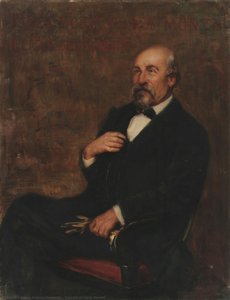
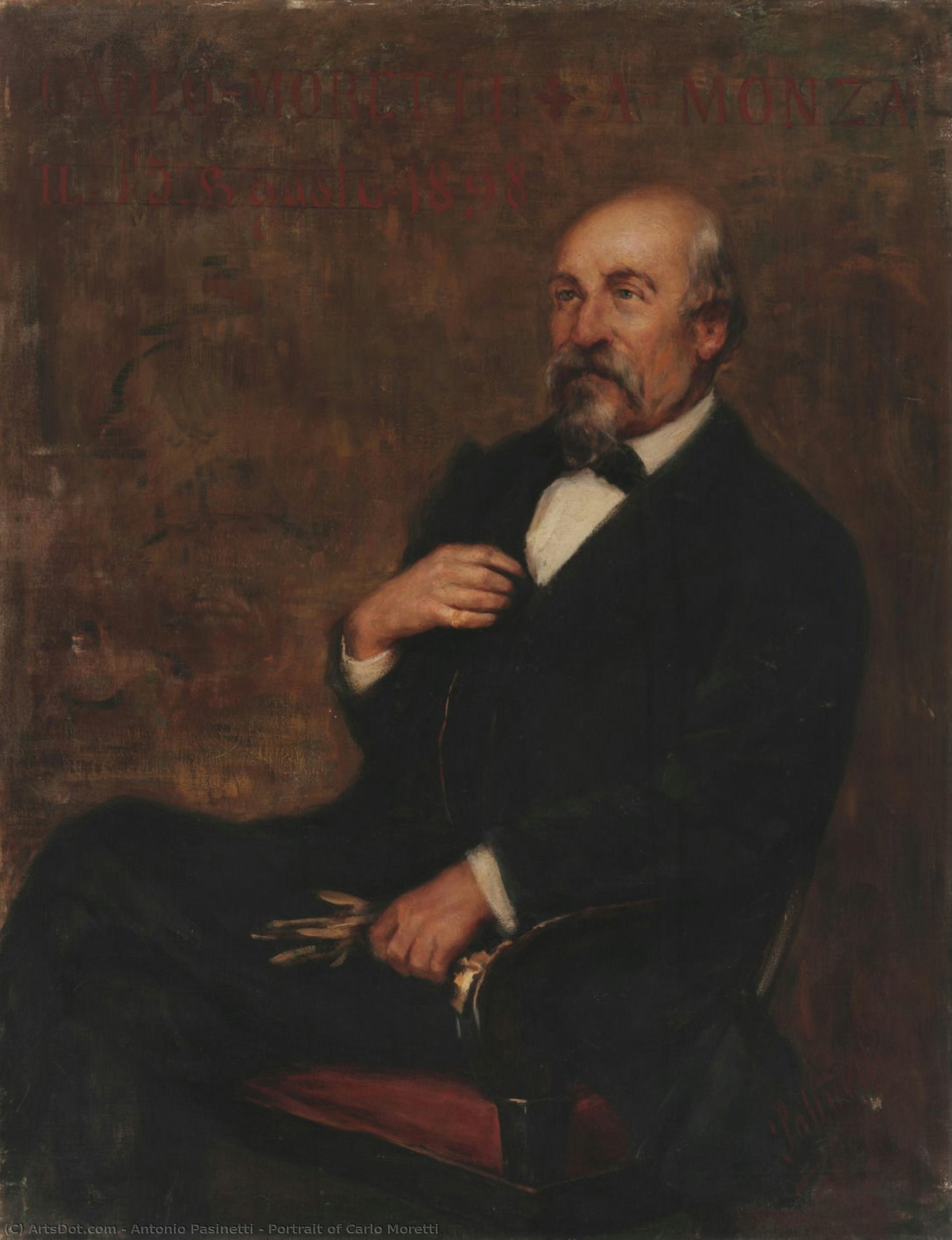
Portrait of Carlo Moretti
 1899
1899 130.0 x 100.0 cm
 Ca’ Granda – Ospedale Maggiore Policlinico
 Read More
Giclée / Art Print
Museum-quality giclée or canvas print with fast production and flexible finish options. ( Buy Hand Made Painting Buy Image)




































Pick from our preset sizes that match the artwork's original proportions.

You may enter your own dimensions to fit a specific frame or space. If your selected size does not match the original image's proportions, we will either crop the artwork or extend the image with a mirrored or solid-fill edge. A digital mockup will be sent for your approval before production begins.
Please note that the on-screen preview does not reflect the actual cropping or extension. Only the mockup will accurately show the final composition.
While custom sizes are available, we recommend selecting a dimension from the predefined list to preserve the original proportions.
Worldwide Delivery () in 2 weeks instead of standard 4/5 weeks. (29 August)

Free Worldwide Express Shipping

High-Quality Linen Canvas

Full Shipping Insurance

Customs Tax Refund Guarantee

True Color Matching Guarantee

60-Day Return Policy (Defects Only)

100% Money-Back Guarantee

Bulk Discount Offer
 Glass option is only available in size under 110 CM

Portrait of Carlo Moretti
Giclée / Art Print
Reproduction Size
-


Total Price
$ 63
Related Artworks








Artist Biography
Edvard Munch: A Soul Exposed
Edvard Munch (December 12, 1863 – January 23, 1944) stands as one of the most profoundly influential and emotionally resonant figures in modern art. Born in Løten, Norway, into a family marked by illness and loss—his mother died when he was five, followed by the deaths of his father and an older sister from tuberculosis—Munch’s early life became inextricably woven into the fabric of his artistic vision. These formative experiences instilled within him a deep preoccupation with themes of mortality, anxiety, love, and the human condition, which he relentlessly explored through a distinctive and intensely personal style. His work wasn't merely representation; it was an excavation of the inner landscape, a raw and unflinching portrayal of psychological states.Early Life and Influences
Munch’s artistic journey began with a formal education at the Kristiania Kunstakademi (Norwegian National Academy of Fine Arts), but he quickly rejected the prevailing naturalistic aesthetic of the time, seeking instead to capture the subjective experience—what he termed “soul painting.” This pursuit led him to Paris in 1889, where he encountered the burgeoning Symbolist and Post-Impressionist movements. He was deeply affected by the works of Paul Gauguin, Vincent van Gogh, and Henri de Toulouse-Lautrec, particularly their bold use of color and expressive brushwork. However, it wasn’t simply imitation that Munch sought; he absorbed these influences to forge his own unique language, one characterized by elongated figures, distorted perspectives, and a palette dominated by intense reds, blues, and yellows—colors often associated with heightened emotion and psychological turmoil. The influence of Kristiania Bohème, a circle of writers and artists who championed free love and challenged societal norms, also played a significant role in shaping his worldview and artistic sensibilities.The Scream and the Expressionist Breakthrough
Perhaps Munch’s most iconic work, *The Scream* (1893), encapsulates the core themes of his oeuvre: anxiety, alienation, and the overwhelming sense of dread that permeated modern life. The painting depicts a figure standing on a bridge, clutching its head in apparent anguish against a swirling, blood-red sky. While often interpreted as a depiction of a specific moment of terror, Munch himself described it as inspired by an auditory hallucination—a “great, infinite scream in nature.” *The Scream* is widely considered to be a pivotal work in the development of Expressionism, a movement that sought to convey subjective emotions and inner experiences rather than objective reality. Following this breakthrough, Munch embarked on *The Frieze of Life*, a series of fourteen paintings depicting stages of human existence—love, anxiety, jealousy, compassion, suicide, birth, death, and ecstasy—each imbued with an atmosphere of intense emotionality.Technique and Style
Munch’s artistic technique was as innovative as his subject matter. He experimented extensively with various media, including oil paint, tempera, pastel, woodcut, lithograph, and etching. His use of color was particularly striking—often employing jarring juxtapositions and unnatural hues to heighten the emotional impact of his works. He frequently employed a technique known as “halation,” where colors appear to shimmer or bleed into one another, creating a sense of instability and unease. Furthermore, Munch’s compositions are often characterized by distorted perspectives, elongated figures, and simplified forms—elements that contribute to the overall feeling of psychological intensity. His work is not about precise representation but rather about conveying an emotional truth, a visceral experience of being human.Legacy and Historical Significance
Edvard Munch’s influence on 20th-century art is undeniable. He paved the way for Expressionist artists like Ernst Ludwig Kirchner and Emil Nolde, and his exploration of psychological themes continues to resonate with audiences today. *The Scream*, in particular, has become a universally recognized symbol of modern anxiety and alienation—a testament to Munch’s ability to capture the darkest corners of the human psyche. Despite facing periods of mental instability and censorship during his lifetime (particularly during Nazi occupation), Munch's work gained increasing recognition after his death, solidifying his place as one of the most important and enduring artists of the modern era. His art serves as a powerful reminder of the fragility of the human spirit and the importance of confronting our own inner demons.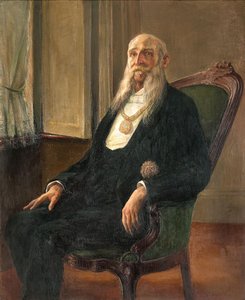
antonio pasinetti
1863 - 1940 , Italy
Quick Facts
- Artistic Movement Or Style: Expressionism, Symbolism
- Artists Or Movements Influenced By This Artist: ['German Expressionism']
- Artists Who Influenced This Artist:
- Vincent van Gogh
- Paul Gauguin
- Date Of Birth: December 12, 1863
- Date Of Death: January 23, 1944
- Full Name: Edvard Munch
- Nationality: Norwegian
- Notable Artworks:
- The Scream
- Madonna
- Vierge
- Despair
- Place Of Birth: Løten, Norway