 Preview
 Send
Send Share
Share
 Details

 Download
 Similars
 X-Ray
X-Ray Diaporama
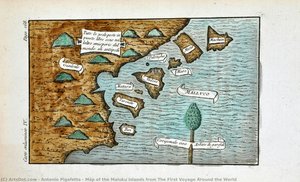
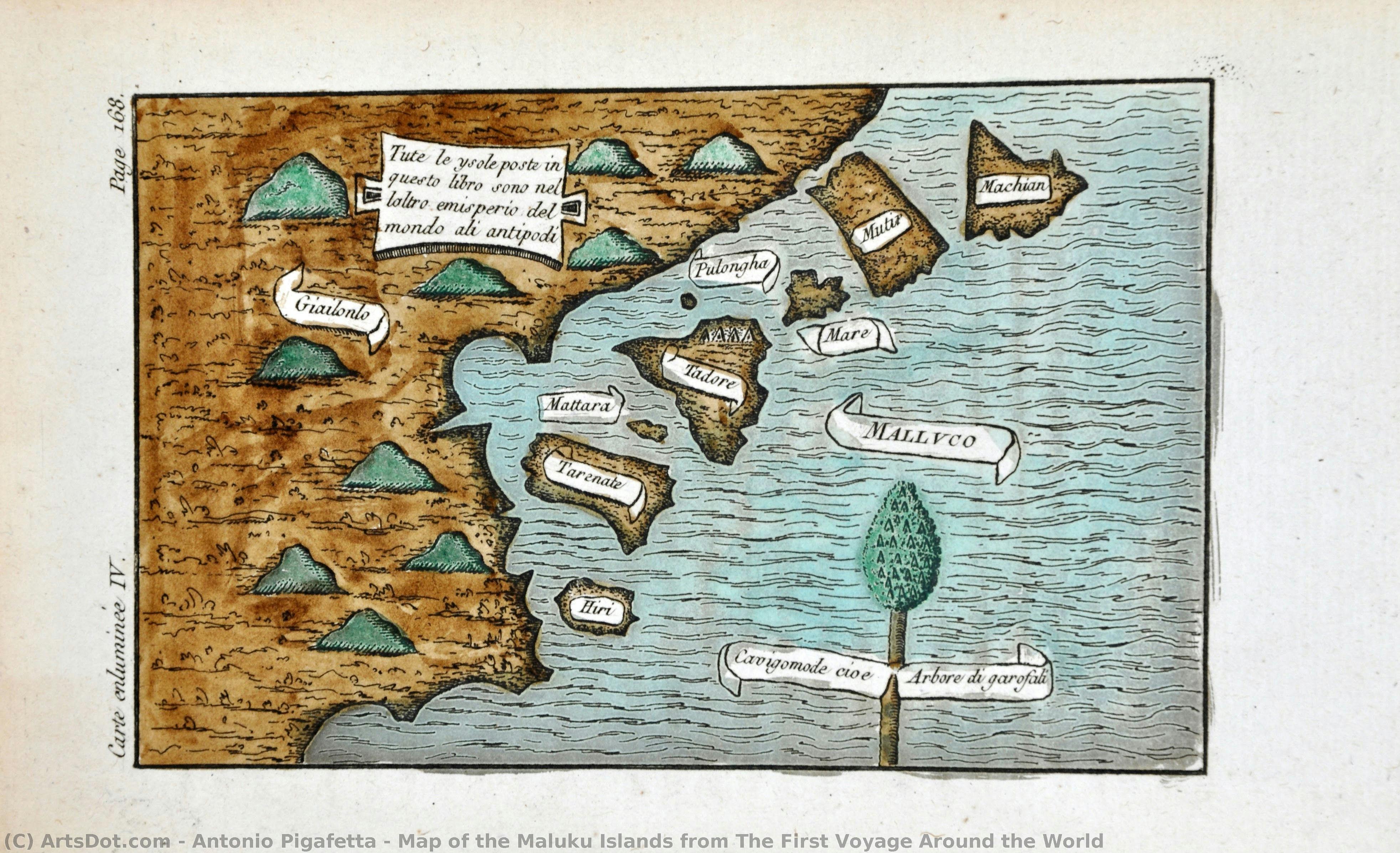
Map of the Maluku Islands from The First Voyage Around the World
 20.0 x 13.0 cm
 Naval Museum
 Read More
Giclée / Art Print
Museum-quality giclée or canvas print with fast production and flexible finish options. ( Buy Hand Made Painting Buy Image)




































Pick from our preset sizes that match the artwork's original proportions.

You may enter your own dimensions to fit a specific frame or space. If your selected size does not match the original image's proportions, we will either crop the artwork or extend the image with a mirrored or solid-fill edge. A digital mockup will be sent for your approval before production begins.
Please note that the on-screen preview does not reflect the actual cropping or extension. Only the mockup will accurately show the final composition.
While custom sizes are available, we recommend selecting a dimension from the predefined list to preserve the original proportions.
Worldwide Delivery () in 2 weeks instead of standard 4/5 weeks. (29 August)

Free Worldwide Express Shipping

High-Quality Linen Canvas

Full Shipping Insurance

Customs Tax Refund Guarantee

True Color Matching Guarantee

60-Day Return Policy (Defects Only)

100% Money-Back Guarantee

Bulk Discount Offer
 Glass option is only available in size under 110 CM

Map of the Maluku Islands from The First Voyage Around the World
Giclée / Art Print
Reproduction Size
-


Total Price
$ 63
Related Artworks









Artist Biography
The Chronicler of the Infinite: The Life and Legacy of Antonio Pigafetta
In the grand tapestry of the Renaissance, where the boundaries of the known world were being violently redrawn by the ambitions of empires, few figures captured the essence of discovery as intimately as Antonio Pigafetta. Born in the elegant city of Vicenza around 1491, Pigafetta was not a conqueror of lands, but a conqueror of details. A Venetian scholar imbued with the humanist spirit of his age, he possessed an intellect sharpened by the study of astronomy, geography, and the classical languages of Latin and Greek. While history often remembers the iron-willed commanders like Ferdinand Magellan, it is through the sensitive, observant eye of Pigafetta that the true texture of the first circumnavigation of the globe is felt. He was a man whose destiny was inextricably linked to the horizon, driven by a profound curiosity to document the unknown.
Pigafetta’s journey into the heart of the unknown began in 1519, when he joined the Spanish expedition under the command of Magellan. He did not sail as a soldier or a navigator, but as a supernumerary—a gentleman volunteer whose primary purpose was to witness and record. As the fleet departed, carrying with it the hopes of King Charles I of Spain, Pigafanness embarked on an odyssey that would test the limits of human endurance. Through the treacherous straits that now bear Magellan's name and across the vast, terrifying expanse of the Pacific Ocean, Pigafetta remained a steadfast observer. His role was to translate the chaos of maritime struggle into the order of written prose, capturing the shifting climates, the strange flora and fauna, and the diverse peoples encountered along the way.
A Cartography of Words and Cultures
The true masterpiece of Antonio Pigafetta lies not in paint or stone, but in his meticulous journal. This document serves as a vital bridge between the medieval worldview and the dawn of modern geography. As the expedition moved through the Philippine Islands and toward the Spice Islands, Pigafetta’s writing transcended mere travelogue; it became an ethnographic treasure. He possessed a rare ability to find significance in the minute, recording the customs, social structures, and even the linguistic nuances of the indigenous populations. Most notably, his observations provided the first recorded glimpses of the Cebuano language, creating a linguistic fossil that remains invaluable to historians and linguists today.
His work was characterized by an almost scientific devotion to accuracy, yet it was infused with the wonder of a man seeing the world anew. He documented the arrival of the fleet in the Moluccas, the preciousness of cloves and nutmeg, and the harrowing reality of life aboard the Victoria—the sole surviving vessel of the original fleet. When the remnants of the expedition finally limped back into Spain in 1522, Pigafetta carried with him more than just stories; he carried a reconstructed map of the Earth's true dimensions. His writings allowed the European consciousness to grasp the sheer scale of the Pacific and the interconnectedness of the world's oceans, effectively shrinking the globe through the power of the written word.
Historical Significance and Eternal Echoes
The legacy of Antonio Pigafetta is woven into the very fabric of maritime history. Without his diligent record-keeping, much of the glory and the tragedy of Magellan’s voyage would have been lost to the currents of time. He provided the essential narrative thread that connects the disparate events of a three-year struggle for survival into a coherent epic of human achievement. His contributions extend far beyond the realm of exploration; he was a pioneer of ethnography, a man who recognized that to understand a new world, one must first learn to listen to its voices and record its rhythms.
Though his life ended around 1531, leaving behind a legacy that continues to inspire awe, the impact of his observations remains undiminished. He stands as a testament to the power of observation and the enduring importance of the chronicler. In an era defined by conquest, Pigafetta chose the path of the witness, ensuring that the vibrant, complex reality of the first global voyage would be preserved for all eternity. His life reminds us that while explorers may discover new lands, it is the scholars who truly allow us to inhabit them.
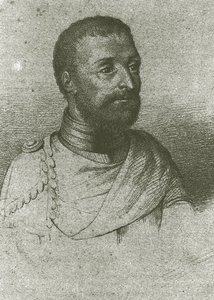
Antonio Pigafetta
1491 - 1531 , Italy
Quick Facts
- Artistic Movement Or Style: Early Navigation
- Artists Or Movements Influenced By This Artist: ['Venetian Painting Art Movement']
- Artists Who Influenced This Artist: ['Ferdinand Magellan']
- Date Of Birth: Between 1480 and 1491
- Date Of Death: c. 1531
- Full Name: Antonio Pigafetta
- Nationality: Italian
- Notable Artworks: ['Map of the Maluku Islands from The First Voyage Around the World']
- Place Of Birth: Vicenza, Italy