 Preview
 Send
Send Share
Share
 Details

 Download
 Similars
 X-Ray
X-Ray Diaporama
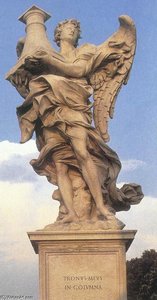
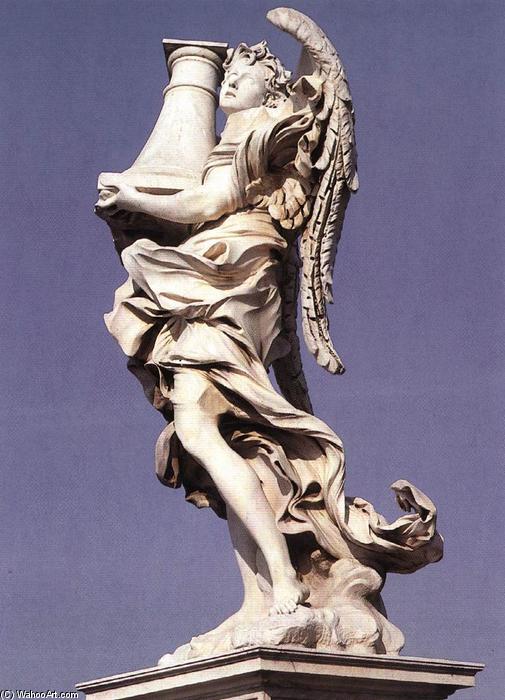
Angel with the Column


 Read More
Hand Made Oil Reproduction
Hand-painted oil on canvas in your size and frame, made to order by our artists. ( Buy Print Buy Image)




































Pick from our preset sizes that match the artwork's original proportions.

You may enter your own dimensions to fit a specific frame or space. If your selected size does not match the original image's proportions, we will either crop the artwork or extend the painting with additional hand-painted elements. A digital mockup will be sent for your approval before production begins.
Please note that the on-screen preview does not reflect the actual cropping or extension. Only the mockup will accurately show the final composition.
While custom sizes are available, we recommend selecting a dimension from the predefined list to preserve the original proportions.
After order, ArtsDot.com team will email client for instructions and provide a mockup preview
Worldwide Delivery () in 3/4 weeks instead of standard 5 weeks. (17 August). No compromise on quality.

Free Worldwide Express Shipping

High-Quality Linen Canvas

Full Shipping Insurance

Customs Tax Refund Guarantee

True Color Matching Guarantee

60-Day Return Policy (Defects Only)

100% Money-Back Guarantee

Bulk Discount Offer
 Glass option is only available in size under 110 CM

Angel with the Column
Reproduction Medium
Reproduction Size
-


Total Price
$ 263
Related Artworks
Artist Biography
The Sculptor of Baroque Grace: The Life and Legacy of Antonio Raggi
In the heart of the Roman Baroque, a period defined by theatricality, movement, and profound emotional depth, few names resonate with as much subtle brilliance as Antonio Raggi. Born in 1624 in the serene village of Vico Morcote, nestled by the shores of Lake Lugano in Switzerland, Raggi’s journey from the quiet landscapes of his homeland to the grand, marble-clad stages of Rome is a narrative of immense artistic ambition. While he arrived in Italy with the burgeoning humanist spirit of his origins, it was the overwhelming grandeur of the Roman Baroque that truly claimed his soul, leading him toward a career that would eventually define the sculptural language of an era.
Raggi’s ascent in the competitive Roman art scene was catalyzed by one of the most significant artistic partnerships in history. Though he initially found himself within the studio of Alessandro Algardi, it was the legendary Gian Lorenzo Bernini who became his true mentor and guiding light. For nearly three decades, Raggi worked under the shadow of the master, becoming Bernini’s closest and perhaps most prolific pupil. This relationship was more than mere apprenticeship; it was a profound artistic symbiosis. Bernini often provided Raggi with detailed modelli—small-scale models—and supervised his progress so closely that Raggi’s works frequently captured the very essence of Bernini’s own creative vision, executing the master's complex conceits with a precision and grace that felt almost seamless.
Mastery of Form and the Spirit of Realism
What distinguishes Raggi from many of his contemporaries was his refusal to settle for mere idealized perfection. While the Baroque period often leaned into the fantastical, Raggi possessed an unwavering dedication to capturing the raw, palpable reality of the human condition. He meticulously studied anatomy, not just to replicate muscle and bone, but to understand how tension, weight, and emotion manifest in the physical form. This commitment to naturalism allowed him to breathe life into stone and stucco, creating figures that seemed caught in a fleeting moment of intense action or deep, spiritual contemplation.
His technical versatility was as vast as his imagination. Raggi was not confined to the heavy permanence of marble; he was a master of stucco, a medium that allowed for a more fluid and delicate expression of movement. His ability to manipulate these materials enabled him to contribute significantly to the architectural splendor of Rome’s most sacred spaces. Whether working on monumental architectural decorations or intimate easel paintings, his hand was always recognizable by its ability to convey narrative complexity through subtle textures and dynamic compositions.
Enduring Achievements and Historical Significance
The legacy of Antonio Raggi is etched into the very fabric of Rome’s most iconic landmarks. His contributions to the Piazza Navona complex, particularly his collaboration with Bernini on the Fountain of the Four Rivers, represent a pinnacle of Baroque achievement. In these works, the boundaries between sculpture and architecture dissolve, replaced by a sense of flowing water and living stone that embodies the period’s obsession with illusion and motion.
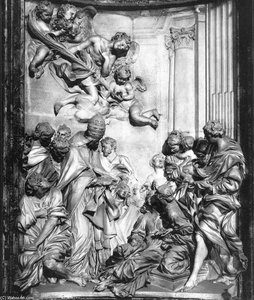
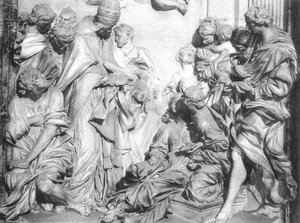
Among his most poignant and celebrated individual achievements is the Death of St. Cecilia, a breathtaking stucco relief located in the Sant’Andrea della Valle Basilica. In this piece, Raggi achieves a level of emotional intimacy that is rare even in the high Baroque; the slumped posture of the saint and the delicate rendering of her final moments serve as a testament to his ability to evoke profound empathy in the viewer. Other notable works, such as the Angel with the Column on the Ponte Sant'Angelo, further demonstrate his capacity for creating figures that possess both classical beauty and a restless, divine energy.
Ultimately, Antonio Raggi stands not merely as a follower of Bernini, but as a transformative force in his own right. He took the theatrical foundations laid by his mentor and infused them with a unique sense of naturalistic tenderness and anatomical precision. His work remains a vital chapter in the history of 17th-century art, reminding us that true greatness lies in the ability to capture the eternal within the ephemeral moment.
antonio raggi
1624 - 1686 , Switzerland
Quick Facts
- Artistic Movement Or Style: Roman Baroque
- Artists Or Movements Influenced By This Artist: Neoclassical
- Artists Who Influenced This Artist: Bernini
- Date Of Birth: 1624
- Full Name: Antonio Raggi
- Nationality: Swiss
- Notable Artworks: ['Death of St. Cecilia']
- Place Of Birth: Vico Morcote, Switzerland