 Preview
 Send
Send Share
Share
 Details

 Download
 Similars
 X-Ray
X-Ray Diaporama
Winter
 Oil On Canvas
- WallArt
- Neoclassicism
 1769
1769 59.0 x 58.0 cm
 English Heritage
 Read More
Hand Made Oil Reproduction
Hand-painted oil on canvas in your size and frame, made to order by our artists. ( Buy Print Buy Image)




P118B $10

P118H $10

P118W $10

P438Z $10

P508JH $12

P508YH $12

P805H $10

P805Z $10

P919BZ $10

P919G $10

P919XJ $10

P959ZH $10

P968JZ $12

W106C $8

W218G $10

W218JH $8

W218Y $10

W307PJ $10

W316G $10

W316PJ $8

W316Y $10

W398PJ $8

W4111J $10

W500HY $15

W500JH $15

W692G $12

W849H $8

W940BG $15

W953PJ $8




Pick from our preset sizes that match the artwork's original proportions.

You may enter your own dimensions to fit a specific frame or space. If your selected size does not match the original image's proportions, we will either crop the artwork or extend the painting with additional hand-painted elements. A digital mockup will be sent for your approval before production begins.
Please note that the on-screen preview does not reflect the actual cropping or extension. Only the mockup will accurately show the final composition.
While custom sizes are available, we recommend selecting a dimension from the predefined list to preserve the original proportions.
After order, ArtsDot.com team will email client for instructions and provide a mockup preview
Worldwide Delivery () in 3/4 weeks instead of standard 5 weeks. (17 August). No compromise on quality.

Free Worldwide Express Shipping

High-Quality Linen Canvas

Full Shipping Insurance

Customs Tax Refund Guarantee

True Color Matching Guarantee

60-Day Return Policy (Defects Only)

100% Money-Back Guarantee

Bulk Discount Offer
 Glass option is only available in size under 110 CM

Winter
Reproduction Medium
Reproduction Size
-


Total Price
$ 288
Artwork Description
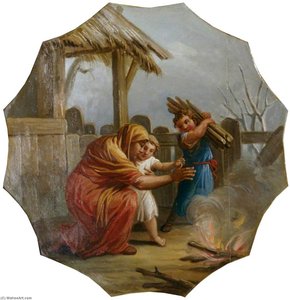
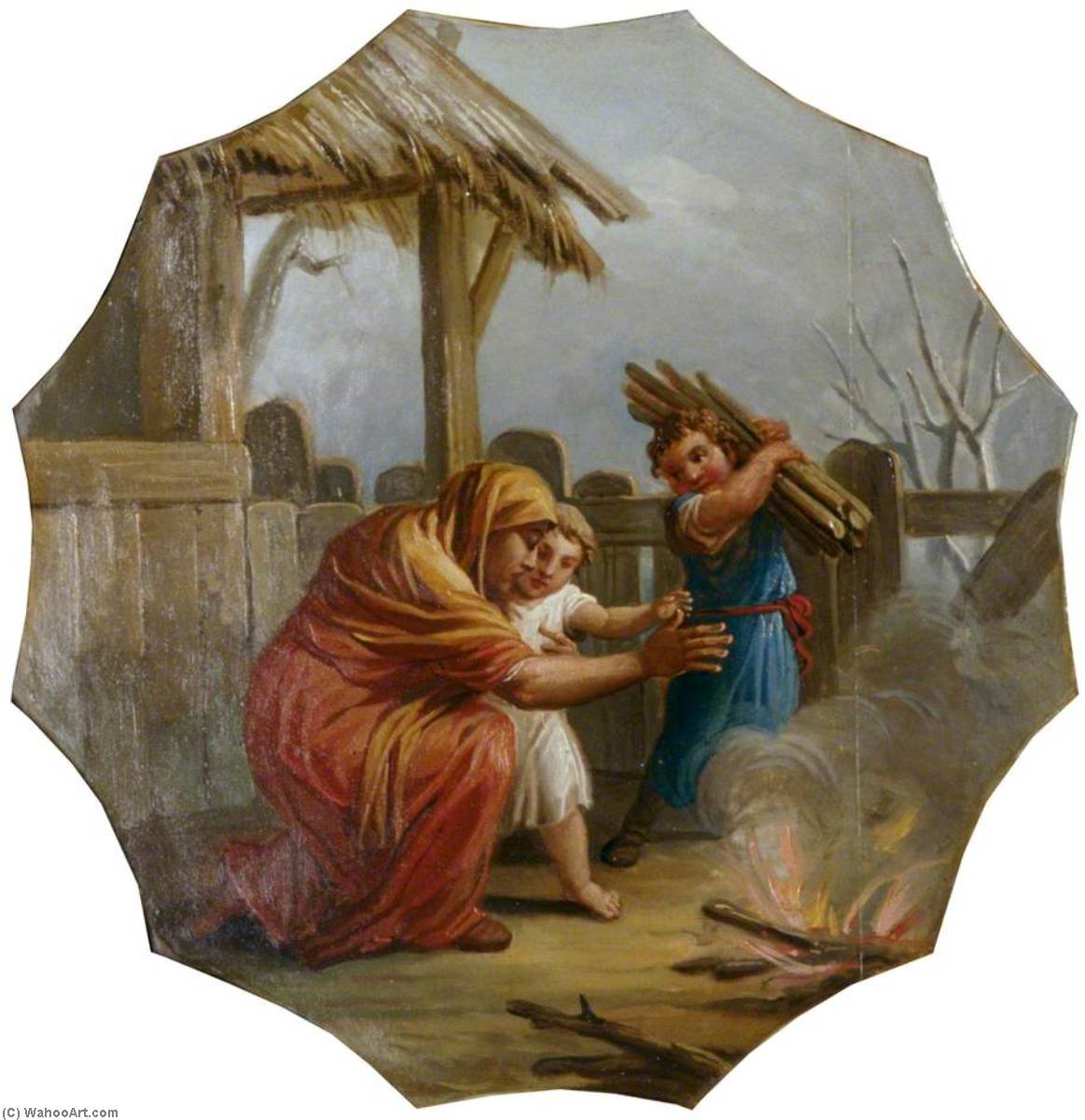
A Winter’s Embrace: Antonio Zucchi's "Winter" (1769)
Antonio Zucchi’s “Winter,” painted in 1769, is more than just a depiction of a snowy landscape; it’s a poignant meditation on family, hardship, and the enduring strength of human connection. This oil painting, measuring 59 x 58 cm, transports us to a rural scene steeped in the quiet dignity of a winter’s day, rendered with a masterful blend of Neoclassical precision and Romantic emotional depth.
The composition centers around a woman, presumably a mother, kneeling before a small child. They are positioned within a modest wooden structure – likely a cottage or farmhouse – its simple lines providing a grounding element to the scene. A young boy stands nearby, diligently carrying firewood, suggesting a shared responsibility and a sense of domestic order amidst the bleakness outside. The background unfolds into a stark winter landscape: bare trees claw at a grey sky, and a blanket of snow covers the ground, creating an atmosphere of both beauty and isolation. The artist’s use of straight lines – defining the architecture and the logs – speaks to a classical sensibility, while the subtle variations in brushstroke and color imbue the scene with a palpable sense of texture and warmth.
Neoclassical Roots & Romantic Undertones
Zucchi's work is firmly rooted in the Neoclassic movement, which sought inspiration from the art and ideals of ancient Greece and Rome. This is evident in the painting’s balanced composition, its emphasis on clarity and order, and its restrained palette dominated by muted browns, greys, and whites. However, “Winter” transcends mere imitation; it possesses a distinctly Romantic quality. The artist doesn't simply record a scene but captures an emotional state – a quiet resilience in the face of adversity. The focus on familial bonds, the vulnerability of the figures, and the evocative portrayal of the winter landscape all contribute to this heightened sense of feeling.
Influenced by artists like Jean-Baptiste van Loo, Zucchi skillfully employed layering techniques – building up color and form through multiple thin applications of oil paint. This creates a rich surface texture, particularly noticeable in the clothing of the figures and the rough grain of the wood. The diffused lighting, suggesting an overcast day, further enhances the painting’s somber mood, while subtle highlights on the child's face draw our attention to his innocence and hope.
Symbolism & Emotional Resonance
Beyond its surface depiction, “Winter” is rich in symbolic meaning. The harsh winter landscape represents challenges, hardship, and perhaps even poverty. Yet, within this bleakness, the family’s connection provides a source of strength and comfort. The mother's act of tending to her child embodies nurturing, sacrifice, and unwavering love. The boy carrying firewood symbolizes responsibility and contribution – essential elements of family life.
The painting evokes a powerful sense of empathy and reminds us of the enduring human capacity for resilience in difficult times. It’s not merely a winter scene; it's a testament to the bonds that sustain us, offering a quiet but profound meditation on the dignity of everyday life.
Historical Context & Legacy
Antonio Zucchi (1726-1795) was a prominent Italian painter and printmaker during the Neoclassical period. He gained recognition for his decorative frescoes, mythological scenes, and ‘veduta’ landscapes – particularly his detailed depictions of classical buildings and ruins. He collaborated extensively with Robert Adam, the influential architect known for his elegant neoclassical designs, contributing to the opulent interiors of grand estates across England.
“Winter” exemplifies Zucchi's ability to seamlessly blend classical principles with Romantic sensibilities. It stands as a poignant reminder of the enduring power of art to capture not only visual reality but also the complex emotions and human experiences that shape our lives. Reproductions of this evocative work continue to resonate with viewers today, offering a glimpse into a bygone era and a timeless celebration of family, love, and resilience.
Related Artworks
Artist Biography
Francis Cotes: A Pioneer of English Pastel
Francis Cotes (1726–1770) stands as a pivotal figure in the burgeoning world of English portraiture, particularly recognized for his innovative use of pastel and his ability to capture fleeting moments of character. Born in London, he was apprenticed to William Faithorne, a painter known for his theatrical group portraits, an experience that undoubtedly shaped his early artistic sensibilities. However, Cotes quickly surpassed his master, developing a distinctly individual style characterized by a remarkable sensitivity to light, texture, and the psychological nuances of his subjects. Unlike the often stiff formality of earlier English portraiture, Cotes’s works possess a vibrant immediacy, reflecting a deep engagement with the sitter's personality and an acute awareness of the visual world around him. His early career was marked by commissions from prominent families, including the Astleys, for whom he created the celebrated “Aged Seven, and her Brother Edward, Aged Five and a Half,” a tender depiction of childhood innocence that remains one of his most beloved works. This painting exemplifies Cotes’s ability to imbue even seemingly simple subjects with profound emotional resonance. He skillfully employed pastel—a medium then considered relatively new in England—to achieve remarkable effects of color and tone, capturing the delicate blush of skin, the shimmer of fabric, and the subtle gradations of light and shadow. Cotes wasn't simply replicating appearances; he was translating observed reality onto canvas with a painterly grace that set him apart from his contemporaries. His use of loose, expressive strokes created a sense of movement and vitality, contributing to the captivating quality of his portraits.Technique and Influences
Cotes’s technical mastery stemmed not only from his innate talent but also from his meticulous study of nature and the works of other artists. He was deeply influenced by the Dutch Masters, particularly Rembrandt, whose use of light and shadow to create dramatic effects is evident in Cotes's portraits. He also admired the work of Anthony van Dyck, whose elegant compositions and psychological insights he sought to emulate. However, unlike Van Dyck’s polished style, Cotes embraced a more informal approach, often depicting his sitters in relaxed poses and capturing them in natural settings. His pastel technique was further refined through experimentation with layering colors and applying them with varying degrees of pressure, allowing him to achieve an astonishing range of tonal values and textures. The resulting portraits are not merely likenesses; they are intimate studies of character, imbued with a palpable sense of life.Notable Works and Commissions
Beyond the iconic “Aged Seven,” Cotes produced a significant body of work that includes numerous portraits of members of the aristocracy and gentry. He painted for prominent figures such as Sir Robert Peel, Lord Charles Townshend, and Lady Mary Wortley Montagu. His commissions were often driven by a desire to capture the sitter’s unique personality and social standing, reflecting the changing tastes of 18th-century England. His work also extended beyond portraiture; he produced landscape paintings and genre scenes, demonstrating his versatility as an artist. The Royal Academy, founded in 1769, recognized Cotes's contributions by electing him as one of its founding members, solidifying his place among the leading artists of his time.Legacy and Historical Significance
Francis Cotes’s legacy lies primarily in his pioneering role in the development of English pastel painting. He demonstrated the medium’s potential for capturing subtle nuances of color and tone, paving the way for future generations of pastel artists. His portraits are admired today not only for their technical brilliance but also for their psychological depth and emotional resonance. Cotes's work represents a shift away from the formal conventions of earlier portraiture, embracing a more intimate and expressive approach that reflected the spirit of the Enlightenment. He is remembered as a key figure in establishing English painting as a distinct and vibrant tradition, leaving an indelible mark on the history of art. His influence can be seen in the works of later artists who followed in his footsteps, solidifying his position as a true innovator and a master of his craft.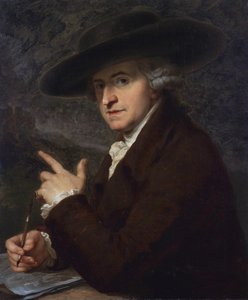
antonio zucchi
1726 - 1795
Quick Facts
- Artistic Movement Or Style: Likely influenced by Van Loo
- Artists Or Movements Influenced By This Artist:
- Chardin
- Greuze
- Artists Who Influenced This Artist: ['Jean Baptiste van Loo']
- Date Of Birth: October 15, 1726
- Full Name: Francoise Duparc
- Nationality: Spanish
- Notable Artworks:
- La tricoteuse
- Man with a sack of nuts
- Place Of Birth: Murcia, Spain
Related Articles
Antonio Zucchi: A Venetian Master of Rococo & Neoclassical Charm
Explore the captivating world of Antonio Zucchi, a Venetian master of Rococo and Neoclassical art. Discover his collaborations with Robert Adam & Angelica Kauffmann, stunning frescoes, and enduring legacy. Learn about collecting Zucchi's works today.

The Enduring Legacy of Oil on Canvas: Technique, History & Aesthetic Impact
Explore the rich history & techniques of oil painting – from Renaissance masters to Impressionism. Discover pigments, layering methods, and why this timeless medium endures. Expert insights for artists & art enthusiasts.

Oil on Canvas: A Historical & Technical Exploration of a Timeless Artistic Medium
Explore the rich history & enduring techniques of oil painting on canvas. Discover the science behind its longevity, conservation practices, and contemporary relevance. Expert insights for art enthusiasts.

The Enduring Power of Painting: A Historical & Contemporary Exploration of Form and Emotion
Explore the rich history & enduring techniques of oil painting with ArtsDot. Discover masterpieces, learn about art collecting, and find authentic handmade reproductions crafted by skilled artists.

The Enduring Legacy of Oil on Canvas: Technique, History & Contemporary Practice
Explore the rich history & enduring techniques of oil painting on canvas. Discover the science behind its longevity, conservation practices, and contemporary relevance. Expert insights for art enthusiasts.