

 Preview
 Send
Send Share
Share
 Details

 Download
 Similars
 X-Ray
X-Ray Diaporama
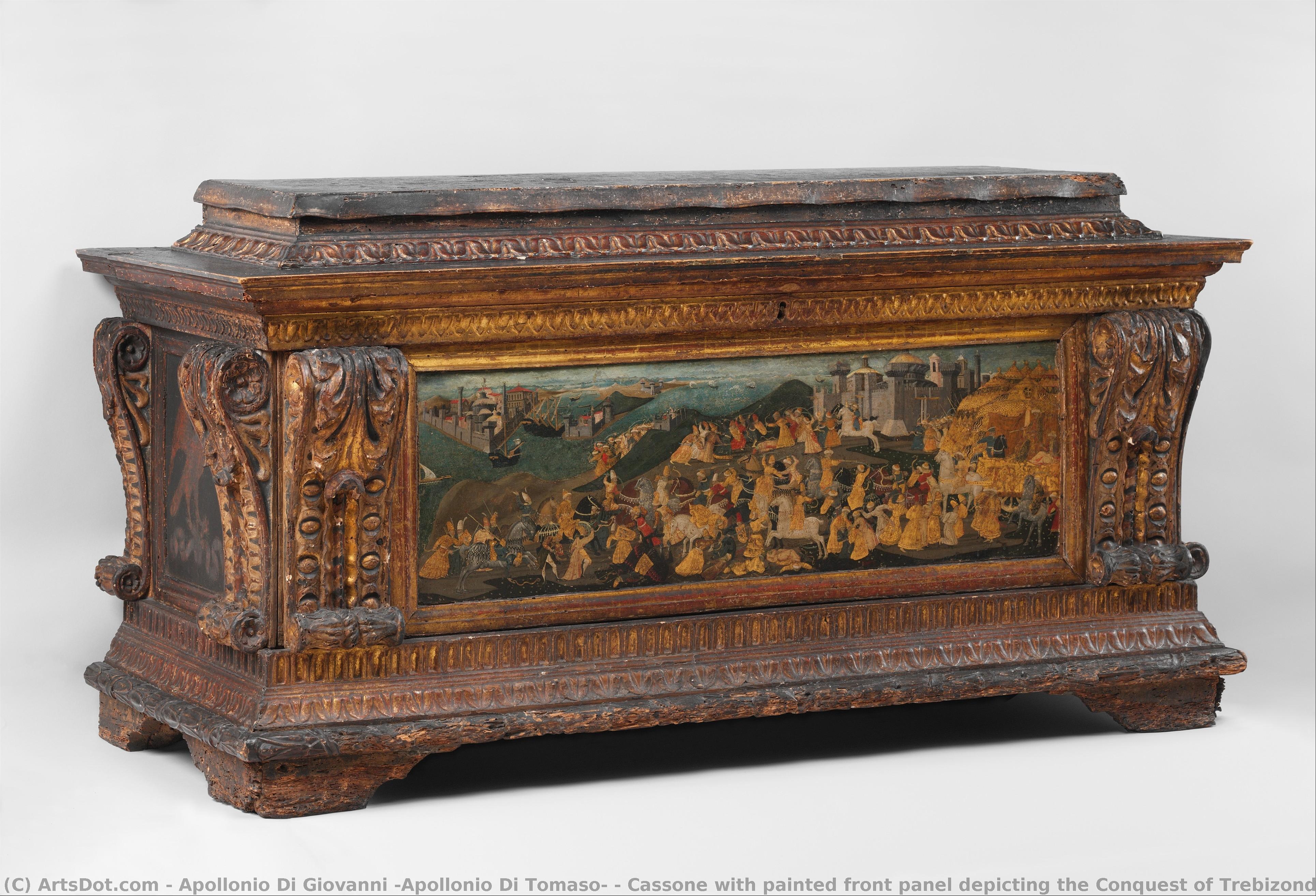
Cassone with painted front panel depicting the Conquest of Trebizond
 Painting
- Renaissance Painting
 1461
1461 100.0 x 196.0 cm
 Metropolitan Museum of Art
 Read More
Purchase a high-resolution, enhanced digital image, far superior to the online preview.
Each file is meticulously prepared by our in-house specialists using advanced tools and expert manual retouching. We ensure every image has exceptional clarity, precise color accuracy, and fine detail.
The final file is delivered via email within 72 hours, optimized for immediate use in professional, editorial, and print environments. This is the same quality trusted by top-tier design studios, publishers, and galleries.
Digital Image
Download a high-resolution file for personal display, printing, and creative projects. ( Buy Print Buy Hand Made Painting)
Included in Every Digital Image Order
Expert Digital Delivery, Guaranteed
When you choose ArtsDot.com, you're not just getting an image - you're receiving a professionally enhanced digital artwork, crafted with precision and backed by a satisfaction guarantee. Here's everything that comes with your order, automatically:

Fast Email Delivery
Your high-resolution digital image file will be emailed to you within 72 hours of ordering - ready for immediate use.

AI-Enhanced Digital File
Your artwork is professionally optimized using advanced AI tools and manual editing, ensuring maximum detail, clarity, and color accuracy.

Free Lifetime Re-Delivery
Accidentally deleted or lost your file? No worries - we'll resend it to you anytime, free of charge.

No Import Fees - Ever
Enjoy your artwork instantly with zero customs, duties, or delivery fees - digital downloads are always tax-free.

Color Accuracy Guarantee
We ensure your digital image reflects the original colors as closely as possible using professional tools and color management.

60-Day Satisfaction Guarantee
If you're not satisfied with your digital image, we'll revise it or refund 100% within 60 days - no questions asked.

100% Money-Back Guarantee
Not satisfied? Get a full refund within 60 days of receiving your digital file - no questions asked.

Bulk Order Discounts
Buy 3 images, save 10% - Buy 5, save 15% - Buy 10+, save 20%. Great for creative projects, galleries, and agencies.
Collectible Description
Cassone with Painted Front Panel Depicting the Conquest of Trebizond
This magnificent cassone – a lavish chest crafted in Florence around 1461 – stands as a testament to the artistic fervor of the High Renaissance and offers a fascinating glimpse into the cultural landscape of fifteenth-century Italy. Purchased by Stefano Bardini in 1913, it’s remarkable not only for its survival intact but also for its daring subject matter: the decisive victory of Mehmed II over Constantinople – the final bastion of Byzantium – marking the end of an era and symbolizing the triumph of Ottoman power over Christian dominion. The cassone's significance extends far beyond mere decorative grandeur; it’s a meticulously crafted emblem of status and wealth, reflecting the aspirations of its aristocratic patrons. Its construction utilizes poplar wood reinforced with linen, showcasing exceptional craftsmanship typical of Florentine workshops during this period. However, recent scientific analysis has challenged initial assumptions about its provenance, revealing that fragments of the chest are not integral components – a groundbreaking discovery that necessitates a reconsideration of our understanding of artistic attribution and historical narrative. The painted front panel itself is executed in tempera and gilded gesso with meticulous attention to detail, embodying the stylistic hallmarks of Apollonio di Giovanni’s workshop alongside Marco del Buono Giamberti. This collaborative effort produced some of Florence's most celebrated decorative artworks, prioritizing vibrant color palettes and expressive forms that captured the spirit of their time. The scene depicts Constantinople besieged by Ottoman forces, skillfully rendered with a panoramic perspective that incorporates recognizable landmarks—the Hagia Sophia, Saint Irene’s Church, and the imposing Galata Tower—demonstrating an impressive grasp of topographical accuracy. Beyond its visual splendor, the panel's symbolism is profound. The depiction of Mehmed II’s conquest underscores the shifting geopolitical realities of Europe during the Renaissance, highlighting the ascendancy of Islam over Christendom. Furthermore, the inclusion of emblems – notably the Strozzi falcon perched atop a caltrop—adds layers of meaning rooted in Florentine heraldry and conveying messages about family lineage and protection. The meticulous tooling and gilding of the top lid’s cloth runner further enhance its aesthetic impact, mimicking the luxurious fabrics favored by aristocratic households. The interior of the cassone retains traces of original stenciled patterns simulating patterned fabric—a technique that speaks to the widespread use of decorative motifs in Florentine interiors during this era. Although much of the paint has faded over time, the design remains legible, offering a tangible connection to the artistic traditions of Renaissance Florence and reminding us of the enduring power of visual storytelling to convey complex historical narratives. Its current location at The Metropolitan Museum of Art allows visitors to appreciate this extraordinary artwork in its rightful context—a symbol of Florentine artistry and cultural heritage preserved for generations to come.Related Artworks
Artist Biography
A Florentine Master of Narrative: Apollonio di Giovanni
Apollonio di Giovanni di Tomaso, born in Florence around 1415-1417 and passing away in 1465, stands as a compelling figure within the Early Renaissance. While perhaps not possessing the household name recognition of contemporaries like Donatello or Masaccio, Apollonio carved out a significant niche for himself as a highly sought-after painter and illuminator, particularly celebrated for his exquisitely decorated *cassoni* – wedding chests that served as both functional objects and vibrant expressions of Florentine life and ideals. His workshop was arguably the most prolific and fashionable in Florence during its active years, producing over 300 cassoni between 1446 and 1465 alone, a testament to the demand for his artistry. He wasn’t merely replicating designs; he was crafting narratives, capturing contemporary fashions, and reflecting the burgeoning humanist spirit of the era.Early Life and Workshop Practice
Details regarding Apollonio's early training remain somewhat elusive, but it is known that he joined Florence’s doctors and apothecaries’ guild in 1442 – a common practice for artists at the time – before becoming a full member of the painters’ guild, the Compania di San Luca, in 1443. His most enduring professional relationship began around 1446 with Marco del Buono Giamberti. This partnership proved remarkably successful; together they established a workshop that dominated the cassone market for nearly two decades. The division of labor within the workshop is still debated by scholars, but it’s generally accepted that Apollonio was primarily responsible for the figurative painting, while Del Buono oversaw other aspects of production and potentially contributed to designs. The sheer volume of work emanating from their studio suggests a highly organized system involving numerous assistants and craftsmen, allowing them to cater to a diverse clientele with varying tastes and budgets.Themes and Techniques: A Renaissance Mirror
Apollonio’s cassoni are not simply decorative; they offer invaluable insights into the cultural preoccupations of 15th-century Florence. He frequently depicted scenes drawn from classical mythology – tales of Troy, stories of heroic deeds, and allegorical representations of love and virtue. However, what sets Apollonio apart is his masterful integration of contemporary elements. His figures are adorned in the latest Florentine fashions, architectural backgrounds reflect the city’s evolving urban landscape, and details often allude to specific events or patrons. His technique is characterized by a delicate touch, vibrant color palettes, and an emphasis on graceful forms. He skillfully employed tempera paint on wood panels, achieving a luminous quality that enhanced the narrative clarity of his compositions. The influence of painters like Marco del Buono Giamberti is evident in Apollonio’s work, particularly in the refined draftsmanship and attention to detail. He also demonstrated considerable skill as an illuminator, producing beautifully rendered manuscripts that showcase his mastery of line and color.Major Achievements and Lasting Legacy
While numerous cassoni attributed to Apollonio survive, several works stand out as particularly representative of his artistic prowess. The *Cassone with painted front panel depicting the Conquest of Trebizond* (1416) is a prime example of his ability to depict contemporary historical events with both accuracy and artistry. The chest commemorates a significant military victory for Florence, transforming a political event into a visually compelling narrative. Other notable works include panels illustrating scenes from Petrarch’s *Triumphs*, showcasing his engagement with humanist literature. Perhaps most intriguing is Apollonio's connection to the earliest surviving tarot decks. He and Del Buono are now credited with creating what is known as the “Estensi” deck, a masterpiece of illuminated playing cards that offers a fascinating glimpse into Renaissance symbolism and iconography. Apollonio di Giovanni’s legacy lies not in groundbreaking innovation but in his exceptional skill at synthesizing existing artistic traditions and adapting them to meet the demands of a sophisticated clientele. He was a master craftsman who captured the spirit of his age, leaving behind a body of work that continues to captivate and inform our understanding of Renaissance Florence.Historical Significance
Apollonio di Giovanni’s importance extends beyond the aesthetic qualities of his paintings. His cassoni provide invaluable documentation of Florentine material culture – clothing styles, furniture design, architectural trends – offering a unique window into daily life during the 15th century. His workshop's success also highlights the growing commercialization of art and the increasing importance of patronage in Renaissance society. The demand for his work demonstrates the rising affluence of Florence’s merchant class and their desire to express their status through luxurious possessions. Furthermore, his involvement with the creation of the Estensi tarot deck adds another layer of intrigue to his biography, suggesting a broader intellectual curiosity and engagement with esoteric traditions. While often overshadowed by more celebrated artists, Apollonio di Giovanni remains a crucial figure in understanding the artistic landscape of Early Renaissance Florence – a testament to the power of narrative, craftsmanship, and the enduring appeal of beauty.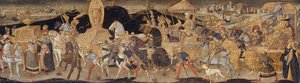
apollonio di giovanni (apollonio di tomaso)
1416 - 1465 , Italy
Quick Facts
- Artistic Movement Or Style: Renaissance Sculpture
- Date Of Birth: Florence, Italy (1416)
- Date Of Death: 1465
- Full Name: Apollonio di Giovanni di Tommaso
- Nationality: Italian
- Notable Artworks: ['Cassone with painted front panel depicting the Conquest of Trebizond']
- Place Of Birth: Florence

