 Preview
 Send
Send Share
Share
 Details

 Download
 Similars
 X-Ray
X-Ray Diaporama
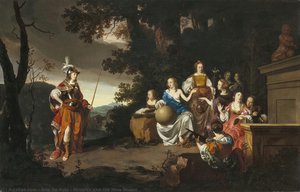
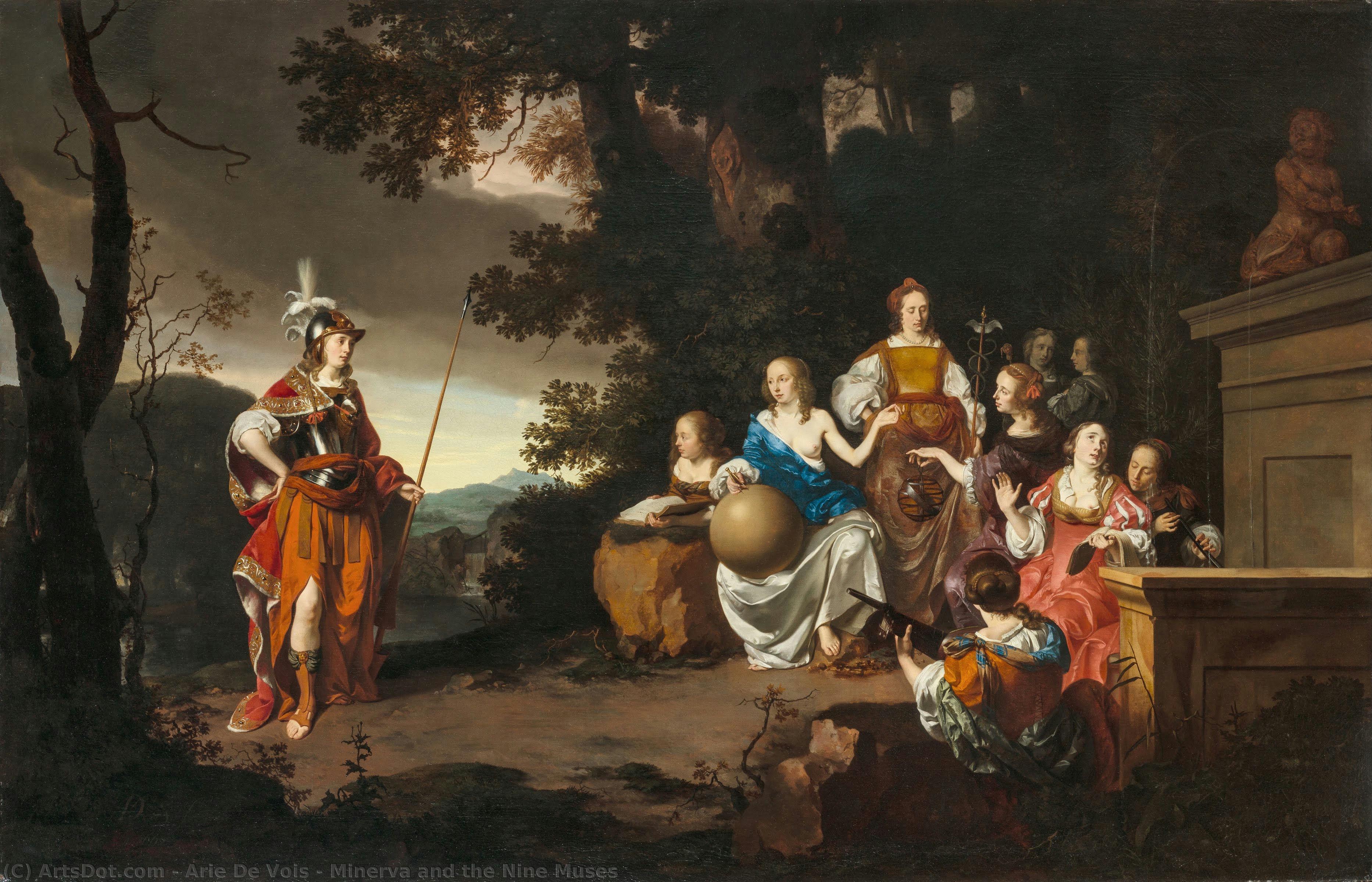
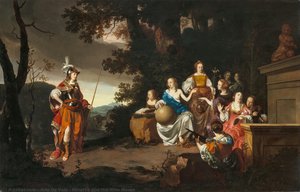
Minerva and the Nine Muses


 Read More
Hand Made Oil Reproduction
Hand-painted oil on canvas in your size and frame, made to order by our artists. ( Buy Print Buy Image)




































Pick from our preset sizes that match the artwork's original proportions.

You may enter your own dimensions to fit a specific frame or space. If your selected size does not match the original image's proportions, we will either crop the artwork or extend the painting with additional hand-painted elements. A digital mockup will be sent for your approval before production begins.
Please note that the on-screen preview does not reflect the actual cropping or extension. Only the mockup will accurately show the final composition.
While custom sizes are available, we recommend selecting a dimension from the predefined list to preserve the original proportions.
After order, ArtsDot.com team will email client for instructions and provide a mockup preview
Worldwide Delivery () in 3/4 weeks instead of standard 5 weeks. (17 August). No compromise on quality.

Free Worldwide Express Shipping

High-Quality Linen Canvas

Full Shipping Insurance

Customs Tax Refund Guarantee

True Color Matching Guarantee

60-Day Return Policy (Defects Only)

100% Money-Back Guarantee

Bulk Discount Offer
 Glass option is only available in size under 110 CM

Minerva and the Nine Muses
Reproduction Medium
Reproduction Size
-


Total Price
$ 263
Artwork Description
Related Artworks
Artist Biography
A Life Captured in Shadow and Light
The name Arie de Vois resonates within the annals of the Dutch Golden Age as a poignant symbol of artistic brilliance interrupted by the fragility of life. Born in Leiden around 1632, De Vois emerged during an era of unparalleled creative explosion, a time when the burgeoning merchant classes of the Netherlands sought to immortalize their status through the medium of oil and canvas. While his biographical timeline is marked by a certain tragic brevity, his presence in the art historical record remains indelible. As the son of Alewijn de Vois, an organist at the Pieterskerk in Leiden, he was raised amidst the profound musical and spiritual textures of his home city, a setting that likely nurtured his early sensitivity to atmosphere and rhythm.
Though some accounts suggest a life cut short in his youth, other historical records point to a more enduring, albeit complex, career that extended into the latter half of the 17th century. This duality adds a layer of mystery to his legacy, suggesting an artist whose influence may have lingered long after his initial period of activity. His journey through the artistic hubs of Utrecht and Leiden allowed him to absorb the very essence of Dutch mastery, weaving together the technical rigor of his mentors with a personal, serene elegance that would become his hallmark.
The Mastery of Influence and Technique
To understand the soul of De Vois’s work, one must look toward the giants upon whose shoulders he stood. His training was a tapestry of the finest instruction available in the Low Countries. In Utrecht, he became a pupil of Nikolaus Knüpfer, a master who also shared his classroom with the legendary Jan Steen. From Knüpfer, De Vois likely inherited a command over composition and the ability to imbue even the simplest subject with narrative weight. Upon returning to Leiden, his studies under Abraham van den Tempel further refined his aesthetic, steering him toward a more polished and sophisticated approach to portraiture.
The influence of Rembrandt Harmensz van Rijn is perhaps the most palpable thread in De Vois’s stylistic fabric. One can observe the echoes of the great master in De Vois’s meticulous use of chiaroscuro—that dramatic, breathing interplay between deep shadow and piercing light. However, where Rembrandt often embraced a rugged, textured spontaneity, De Vois moved toward a more restrained and tranquil palette. He favored muted tones of ochre, umber, and sienna, creating atmospheres of contemplative calm. His technique was not merely about the replication of form, but about the capture of a psychological state, using light to draw the viewer into the quiet, inner lives of his subjects.
Legacy of the Serene Portrait
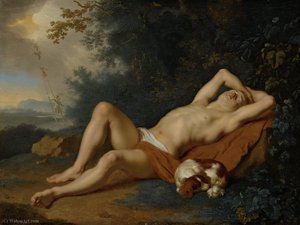
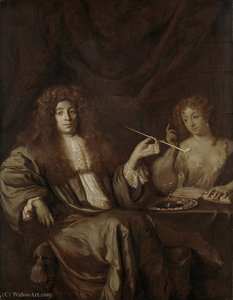
The surviving works of Arie de Vois serve as intimate windows into the social and moral fabric of 17th-century Dutch life. His portraits were far more than mere documentation; they were carefully constructed statements of identity, character, and lineage. In pieces such as Jacob Dream, we encounter a profound sense of peace, where the subtle rendering of emotion suggests a subject lost in deep thought. Conversely, works like the Portrait of Hadriaan Beverland with a Prostitute demonstrate his ability to navigate much more complex and provocative psychological landscapes, utilizing juxtaposition to create tension and narrative intrigue.
De Vois’s significance lies in his ability to balance the formal requirements of the Dutch Guild of St. Luke—of which he was an active and esteemed member, even serving as dean—with a deeply personal artistic voice. His career, marked by both professional prestige and the quietude of his compositions, represents a vital branch of the Golden Age tradition. He remains a master of the understated, an artist who proved that the most profound human truths are often found not in grand gestures, but in the softest light falling across a face, or the silent gaze of a sitter caught in a moment of eternal reflection.
arie de vois
1632 - 1635 , Netherlands
Quick Facts
- Artistic Movement Or Style: Dutch Golden Age Art
- Date Of Birth: Leiden, Netherlands (1632)
- Full Name: Arie de Vois
- Nationality: Dutch
- Notable Artworks:
- Jacob Dream
- Portrait of Hadriaan Beverland with a Prostitute
- Place Of Birth: Leiden