 Preview
 Send
Send Share
Share
 Details

 Download
 Similars
 X-Ray
X-Ray Diaporama
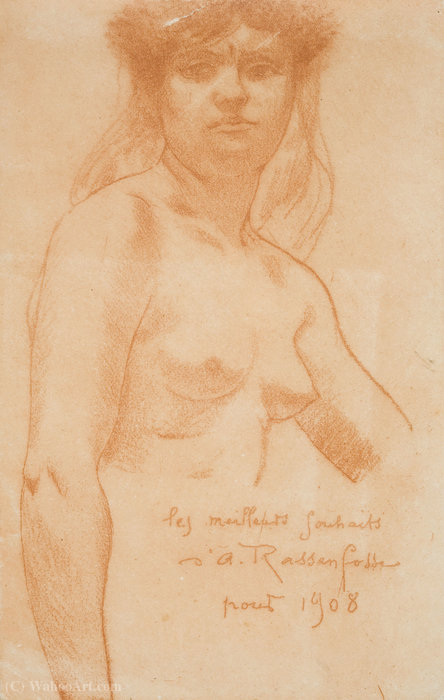
(14 x 9 CM) (1908)
 Read More
Hand Made Oil Reproduction
Hand-painted oil on canvas in your size and frame, made to order by our artists. ( Buy Print Buy Image)




































Pick from our preset sizes that match the artwork's original proportions.

You may enter your own dimensions to fit a specific frame or space. If your selected size does not match the original image's proportions, we will either crop the artwork or extend the painting with additional hand-painted elements. A digital mockup will be sent for your approval before production begins.
Please note that the on-screen preview does not reflect the actual cropping or extension. Only the mockup will accurately show the final composition.
While custom sizes are available, we recommend selecting a dimension from the predefined list to preserve the original proportions.
After order, ArtsDot.com team will email client for instructions and provide a mockup preview
Worldwide Delivery () in 3/4 weeks instead of standard 5 weeks. (23 August). No compromise on quality.

Free Worldwide Express Shipping

High-Quality Linen Canvas

Full Shipping Insurance

Customs Tax Refund Guarantee

True Color Matching Guarantee

60-Day Return Policy (Defects Only)

100% Money-Back Guarantee

Bulk Discount Offer
 Glass option is only available in size under 110 CM

(14 x 9 CM) (1908)
Reproduction Medium
Reproduction Size
-


Total Price
$ 263
Related Artworks
Artist Biography
The Soul in the Line: The Life and Legacy of Armand Rassenfosse
Armand Rassenfosse stands as a testament to artistic achievement born from self-discovery and nurtured by familial heritage. Largely unrecognized during his lifetime, this Belgian graphic artist carved out a distinctive path through the Symbolist movement, achieving particular renown for his breathtaking illustrations of Charles Baudelaire’s Les Fleurs du Mal. His legacy resides not merely in quantity but in quality—in images imbued with profound emotion and executed with meticulous technical skill. Born in Liège on August 6th, 1862, Rassenfosse's upbringing instilled within him a deep appreciation for decorative arts and craftsmanship. As a descendant of a family involved in the trade of crystal, porcelain, bronze, and oriental rugs, he was initially destined for a conventional business career, yet his spirit was irrevocably drawn to the nuances of the visual arts.
The trajectory of Rassen-fosse's life changed during his secondary education years in Namur. It was here that his passion for art ignited, fostered by connections with influential figures within the Liège Academy of Fine Arts. His fascination began specifically with etching, spurred by a transformative encounter with the collection of Félicien Rops. This meeting served as a formative influence that would permeate his entire oeuvre, planting the seeds of a Symbolist sensibility. Demonstrating remarkable tenacity and ingenuity, Rassenfosse honed his skills independently, often experimenting with rudimentary tools to develop a distinctive style characterized by subtle tonal gradations and expressive linework. By 1882, he was already contributing drawings signed under the pseudonym “zig” to the satirical journal Le Frondeur, showcasing a burgeoning talent for capturing complex, often biting, ideas through visual wit.
Mastery of Technique and Symbolist Vision
While his early years were marked by self-taught experimentation, Rassenfosse eventually embraced formal training, immersing himself in the artistic traditions of his time. His technical repertoire was remarkably diverse, ranging from the delicate precision of soft ground etching to the experimental warmth of pyrography—a decorative technique where a line drawing is burned into wood. This versatility allowed him to navigate the boundaries between fine art and the decorative arts, a skill likely inherited from his family's mercantile background. His work often danced on the edge of the erotic and the ethereal, a hallmark of the Symbolist movement which sought to represent ideas and emotions through metaphorical imagery rather than literal depiction.
His professional journey was deeply intertwined with the printing world of Liège. In 1887, Rassenfosse began submitting work to August Bénard’s printing house, a collaboration that would yield many of his most enduring pieces. Although he occasionally viewed these commissions as routine, they ultimately produced some of the finest examples of graphic art from the late 19th and early 20th centuries. His ability to translate the dark, decadent poetry of Baudelaire into visual form remains his greatest triumph. Through his mastery of the etching needle, he captured the tension between beauty and decay, creating a visual language that resonated with the melancholic and mysterious spirit of the era.
Historical Significance and Artistic Enduring Spirit
The significance of Armand Rassenfosse lies in his ability to elevate the medium of printmaking to the heights of poetic expression. He was not merely an illustrator but a visual poet who understood that the texture of the paper and the depth of the ink could convey as much meaning as the subject matter itself. His contributions to the Belgian art scene helped solidify the importance of graphic arts within the broader Symbolist movement, bridging the gap between mass-produced illustration and high-concept fine art.
Reflecting on his life's work, several key elements define his contribution to art history:
- The Synthesis of Tradition and Innovation: He successfully merged his inherited knowledge of decorative craftsmanship with cutting-edge printmaking techniques.
- Literary Symbiosis: His profound connection to the works of Baudelaire created a definitive visual companion to one of literature's most important poetic collections.
- Technical Versatility: From the precision of etching to the experimental nature of pyrography, his range expanded the possibilities of graphic media.
- Symbolist Depth: He moved beyond mere representation to explore the psychological and atmospheric depths characteristic of the Symbolist era.
Though he passed away in 1934, Rassenfosse's influence persists in the study of Belgian graphic art. He remains a quiet master, an artist who found extraordinary beauty in the subtle interplay of shadow and light, leaving behind a body of work that continues to haunt and enchant the modern viewer.
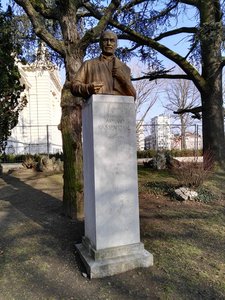
Armand Rassenfosse
1862 - 1934
Quick Facts
- Artistic Movement Or Style: Symbolism
- Artists Or Movements Influenced By This Artist: ['Romanticism']
- Artists Who Influenced This Artist: ['Félicien Rops']
- Date Of Birth: 1862
- Date Of Death: 1934
- Full Name: Armand Rassenfosse
- Nationality: Belgian
- Notable Artworks:
- Les Fleurs du Mal Illustrations
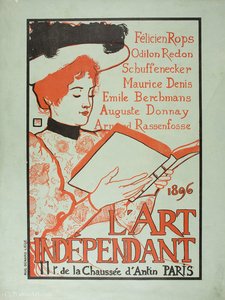
- L'Art Independant
- (50 x 39 CM)
- Place Of Birth: Liège, Belgium