

 Preview
 Send
Send Share
Share
 Details

 Download
 Similars
 X-Ray
X-Ray Diaporama
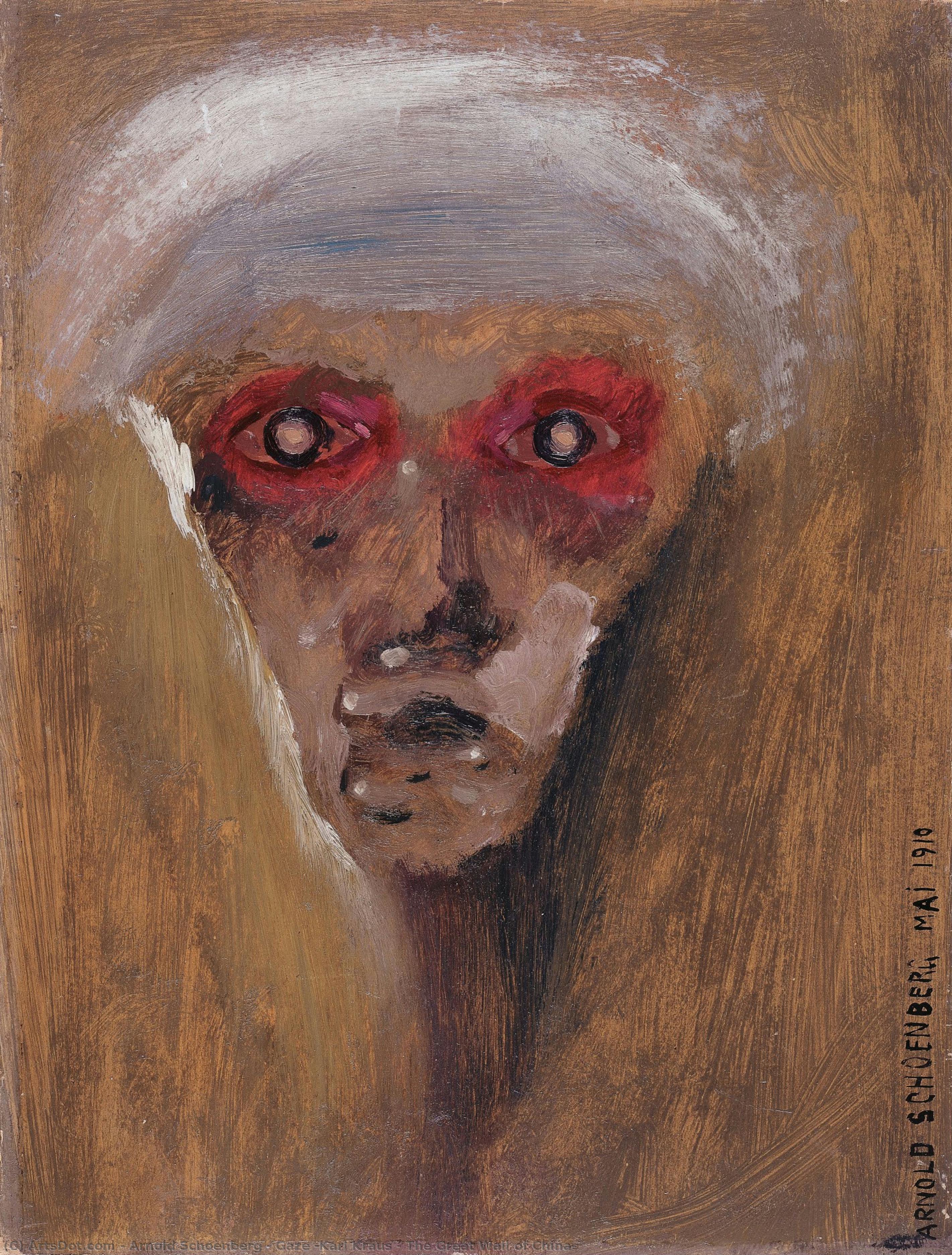
Gaze (Karl Kraus – The Great Wall of China)
 Oil On Board
- Expressionist Abstraction
 1910
1910- 19th Century
 24.0 x 32.0 cm
 Arnold Schönberg Center
 Read More
Purchase a high-resolution, enhanced digital image, far superior to the online preview.
Each file is meticulously prepared by our in-house specialists using advanced tools and expert manual retouching. We ensure every image has exceptional clarity, precise color accuracy, and fine detail.
The final file is delivered via email within 72 hours, optimized for immediate use in professional, editorial, and print environments. This is the same quality trusted by top-tier design studios, publishers, and galleries.
Digital Image
Download a high-resolution file for personal display, printing, and creative projects. ( Buy Print Buy Hand Made Painting)
Included in Every Digital Image Order
Expert Digital Delivery, Guaranteed
When you choose ArtsDot.com, you're not just getting an image - you're receiving a professionally enhanced digital artwork, crafted with precision and backed by a satisfaction guarantee. Here's everything that comes with your order, automatically:

Fast Email Delivery
Your high-resolution digital image file will be emailed to you within 72 hours of ordering - ready for immediate use.

AI-Enhanced Digital File
Your artwork is professionally optimized using advanced AI tools and manual editing, ensuring maximum detail, clarity, and color accuracy.

Free Lifetime Re-Delivery
Accidentally deleted or lost your file? No worries - we'll resend it to you anytime, free of charge.

No Import Fees - Ever
Enjoy your artwork instantly with zero customs, duties, or delivery fees - digital downloads are always tax-free.

Color Accuracy Guarantee
We ensure your digital image reflects the original colors as closely as possible using professional tools and color management.

60-Day Satisfaction Guarantee
If you're not satisfied with your digital image, we'll revise it or refund 100% within 60 days - no questions asked.

100% Money-Back Guarantee
Not satisfied? Get a full refund within 60 days of receiving your digital file - no questions asked.

Bulk Order Discounts
Buy 3 images, save 10% - Buy 5, save 15% - Buy 10+, save 20%. Great for creative projects, galleries, and agencies.
Gaze: A Portrait of Anxiety in Schoenberg's 'The Great Wall of China'
Arnold Schoenberg’s “Gaze,” painted in 1910, is more than just a striking visual; it’s a haunting echo of the anxieties simmering beneath the surface of early 20th-century Vienna. This small oil on board – measuring a mere 24 x 32 cm – captures a moment of profound unease, born from Karl Kraus's controversial lecture, “Die chinesische Mauer” (The Great Wall of China). The lecture itself, delivered in 1910 and inspired by the brutal murder of Elsie Sigel in Chinatown, New York, exposed the dark undercurrents of societal anxieties surrounding immigration, violence, and the perceived ‘other.’ Schoenberg, deeply embedded within Vienna’s artistic circle – a key figure alongside Alban Berg and Anton Webern – responded to this unsettling narrative with an image that refuses easy interpretation.
- Subject & Composition: The painting centers on a distorted face, rendered in jarring hues of red and blue. The subject's gaze is intensely focused, almost predatory, immediately drawing the viewer into its unsettling presence.
- Color Palette: The deliberate use of vibrant red and blue creates an immediate sense of discordance. Red, traditionally associated with passion and danger, amplifies the feeling of threat, while blue evokes a chilling emptiness or perhaps a melancholic reflection on loss.
- Background Detail: A stark yellow wall serves as a backdrop, further isolating the figure and intensifying the overall atmosphere of alienation and confinement.
Historical Context & The Influence of Kraus
Understanding “Gaze” requires acknowledging its genesis within Vienna’s intellectual ferment. Schoenberg was deeply influenced by Karl Kraus's lecture, which interrogated the complexities of race relations and social justice in a rapidly changing world. Kraus’s work challenged prevailing notions of European superiority and exposed the vulnerability of marginalized communities. The murder of Elsie Sigel, a case that captivated the press, became a potent symbol of these anxieties. Schoenberg wasn’t simply depicting a face; he was visually translating the unsettling questions raised by Kraus's words – questions about identity, power, and the potential for violence.
The painting’s creation coincided with Schönberg’s involvement in organizing concerts for the Academic Association for Literature and Music, further cementing his position within Vienna’s artistic elite. This context highlights the work’s engagement with contemporary social and political debates, making it a valuable document of its time.
Technique & Artistic Style
"Gaze" exemplifies Schoenberg's evolving style in the early 20th century. While rooted in his earlier expressionist tendencies – particularly evident in the distorted features and unsettling color palette – the painting demonstrates a growing interest in abstraction. The deliberate manipulation of form and color, rather than a realistic representation, suggests a move towards exploring emotional states through purely visual means. Schoenberg’s use of oil on board allows for rich textures and subtle gradations of tone, contributing to the painting's overall sense of depth and complexity.
The technique employed is characterized by bold brushstrokes and a deliberate lack of blending, creating a fragmented and unsettling effect that mirrors the anxieties conveyed in the subject matter. The surface texture itself adds another layer of visual interest, inviting closer inspection and encouraging viewers to confront the painting’s disturbing imagery.
Symbolism & Emotional Impact
Ultimately, “Gaze” is a powerfully evocative work that transcends its historical context. The distorted face can be interpreted as representing not just an individual but also the anxieties of a society grappling with rapid change and unsettling truths. The intense gaze itself suggests a sense of judgment, accusation, or perhaps even madness. It’s a portrait of psychological distress, rendered in a visually arresting manner. This reproduction offers a unique opportunity to own a piece of art that continues to provoke thought and emotion over a century later.
Related Artworks
Artist Biography
early life and musical beginnings
arnold schoenberg, an austrian-american composer, was born on september 13, 1874, in vienna, austria. his early life was marked by a humble beginning, with his father being a shoe-shopkeeper. despite this, schoenberg's innate passion for music led him to largely self-educate himself in the field.- schoenberg explored film music and wrote more tonal music, completing his chamber symphony no. 2 in 1939.
- he satirized fascist tyrants in ode to napoleon (1942), after byron.
- post-war vienna offered him honorary citizenship, but he was ill, as depicted in his string trio (1946).
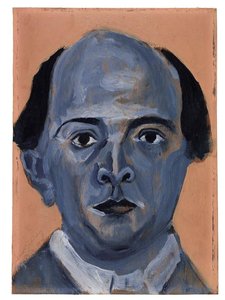
arnold schoenberg
1874 - 1951 , Austria
Quick Facts
- Artistic Movement Or Style: Twelve-tone technique; Expressionism
- Artists Or Movements Influenced By This Artist:
- Anton Webern
- Alban Berg
- Artists Who Influenced This Artist:
- Johannes Brahms
- Richard Wagner
- Date Of Birth: September 13, 1874
- Date Of Death: 1951
- Full Name: Arnold Schoenberg
- Nationality: Austrian-American
- Notable Artworks:
- Suite, op. 29
- Music Typewriter
- Staffliner
- Place Of Birth: Vienna, Austria

