 Preview
 Send
Send Share
Share
 Details

 Download
 Similars
 X-Ray
X-Ray Diaporama
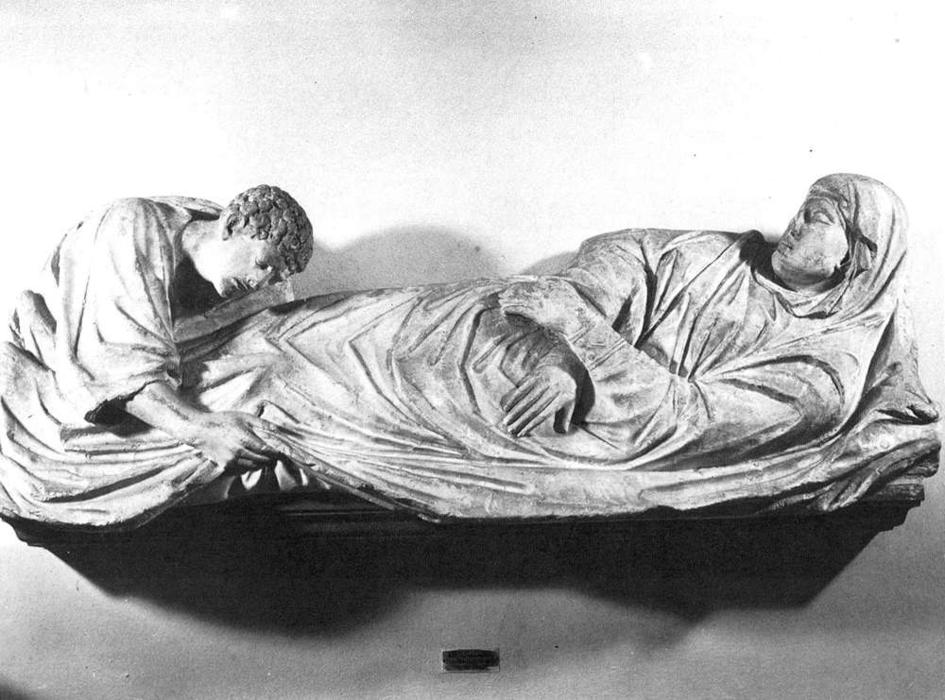
Dormition of the Virgin


 Read More
Hand Made Oil Reproduction
Hand-painted oil on canvas in your size and frame, made to order by our artists. ( Buy Print Buy Image)




P118B $10

P118H $10

P118W $10

P438Z $10

P508JH $12

P508YH $12

P805H $10

P805Z $10

P919BZ $10

P919G $10

P919XJ $10

P959ZH $10

P968JZ $12

W106C $8

W218G $10

W218JH $8

W218Y $10

W307PJ $10

W316G $10

W316PJ $8

W316Y $10

W398PJ $8

W4111J $10

W500HY $15

W500JH $15

W692G $12

W849H $8

W940BG $15

W953PJ $8




Pick from our preset sizes that match the artwork's original proportions.

You may enter your own dimensions to fit a specific frame or space. If your selected size does not match the original image's proportions, we will either crop the artwork or extend the painting with additional hand-painted elements. A digital mockup will be sent for your approval before production begins.
Please note that the on-screen preview does not reflect the actual cropping or extension. Only the mockup will accurately show the final composition.
While custom sizes are available, we recommend selecting a dimension from the predefined list to preserve the original proportions.
After order, ArtsDot.com team will email client for instructions and provide a mockup preview
Worldwide Delivery () in 3/4 weeks instead of standard 5 weeks. (17 August). No compromise on quality.

Free Worldwide Express Shipping

High-Quality Linen Canvas

Full Shipping Insurance

Customs Tax Refund Guarantee

True Color Matching Guarantee

60-Day Return Policy (Defects Only)

100% Money-Back Guarantee

Bulk Discount Offer
 Glass option is only available in size under 110 CM

Dormition of the Virgin
Reproduction Medium
Reproduction Size
-


Total Price
$ 288
Artwork Description
The Serene Descent: An Exploration of Arnolfo di Cambio’s Dormition of the Virgin
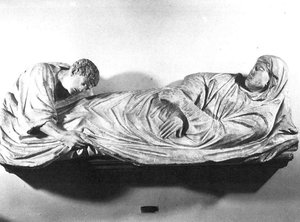
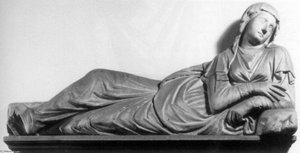
Within the hushed reverence of early Italian Gothic art resides a profound meditation on faith, loss, and divine grace – Arnolfo di Cambio's “Dormition of the Virgin,” a marble sculpture dating back to 1296. This isn’t merely a depiction of a religious event; it’s a carefully constructed tableau designed to evoke a deep sense of solemnity and spiritual contemplation. Originally conceived as part of a larger decorative scheme for Florence Cathedral, this fragment – now housed in the Museum of the Cathedral – offers a poignant glimpse into the artistic sensibilities of a pivotal figure bridging the medieval and Renaissance eras.
Arnolfo di Cambio, born in Colle Val d’Elsa around 1245 and passing away in 1310, was an architect and sculptor whose influence resonated throughout Florence. His career spanned decades, marked by commissions for prominent religious institutions and the creation of monumental tombs. He began as a lead assistant to Nicola Pisano, absorbing the master's innovative techniques while simultaneously forging his own distinctive style – one characterized by a remarkable blend of Byzantine formality and burgeoning naturalism. The “Dormition” exemplifies this evolution, showcasing Arnolfo’s ability to capture both the stylized elegance of his predecessors and the nascent humanism that would define the Renaissance.
A Study in Relief: Technique and Material
The sculpture is a testament to the mastery of relief carving in marble – a technique demanding immense skill and patience. Arnolfo meticulously removed stone, layer by layer, to create the figures’ forms, employing chisels, hammers, and other specialized tools. The resulting surface exhibits a captivating interplay of textures: smooth, polished areas reflect light with an almost ethereal glow, while shadowed recesses reveal the rougher grain of the marble, lending depth and volume to the scene. The choice of marble itself – known for its durability and capacity for intricate detail – speaks volumes about Arnolfo’s ambition and his desire to create a work that would endure through the ages.
Notably, the sculpture was originally part of a larger composition, intended to adorn the façade of Florence Cathedral. The surviving fragment retains traces of this original context, hinting at the grandeur of the entire scheme. The meticulous attention to detail – from the folds of the Virgin’s drapery to the subtle expressions on the faces of the assembled Apostles – underscores Arnolfo's commitment to realism and his desire to imbue the scene with a palpable sense of emotion.
Symbolism and Emotional Resonance
The “Dormition” is rich in symbolic meaning, reflecting key tenets of Christian theology. The event itself—the Virgin Mary’s peaceful passing into heaven—represents not an ending but a transition to eternal life. The kneeling Apostle, rendered with poignant grief, embodies the universal human experience of loss and mourning. His posture – bent low, his hands clasped in prayer – conveys a sense of profound sorrow and devotion. The central figure of the Virgin Mary, reclining serenely on the bed, exudes an aura of tranquility and acceptance, suggesting a serene departure from earthly concerns.
The inclusion of the *animula*—the soul of the Virgin taking the form of a child—is another significant symbolic element. It represents the promise of resurrection and eternal salvation. The overall composition evokes feelings of peace, reverence, and solemnity – inviting viewers to contemplate themes of faith, mortality, and the mysteries of the divine.
A Legacy in Stone: Context and Influence
Arnolfo di Cambio’s “Dormition of the Virgin” stands as a pivotal work in the transition from Gothic to Renaissance art. Its influence can be seen in subsequent generations of sculptors, who drew inspiration from its masterful use of form, texture, and symbolism. The sculpture's composition—characterized by a balanced arrangement of figures and a carefully controlled use of light and shadow—became a model for artists throughout Italy. Furthermore, the work’s exploration of human emotion – particularly grief and devotion – foreshadowed the humanist concerns that would dominate Renaissance art.
Today, this fragment offers a powerful reminder of Arnolfo di Cambio's artistic genius and his enduring contribution to the history of Italian sculpture. It is a testament to the power of stone to capture not only physical form but also profound spiritual truths – a timeless meditation on faith, loss, and the promise of eternal life.
Related Artworks
Artist Biography
The Architect of Florentine Grandeur
Arnolfo di Cambio stands as a towering figure in the annals of Italian art, an architect and sculptor whose hand shaped the very contours of medieval and early Renaissance Florence. Born in Colle Val D'Elsa around 1245, his life spanned a period of profound artistic transition, allowing him to absorb the grandeur of Roman antiquity while pioneering new forms that would define Gothic sensibilities for centuries to come. His early apprenticeship under masters like Nicola Pisano provided him with an invaluable foundation, particularly evident in his work on the marble pulpit for the Duomo in Siena between 1265 and 1268.
Yet, Arnolfo’s genius was not confined to one locale or style. His travels and commissions allowed him a breathtaking breadth of experience. In Rome, he served King Charles I of Anjou, contributing to the magnificent statue housed in the Campidoglio. It was in this vibrant Roman milieu that his understanding of classical forms deepened, an influence that would permeate his later decorative schemes.
Mastery in Sculpture and Monumental Design
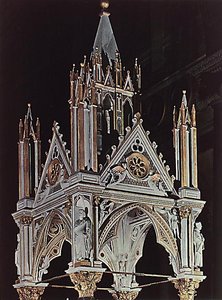
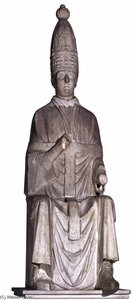
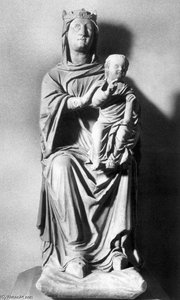
His sculptural achievements speak to a remarkable versatility. A prime example is the monument he completed for Cardinal Guillaume de Braye in the church of San Domenico in Orvieto around 1282. Here, his vision was breathtakingly realized, notably in an enthroned Madonna (a maestà). The model for this piece drew directly from ancient Roman statuary—specifically, the goddess Abundantia—allowing him to seamlessly weave classical vocabulary into a distinctly Christian narrative. Furthermore, the details of the Madonna’s tiara and jewels are noted by scholars for their meticulous reproduction of antique models, testifying to his deep scholarly engagement with history.
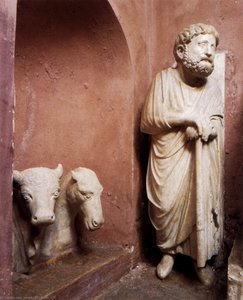
Arnolfo's connection to Roman decorative arts was profound; having witnessed the cosmatesque artistry firsthand, its influence can be traced in the intricate intarsia and polychrome glass decorations he contributed to major sites such as the Basilica of Saint Paul outside the walls and the Church of Santa Cecilia in Trastevere. His involvement continued through monumental commissions, including work on the presepio at Santa Maria Maggiore and contributions to the monument for Pope Boniface VIII.
Shaping the Florentine Skyline
The period spanning 1294 to 1295 saw Arnolfo working extensively in Florence, primarily as an architect. According to Giorgio Vasari’s detailed accounts, he was entrusted with overseeing the construction of the city's cathedral, a role that cemented his status as a master builder. Though much of the lower façade decoration suffered damage over time, the surviving statues remain powerful testaments to his skill. While some attribution remains debated, the design of the Church of Santa Croce is often linked to him, and Vasari also credited him with the urban plan for San Giovanni Valdarno.
It is undeniable that Arnolfo’s monumental character left an indelible mark upon the very appearance of Florence. His funerary monuments, in particular, established a benchmark, becoming the definitive model for Gothic funerary art throughout subsequent generations of Italian artisans.
Legacy and Enduring Influence
Arnolfo di Cambio was more than just a craftsman; he was an artistic synthesizer. He possessed the rare ability to bridge disparate historical styles—the weight of Roman antiquity, the soaring aspiration of the Gothic period, and the nascent humanism that would blossom into the Renaissance. His comprehensive body of work, chronicled by Vasari in his Lives, solidifies his place not merely as a participant in art history, but as one of its most crucial architects and sculptors.
His genius lies in this synthesis: a profound respect for the past channeled through an innovative vision for the future.
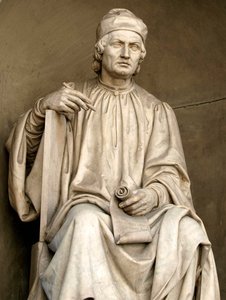
arnolfo di cambio
1245 - 1310 , Italy
Quick Facts
- Artistic Movement Or Style: Yuan Dynasty painting
- Artists Who Influenced This Artist: ['Wen Tong']
- Date Of Birth: 1245
- Date Of Death: 1320
- Full Name: Li Kàn (李衎)
- Nationality: Chinese
- Notable Artworks: ['Ink bamboo paintings']
- Place Of Birth: Jiqiu county (Beijing)
Related Articles
High Medieval Art: 10 Masterpieces That Shaped an Era | ArtsDot
Journey through High Medieval Art! Explore 10 iconic masterpieces – from Giotto's frescoes to stunning Gothic cathedrals. Discover the stories behind these timeless paintings, sculptures & illuminated manuscripts. Find museum-quality art reproductions at ArtsDot.com.
The Shadow of Faith: Exploring Gothic Art's Spiritual Intensity & Architectural Innovation
Explore the spiritual intensity & architectural innovation of Gothic art! Discover the symbolism behind cathedrals, stained glass & master artists like Giotto and Monet. A deep dive into medieval history & artistic expression.
The Enduring Allure of Marble in Art History: From Classical Sculpture to Modern Abstraction
Explore the captivating history of marble sculpture from ancient Greece to modern art. Discover renowned artists like Canova & Michelangelo, carving techniques, and investment insights at ArtsDot.
Giotto di Bondone: Revolutionizing Late Medieval Painting through Narrative Innovation
Explore the revolutionary art of Giotto di Bondone! Discover his groundbreaking techniques, iconic frescoes like those in the Arena Chapel, and lasting impact on Renaissance painting. A deep dive for art enthusiasts.

Bronze Sculptures That Defined Art History | ArtsDot
Journey through art history with our Top 10 bronze sculptures! Explore masterpieces by Rodin, Michelangelo & more. Discover stories behind iconic statues and find museum-quality reproductions for your home decor at ArtsDot.com.