

 Send
Send Share
Share
 Details

 Download
 Similars
 Diaporama
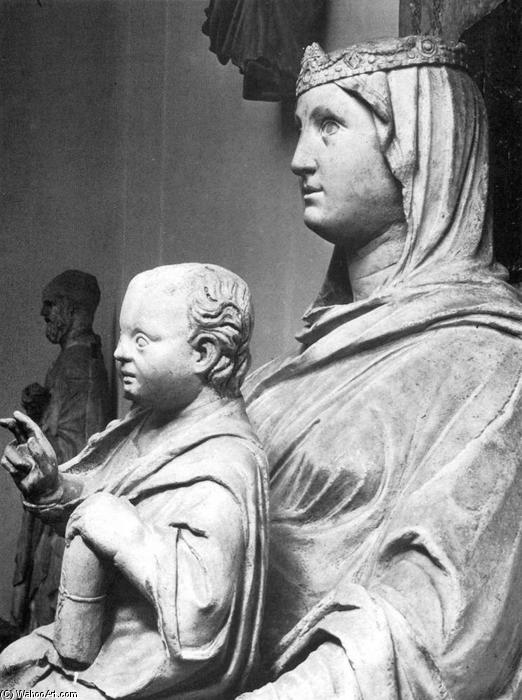
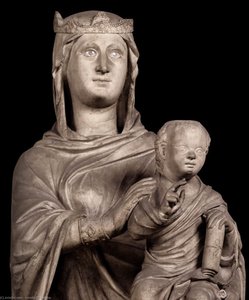
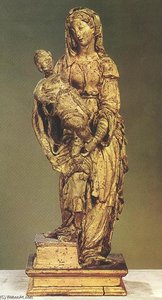
Madonna and Child (detail)


 Read More
Purchase a high-resolution, enhanced digital image, far superior to the online preview.
Each file is meticulously prepared by our in-house specialists using advanced tools and expert manual retouching. We ensure every image has exceptional clarity, precise color accuracy, and fine detail.
The final file is delivered via email within 72 hours, optimized for immediate use in professional, editorial, and print environments. This is the same quality trusted by top-tier design studios, publishers, and galleries.
Digital Image
Download a high-resolution file for personal display, printing, and creative projects. ( Buy Print Buy Hand Made Painting)
Included in Every Digital Image Order
Expert Digital Delivery, Guaranteed
When you choose ArtsDot.com, you're not just getting an image - you're receiving a professionally enhanced digital artwork, crafted with precision and backed by a satisfaction guarantee. Here's everything that comes with your order, automatically:

Fast Email Delivery
Your high-resolution digital image file will be emailed to you within 72 hours of ordering - ready for immediate use.

AI-Enhanced Digital File
Your artwork is professionally optimized using advanced AI tools and manual editing, ensuring maximum detail, clarity, and color accuracy.

Free Lifetime Re-Delivery
Accidentally deleted or lost your file? No worries - we'll resend it to you anytime, free of charge.

No Import Fees - Ever
Enjoy your artwork instantly with zero customs, duties, or delivery fees - digital downloads are always tax-free.

Color Accuracy Guarantee
We ensure your digital image reflects the original colors as closely as possible using professional tools and color management.

60-Day Satisfaction Guarantee
If you're not satisfied with your digital image, we'll revise it or refund 100% within 60 days - no questions asked.

100% Money-Back Guarantee
Not satisfied? Get a full refund within 60 days of receiving your digital file - no questions asked.

Bulk Order Discounts
Buy 3 images, save 10% - Buy 5, save 15% - Buy 10+, save 20%. Great for creative projects, galleries, and agencies.
Collectible Description
A Testament to Faith: Examining Arnolfo di Cambio’s Madonna and Child (detail)
Arnolfo di Cambio, born in Colle Val D'Elsa around 1245 and passing away in Rome circa 1310, stands as a pivotal figure in Florentine art history—a sculptor who deftly bridged the Gothic and burgeoning Renaissance movements. His legacy resides not merely in monumental architectural achievements like the Palazzo Vecchio but profoundly shaped the artistic landscape of his time through masterful depictions of religious subjects, particularly exemplified by “Madonna and Child (detail).” This exquisite marble sculpture offers a glimpse into the artistic sensibilities of the late Medieval period and embodies enduring themes of maternal devotion and divine grace.- Composition & Perspective: The artwork’s tightly framed composition immediately draws the viewer's eye to the serene visage of Mary and the tender posture of Christ. Di Cambio skillfully employs perspective, subtly receding into space to create depth and emphasizing the Madonna’s profile facing left—a compositional choice characteristic of Gothic sculpture yet imbued with a humanist awareness gaining traction in Rome during his formative years.
- Material & Technique: Crafted from Carrara marble – sourced locally and prized for its purity and translucency – the sculpture demonstrates exceptional technical prowess. Di Cambio meticulously carved the stone into precise contours, utilizing chisels and hammers to achieve remarkable realism. The sculptor’s technique reflects the prevailing methods of his era, prioritizing anatomical accuracy and conveying emotion through subtle modeling and shading.
- Stylistic Influences: “Madonna and Child” bears unmistakable marks of Gothic artistic traditions, notably evident in the flowing drapery lines that drape around Mary's figure—a stylistic hallmark of Di Cambio’s earlier commissions on the Siena Cathedral pulpit alongside Nicola Pisano. However, it simultaneously foreshadows the humanist ideals championed by artists like Brunelleschi and Michelangelo, reflecting a broader shift towards naturalistic representation and emotional expression.
- Symbolism & Iconography: The Madonna and Child motif itself carries immense symbolic weight within Christian iconography. Mary embodies purity, compassion, and divine motherhood—qualities revered throughout the medieval world. Christ represents redemption and divine grace, symbolizing humanity’s salvation through faith. Di Cambio's careful rendering of these figures underscores their spiritual significance, inviting contemplation on themes of piety and transcendence.
- Lighting & Texture: The sculpture’s surface exhibits a delicate texture—a subtle interplay of light and shadow that enhances its realism. Di Cambio skillfully manipulated the marble to capture the nuances of form and materiality, mirroring the meticulous attention to detail found in contemporaneous artworks. Diffused lighting contributes to an atmosphere of solemn reverence, emphasizing the Madonna's serene countenance and fostering a connection with viewers across centuries.
Historical Context: Rome & The Cosmatesque Style
Arnolfo di Cambio’s artistic journey unfolded against the backdrop of Rome during the reign of King Charles I of Anjou—a period marked by significant architectural innovation and stylistic experimentation. He was deeply influenced by the Cosmatesque style, characterized by intricate inlaid marble decorations and vibrant polychrome glass mosaics – a visual language that celebrated both classical grandeur and Christian spirituality. This fascination with antiquity informed Di Cambio’s artistic vision, propelling him to recreate ancient models like abundantia—a testament to the intellectual ferment of his time.Emotional Impact & Artistic Legacy
“Madonna and Child (detail)” transcends mere visual representation; it communicates profound emotional resonance. The sculpture's tranquil expressions convey peace and serenity—inviting viewers to contemplate the beauty of faith and the sanctity of maternal love. Arnolfo di Cambio’s enduring contribution to Florentine art lies in his ability to synthesize Gothic formalism with humanist ideals, establishing him as a cornerstone of Renaissance sculpture and securing his place among the most revered artists of his era. Its meticulous craftsmanship and evocative symbolism continue to inspire admiration and contemplation today.Related Artworks
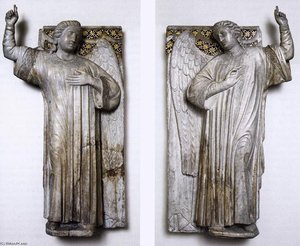
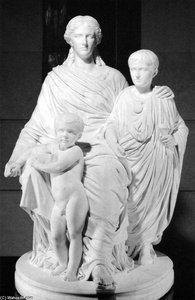
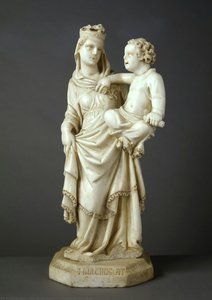
Artist Biography
The Architect of Florentine Grandeur
Arnolfo di Cambio stands as a towering figure in the annals of Italian art, an architect and sculptor whose hand shaped the very contours of medieval and early Renaissance Florence. Born in Colle Val D'Elsa around 1245, his life spanned a period of profound artistic transition, allowing him to absorb the grandeur of Roman antiquity while pioneering new forms that would define Gothic sensibilities for centuries to come. His early apprenticeship under masters like Nicola Pisano provided him with an invaluable foundation, particularly evident in his work on the marble pulpit for the Duomo in Siena between 1265 and 1268.
Yet, Arnolfo’s genius was not confined to one locale or style. His travels and commissions allowed him a breathtaking breadth of experience. In Rome, he served King Charles I of Anjou, contributing to the magnificent statue housed in the Campidoglio. It was in this vibrant Roman milieu that his understanding of classical forms deepened, an influence that would permeate his later decorative schemes.
Mastery in Sculpture and Monumental Design
His sculptural achievements speak to a remarkable versatility. A prime example is the monument he completed for Cardinal Guillaume de Braye in the church of San Domenico in Orvieto around 1282. Here, his vision was breathtakingly realized, notably in an enthroned Madonna (a maestà). The model for this piece drew directly from ancient Roman statuary—specifically, the goddess Abundantia—allowing him to seamlessly weave classical vocabulary into a distinctly Christian narrative. Furthermore, the details of the Madonna’s tiara and jewels are noted by scholars for their meticulous reproduction of antique models, testifying to his deep scholarly engagement with history.
Arnolfo's connection to Roman decorative arts was profound; having witnessed the cosmatesque artistry firsthand, its influence can be traced in the intricate intarsia and polychrome glass decorations he contributed to major sites such as the Basilica of Saint Paul outside the walls and the Church of Santa Cecilia in Trastevere. His involvement continued through monumental commissions, including work on the presepio at Santa Maria Maggiore and contributions to the monument for Pope Boniface VIII.
Shaping the Florentine Skyline
The period spanning 1294 to 1295 saw Arnolfo working extensively in Florence, primarily as an architect. According to Giorgio Vasari’s detailed accounts, he was entrusted with overseeing the construction of the city's cathedral, a role that cemented his status as a master builder. Though much of the lower façade decoration suffered damage over time, the surviving statues remain powerful testaments to his skill. While some attribution remains debated, the design of the Church of Santa Croce is often linked to him, and Vasari also credited him with the urban plan for San Giovanni Valdarno.
It is undeniable that Arnolfo’s monumental character left an indelible mark upon the very appearance of Florence. His funerary monuments, in particular, established a benchmark, becoming the definitive model for Gothic funerary art throughout subsequent generations of Italian artisans.
Legacy and Enduring Influence
Arnolfo di Cambio was more than just a craftsman; he was an artistic synthesizer. He possessed the rare ability to bridge disparate historical styles—the weight of Roman antiquity, the soaring aspiration of the Gothic period, and the nascent humanism that would blossom into the Renaissance. His comprehensive body of work, chronicled by Vasari in his Lives, solidifies his place not merely as a participant in art history, but as one of its most crucial architects and sculptors.
His genius lies in this synthesis: a profound respect for the past channeled through an innovative vision for the future.
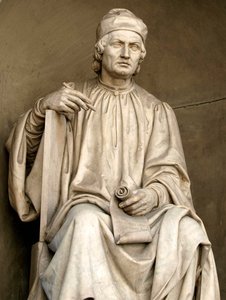
arnolfo di cambio
1245 - 1310 , Italy
Quick Facts
- Artistic Movement Or Style: Yuan Dynasty painting
- Artists Who Influenced This Artist: ['Wen Tong']
- Date Of Birth: 1245
- Date Of Death: 1320
- Full Name: Li Kàn (李衎)
- Nationality: Chinese
- Notable Artworks: ['Ink bamboo paintings']
- Place Of Birth: Jiqiu county (Beijing)

