 Preview
 Send
Send Share
Share
 Details

 Download
 Similars
 X-Ray
X-Ray Diaporama
Diary of a Seducer

 Read More
Hand Made Oil Reproduction
Hand-painted oil on canvas in your size and frame, made to order by our artists. ( Buy Print Buy Image)




































Pick from our preset sizes that match the artwork's original proportions.

You may enter your own dimensions to fit a specific frame or space. If your selected size does not match the original image's proportions, we will either crop the artwork or extend the painting with additional hand-painted elements. A digital mockup will be sent for your approval before production begins.
Please note that the on-screen preview does not reflect the actual cropping or extension. Only the mockup will accurately show the final composition.
While custom sizes are available, we recommend selecting a dimension from the predefined list to preserve the original proportions.
After order, ArtsDot.com team will email client for instructions and provide a mockup preview
Worldwide Delivery () in 3/4 weeks instead of standard 5 weeks. (16 August). No compromise on quality.

Free Worldwide Express Shipping

High-Quality Linen Canvas

Full Shipping Insurance

Customs Tax Refund Guarantee

True Color Matching Guarantee

60-Day Return Policy (Defects Only)

100% Money-Back Guarantee

Bulk Discount Offer
 Glass option is only available in size under 110 CM

Diary of a Seducer
Reproduction Medium
Reproduction Size
-


Total Price
$ 263
Artwork Description
Diary of a Seducer: A Glimpse into Arshile Gorky's Psyche
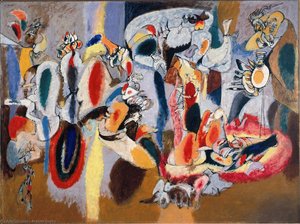
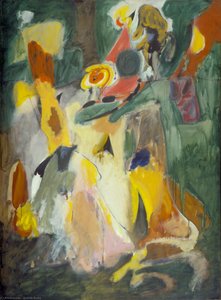
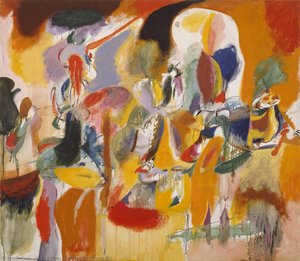
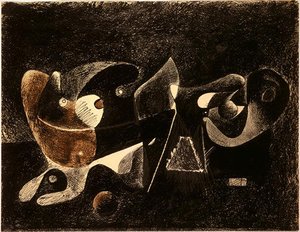
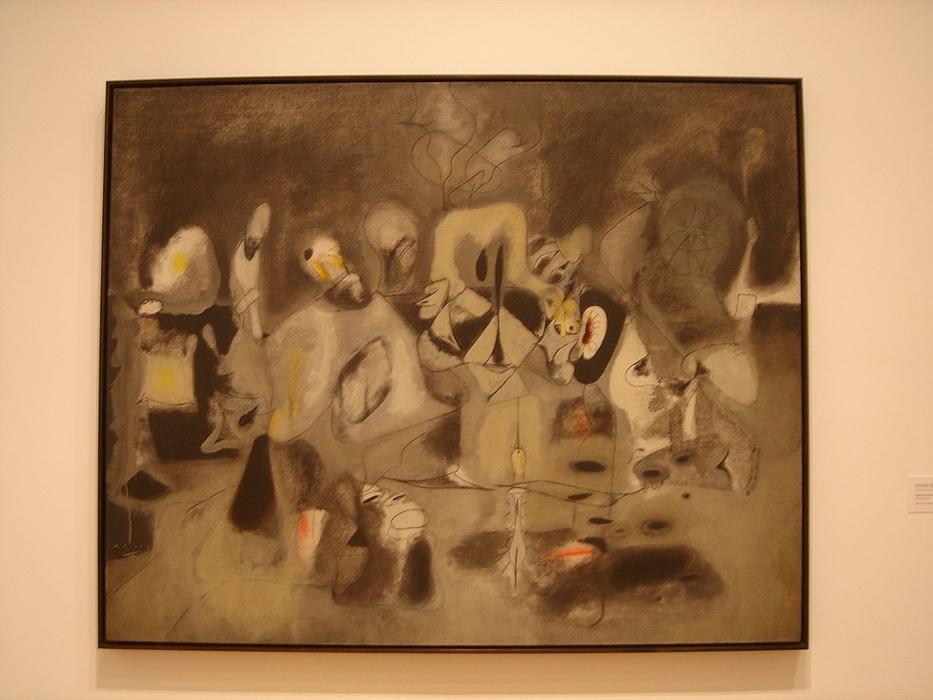
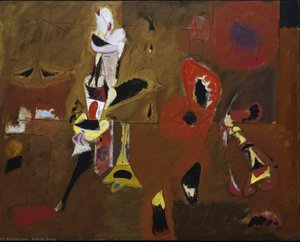
Arshile Gorky’s "Diary of a Seducer," painted in 1945, stands as a pivotal work within the burgeoning Abstract Expressionist movement. This large-scale oil on canvas (measuring approximately 50 x 62 inches) resides in the collection of the Museum of Modern Art in New York City and offers a profound exploration of memory, desire, and the subconscious mind through Gorky’s unique visual language.
Subject and Style: Biomorphic Forms Against a Dark Backdrop
"Diary of a Seducer" defies easy categorization. While rooted in Surrealist principles—particularly its interest in dreamlike imagery and psychological exploration—Gorky transcends mere representation, forging his own path toward abstraction. The painting depicts a group of figures engaged in an ambiguous interaction against a stark black background. These are not realistically rendered individuals; instead, they appear as biomorphic forms – organic shapes reminiscent of the human body but distorted and simplified. Gorky’s signature style involves flowing lines, elongated limbs, and amorphous masses that suggest movement and emotion rather than concrete identity. The dark backdrop intensifies the drama and focuses attention on the figures themselves, creating a sense of isolation and psychological depth.
Technique and Historical Context: Bridging Surrealism and Abstract Expressionism
Gorky’s technique in "Diary of a Seducer" is characterized by thin washes of oil paint applied with delicate precision. He builds up layers of color, creating subtle gradations and atmospheric effects. The painting's creation occurred during a period of immense personal turmoil for Gorky. Having recently fled Armenia due to the Armenian Genocide as a child, he carried deep emotional scars that profoundly influenced his artistic output. The post-World War II era was also marked by existential anxieties and a desire to break from traditional representational art forms. Gorky’s work emerged at this critical juncture, serving as a bridge between European Surrealism (which heavily influenced him through contact with artists like André Breton) and the burgeoning American Abstract Expressionist movement. He moved to New York in 1924 and absorbed aesthetic strategies from prominent modern artists including Pablo Picasso and Paul Cézanne.
Symbolism and Emotional Impact: Desire, Memory, and Psychological Landscape
The title "Diary of a Seducer" hints at the painting's underlying theme of desire and intimacy. However, Gorky avoids explicit depiction, instead relying on suggestive forms and ambiguous relationships to evoke a sense of psychological tension. The swirling lines and distorted figures can be interpreted as representing the complexities of human interaction, the fluidity of memory, and the power of subconscious desires. The black background contributes to an atmosphere of mystery and introspection, inviting viewers to project their own interpretations onto the scene. The painting’s emotional impact is both unsettling and captivating; it evokes a sense of vulnerability, longing, and the inherent ambiguity of human relationships. Gorky's handling of paint—highlighting both the woven nature of his canvas support and the liquidity of oil—adds another layer to the work's complexity.
Gorky’s Legacy: A Pioneer of Abstract Expressionism
Arshile Gorky tragically died in 1948, succumbing to complications from a stroke. Despite his relatively short career, he left an indelible mark on the art world. "Diary of a Seducer" exemplifies his unique artistic vision and demonstrates his crucial role in shaping Abstract Expressionism. His biomorphic forms and exploration of psychological themes paved the way for later artists like Jackson Pollock and Willem de Kooning, solidifying his position as a pioneer of modern American art.
Related Artworks
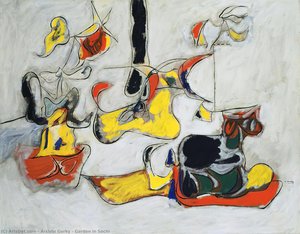
Artist Biography
early life and influences
arshile gorky, born vostanik manoug adoian, was a turkish-born armenian-american painter who left an indelible mark on the art world. born on april 15, 1904, in khorgom, van, ottoman empire (now turkey), gorky's life was marked by turmoil and displacement, which would later influence his artistic style.the formative years
gorky's family fled to russian-controlled territory during the armenian genocide in 1915. this pivotal event shaped his worldview and informed his future artistic expressions. in 1920, at the age of 16, gorky reunited with his father in america but struggled to form a close bond.artistic evolution
- landscape in the manner of cézanne (1927) and landscape, staten island (1927–1928) exemplify gorky's early experimentation with cubism and post-impressionism.
- his later works, such as nighttime, enigma, nostalgia (1930–1934), showcase a shift towards surrealism, characterized by complex, abstract forms.
notable works and collaborations
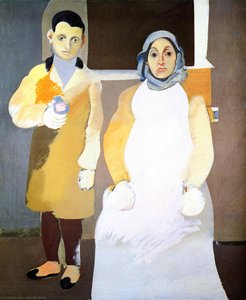
key artworks:- the artist and his mother (ca. 1926–1936), a poignant portrait inspired by a childhood photograph, showcases gorky's innovative style.
- portrait of master bill, initially believed to be a portrait of willem de kooning, is now recognized as a depiction of a swedish carpenter who worked for gorky.
- gorky's association with the works progress administration federal art project (1933) brought him alongside notable artists like alice neel, lee krasner, jackson pollock, and mark rothko.
- his work was also influenced by paul cézanne, as seen in his landscape series.
legacy and museum collections
gorky's impact on abstract expressionism is undeniable. his works can be found in various museums, including the national gallery of art, washington, d.c., and are a testament to his enduring influence.- explore gorky's artwork and other influential artists at ArtsDot.
- delve into the world of art history with ArtsDot's comprehensive timeline: wahoo art timeline.
conclusion
arshile gorky's life, marked by displacement and turmoil, translated into a body of work that would redefine the landscape of abstract expressionism. his legacy continues to inspire artists and art enthusiasts alike, a testament to the transformative power of art. view gorky's artworks on ArtsDot learn more about arshile gorky on wikipedia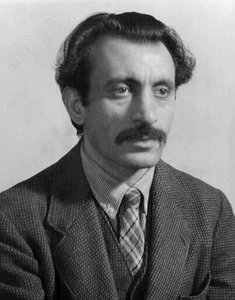
Arshile Gorky
1904 - 1948 , Turkey
Quick Facts
- Artistic Movement Or Style: Abstract Expressionism
- Artists Or Movements Influenced By This Artist: ['Abstract Expressionism']
- Artists Who Influenced This Artist:
- Paul Cézanne
- Joan Miró
- Pablo Picasso
- Date Of Birth: April 15, 1904
- Date Of Death: July 21, 1948
- Full Name: Arshile Gorky
- Nationality: Armenian-American
- Notable Artworks:
- The Artist and His Mother
- Nighttime, Enigma, Nostalgia
- Portrait of Master Bill
- Waterfall
- Composition
- Place Of Birth: Khorgom, Turkey
Related Articles
Abstract Expressionism's 10 Defining Masterpieces |
Explore 10 defining Abstract Expressionism masterpieces by Pollock, Rothko & de Kooning. Discover the stories behind these iconic paintings and find museum-quality art reproductions to elevate your home decor on .
Kandinsky's Masterpieces: 25 Paintings That Define Abstract Art | ArtsDot
Journey through Wassily Kandinsky's 25 most iconic abstract paintings. Explore his revolutionary use of color, form & spiritual expressionism. Find museum-quality Kandinsky reproductions and elevate your home decor with ArtsDot.com. Discover all masterpieces on ArtsDot.com!

Geometric Abstraction's 10 Defining Masterpieces | Art for Your Home - ArtsDot
Explore 10 defining masterpieces of Geometric Abstraction! Discover Kandinsky, Mondrian & Malevich’s iconic works. Find museum-quality art reproductions and curated decor ideas to elevate your home at ArtsDot.com.
Fernand Léger's Masterpieces: 25 Iconic Paintings & The Machine Age Aesthetic | ArtsDot
Explore 25 iconic Fernand Léger paintings that defined the Machine Age & Cubism. Discover the stories behind his bold colors, geometric forms & avant-garde style. Find museum-quality art reproductions on ArtsDot.com.
Beyond Representation: Exploring the Emotional Landscape of Abstract Expressionism
Explore the profound emotional world of Abstract Expressionism with ArtsDot. Discover key artists like Pollock & Rothko, learn about collecting, and find museum-quality reproductions to inspire your space.