 Preview
 Send
Send Share
Share
 Details

 Download
 Similars
 X-Ray
X-Ray Diaporama
Sandridge
 Oil On Canvas
- WallArt
- Australian Impressionism
 1888
1888- 19th Century
 233.0 x 128.0 cm
 National Gallery of Australia
 Read More
Hand Made Oil Reproduction
Hand-painted oil on canvas in your size and frame, made to order by our artists. ( Buy Print Buy Image)




P118B $10

P118H $10

P118W $10

P438Z $10

P508JH $12

P508YH $12

P805H $10

P805Z $10

P919BZ $10

P919G $10

P919XJ $10

P959ZH $10

P968JZ $12

W106C $8

W218G $10

W218JH $8

W218Y $10

W307PJ $10

W316G $10

W316PJ $8

W316Y $10

W398PJ $8

W4111J $10

W500HY $15

W500JH $15

W692G $12

W849H $8

W940BG $15

W953PJ $8




Pick from our preset sizes that match the artwork's original proportions.

You may enter your own dimensions to fit a specific frame or space. If your selected size does not match the original image's proportions, we will either crop the artwork or extend the painting with additional hand-painted elements. A digital mockup will be sent for your approval before production begins.
Please note that the on-screen preview does not reflect the actual cropping or extension. Only the mockup will accurately show the final composition.
While custom sizes are available, we recommend selecting a dimension from the predefined list to preserve the original proportions.
After order, ArtsDot.com team will email client for instructions and provide a mockup preview
Worldwide Delivery () in 3/4 weeks instead of standard 5 weeks. (16 August). No compromise on quality.

Free Worldwide Express Shipping

High-Quality Linen Canvas

Full Shipping Insurance

Customs Tax Refund Guarantee

True Color Matching Guarantee

60-Day Return Policy (Defects Only)

100% Money-Back Guarantee

Bulk Discount Offer
 Glass option is only available in size under 110 CM

Sandridge
Reproduction Medium
Reproduction Size
-


Total Price
$ 263
Artwork Description
A Moment Frozen in Time: The Drama of Sandridge
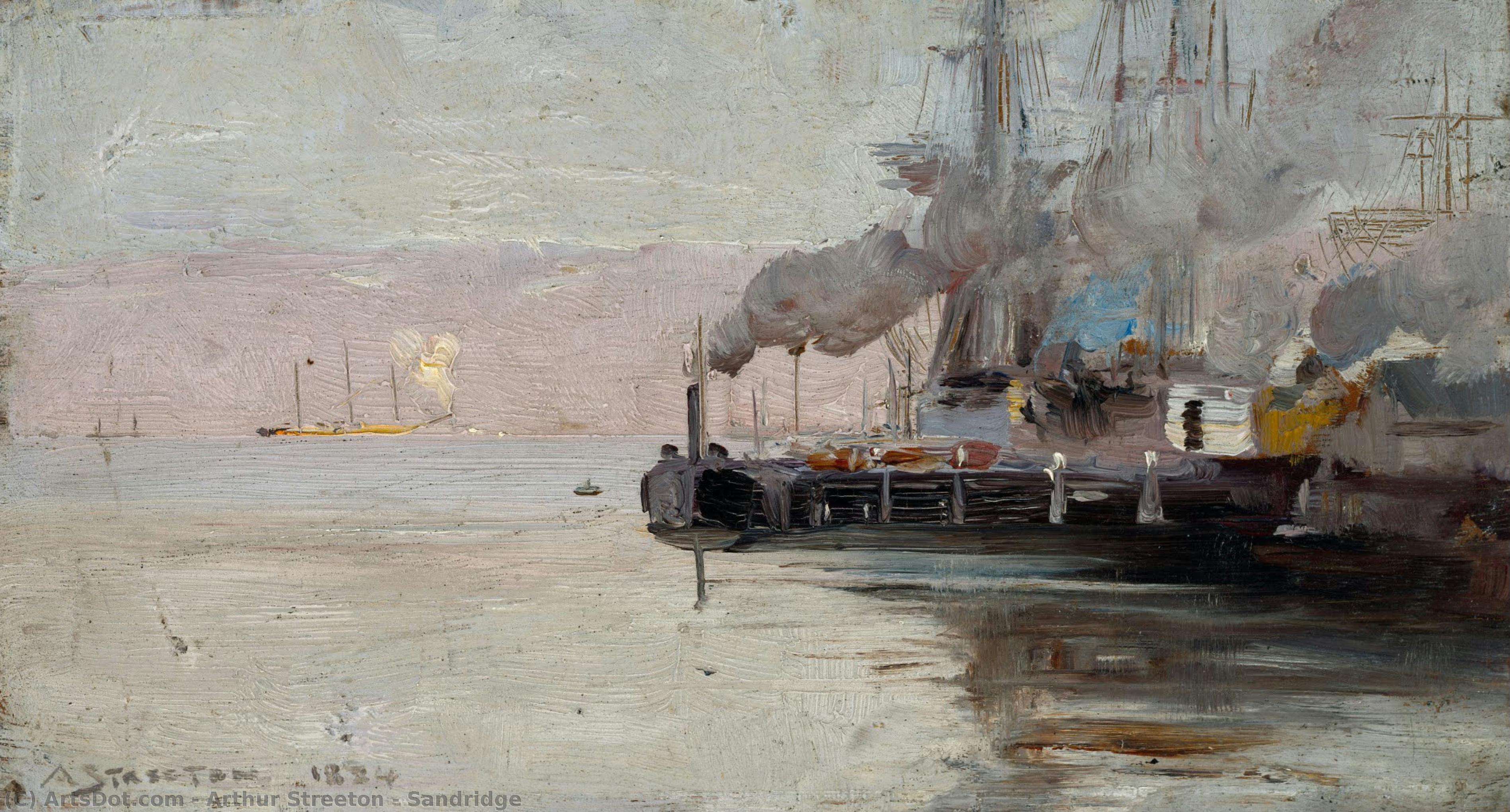
In the vast expanse of Australian Impressionism, few works capture the raw, unscripted tension of maritime life as poignantly as Arthur Streeton’s Sandridge. Painted in 1888, this monumental oil on canvas serves as a window into a bustling, high-stakes moment within a busy harbor. At first glance, the viewer is drawn into a scene of profound movement and uncertainty; the central focus is a vessel caught in a state of distress, appearing to sink or having just succumbed to the elements. This focal point acts as the emotional anchor of the composition, pulling the eye toward the center of a swirling maritime drama where the calm of the water meets the sudden chaos of an emergency.
Streeton, a pioneer of the Heidelberg School, was a master at capturing what his contemporaries called the "Australian Light." In Sandridge, he utilizes this expertise to paint not just a scene, and not just a location, but an atmosphere. The light dances across the hulls of various boats—ranging from large, dominating vessels to smaller, more agile craft—creating a sense of depth and shimmering heat. Through his brushwork, one can almost feel the humidity of the harbor and the frantic energy of the at least twelve figures scattered throughout the scene. Some onlookers stand in stunned proximity to the sinking boat, while others are mere silhouettes against the horizon, their presence adding to the collective weight of the unfolding tragedy.
Technique and the Impressionist Spirit
The technical execution of Sandridge is a testament to Streeton’s ability to blend large-scale composition with delicate, impressionistic touches. The sheer scale of the work, measuring an impressive 233 x 128 cm, allows the viewer to become immersed in the harbor's geography. Streeton employs a palette that reflects the gritty yet luminous reality of a working port. His use of oil on canvas provides a rich texture that gives weight to the wooden hulls and life to the churning water. The way he manages the interplay between light and shadow is crucial; it is through these subtle shifts in tone that the sense of "chaos" is communicated without relying on overt, messy strokes.
For the discerning collector or interior designer, this piece offers a sophisticated balance of narrative intensity and aesthetic harmony. The painting does not merely depict a disaster; it captures the structural beauty of a maritime landscape. The composition guides the eye through a rhythmic arrangement of masts, sails, and figures, making it a powerful statement piece for any grand space. It possesses that rare quality in fine art: the ability to command attention through its historical gravity while simultaneously complementing a modern or classical interior with its masterful use of color and light.
A Legacy of Australian Identity
To understand Sandridge is to understand the birth of a national artistic identity. During the late 19th century, Streeton and his peers were moving away from European traditions to find a way to paint the unique, harsh, yet beautiful Australian landscape. While much of his work focuses on the golden hues of the bush, Sandridge explores the industrial and social heartbeat of the coast. The painting symbolizes the vulnerability of human endeavor when faced with the unpredictable forces of nature, a theme that resonates deeply across generations.
Owning a high-quality reproduction of this masterpiece allows one to bring a piece of Australian history into the contemporary home. It is more than a decoration; it is an invitation to contemplate the fleeting nature of stability and the enduring strength of human observation. Whether placed in a library, a formal dining room, or a curated gallery space, Sandridge serves as a profound conversation starter, embodying the spirit of an era defined by discovery, struggle, and the breathtaking beauty of the Australian light.
Related Artworks

Artist Biography
A Pioneer of the Australian Light: The Life and Art of Arthur Streeton
Arthur Ernest Streeton, affectionately known as “Smike” to his contemporaries, stands as a monumental figure in Australian art history. Born on April 8, 1867, at Mount Duneed, Victoria, his life was inextricably linked to the evolving identity of a nation finding its voice through landscape painting. From humble beginnings – his parents were English migrants who met during their voyage to Australia – Streeton’s artistic journey began with studies at the National Gallery School in Melbourne from 1882 to 1887, laying the groundwork for a career that would define Australian Impressionism and the Heidelberg School. These early years weren't merely about technical skill; they were about discovering a way to capture the unique quality of light and atmosphere that characterized the Australian bush – a light unlike anything seen in Europe, and a challenge that captivated Streeton throughout his life. He supplemented his formal training with apprenticeships as a lithographer, experiences which undoubtedly informed his understanding of composition and tonal values.The Heidelberg School and the Eaglemont Camp
Streeton’s artistic maturation coincided with the burgeoning of the Heidelberg School, a group of artists determined to forge an authentically Australian style. His friendships with Tom Roberts and Frederick McCubbin were pivotal; together they embarked on *plein air* painting excursions, seeking to represent the landscape directly from nature. This commitment to working outdoors, inspired by French Impressionism but adapted to the distinctly Australian context, became a hallmark of their work. The establishment of the Eaglemont Camp in 1888 marked a turning point. Sharing a farmhouse on the outskirts of Melbourne with fellow artists, Streeton entered a period of intense creativity. It was here that he produced some of his most iconic works, including Golden Summer, Eaglemont (1889) and Still glides the stream, and shall for ever glide (1890). These paintings weren’t simply depictions of scenery; they were evocations of a feeling – the heat haze shimmering over golden fields, the stillness of a summer afternoon. The camp fostered an environment of shared experimentation and mutual encouragement, solidifying the Heidelberg School's reputation as a force to be reckoned with in the Australian art world. The group’s bold approach culminated in the controversial “9 by 5 Impression Exhibition” in 1889, showcasing small, rapidly executed paintings that challenged conventional artistic norms.Seeking Recognition and Returning Home
Driven by ambition and a desire for wider recognition, Streeton sailed for London on the *Polynesien* in 1897. While he achieved some success exhibiting at the Royal Academy, including representation in 1900, he found it difficult to replicate the acclaim he had enjoyed in Australia. The European art scene was crowded and competitive, and his distinctly Australian vision didn’t always resonate with established tastes. He continued to paint, exploring different subjects – Venetian scenes like Palazzo Labia, Venice (1908) demonstrate a shift in focus but retain his characteristic sensitivity to light and color. The outbreak of World War I saw Streeton attempting to contribute through service as an orderly with the Royal Army Medical Corps, later becoming an official war artist in 1918. His wartime paintings, while documenting the devastation of the Western Front, often focused on the landscape itself, reflecting his enduring fascination with the natural world. He returned to Australia in 1923 a celebrated figure, knighted in 1937 for his contributions to art.Legacy and Lasting Influence
Arthur Streeton’s legacy extends far beyond his individual paintings. He played a crucial role in establishing a uniquely Australian artistic identity, one that celebrated the beauty and vastness of the continent. His work helped to define how Australians saw themselves and their land. His influence can be seen in generations of landscape painters who followed, inspired by his ability to capture the essence of the Australian light and atmosphere. He was a prolific writer and art critic, further shaping the discourse around Australian art. Though he experienced periods of frustration and self-doubt, Streeton remained committed to his artistic vision until his death on September 1, 1943, at Olinda, Victoria. His paintings continue to captivate audiences today, offering a timeless glimpse into the heart and soul of Australia.Key Works & Themes
- Golden Summer, Eaglemont (1889): Perhaps his most famous work, embodying the heat and light of an Australian summer.
- Still glides the stream, and shall for ever glide (1890): A lyrical depiction of the Yarra River, showcasing his mastery of atmospheric perspective.
- Fire’s on (1891): A powerful representation of the Australian bushfire landscape, capturing both its beauty and danger.
- Palazzo Labia, Venice (1908): Demonstrates his ability to adapt his Impressionistic style to European subjects.
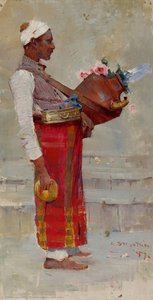
- Egyptian Drink Vendor (1897): A vibrant scene reflecting his travels and exploration of different cultures.
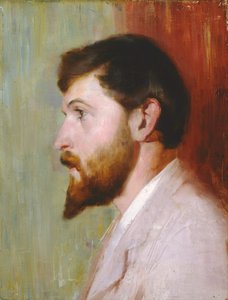
Arthur Streeton
1867 - 1943 , Australia
Quick Facts
- Artistic Movement Or Style: Impressionism, Heidelberg School
- Artists Or Movements Influenced By This Artist: Australian Impressionism
- Artists Who Influenced This Artist:
- Louis Buvelot
- J.M.W. Turner
- Date Of Birth: April 8, 1867
- Date Of Death: September 1, 1943
- Full Name: Arthur Ernest Streeton
- Nationality: Australian
- Notable Artworks:
- Golden Summer, Eaglemont
- Still glides the stream
- Palazzo Labia, Venice
- Egyptian Drink Vendor
- Sirius Cove
- Place Of Birth: Mount Duneed, Australia
Related Articles
Boats on Canvas: 10 Masterpieces of Maritime Art for Your Home Decor
Sail away with 10 iconic boat paintings! Explore masterpieces by Monet, Van Gogh & Turner. Discover the stories behind these timeless seascapes and find museum-quality art reproductions for your home decor at ArtsDot.com.
Impressionism's Masterpieces: 10 Paintings That Defined a Movement | ArtsDot
Journey through Impressionism's heart with 10 iconic paintings by Monet, Renoir & Degas. Explore light, color & the stories behind these masterpieces. Find museum-quality art reproductions and elevate your home decor on ArtsDot.com.
Navigating Symbolism & Sentiment: A Comprehensive Exploration of Boats in Art History
Explore the rich history of boats in art! Discover symbolism & style from ancient myths to Impressionist masterpieces. Expert insights for collectors at ArtsDot.
Fleeting Moments & Radiant Light: Exploring the Enduring Legacy of Impressionism
Explore the captivating world of Impressionism! Discover its history, key artists like Monet & Renoir, defining techniques, and lasting impact on modern art. Expert insights for collectors.

Cézanne's Masterpieces: 25 Iconic Artworks to Transform Your Space
Journey through 25 iconic artworks by Paul Cézanne – a master of Impressionism and Post-Impressionism. Explore his landscapes, still lifes, and the stories behind these timeless masterpieces. Discover museum-quality reproductions & curated decor at ArtsDot.com.


![Cairo street [or Mosque, Sultan Hassan]](/media/artworks/images/thumbnails/c9/e7/c9e737e02b2e42059aa23acb00094dab.jpg)