 Preview
 Send
Send Share
Share
 Details

 Download
 Similars
 X-Ray
X-Ray Diaporama
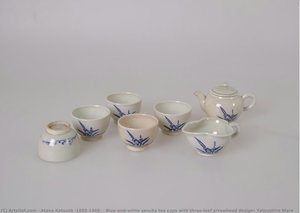
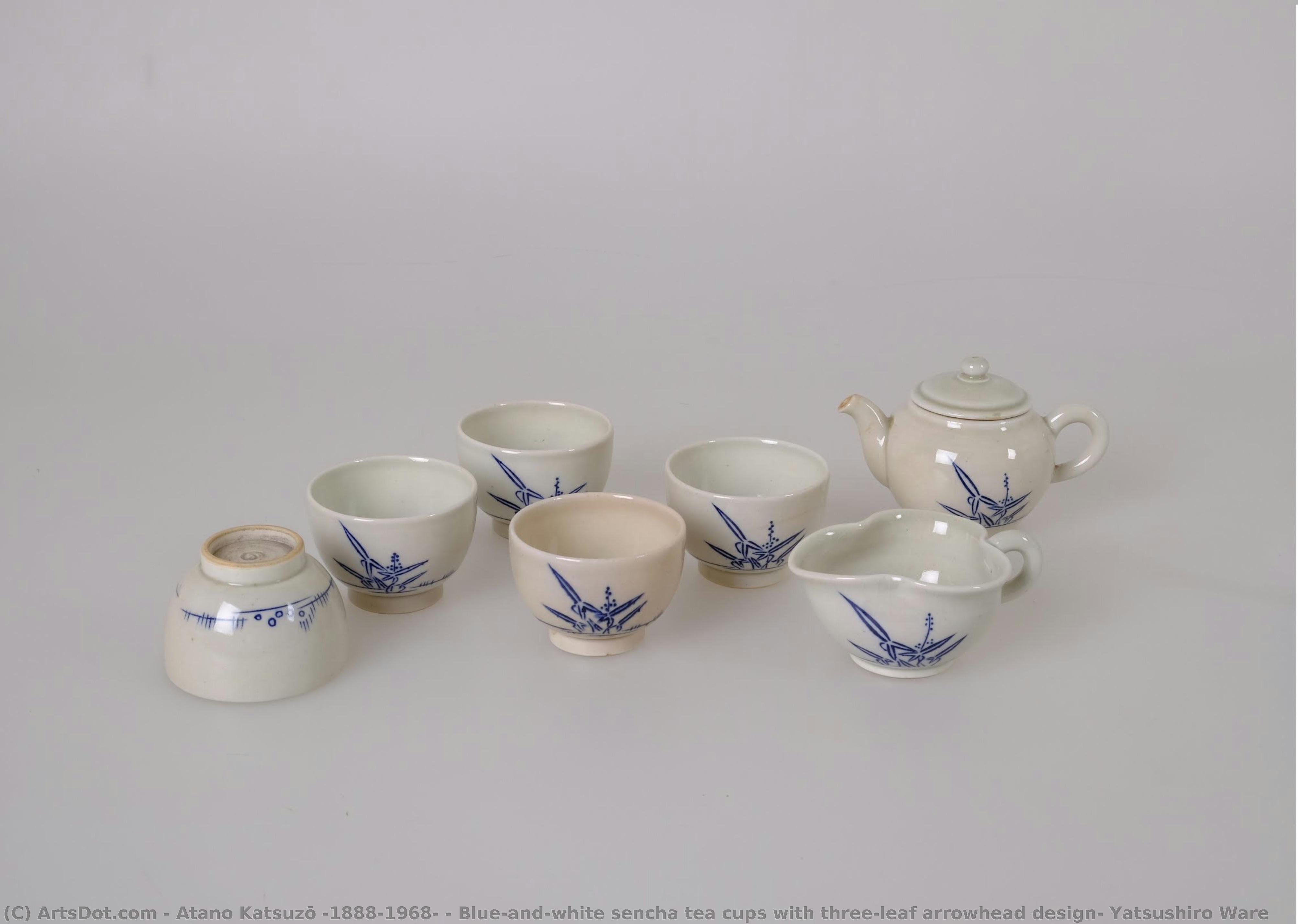
Blue-and-white sencha tea cups with three-leaf arrowhead design, Yatsushiro Ware

 Read More
Giclée / Art Print
Museum-quality giclée or canvas print with fast production and flexible finish options. ( Buy Hand Made Painting Buy Image)




































Pick from our preset sizes that match the artwork's original proportions.

You may enter your own dimensions to fit a specific frame or space. If your selected size does not match the original image's proportions, we will either crop the artwork or extend the image with a mirrored or solid-fill edge. A digital mockup will be sent for your approval before production begins.
Please note that the on-screen preview does not reflect the actual cropping or extension. Only the mockup will accurately show the final composition.
While custom sizes are available, we recommend selecting a dimension from the predefined list to preserve the original proportions.
Worldwide Delivery () in 2 weeks instead of standard 4/5 weeks. (25 August)

Free Worldwide Express Shipping

High-Quality Linen Canvas

Full Shipping Insurance

Customs Tax Refund Guarantee

True Color Matching Guarantee

60-Day Return Policy (Defects Only)

100% Money-Back Guarantee

Bulk Discount Offer
 Glass option is only available in size under 110 CM

Blue-and-white sencha tea cups with three-leaf arrowhead design, Yatsushiro Ware
Giclée / Art Print
Reproduction Size
-


Total Price
$ 63
Related Artworks

Artist Biography
Atano Katsuzō: A Master of Yatsushiro Ware
Atano Katsuzō (1888-1968) stands as a pivotal figure in the enduring legacy of Japanese ceramics, particularly renowned for his exquisite blue and white sencha tea cups adorned with the distinctive three-leaf arrowhead design. Born in Yatsushiro, Japan – the very town that would bear his name – Katsuzō’s life was inextricably linked to the region's celebrated pottery tradition. His early years were steeped in the atmosphere of a thriving ceramic center, an environment profoundly shaped by the rich history and techniques of Yatsushiro ware. This distinctive style, characterized by its subtle glazes, delicate forms, and often understated elegance, provided the foundation for Katsuzō’s artistic journey.The Essence of Yatsushiro Ware and Early Influences
Yatsushiro ware itself is a fascinating product of regional specialization. Developed in the late 19th century, it emerged as a response to the increasing demand for high-quality tea utensils following the Meiji Restoration. The clay sourced from the surrounding mountains yielded a unique body – often described as “sand-like” due to its fine texture and slightly porous nature. This characteristic contributed significantly to the ware’s distinctive appearance when fired, resulting in subtle variations in color and surface texture that are highly prized by collectors today. Katsuzō's formative years were spent absorbing these traditions, learning from master potters and meticulously studying the nuances of Yatsushiro clay. While specific mentors remain somewhat shrouded in local lore, it’s clear he was deeply influenced by the established aesthetic principles of the style – a balance between simplicity and refined craftsmanship.The Three-Leaf Arrowhead: A Signature Motif
Katsuzō's contribution to Yatsushiro ware lies primarily in his masterful execution of the three-leaf arrowhead design, often referred to as *mizuhari*. This motif, a recurring element throughout Japanese ceramics, carries deep symbolic weight. The arrowhead itself represents strength, direction, and aspiration – qualities highly valued in traditional Japanese culture. The addition of the three leaves further amplifies this symbolism, evoking images of spring, renewal, and harmony with nature. Katsuzō’s interpretation of *mizuhari* is particularly notable for its understated elegance; he avoided excessive ornamentation, allowing the design to subtly enhance the beauty of the vessel rather than dominate it. The precise placement and delicate rendering of each element speak volumes about his meticulous attention to detail and profound understanding of ceramic aesthetics.Technique and Innovation within Tradition
While deeply rooted in established Yatsushiro ware techniques, Katsuzō was not simply a replicator of the past. He demonstrated a remarkable ability to refine and elevate these traditions through subtle innovations. His mastery of glaze application is particularly noteworthy – achieving a luminous, almost ethereal quality that is characteristic of his work. The delicate balance between ash glazes and white porcelain created depth and richness while maintaining an overall lightness and transparency. Furthermore, Katsuzō’s control over the firing process allowed him to coax out subtle variations in color and texture, adding layers of complexity and visual interest to each piece. He consistently produced works that were both technically proficient and aesthetically captivating, demonstrating a deep respect for tradition while simultaneously pushing the boundaries of Yatsushiro ware artistry.Legacy and Historical Significance
Atano Katsuzō’s work continues to be celebrated today as a testament to the enduring beauty and artistic merit of Yatsushiro ware. His tea cups, in particular, are highly sought after by collectors worldwide – prized for their exquisite craftsmanship, subtle symbolism, and connection to a rich cultural heritage. Beyond his individual achievements, Katsuzō played a crucial role in preserving and promoting the legacy of Yatsushiro pottery during a period of significant change in Japan. His dedication to upholding traditional techniques while embracing innovation ensured that this distinctive style would continue to thrive for generations to come. He remains an essential figure in understanding the evolution of Japanese ceramics and a shining example of artistic excellence within the Yatsushiro ware tradition.
atano katsuzō (1888-1968)
1888 - 1968 , Japan
Quick Facts
- Artistic Movement Or Style: Yatsushiro Ware
- Date Of Birth: 1888
- Date Of Death: 1968
- Full Name: Atano Katsuzō
- Nationality: Japanese
- Notable Artworks: ['Blue-and-white sencha cups']
- Place Of Birth: Yatsushiro, Japan