 Preview
 Send
Send Share
Share
 Details

 Download
 Similars
 X-Ray
X-Ray Diaporama
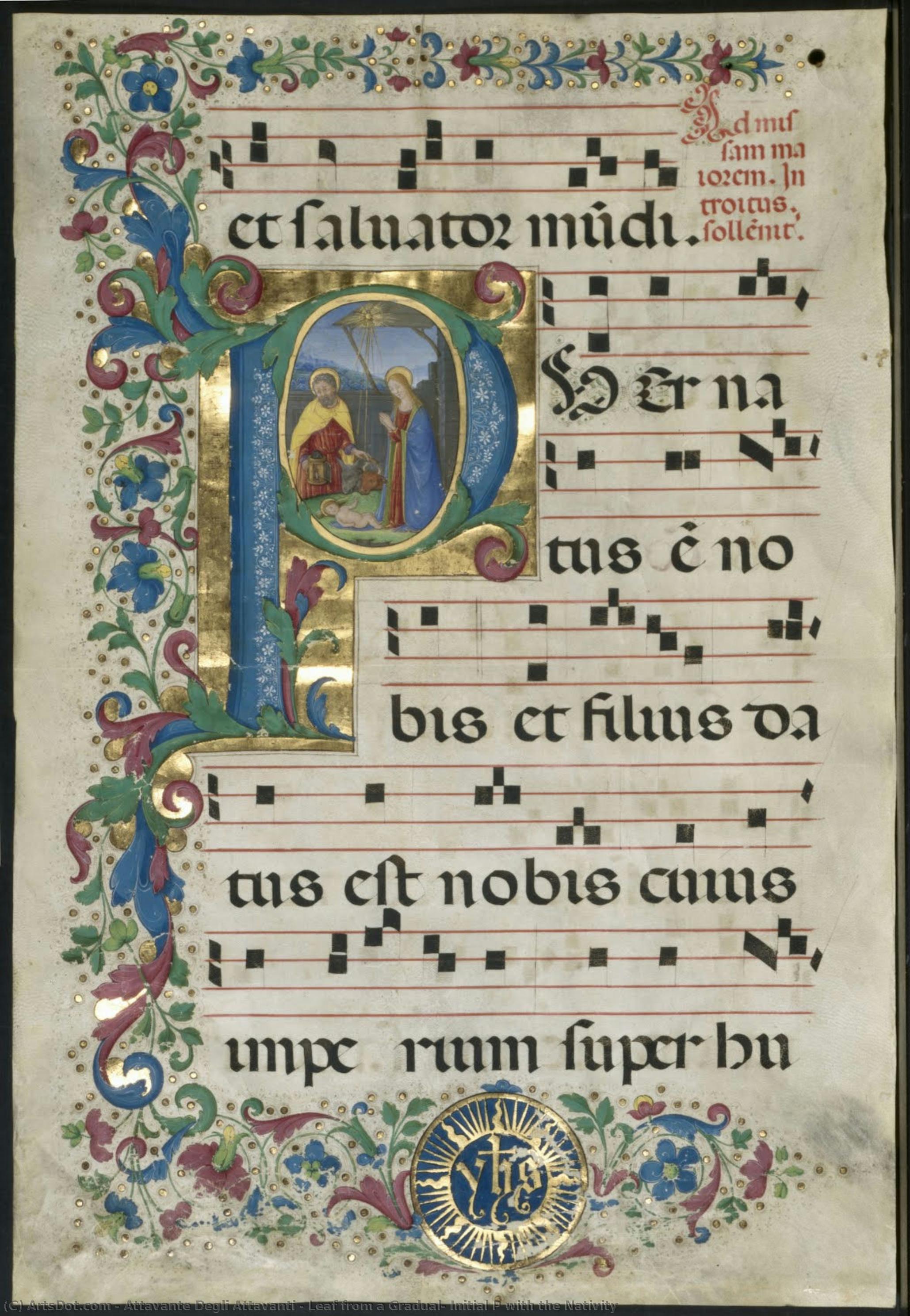
Leaf from a Gradual: Initial P with the Nativity
 Manuscript
- Gothic Illumination
 1500
1500- Renaissance
 59.0 x 4.0 cm
 Cleveland Museum of Art
 Read More
Giclée / Art Print
Museum-quality giclée or canvas print with fast production and flexible finish options. ( Buy Hand Made Painting Buy Image)




P118B $10

P118H $10

P118W $10

P438Z $10

P508JH $12

P508YH $12

P805H $10

P805Z $10

P919BZ $10

P919G $10

P919XJ $10

P959ZH $10

P968JZ $12

W106C $8

W218G $10

W218JH $8

W218Y $10

W307PJ $10

W316G $10

W316PJ $8

W316Y $10

W398PJ $8

W4111J $10

W500HY $15

W500JH $15

W692G $12

W849H $8

W940BG $15

W953PJ $8




Pick from our preset sizes that match the artwork's original proportions.

You may enter your own dimensions to fit a specific frame or space. If your selected size does not match the original image's proportions, we will either crop the artwork or extend the image with a mirrored or solid-fill edge. A digital mockup will be sent for your approval before production begins.
Please note that the on-screen preview does not reflect the actual cropping or extension. Only the mockup will accurately show the final composition.
While custom sizes are available, we recommend selecting a dimension from the predefined list to preserve the original proportions.
Worldwide Delivery () in 2 weeks instead of standard 4/5 weeks. (17 August)

Free Worldwide Express Shipping

High-Quality Linen Canvas

Full Shipping Insurance

Customs Tax Refund Guarantee

True Color Matching Guarantee

60-Day Return Policy (Defects Only)

100% Money-Back Guarantee

Bulk Discount Offer
 Glass option is only available in size under 110 CM

Leaf from a Gradual: Initial P with the Nativity
Giclée / Art Print
Reproduction Size
-


Total Price
$ 63
Collectible Description
A Celestial Beginning: The Radiance of Attavante’s Christmas Introit
In the quiet, hallowed corridors of art history, few objects capture the ephemeral beauty of devotion quite like this exquisite leaf from a 1500 Gradual. At first glance, the eye is immediately arrested by the magnificent initial P, a masterwork of Florentine illumination that serves as a gateway to the sacred. This is not merely a letter; it is a flourishing garden of gold and pigment, where sprays of delicate foliage emerge from the parchment to dance along the margins. The text it introduces—Puer natus e[st] nobis (“For a child is born to us”)—is the very heartbeat of Christmas Day, a prophetic promise from the Book Isaiah that transforms the page into a liturgical celebration of light and hope.
The artistry of Attavante degli Attavanti shines through in every meticulous stroke. As one of the most prominent Florentine illuminators of the late 15th century, Attavante possessed a unique ability to marry the structural elegance of the Renaissance with the ornate, symbolic richness of the Gothic tradition. His palette here is famously sun-drenched, eschewing the somber tones often found in medieval manuscripts for a bright, luminous spectrum that mirrors the joy of the Nativity. The interplay of deep ultramarine blues against the warmth of burnished gold leaf creates a visual rhythm that guides the viewer from the intricate borders into the heart of the miniature.
The Sacred Miniature: A Window into the Divine
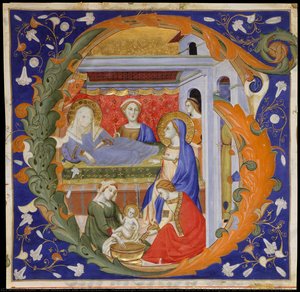
Within a decorative golden frame, a miniature scene unfolds, offering a tender glimpse into the Nativity. Here, the Virgin Mary, the infant Jesus, and Joseph are nestled within a composition that feels both intimate and cosmic. The technique employed is a triumph of late medieval craftsmanship; through delicate brushwork and layered pigments, Attavante creates a sense of depth and texture that defies the flat surface of the parchment. One can almost feel the weight of the gold leaf and the tactile grain of the ancient skin upon which these holy figures reside.
The symbolism embedded in this piece is profound. The musical notation surrounding the text acts as a silent hymn, representing the eternal chant of the Church, while the lush, creeping vines of the initial P symbolize the flourishing of life and the renewal brought by Christ's birth. For the collector or the lover of fine art, this manuscript leaf represents more than just historical documentation; it is an emotional experience. It evokes a sense of reverence and timelessness, making it an extraordinary centerpiece for any collection dedicated to the spiritual and aesthetic heights of the Italian Renaissance.
An Inspiration for the Modern Interior
For interior designers and connoisseurs of classical beauty, a high-quality reproduction of this work offers a sophisticated way to introduce historical narrative and warmth into a space. The rich, earthy browns, regal golds, and celestial blues provide a versatile palette that complements both traditional and contemporary settings. Whether displayed in a curated gallery wall or as a focal point in a study, the Leaf from a Gradual brings with it an aura of intellectual depth and quiet luxury. It is a piece that invites contemplation, encouraging anyone who gazes upon it to pause and appreciate the meticulous devotion of a master craftsman from half a millennium ago.
Related Artworks
Artist Biography
Attavante degli Attavanti: A Master of Florentine Illumination
Born in Florence around 1452 and tragically lost to history sometime before 1525, Attavante degli Attavanti – often simply known as Vante – remains a captivating figure within the vibrant tapestry of Renaissance art. He wasn’t a revolutionary innovator, but rather a supremely skilled imitator and compiler, a master craftsman who honed his talents under the tutelage of established masters like Bartolomeo della Gatta, ultimately forging a distinctive style deeply rooted in Florentine tradition. His legacy isn't defined by groundbreaking originality, but by the sheer quality and meticulous detail he brought to his work, particularly within the realm of illuminated manuscripts – a field where his influence is profoundly felt even today.
Vante’s early career was shaped by his apprenticeship under della Gatta, a renowned painter known for his elegant portraits and refined style. This formative period instilled in him a deep appreciation for classical forms and a commitment to achieving visual harmony. However, Vante quickly established himself as an independent artist, securing commissions that showcased his versatility and technical prowess. A pivotal moment arrived when he was summoned to the court of Matthias Corvinus, King of Hungary, where he undertook the ambitious task of creating a missal – a work now housed in the Royal Library at Brussels. This commission demonstrated Vante’s ability to execute large-scale projects with remarkable precision and attention to detail.
The Art of Imitation and Compilation
What truly distinguishes Attavante's oeuvre is his masterful technique of imitation and compilation. Rather than developing entirely original compositions, he meticulously studied the works of established masters like Domenico Ghirlandaio and skillfully adapted their styles to suit specific commissions. This approach wasn’t a sign of laziness or lack of creativity; rather, it reflected a deep understanding of artistic conventions and a pragmatic approach to fulfilling his patrons' desires. His breviary in Paris, for instance, bears the unmistakable hallmarks of Ghirlandaio’s style, yet possesses a unique elegance and refinement that clearly reflects Vante’s own hand.
Furthermore, Vante was a prolific producer of missals, breviaries, and other liturgical texts. He worked primarily in Florence and Rome during his career, supplying numerous churches and wealthy patrons with exquisitely crafted illuminated manuscripts. His workshop, remarkably, produced the Jerome's Bible – an astonishing achievement considered by many to be one of the finest Bibles ever created during the Italian Renaissance. This monumental work, now residing in the Portuguese National Archives at Torre do Tombo, stands as a testament to Vante’s skill and the dedication of his team.
Miniature Painting and a Mysterious Theft
Beyond illuminated manuscripts, Attavante was also recognized as a skilled miniature painter. His meticulous attention to detail and mastery of color were evident in these smaller works, which often depicted religious figures and scenes with remarkable clarity and emotional depth. Interestingly, the history of Vante’s work is punctuated by a recent and unsettling event: in January 2017, an illuminated Book of Hours attributed to Attavanti or his “circle” was stolen from a London warehouse en route to a book fair in the United States. This theft underscores the enduring value and fascination surrounding this enigmatic artist and his remarkable creations.
Legacy and Historical Significance
Despite not being a revolutionary figure, Attavante degli Attavanti’s contribution to Renaissance art is undeniable. He represents a crucial link in the chain of artistic transmission, preserving and disseminating the stylistic conventions of his predecessors while simultaneously demonstrating exceptional technical skill. His work provides invaluable insights into the production of illuminated manuscripts during the High Renaissance, revealing the complex processes involved in creating these intricate and beautiful objects. Attavante’s legacy lives on through his surviving works – a testament to a lifetime dedicated to the art of illumination, imitation, and meticulous craftsmanship.
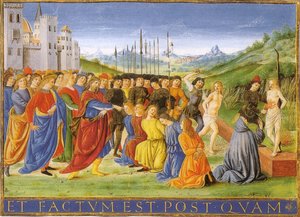
Quick Facts
- Artistic Movement Or Style: Renaissance Imitator
- Artists Who Influenced This Artist:
- Bartolomeo della Gatta
- Domenico Ghirlandaio
- Date Of Birth: c. 1452
- Date Of Death: c. 1525
- Full Name: Attavante degli Attavanti
- Nationality: Italian
- Notable Artworks:
- Missal (Brussels)
- Breviary (Paris)
- Jerome's Bible
- Book of Hours
- Place Of Birth: Florence, Italy
Related Articles
Illuminating Faith & Power: A Journey Through Medieval Art (c. 500 – c. 1500)
Explore the rich history of Medieval Art (c. 500 – c. 1500) with ArtsDot. Discover Byzantine mosaics, Gothic cathedrals & Renaissance masterpieces. Expert insights & museum-quality reproductions.

Uffizi's 25 Masterpieces: Renaissance Art & Timeless Decor Inspiration
Journey through the Uffizi Gallery's 25 most iconic Renaissance artworks! Explore Botticelli, Leonardo da Vinci & Michelangelo’s masterpieces. Find museum-quality art reproductions and curated decor ideas to bring timeless Italian beauty into your home. Discover all masterpieces on ArtsDot.com
Andrea del Sarto: Florentine Grace, Technical Mastery & Artistic Ambition
Explore the life & art of Andrea del Sarto, a Florentine Renaissance master renowned for harmonious compositions & technical brilliance. Discover his frescoes, portraits, and lasting influence on art history.
Illuminating Masterpieces: A Comprehensive Guide to Art Lighting for Enhanced Aesthetic Impact and Preservation
Discover expert guidance on art lighting & preservation. Learn how to protect your valuable collection with optimal illumination techniques for lasting beauty. Enhance aesthetic impact & prevent damage – a comprehensive guide.
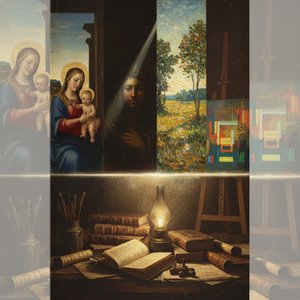
Illuminating Visions: A Historical & Artistic Exploration of Light in Painting
Explore the captivating history of light in painting! From Renaissance chiaroscuro to American Luminism, discover how artists mastered illumination for dramatic effect & emotional resonance. Expert insights at ArtsDot.