 Send
Send Share
Share
 Details

 Download
 Similars
 Diaporama
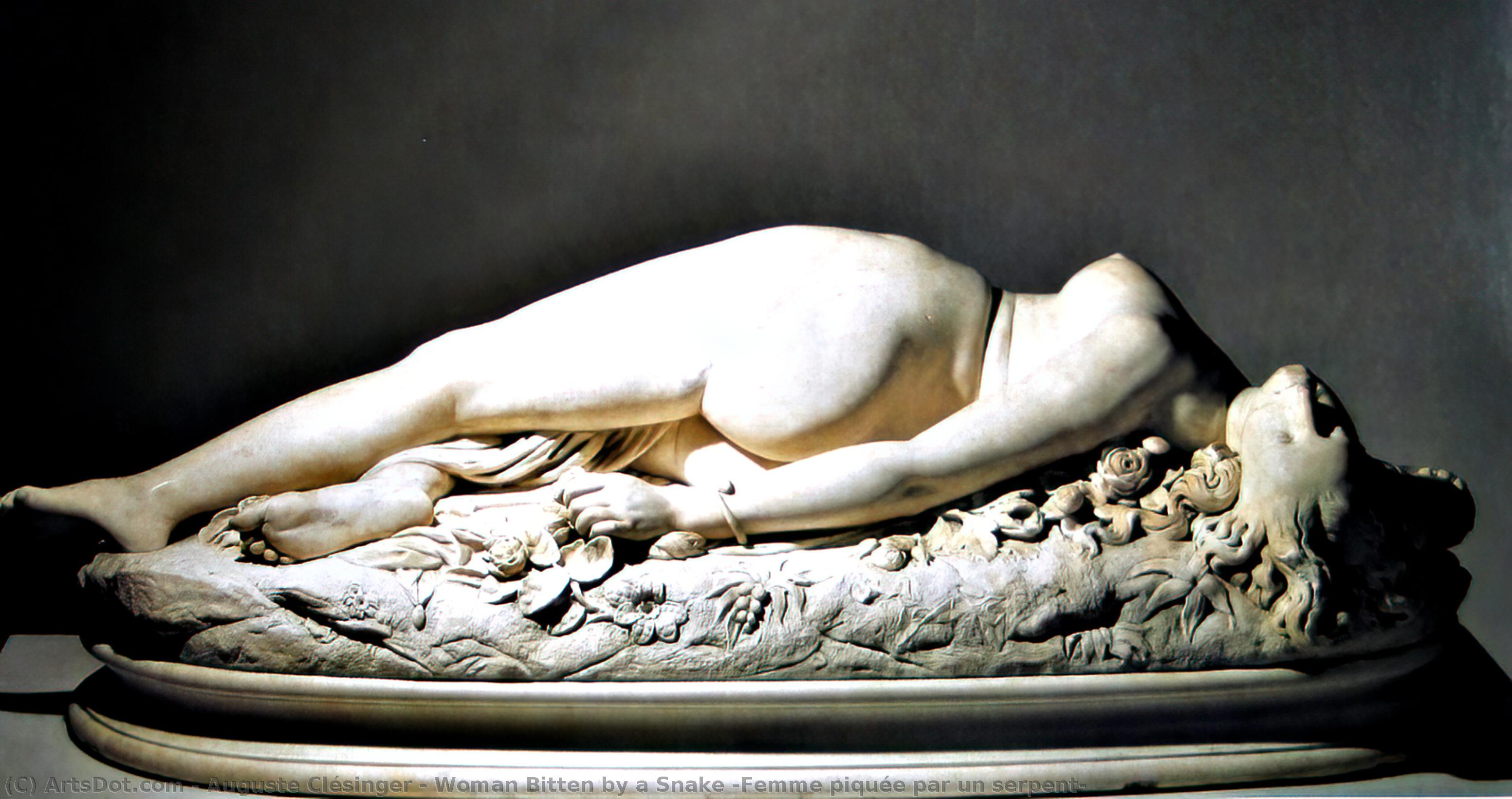
Woman Bitten by a Snake (Femme piquée par un serpent)
 Sculpture Bronze
- Romanticism
 1847
1847 56.0 x 180.0 cm
 Musée d'Orsay
 Read More
Giclée / Art Print
Museum-quality giclée or canvas print with fast production and flexible finish options. ( Buy Hand Made Painting Buy Image)




































Pick from our preset sizes that match the artwork's original proportions.

You may enter your own dimensions to fit a specific frame or space. If your selected size does not match the original image's proportions, we will either crop the artwork or extend the image with a mirrored or solid-fill edge. A digital mockup will be sent for your approval before production begins.
Please note that the on-screen preview does not reflect the actual cropping or extension. Only the mockup will accurately show the final composition.
While custom sizes are available, we recommend selecting a dimension from the predefined list to preserve the original proportions.
Worldwide Delivery () in 2 weeks instead of standard 4/5 weeks. (31 August)

Free Worldwide Express Shipping

High-Quality Linen Canvas

Full Shipping Insurance

Customs Tax Refund Guarantee

True Color Matching Guarantee

60-Day Return Policy (Defects Only)

100% Money-Back Guarantee

Bulk Discount Offer
 Glass option is only available in size under 110 CM

Woman Bitten by a Snake (Femme piquée par un serpent)
Giclée / Art Print
Reproduction Size
-


Total Price
$ 63
Auguste Clésinger’s Woman Bitten by a Snake: Scandal and Symbolism at the Salon of 1847
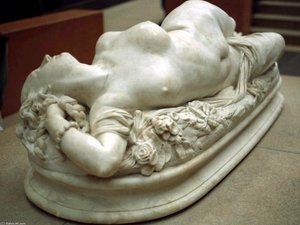
The sculpture Femme piquée par un serpent, created in 1847 by Auguste Clésinger, remains one of the most controversial artworks produced during the Romantic era. Exhibited at the Paris Salon that year—a pivotal moment for artistic discourse—it ignited considerable debate and solidified Clésinger’s reputation as a daring innovator who pushed boundaries of acceptable subject matter and technique. More than just a depiction of nudity, it embodies a complex interplay of symbolism and psychological drama, reflecting anxieties surrounding sexuality, mortality, and the transformative power of experience.The Model and Context: Apollonie Sabatier's Influence
Clésinger’s inspiration stemmed from Apollonie Sabatier, a Parisian beauty who captivated artists and intellectuals alike. Sabatier, known affectionately as “La Présidente,” hosted lavish salons where she cultivated relationships with prominent figures of the artistic milieu—including Baudelaire, Gautier, and Eugène Delacroix—creating an environment ripe for experimentation and provocation. Clésinger meticulously crafted his sculpture from a life cast of Sabatier’s body, a practice considered scandalous at the time due to its perceived lack of artistic integrity. Critics questioned whether Clésinger had truly captured the essence of his muse or merely indulged in technical virtuosity—a debate that continues to fascinate art historians today. The Salon of 1847 was itself marked by considerable upheaval and social unrest, mirroring the broader anxieties surrounding industrialization and societal change; Clésinger’s sculpture served as a visual manifestation of these turbulent currents.A Study in Marble: Technique and Aesthetic Sensibility
Clésinger's masterful execution demonstrates his profound understanding of sculptural technique. He employed a life cast from Sabatier’s body, utilizing the method pioneered by Michelangelo—a bold move that challenged prevailing artistic conventions. The sculpture is carved from Carrara marble, chosen for its luminosity and ability to convey subtle nuances of form and texture. Clésinger painstakingly sculpted the woman's musculature, capturing the tension and vulnerability inherent in her pose. He skillfully blended classical ideals of beauty with Romantic sensibilities—evident in the idealized face juxtaposed against the dramatic realism of the snake bite. The artist’s meticulous attention to detail—particularly the depiction of cellulite—was deliberately provocative, signaling a rejection of academic standards and embracing an unflinching portrayal of human physicality.Symbolism and Narrative Depth
Beyond its technical prowess, Femme piquée par un serpent is laden with symbolic significance. The snake represents poison, temptation, and death—themes prevalent in Romantic literature and art. Its bite symbolizes the intrusion of pain and suffering into idealized beauty, highlighting the inescapable realities of human experience. The woman’s contorted posture conveys a visceral reaction to trauma, mirroring the psychological turmoil characteristic of Romantic artists grappling with existential questions. Clésinger's sculpture isn’t merely aesthetically pleasing; it compels viewers to confront uncomfortable truths about desire, vulnerability, and mortality—a testament to his artistic vision and enduring legacy.Legacy and Influence
The sculpture’s impact extended far beyond the Salon of 1847, establishing Clésinger as a pioneer of realism in sculpture and influencing subsequent generations of artists. Its daring portrayal of female nudity challenged societal norms and sparked critical discussion about art's role in reflecting and shaping cultural values. Today, Femme piquée par un serpent continues to captivate audiences with its dramatic intensity and psychological depth—a timeless masterpiece that embodies the spirit of Romanticism and remains a cornerstone of artistic history.Related Artworks
Artist Biography
Auguste Clésinger: Life and Legacy
Early Life and Training
- Born: October 22, 1814, in Besançon, France.
- Auguste Clésinger came from an artistic family; his father, Georges-Philippe Clésinger, was a sculptor who provided Auguste with his initial training.
- This early exposure instilled in him a foundational understanding of sculptural techniques and aesthetics.
Artistic Development and Style
- Clésinger’s artistic style evolved through the 19th century, initially embracing Neoclassical principles but gradually incorporating elements of Realism and Romanticism.
- He skillfully blended technical precision with emotional intensity in his works.
- His sculptures often depict dramatic narratives and sensuous figures, showcasing a mastery of anatomy and form.
Major Works and Achievements
- Woman Bitten by a Serpent (1847): This sculpture caused a sensation at the Paris Salon due to its dramatic realism and erotic undertones. It was modeled from life casts of Apollonie Sabatier.
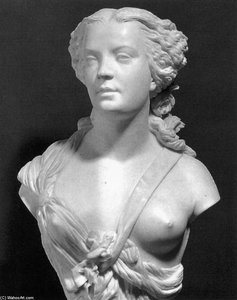
- Madame Sabatier (1847): A marble portrait of his model, Apollonie Sabatier, further establishing Clésinger’s reputation for capturing beauty and sensuality.
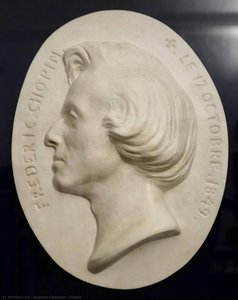
- Chopin's Funerary Monument (1850): Commissioned after the composer Frédéric Chopin’s death, this white marble monument at Père Lachaise Cemetery is a poignant tribute to the musician.
- Angel of Grief: A deeply moving sculpture embodying Baroque drama and pathos.
- He also created busts of prominent figures like Rachel Félix and Théophile Gautier, and a statue of Louise of Savoy.
Influences and Relationships
- Influenced by: His father, Georges-Philippe Clésinger, provided his initial artistic foundation.
- Clésinger’s association with Apollonie Sabatier, a salonnière and mistress of several prominent artists including Charles Baudelaire, exposed him to intellectual and artistic circles.
- His marriage in 1847 to Solange Dudevant, daughter of George Sand, further connected him to literary society.
Historical Significance and Legacy
- Clésinger’s work reflects the artistic currents of 19th-century France, bridging Neoclassicism with emerging Realist tendencies.
- Recognition: He received the Knight's Cross of the Légion d'honneur in 1849 and was promoted to Officer in 1864.
- His sculptures continue to be admired for their technical skill, emotional depth, and dramatic impact. His works are displayed at prominent museums such as the Musée d’Orsay.
- Death: He died on January 5, 1883, in Paris, and is buried in Père Lachaise Cemetery.
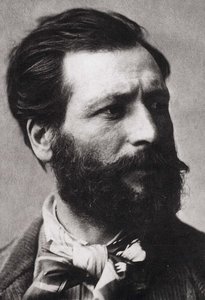
auguste clésinger
1814 - 1883 , France
Quick Facts
- Birth Date: 1814-10-22
- Birth Place: Besançon, France
- Death Date: 1883-01-05
- Influenced: None, 'influenced by': 'Georges-Philippe Clésinger (father)', 'movement': ['Realism', 'Romanticism'], 'name': 'Auguste Clésinger', 'nationality': 'French', 'notable works': ['Woman Bitten by a Serpent', 'Angel of Grief', 'Madame Sabatier',
Related Articles
The Enduring Allure of Marble in Art History: From Classical Sculpture to Modern Abstraction
Explore the captivating history of marble sculpture from ancient Greece to modern art. Discover renowned artists like Canova & Michelangelo, carving techniques, and investment insights at ArtsDot.
Renoir's Masterpieces: Explore 25 Iconic Paintings & Bring Art Home | ArtsDot
Explore 25 iconic Pierre-Auguste Renoir paintings! Discover the stories behind Impressionist masterpieces like 'Dance at Le Moulin de la Galette' & 'Luncheon of the Boating Party'. Find museum-quality art reproductions and elevate your home decor with ArtsDot.com.

Bronze Sculptures That Defined Art History | ArtsDot
Journey through art history with our Top 10 bronze sculptures! Explore masterpieces by Rodin, Michelangelo & more. Discover stories behind iconic statues and find museum-quality reproductions for your home decor at ArtsDot.com.

The Enduring Form: Exploring Themes & Techniques in Sculpture Across Historical Periods
Explore the rich history of sculpture from ancient masterpieces to contemporary innovations. Discover key techniques, influential artists & investment potential for discerning art collectors.

The Enduring Form: Sculpture Across History, Technique & Emotional Resonance
Explore the rich history of sculpture with ArtsDot. Discover key techniques, influential artists & investment potential for discerning collectors. Expert insights into valuing and collecting timeless masterpieces.