 Send
Send Share
Share
 Details

 Download
 Similars
 Diaporama
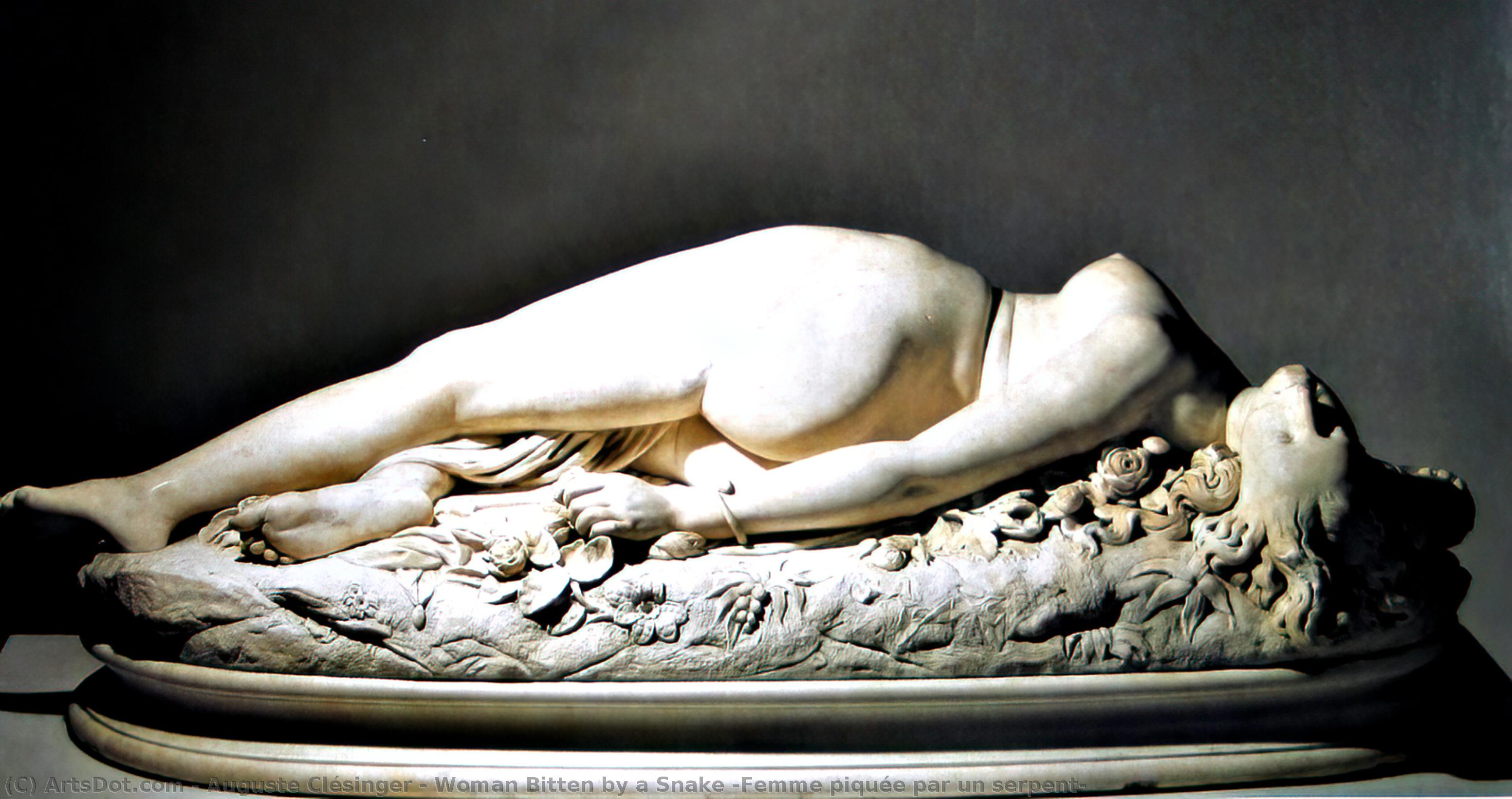
Woman Bitten by a Snake (Femme piquée par un serpent)
 Marble
- Sculpture
- Romanticism
 1847
1847- 19th Century
 56.0 x 180.0 cm
 Musée d'Orsay
 Read More
Giclée / Art Print
Museum-quality giclée or canvas print with fast production and flexible finish options. ( Buy Hand Made Painting Buy Image)




































Pick from our preset sizes that match the artwork's original proportions.

You may enter your own dimensions to fit a specific frame or space. If your selected size does not match the original image's proportions, we will either crop the artwork or extend the image with a mirrored or solid-fill edge. A digital mockup will be sent for your approval before production begins.
Please note that the on-screen preview does not reflect the actual cropping or extension. Only the mockup will accurately show the final composition.
While custom sizes are available, we recommend selecting a dimension from the predefined list to preserve the original proportions.
Worldwide Delivery () in 2 weeks instead of standard 4/5 weeks. (2 September)

Free Worldwide Express Shipping

High-Quality Linen Canvas

Full Shipping Insurance

Customs Tax Refund Guarantee

True Color Matching Guarantee

60-Day Return Policy (Defects Only)

100% Money-Back Guarantee

Bulk Discount Offer
 Glass option is only available in size under 110 CM

Woman Bitten by a Snake (Femme piquée par un serpent)
Giclée / Art Print
Reproduction Size
-


Total Price
$ 63
A Scandal in Marble: The Sensuous Drama of Clésinger
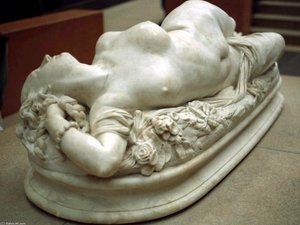
In the grand, gilded halls of the 1847 Paris Salon, few works ignited as much fervent debate and whispered scandal as Auguste Clésinger’s Woman Bitten by a Snake. This breathtaking marble masterpiece does not merely sit in stillness; it writhes with a visceral, almost cinematic energy that captures the viewer in a moment of sudden, sharp agony and profound ecstasy. The sculpture depicts a nude woman, her body contorted in a dramatic reflex of pain as a small serpent latches onto her wrist. It is a work that transcends the boundaries of traditional Neoclassicism, leaning heavily into the turbulent emotions of the Romantic era, where the line between suffering and pleasure is famously blurred.
For the discerning collector or lover of fine art, the piece offers an unparalleled study in movement and tension. The way Clésinger captures the soft, yielding flesh of the subject—rendered with such startling realism that it seems to pulse beneath the stone—creates a sensory experience that is both haunting and deeply captivating. It is a conversation piece designed to command attention, bringing a sense of historical weight and dramatic flair to any curated space.
The Alchemy of Realism and the Muse
What truly sets this sculpture apart from its contemporaries is Clésinger’s revolutionary approach to technique. To achieve a level of anatomical precision that felt almost scandalous to the critics of the day, the artist utilized a method of life-casting from his model, the legendary Apollonie Sabatier. By capturing the literal contours of her body, Clés_inger moved beyond mere representation into the realm of hyper-realism. This technique allowed him to render the subtle dimples of skin and the delicate tension of muscles with a fidelity that was unprecedented in marble sculpture.
This intimate connection between artist and muse adds a layer of psychological depth to the work. Sabatier, a celebrated salon hostess and a figure of immense bohemian influence, provided more than just a physical form; she provided the spirit of an era defined by shifting social mores and burgeoning sensuality. When viewing a high-quality reproduction of this piece, one can almost feel the breath of 19th-century Paris, making it an exquisite choice for interior designers looking to infuse a room with narrative richness and historical soul.
Symbolism and the Eternal Allure of the Serpent
Beyond its technical virtuosity, Woman Bitten by a Snake is steeped in a complex web of symbolism. The serpent, a perennial icon in art history, serves as a dual messenger of mortality and temptation. Its bite represents a sudden intrusion of fate—a sharp, stinging reminder of the fragility of life amidst the beauty of the flesh. Yet, within the context of Romanticism, the snake also evokes the transformative power of experience, suggesting that through pain, one undergoes a profound metamorphosis.
The interplay of light and shadow across the white Carrara marble enhances this emotional duality, creating a visual rhythm that guides the eye from the serpent's coil to the woman's expressive, recoiling form. For those seeking to decorate with art that possesses both intellectual depth and aesthetic grandeur, this sculpture offers a timeless allure. It is not merely a depiction of a moment in time, but an eternal exploration of the human condition—vulnerable, beautiful, and eternally caught in the grip of passion.
Related Artworks




Artist Biography
Auguste Clésinger: Life and Legacy
Early Life and Training
- Born: October 22, 1814, in Besançon, France.
- Auguste Clésinger came from an artistic family; his father, Georges-Philippe Clésinger, was a sculptor who provided Auguste with his initial training.
- This early exposure instilled in him a foundational understanding of sculptural techniques and aesthetics.
Artistic Development and Style
- Clésinger’s artistic style evolved through the 19th century, initially embracing Neoclassical principles but gradually incorporating elements of Realism and Romanticism.
- He skillfully blended technical precision with emotional intensity in his works.
- His sculptures often depict dramatic narratives and sensuous figures, showcasing a mastery of anatomy and form.
Major Works and Achievements
- Woman Bitten by a Serpent (1847): This sculpture caused a sensation at the Paris Salon due to its dramatic realism and erotic undertones. It was modeled from life casts of Apollonie Sabatier.
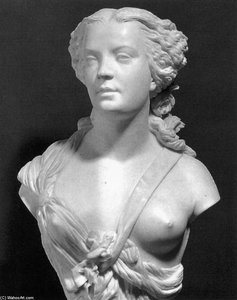
- Madame Sabatier (1847): A marble portrait of his model, Apollonie Sabatier, further establishing Clésinger’s reputation for capturing beauty and sensuality.
- Chopin's Funerary Monument (1850): Commissioned after the composer Frédéric Chopin’s death, this white marble monument at Père Lachaise Cemetery is a poignant tribute to the musician.
- Angel of Grief: A deeply moving sculpture embodying Baroque drama and pathos.
- He also created busts of prominent figures like Rachel Félix and Théophile Gautier, and a statue of Louise of Savoy.
Influences and Relationships
- Influenced by: His father, Georges-Philippe Clésinger, provided his initial artistic foundation.
- Clésinger’s association with Apollonie Sabatier, a salonnière and mistress of several prominent artists including Charles Baudelaire, exposed him to intellectual and artistic circles.
- His marriage in 1847 to Solange Dudevant, daughter of George Sand, further connected him to literary society.
Historical Significance and Legacy
- Clésinger’s work reflects the artistic currents of 19th-century France, bridging Neoclassicism with emerging Realist tendencies.
- Recognition: He received the Knight's Cross of the Légion d'honneur in 1849 and was promoted to Officer in 1864.
- His sculptures continue to be admired for their technical skill, emotional depth, and dramatic impact. His works are displayed at prominent museums such as the Musée d’Orsay.
- Death: He died on January 5, 1883, in Paris, and is buried in Père Lachaise Cemetery.

auguste clésinger
1814 - 1883 , France
Quick Facts
- Birth Date: 1814-10-22
- Birth Place: Besançon, France
- Death Date: 1883-01-05
- Influenced: None, 'influenced by': 'Georges-Philippe Clésinger (father)', 'movement': ['Realism', 'Romanticism'], 'name': 'Auguste Clésinger', 'nationality': 'French', 'notable works': ['Woman Bitten by a Serpent', 'Angel of Grief', 'Madame Sabatier',
Related Articles
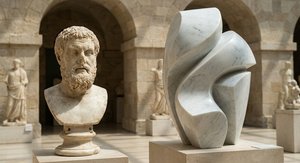
The Enduring Allure of Marble in Art History: From Classical Sculpture to Modern Abstraction
Explore the captivating history of marble sculpture from ancient Greece to modern art. Discover renowned artists like Canova & Michelangelo, carving techniques, and investment insights at ArtsDot.
Renoir's Masterpieces: Explore 25 Iconic Paintings & Bring Art Home | ArtsDot
Explore 25 iconic Pierre-Auguste Renoir paintings! Discover the stories behind Impressionist masterpieces like 'Dance at Le Moulin de la Galette' & 'Luncheon of the Boating Party'. Find museum-quality art reproductions and elevate your home decor with ArtsDot.com.

Bronze Sculptures That Defined Art History | ArtsDot
Journey through art history with our Top 10 bronze sculptures! Explore masterpieces by Rodin, Michelangelo & more. Discover stories behind iconic statues and find museum-quality reproductions for your home decor at ArtsDot.com.

The Enduring Form: Exploring Themes & Techniques in Sculpture Across Historical Periods
Explore the rich history of sculpture from ancient masterpieces to contemporary innovations. Discover key techniques, influential artists & investment potential for discerning art collectors.

The Enduring Form: Sculpture Across History, Technique & Emotional Resonance
Explore the rich history of sculpture with ArtsDot. Discover key techniques, influential artists & investment potential for discerning collectors. Expert insights into valuing and collecting timeless masterpieces.