 Preview
 Send
Send Share
Share
 Details

 Download
 Similars
 X-Ray
X-Ray Diaporama
The Princess of Hesse-Homburg as Minerva


 Read More
Hand Made Oil Reproduction
Hand-painted oil on canvas in your size and frame, made to order by our artists. ( Buy Print Buy Image)




P118B $10

P118H $10

P118W $10

P438Z $10

P508JH $12

P508YH $12

P805H $10

P805Z $10

P919BZ $10

P919G $10

P919XJ $10

P959ZH $10

P968JZ $12

W106C $8

W218G $10

W218JH $8

W218Y $10

W307PJ $10

W316G $10

W316PJ $8

W316Y $10

W398PJ $8

W4111J $10

W500HY $15

W500JH $15

W692G $12

W849H $8

W940BG $15

W953PJ $8




Pick from our preset sizes that match the artwork's original proportions.

You may enter your own dimensions to fit a specific frame or space. If your selected size does not match the original image's proportions, we will either crop the artwork or extend the painting with additional hand-painted elements. A digital mockup will be sent for your approval before production begins.
Please note that the on-screen preview does not reflect the actual cropping or extension. Only the mockup will accurately show the final composition.
While custom sizes are available, we recommend selecting a dimension from the predefined list to preserve the original proportions.
After order, ArtsDot.com team will email client for instructions and provide a mockup preview
Worldwide Delivery () in 3/4 weeks instead of standard 5 weeks. (2 September). No compromise on quality.

Free Worldwide Express Shipping

High-Quality Linen Canvas

Full Shipping Insurance

Customs Tax Refund Guarantee

True Color Matching Guarantee

60-Day Return Policy (Defects Only)

100% Money-Back Guarantee

Bulk Discount Offer
 Glass option is only available in size under 110 CM

The Princess of Hesse-Homburg as Minerva
Reproduction Medium
Reproduction Size
-


Total Price
$ 263
Augustin Pajou: The Sculptor of Elegant Grace
Augustin Pajou (1730 – 1809) stands as a pivotal figure in the artistic landscape of late eighteenth-century France, embodying the ideals of Neoclassicism and securing his place amongst the most celebrated sculptors of his era. Born in Paris to Jean-Baptiste Pajou, a renowned sculptor himself, Augustin inherited a legacy of artistic excellence and swiftly established himself as a prodigious talent destined for greatness. His formative years were marked by rigorous training under Lemoyne, cementing his understanding of classical principles and shaping his distinctive sculptural style—characterized by refined grace, meticulous detail, and an unwavering commitment to capturing idealized beauty.- Early Career & Prix de Rome: Pajou’s ambition propelled him toward the prestigious Prix de Rome in 1784, a competition that recognized exceptional artistic merit. Despite multiple unsuccessful attempts, he persevered, demonstrating remarkable deter
The Princess of Hesse-Homburg as Minerva
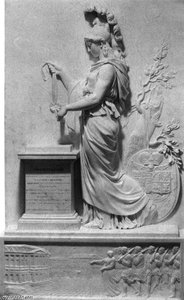
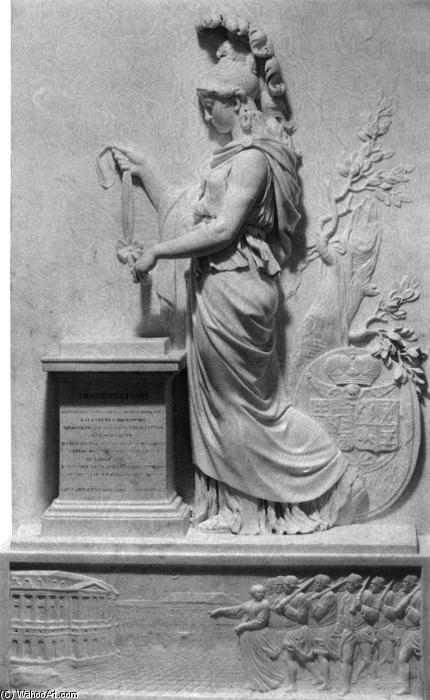
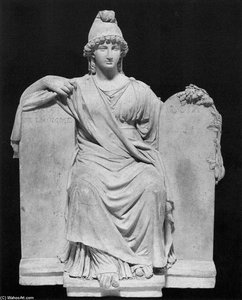
Pajou showed this marble relief at the Salon of 1761 with the somewhat unpromising theme of the Princess of Hesse-Homburg as Minerva consecrating on the Altar of Immortality the Cordon of the Order of St Catherine. Though the subject might be obscure, Pajou's treatment of it effectively avoids both the ridiculous and the fussy. The execution is of great delicacy, with graceful chiseling of the patterned helmet and the folds of Grecian-style drapery that gently fall about the shoulders. While the bas-relief below is a piece of historical narration, the main portion is composed with deliberate calm, aiming at harmony of line, a sense of interval, and a purity of form.- Composition: The central figure dominates the image, positioned slightly off-center to create visual interest. A rectangular base with inscribed text sits below her, providing a grounding element. Behind her, stylized trees and foliage add depth and context. At the bottom of the relief, a scene depicting figures possibly representing labor, conquest, or a dedication to a specific cause is carved.
- Color Palette: The image is entirely grayscale, lacking any color information. Shades range from deep blacks to bright whites, creating contrast and highlighting details within the sculpture.
- Use of Lines: Strong, defined lines are characteristic of relief sculpture. These lines delineate forms, create shadows, and define the edges of architectural elements and foliage. Curved lines contribute to the flowing drapery of the princess’s garments.
Technique & Materials
The original artwork is a relief sculpture carved from stone (likely marble). This photograph captures that medium. The technique involves carving away portions of the stone to create raised images and designs. The artist would have used various tools to achieve different levels of detail and texture. The primary material is stone, likely marble or a similar fine-grained stone.- Lighting: The lighting appears to be directional, creating highlights and shadows that emphasize the three-dimensional nature of the relief. This enhances the depth and form of the figures and architectural elements.
Symbolism & Emotional Impact
Minerva represents wisdom, strategic warfare, and craftsmanship. Her depiction suggests intelligence, strength, and perhaps even political power. The architectural setting evokes classical ideals of order and civilization. The lower scene could symbolize labor, conquest, or a dedication to a specific cause. Pajou’s masterful rendering captures not merely the likeness of the princess but also her inner fortitude—a testament to Neoclassical artistry's ability to convey profound emotional resonance through meticulous form and serene composition.- Style: The style is neoclassical, characterized by its emphasis on classical forms, symmetry, and idealized figures. It reflects the artistic trends prevalent in the late 18th century.
Related Artworks


Artist Biography
Augustin Pajou: The Sculptor of Elegant Grace
Augustin Pajou (1766 – 1809) stands as a pivotal figure in the artistic landscape of late eighteenth-century France, embodying the ideals of Neoclassicism and securing his place amongst the most celebrated sculptors of his era. Born in Paris to Jean-Baptiste Pajou, a renowned sculptor himself, Augustin inherited a legacy of artistic excellence and swiftly established himself as a prodigious talent destined for greatness. His formative years were marked by rigorous training under Lemoyne, cementing his understanding of classical principles and shaping his distinctive sculptural style—characterized by refined grace, meticulous detail, and an unwavering commitment to capturing idealized beauty.- Early Career & Prix de Rome: Pajou’s ambition propelled him toward the prestigious Prix de Rome in 1784, a competition that recognized exceptional artistic merit. Despite multiple unsuccessful attempts, he persevered, demonstrating remarkable determination and honing his craft through tireless experimentation.
- Notable Commissions & Patronage: His breakthrough came with commissions from influential patrons like Madame du Barry and Louis XVI, securing him positions at Versailles and propelling him to international acclaim. These projects showcased Pajou’s ability to translate aristocratic tastes into breathtaking sculptural masterpieces.
Sculptural Style & Technique
Pajou's artistic vision was firmly rooted in the principles of Neoclassicism, a movement that championed rationalism and sought inspiration from ancient Greece and Rome. He meticulously studied classical sculptures, absorbing their anatomical accuracy and expressive dynamism. His technique involved painstaking carving—often utilizing marble—employing tools with precision to achieve unparalleled realism and conveying emotion through subtle gestures and facial expressions. The sculptor’s mastery of material was evident in his ability to imbue stone with life-like qualities, capturing the essence of human form with remarkable sensitivity.- Emphasis on Anatomy & Proportion: Pajou adhered strictly to classical anatomical standards, ensuring that every sculpture reflected a profound understanding of human musculature and skeletal structure.
- Material Choice & Surface Treatment: He favored marble—particularly alabaster—renowned for its translucency and ability to capture delicate textures—a hallmark of his distinctive aesthetic.
Major Achievements & Legacy
Augustin Pajou’s artistic output spanned a remarkable breadth of projects, cementing his reputation as one of the foremost sculptors of his time. Among his most celebrated works are monumental sculptures like “Neptune Calming the Waves,” commissioned for Lyon’s Musée des Beaux-Arts, and busts of luminaries such as Voltaire, Rousseau, and Madame du Barry—each embodying exceptional artistic skill and capturing the spirit of Enlightenment thought. Furthermore, he played a crucial role in decorating Versailles' opera house, collaborating with Jean-Baptiste Raspail to create opulent interiors that reflected royal grandeur. His contribution to the monumental sculpture "The Princesse de Hesse-Homburg as Minerva" remains an enduring testament to his artistic prowess and stylistic innovation.- Versailles Opera House Decoration: Pajou’s involvement in Versailles' opera house project solidified his position as a leading artist of the era, demonstrating his ability to elevate architectural spaces through sculptural embellishments.
- Influence on Subsequent Artists: Pajou’s stylistic influence extended beyond his own lifetime, inspiring generations of sculptors who embraced Neoclassical ideals and sought to emulate his meticulous craftsmanship and expressive artistry.
Recognition & Collections
Today, Augustin Pajou's sculptures reside in prestigious collections worldwide—including the Louvre Museum, Musée des Beaux-Arts Lyon, Metropolitan Museum of Art (New York), Tate Britain, and numerous other institutions across Europe and America. His enduring legacy testifies to his unparalleled artistic achievement and ensures that his masterpieces continue to captivate audiences with their elegance, grace, and profound understanding of classical art principles. He is remembered as a sculptor who elevated Neoclassicism to new heights, securing his place among the giants of French sculpture history.
Augustin Pajou
1766 - 1828 , France
Quick Facts
- Artistic Movement Or Style: Neoclassical
- Artists Or Movements Influenced By This Artist: ['Classical Art']
- Artists Who Influenced This Artist: ['Jean-Baptiste Lemoyne']
- Date Of Birth: Paris, France (1766)
- Date Of Death: Paris, France (1809)
- Full Name: Augustin Pajou
- Nationality: French
- Notable Artworks:
- Bust of Madame du Barry
- Psyche Abandoned
- The Princess of Hesse-Homburg as Minerva
- Place Of Birth: Paris
Related Articles

Bronze Sculptures That Defined Art History | ArtsDot
Journey through art history with our Top 10 bronze sculptures! Explore masterpieces by Rodin, Michelangelo & more. Discover stories behind iconic statues and find museum-quality reproductions for your home decor at ArtsDot.com.

The Enduring Form: Exploring Themes & Techniques in Sculpture Across Historical Periods
Explore the rich history of sculpture from ancient masterpieces to contemporary innovations. Discover key techniques, influential artists & investment potential for discerning art collectors.

Bronze Age to Modern Masters: 10 Sculptures That Redefined Art | ArtsDot
Journey through art history with 10 legendary bronze sculptures – from Michelangelo's David to Rodin’s Thinker. Explore the stories, techniques & timeless beauty of these masterpieces. Find museum-quality reproductions & elevate your home decor on ArtsDot.com.
The Enduring Form: Sculpture Across History, Technique & Emotional Resonance
Explore the rich history of sculpture with ArtsDot. Discover key techniques, influential artists & investment potential for discerning collectors. Expert insights into valuing and collecting timeless masterpieces.
Antonio Canova: Neoclassical Sculpture & the Pursuit of Emotional Perfection
Explore the life & art of Antonio Canova, the greatest Neoclassical sculptor. Discover his masterpieces, innovative techniques, and lasting influence on fine art collecting. Expert insights for discerning investors.