 Preview
 Send
Send Share
Share
 Details

 Download
 Similars
 X-Ray
X-Ray Diaporama
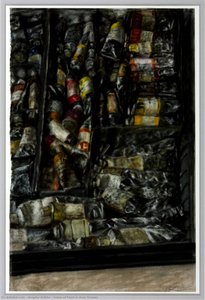
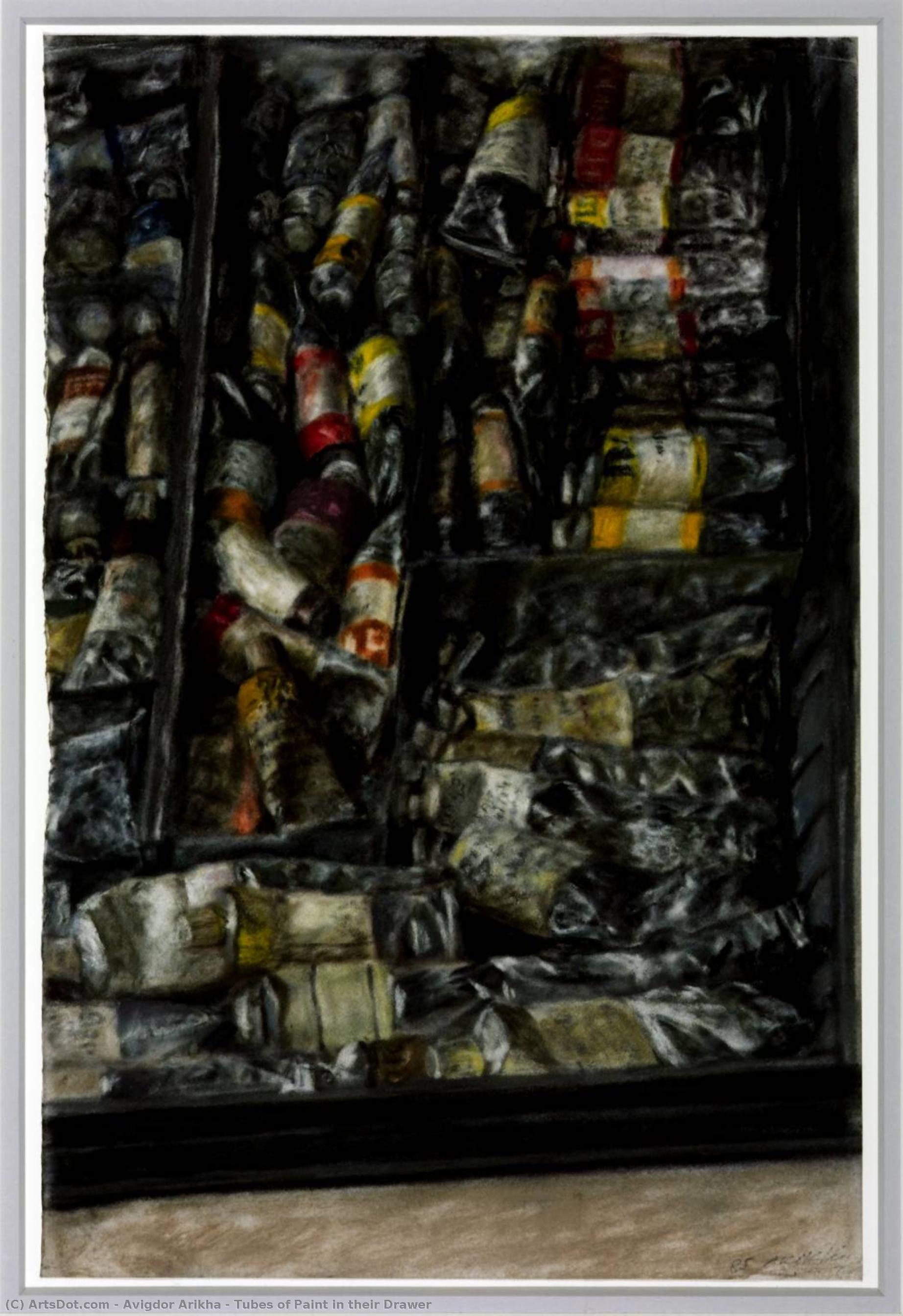
Tubes of Paint in their Drawer


 Read More
Giclée / Art Print
Museum-quality giclée or canvas print with fast production and flexible finish options. ( Buy Hand Made Painting Buy Image)




P118B $10

P118H $10

P118W $10

P438Z $10

P508JH $12

P508YH $12

P805H $10

P805Z $10

P919BZ $10

P919G $10

P919XJ $10

P959ZH $10

P968JZ $12

W106C $8

W218G $10

W218JH $8

W218Y $10

W307PJ $10

W316G $10

W316PJ $8

W316Y $10

W398PJ $8

W4111J $10

W500HY $15

W500JH $15

W692G $12

W849H $8

W940BG $15

W953PJ $8




Pick from our preset sizes that match the artwork's original proportions.

You may enter your own dimensions to fit a specific frame or space. If your selected size does not match the original image's proportions, we will either crop the artwork or extend the image with a mirrored or solid-fill edge. A digital mockup will be sent for your approval before production begins.
Please note that the on-screen preview does not reflect the actual cropping or extension. Only the mockup will accurately show the final composition.
While custom sizes are available, we recommend selecting a dimension from the predefined list to preserve the original proportions.
Worldwide Delivery () in 2 weeks instead of standard 4/5 weeks. (27 August)

Free Worldwide Express Shipping

High-Quality Linen Canvas

Full Shipping Insurance

Customs Tax Refund Guarantee

True Color Matching Guarantee

60-Day Return Policy (Defects Only)

100% Money-Back Guarantee

Bulk Discount Offer
 Glass option is only available in size under 110 CM

Tubes of Paint in their Drawer
Giclée / Art Print
Reproduction Size
-


Total Price
$ 63
Collectible Description
The Intimacy of the Artist's Workspace
In the quiet, contemplative realm of Avigdor Arikha’s Tubes of Paint in their Drawer, we are invited into a moment of profound stillness that belies the creative chaos contained within. This evocative work serves as more than a mere study of objects; it is a window into the very soul of the artistic process. The composition presents a densely packed drawer, where various tubes of paint lie in a state of beautiful disarray. There is an undeniable sense of abundance here, a feeling that each metallic cylinder holds the potential for a new masterpiece. Through his masterful use of expressive lines and a somber, atmospheric palette, Arikha transforms a mundane corner of a studio into a site of deep emotional resonance, capturing the tension between the organized tools of a craft and the wild, unbridled imagination they are meant to serve.
The technique employed in this piece speaks to Arikha’s legendary ability to capture immediacy. Utilizing what appears to be the raw, tactile energy of charcoal or graphite, the artist employs intricate hatching and cross-hatching to breathe life into the inanimate. The dark, heavy outlines of the tubes create a sense of weight and volume, while delicate, lighter strokes suggest the subtle glint of light reflecting off metallic surfaces. This interplay of shadow and highlight creates a dramatic, almost chiaroscuro effect, where deep blacks and grays provide a stage for sudden, vibrant bursts of color. These pops of yellow, orange, red, and blue act as rhythmic pulses within the composition, representing the latent energy of the pigments waiting to be unleashed upon a canvas.
A Legacy of Observation and Resilience
To understand the depth of this work, one must consider the life of Avigdor Arikha himself. Born in Romania and having survived the harrowing realities of the Transnistria concentration camps during World War II, Arikha’s relationship with reality was always marked by a profound need to observe and record. His journey from the abstract movements of post-war Paris back to a rigorous, life-based realism defines his artistic identity. In Tubes of Paint in their Drawer, we see this evolution distilled into a single, focused subject. The piece reflects his transition away from abstraction toward a style that celebrates the tangible world, finding extraordinary meaning in the most ordinary of subjects through sheer, disciplined observation.
For the discerning collector or interior designer, this artwork offers a sophisticated layer of intellectual and aesthetic depth. It is a piece that commands attention not through loud colors or grand gestures, but through its quiet intensity and textural richness. When placed within a curated space—perhaps an elegant study, a modern gallery, or a creative atelier—it acts as a focal point of inspiration. The artwork’s ability to evoke feelings of accumulated potential and the sanctity of the creative act makes it a timeless addition to any collection. It is a tribute to the tools of the trade, a celebration of the messy, beautiful reality of creation, and a testament to the enduring power of the artist's gaze.
Related Artworks
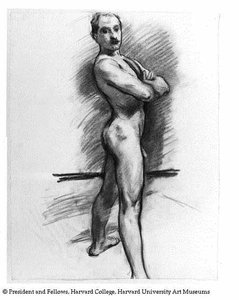
Artist Biography
Early Life and Background
- Born: Radauti, Romania (1929)
- Died: 2010
- Victor Długacz (later Avigdor Arikha) was born to German-speaking Jewish parents in Rădăuţi, Bukovina, Romania.
- He grew up in Czernowitz, also in Bukovina.
- His family faced forced deportation in 1941 to the Romanian-run concentration camps of Transnistria, where his father died.
- Arikha survived by drawing scenes of deportation, which were shown to delegates of the International Red Cross.
Artistic Development and Style
- Emigration and Education: Emigrated to Palestine in 1944 with his sister. Lived in Kibbutz Ma'ale HaHamisha until 1948. Studied at the Bezalel School of Art in Jerusalem (1946-1949).
- Early Career and Abstraction: Won a scholarship to study at the École des Beaux Arts in Paris (1949), where he learned fresco technique. Resided in Paris from 1954. Initially, Arikha became an abstract painter in the late 1950s.
- Shift to Drawing and Return to Painting: In 1965, he stopped painting and focused solely on drawing from life, treating all subjects in a single sitting for eight years. Resumed painting in 1973.
- Signature Style: Arikha developed a unique style of painting directly from the subject in natural light only, without preliminary drawings. This approach emphasized immediacy and spontaneity.
- Influences: Inspired by Chinese brush painting and shared a similar principle of capturing "the decisive moment" with his friend Henri Cartier-Bresson.
- Subject Matter: Known for portraits, nudes, still lifes, and landscapes rendered realistically but with spatial compositions influenced by abstraction, particularly Mondrian.
Major Achievements and Recognition
- Critical Acclaim: Described as "perhaps the best painter from life in the last decades of the 20th century" by *The Economist*.
- Commissions and Portraits: Painted commissioned portraits, including those of Queen Elizabeth The Queen Mother (1983) and former Prime Minister Lord Home (1988), both held by the Scottish National Portrait Gallery. Also painted Catherine Deneuve (1990) for the French state and Pierre Mauroy for the city of Lille.
- Exhibitions: Showed frequently in London and New York, with over two dozen solo exhibitions.
- Retrospectives: Major retrospective at the Israel Museum (paintings) and Tel Aviv Museum of Art (prints and drawings) in 1998. Exhibitions at the Scottish National Gallery of Modern Art, British Museum, Bibliothèque Nationale, and Thyssen-Bornemisza Museum.
- Awards & Honors: Received numerous accolades including the Gold Medal, Chevalier des Arts et des Lettres, Grand Prix des Arts de la Ville Paris, Prix des Arts des Lettres et des Sciences, and the Chevalier of the Légion d'honneur.
Art Historical Significance
- Bridging Modernism: Art critic Marco Livingstone described Arikha as bridging "the modernist avant-garde of pure abstraction with traditions of observational drawing and painting stretching back to the Renaissance."
- Post-Abstract Representation: Considered a “post-abstract representational artist,” he moved beyond pure abstraction while retaining its lessons in spatial composition.
- Emphasis on Direct Observation: Arikha’s commitment to painting directly from life, without preliminary sketches or photographs, was a significant departure from many contemporary artists and emphasized the importance of immediate perception.
- Legacy: His work is held in prestigious collections worldwide, including the Israel Museum, Tel Aviv Museum of Art, Scottish National Gallery of Modern Art, British Museum, Bibliothèque Nationale, and Thyssen-Bornemisza Museum.
Art Historian and Writer
- Scholarship: Arikha was also a respected art historian and writer on art.
- Catalogues & Publications: He wrote catalogues for exhibitions on Poussin and Ingres at the Musée du Louvre, and authored books such as *Ingres, Fifty Life Drawings*, *Peinture et Regard*, *On Depiction*.
- Lectures: Lectured widely at institutions like Princeton University, Yale University, and the Frick Collection.
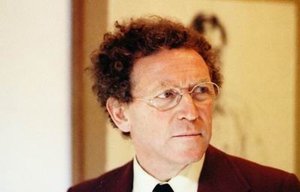
Avigdor Arikha
1929 - 2010 , Romania
Quick Facts
- Artistic Movement Or Style: Post-Abstract Representational
- Artists Who Influenced This Artist:
- Henri Cartier-Bresson
- Mondrian
- Date Of Birth: April 28, 1929
- Date Of Death: April 29, 2010
- Full Name: Avigdor Arikha
- Nationality:
- Israeli
- French
- Romanian
- Place Of Birth: Rădăuţi, Romania
Related Articles
Avigdor Arikha: A Life in Painting – From Witness to Abstraction
Explore the life and work of Avigdor Arikha, a master painter celebrated for his striking portraits and commitment to painting directly from life. Discover his journey from trauma to abstraction & lasting influence.
The Nuances of Graphite: Exploring Emotional Depth & Technical Mastery in Pencil Drawing
Explore the captivating world of graphite drawing! Discover its rich history, master essential techniques like chiaroscuro, and learn how artists evoke emotion through this timeless medium. Expert insights for art enthusiasts.
Charcoal & Canvas: 10 Masterpieces of Shadow & Light |
Explore 10 iconic paintings dominated by charcoal tones – from Rembrandt's dramatic chiaroscuro to Goya’s expressive portraits. Discover the stories behind these masterpieces & find museum-quality art reproductions for your home at .
The Enduring Power of Line: Exploring Themes & Techniques in Drawing Across Art History
Explore the rich history of drawing! Discover key techniques like linear perspective & iconic artists from the Renaissance to modern times. Enhance your art appreciation with ArtsDot.
Frederick Bridgman: Anatomical Mastery & the Evolution of Figure Drawing Instruction
Explore the anatomical mastery of George B. Bridgman & his revolutionary figure drawing techniques. Discover how his methods transformed art instruction and continue to inspire artists today. Learn more at ArtsDot.