 Send
Send Share
Share
 Details

 Download
 Similars
 Diaporama
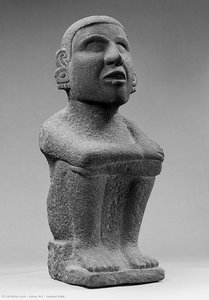
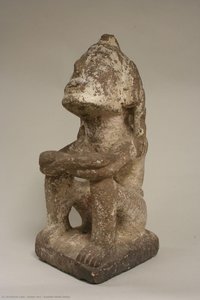
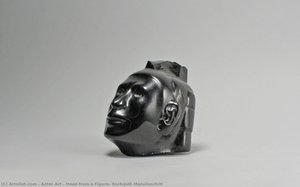
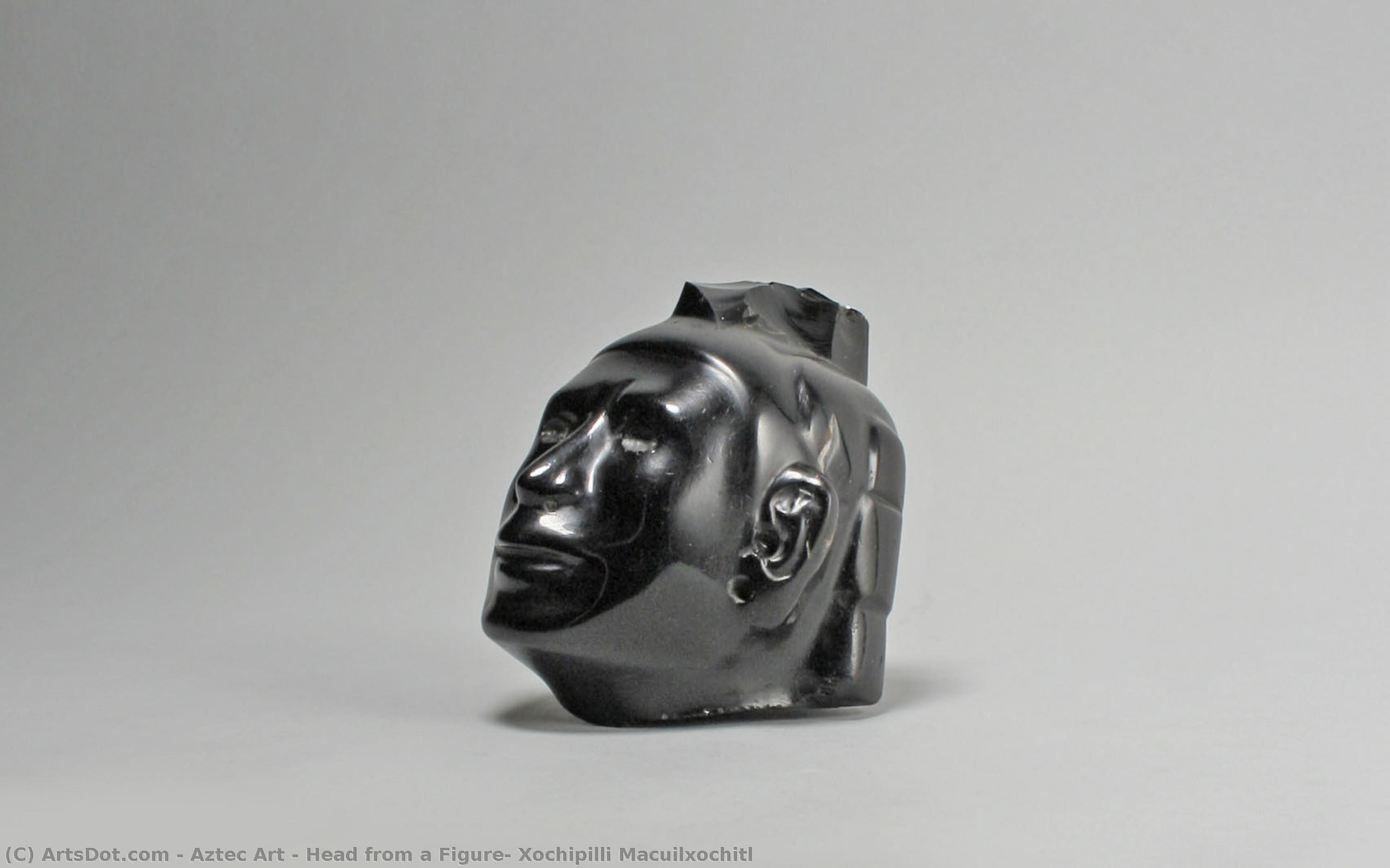
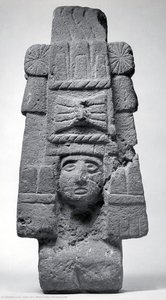
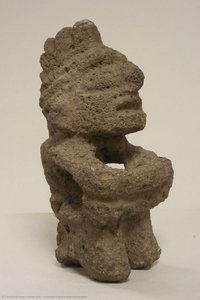
Head from a Figure, Xochipilli Macuilxochitl


 Read More
Hand Made Oil Reproduction
Hand-painted oil on canvas in your size and frame, made to order by our artists. ( Buy Print Buy Image)




































Pick from our preset sizes that match the artwork's original proportions.

You may enter your own dimensions to fit a specific frame or space. If your selected size does not match the original image's proportions, we will either crop the artwork or extend the painting with additional hand-painted elements. A digital mockup will be sent for your approval before production begins.
Please note that the on-screen preview does not reflect the actual cropping or extension. Only the mockup will accurately show the final composition.
While custom sizes are available, we recommend selecting a dimension from the predefined list to preserve the original proportions.
After order, ArtsDot.com team will email client for instructions and provide a mockup preview
Worldwide Delivery () in 3/4 weeks instead of standard 5 weeks. (16 August). No compromise on quality.

Free Worldwide Express Shipping

High-Quality Linen Canvas

Full Shipping Insurance

Customs Tax Refund Guarantee

True Color Matching Guarantee

60-Day Return Policy (Defects Only)

100% Money-Back Guarantee

Bulk Discount Offer
 Glass option is only available in size under 110 CM

Head from a Figure, Xochipilli Macuilxochitl
Reproduction Medium
Reproduction Size
-


Total Price
$ 263
Artwork Description
A Glimpse of Aztec Paradise: The Head from Xochipilli Macuilxochitl
The obsidian head before us—a dark, almost brooding presence—isn’t merely a sculpture; it's a portal into the vibrant and complex world of the Aztec Empire. Carved in the early 16th century, just decades before the arrival of the Spanish conquistadors, this intimate portrait of Xochipilli Macuilxochitl offers a rare and compelling glimpse into the beliefs, artistry, and ultimately, the fleeting beauty of a vanished civilization. The piece speaks not only to the skill of its creator but also to the profound symbolism woven into every facet of Aztec life.
Form and Material: A Study in Contrasts
The head itself is remarkably compact, measuring approximately 11 inches in height—a scale that emphasizes its intensely personal nature. Crafted from a single block of dark basalt or obsidian, the stone’s inherent texture immediately dominates. The surface isn't smooth; instead, it reveals the marks of the artisan’s hand – subtle striations and carefully controlled toolwork create a captivating interplay between polished planes and deliberately roughened areas. This deliberate contrast speaks to the Aztec reverence for both natural materials and the transformative power of human skill. Notice how the artist has exploited the stone's reflective qualities, creating highlights that seem to catch and hold the light—a technique likely intended to mimic the radiant beauty of the sun god, Tonatiuh, with whom Xochipilli is closely associated.
Symbolism of a Floral God
Xochipilli Macuilxochitl’s name itself – “flower prince” – hints at his multifaceted role within Aztec cosmology. He was the deity of music, flowers, song, and games, embodying pleasure, fertility, and the delicate balance between earthly delights and spiritual responsibility. The headdress, though partially damaged, retains traces of its former splendor—a testament to the lavish adornments associated with this god. The vertical stalks, once supporting elaborate feathers and jewels, would have evoked the blossoming of flowers, mirroring Xochipilli’s connection to nature's beauty. The almond-shaped eyes, a common feature in Aztec portraiture, are subtly expressive, suggesting an awareness and perhaps even a hint of mischievousness – qualities fitting for a deity associated with games and indulgence.
Craftsmanship and Context: Echoes of the Past
The head’s construction reveals a sophisticated understanding of both form and technique. The meticulous carving of the facial features, particularly the delicately rendered ears and brow, demonstrates an exceptional level of anatomical precision—a rarity in ancient sculpture. Furthermore, the use of a bow drill to create the smooth surfaces suggests a mastery of traditional tools and methods. It’s important to remember that this piece was created within a society deeply invested in ritual and artistic expression; each element – from the choice of material to the execution of detail – served a specific purpose within the broader context of Aztec religious practice. The fact that it was discovered near Veracruz, an area previously occupied by other Mesoamerican cultures, indicates a fascinating process of cultural exchange and adaptation.
A Legacy of Beauty: Reproductions and Inspiration
Reproductions of the Head from Xochipilli Macuilxochitl offer a remarkable opportunity to bring this captivating piece into your home or studio. When selecting a reproduction, consider the quality of materials and craftsmanship—a faithful rendering should capture not only the visual details but also the spirit and emotional resonance of the original. This sculpture serves as a potent reminder of the ingenuity and artistic vision of the Aztec Empire – a civilization that continues to inspire awe and wonder centuries after its decline.
Related Artworks

Artist Biography
The Echoes of Stone: Exploring the Art and Legacy of the Aztec Empire
The name “Aztec” – derived from the Nahuatl word *ātl-ce-tlācati–tlān*, meaning "people of many forms" – conjures images of a vast, complex empire that dominated Mesoamerica for centuries. More than just warriors and conquerors, the Aztecs were profoundly artistic individuals, weaving intricate beauty into every facet of their lives—from monumental architecture to delicate featherwork, from sacred rituals to daily objects. Their art wasn’t merely decorative; it was a vibrant language, communicating religious beliefs, political power, historical narratives, and social hierarchies within a society both rigidly structured and remarkably innovative.
Born in the early 14th century in Tenochtitlan, the heart of the Aztec Empire, the artistic traditions of the Aztecs were deeply rooted in the legacies of earlier Mesoamerican civilizations. The Olmecs, with their colossal heads and sophisticated calendar systems, the Teotihuacans, renowned for their massive pyramids and urban planning, and the Toltecs, masters of metalworking and sculpture, all contributed to the rich artistic tapestry that the Aztecs inherited. However, the Aztecs weren’t simply imitators; they synthesized these influences with their own unique aesthetic sensibilities, developing a distinctive style characterized by bold colors, intricate geometric patterns, and symbolic representations.
A Palette of Power: Materials and Techniques
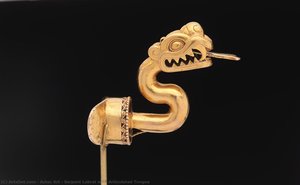
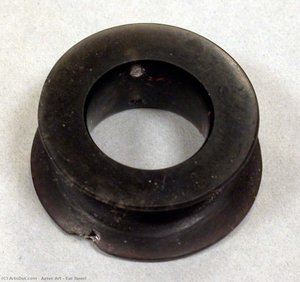
Aztec art was remarkably diverse, employing an astonishing range of materials and techniques. Stone carving held a prominent place, exemplified by monumental sculptures depicting deities, rulers, and mythical creatures. The massive Sun Stone (Calendar Stone), discovered in 1946, stands as a testament to their mastery of this medium—a complex, layered stone relief that combined calendrical information with cosmological symbolism. Skilled artisans also worked with wood, clay, feathers – particularly the vibrant quetzal plumes – jade, turquoise, obsidian, and gold, reflecting both wealth and status.
Featherwork was perhaps the most visually arresting aspect of Aztec art. Intricately crafted headdresses, cloaks, shields, and other decorative items were created using thousands of meticulously arranged feathers—a process requiring immense skill and patience. These objects weren’t merely beautiful; they served as potent symbols of authority, religious devotion, and social rank. The colors themselves held specific meanings: blue represented the heavens, green symbolized fertility, red signified warfare, and yellow represented the sun.
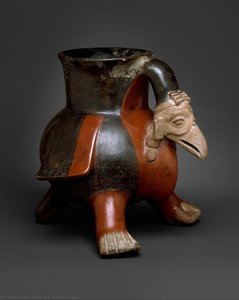
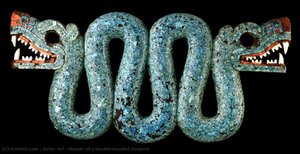
Furthermore, Aztec artists were masters of mosaic work, creating stunning decorative panels using small, precisely cut stone tiles. These mosaics adorned temples, palaces, and private residences, adding a layer of visual richness to the built environment. Their pottery was equally impressive, featuring intricate geometric designs and depictions of animals and deities.
The Language of Symbols: Themes and Motifs
Aztec art is replete with symbolism, each image carrying layers of meaning that required careful interpretation by priests, scribes, and rulers. The central deity, Huitzilopochtli, the god of war and sun, was frequently depicted in elaborate headdresses adorned with feathers and precious stones. Quetzalcoatl, the feathered serpent god associated with knowledge, wisdom, and creation, held a prominent place in their pantheon and appeared in numerous artistic representations.
The calendar system—a remarkably sophisticated combination of solar and ritual cycles—was another recurring motif. Images of calendars, glyphs, and astronomical symbols were incorporated into sculptures, mosaics, and codices (illustrated books), reflecting the Aztecs’ deep understanding of time and cosmology. Representations of maize, the staple crop of their diet, symbolized sustenance and fertility. Animal imagery—particularly jaguars, eagles, snakes, and hummingbirds—carried symbolic significance related to power, courage, and divinity.
A Legacy in Fragments: Art and Historical Significance
The Aztec Empire’s sudden collapse at the hands of Spanish conquistadors in 1521 resulted in a devastating loss for Mesoamerican culture. Tragically, much of their artistic heritage was destroyed during the conquest—temples were razed, sculptures smashed, and codices burned. However, despite these losses, fragments of Aztec art survive today, offering invaluable insights into this remarkable civilization.
Notable examples include the Sun Stone, a monumental sculpture that showcases the Aztecs’ advanced knowledge of astronomy and mathematics; intricate featherwork headdresses and cloaks preserved in museums around the world; and surviving codices—handwritten books containing historical accounts, religious beliefs, and calendrical information. The *Colección Andrés Blaisten* in Mexico houses a significant collection of Latin American art, including examples that illuminate Aztec artistic traditions.
The influence of the Aztec Empire’s artistic legacy can still be seen today, inspiring contemporary artists and designers alike. Their innovative techniques, symbolic imagery, and profound connection to nature continue to resonate with audiences worldwide. Exploring the art of the Aztecs is not merely an exercise in historical appreciation; it's a journey into the heart of a complex and captivating civilization—a testament to human creativity, ingenuity, and spiritual depth.
To explore more artworks from the Aztec Empire and other notable artists, visit ArtsDot.com.

aztec empire
1300 - 1521 , Mexico
Quick Facts
- Artistic Movement Or Style: Mesoamerican art
- Artists Or Movements Influenced By This Artist: ['Modern art']
- Artists Who Influenced This Artist:
- Olmec
- Teotihuacan
- Toltec
- Date Of Birth: 1300 (Tenochtitlan)
- Date Of Death: 1521
- Full Name: Aztec Empire
- Nationality: Mexican
- Notable Artworks:
- Aztec calendar
- Pyramid of sun
- Mexica featherwork
- Place Of Birth: Tenochtitlan, Mexico
Related Articles
Dante Gabriel Rossetti's 25 Masterpieces: A Journey Through Victorian Art & Symbolism | ArtsDot
Explore 25 iconic artworks by Dante Gabriel Rossetti, a leading Pre-Raphaelite artist. Discover the stories behind masterpieces like 'Proserpine' & 'Beata Beatrix'. Find museum-quality art reproductions and elevate your home decor with ArtsDot.com.

Martin Johnson Heade: Luminism, American Identity & the Poetic Still Life
Explore the captivating world of Martin Johnson Heade, a master of Luminism. Discover his serene landscapes, vibrant still lifes & profound connection to American identity. Learn about his techniques and legacy.
Sir John Everett Millais: Pre-Raphaelite Rebellion & Victorian Narrative Detail
Explore the revolutionary art of Sir John Everett Millais & the Pre-Raphaelite Brotherhood. Discover their radical realism, symbolic narratives, and lasting impact on Victorian aesthetics. A deep dive into 19th-century masterpieces.

Arthur Hughes: Pre-Raphaelite Visions of Beauty & Melancholy
Explore the captivating world of Arthur Hughes (1832-1915), a leading Pre-Raphaelite painter. Discover his dreamy landscapes, poetic narratives & iconic Victorian artworks. Learn about his life, style & collecting today.

The Pre-Raphaelite Brotherhood: Rebellion, Romance & Medieval Revival
Explore the captivating world of the Pre-Raphaelite Brotherhood! Discover their rebellious spirit, iconic masterpieces & lasting influence on art history. Learn about Rossetti, Millais & more.