 Preview
 Send
Send Share
Share
 Details

 Download
 Similars
 X-Ray
X-Ray Diaporama
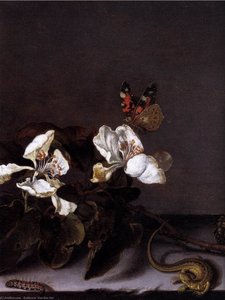
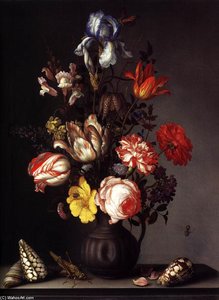
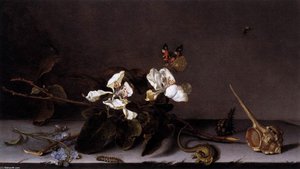
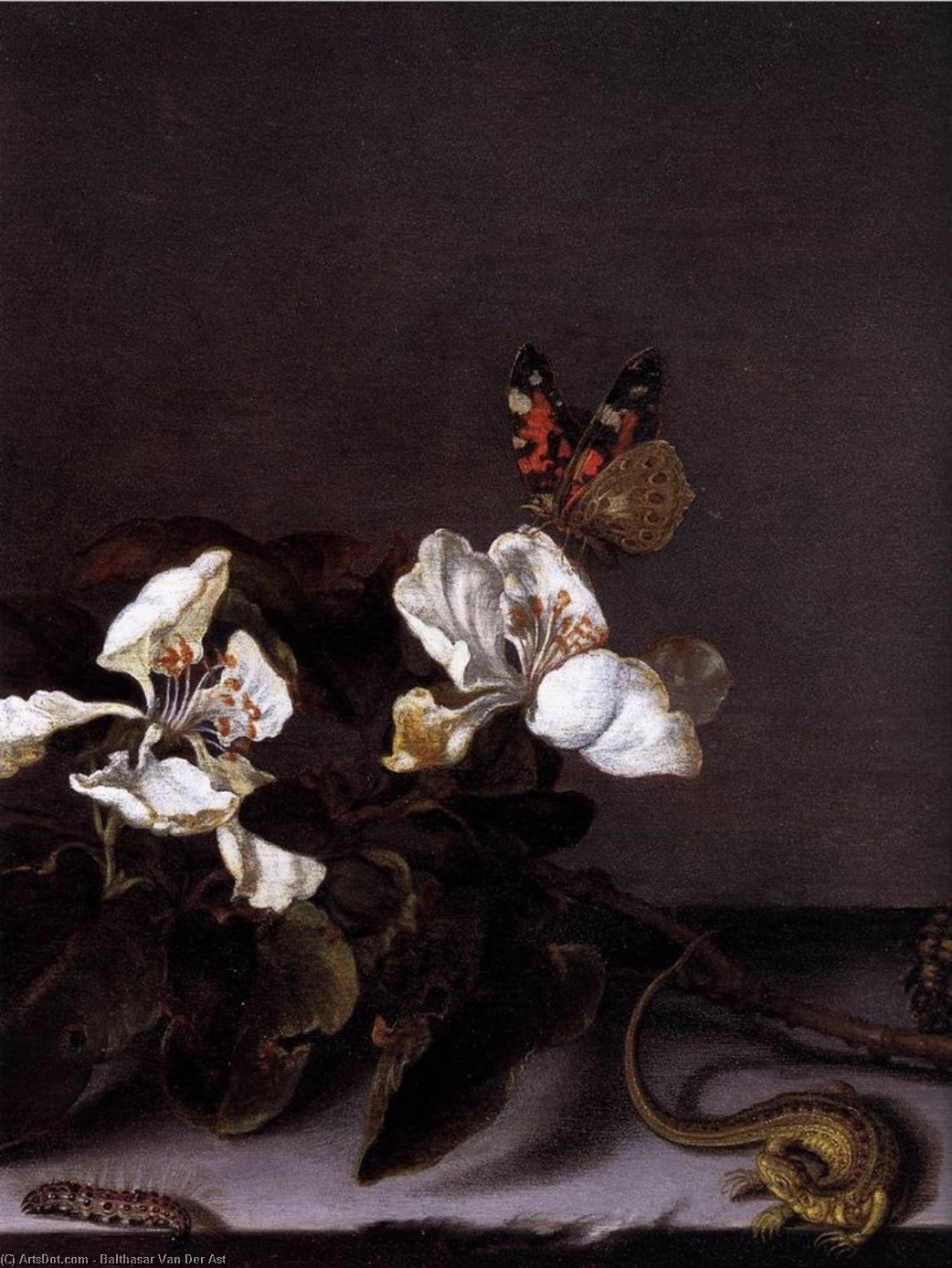
Still-Life with Apple Blossoms (detail)


 Read More
Giclée / Art Print
Museum-quality giclée or canvas print with fast production and flexible finish options. ( Buy Hand Made Painting Buy Image)




P118B $10

P118H $10

P118W $10

P438Z $10

P508JH $12

P508YH $12

P805H $10

P805Z $10

P919BZ $10

P919G $10

P919XJ $10

P959ZH $10

P968JZ $12

W106C $8

W218G $10

W218JH $8

W218Y $10

W307PJ $10

W316G $10

W316PJ $8

W316Y $10

W398PJ $8

W4111J $10

W500HY $15

W500JH $15

W692G $12

W849H $8

W940BG $15

W953PJ $8




Pick from our preset sizes that match the artwork's original proportions.

You may enter your own dimensions to fit a specific frame or space. If your selected size does not match the original image's proportions, we will either crop the artwork or extend the image with a mirrored or solid-fill edge. A digital mockup will be sent for your approval before production begins.
Please note that the on-screen preview does not reflect the actual cropping or extension. Only the mockup will accurately show the final composition.
While custom sizes are available, we recommend selecting a dimension from the predefined list to preserve the original proportions.
Worldwide Delivery () in 2 weeks instead of standard 4/5 weeks. (22 August)

Free Worldwide Express Shipping

High-Quality Linen Canvas

Full Shipping Insurance

Customs Tax Refund Guarantee

True Color Matching Guarantee

60-Day Return Policy (Defects Only)

100% Money-Back Guarantee

Bulk Discount Offer
 Glass option is only available in size under 110 CM

Still-Life with Apple Blossoms (detail)
Giclée / Art Print
Reproduction Size
-


Total Price
$ 63
Collectible Description
A Symphony of Shells and Blossoms: Balthasar van der Ast’s Still-Life with Apple Blossoms
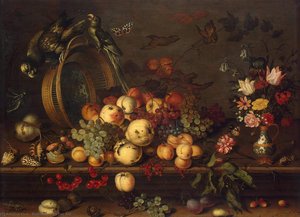
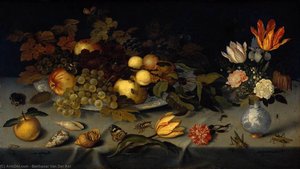
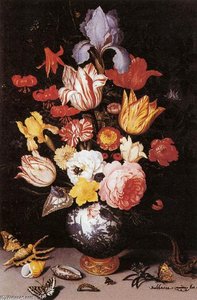
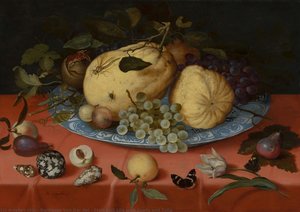
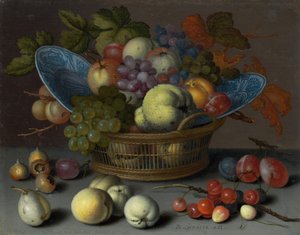
Balthasar van der Ast's "Still-Life with Apple Blossoms," painted around 1635, isn’t merely a depiction of flowers; it’s a meticulously crafted meditation on beauty, mortality, and the intricate connections within the natural world. Housed in the Staatliche Museen in Berlin, this oil-on-panel masterpiece offers a rare glimpse into the Dutch Golden Age's fascination with scientific observation blended with profound humanist thought. Van der Ast, born in Middelburg around 1593, was more than just a painter; he was a pioneer, particularly renowned for his groundbreaking work in shell painting – a technique that elevated the humble mollusk to an object of exquisite artistic contemplation.A Masterclass in Detail and Tonality
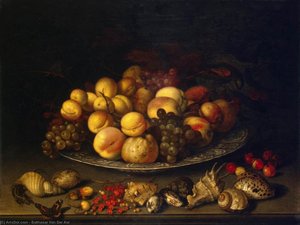
Van der Ast’s skill lies not simply in replicating nature but in capturing its essence with astonishing realism. The painting is dominated by a riot of color – the blush pinks and creamy whites of the apple blossoms, the deep greens of the foliage, and the rich browns and ochres of the fruit and shells. He achieves this remarkable depth through his masterful use of *tonality*, a technique he helped to popularize. Van der Ast meticulously layered thin glazes of paint, building up subtle variations in value and color to create an illusion of three-dimensionality that is both breathtakingly realistic and profoundly atmospheric. Notice how the light catches on the delicate petals, revealing their intricate textures, or how the shadows deepen within the folds of the leaves – these are not simply details; they’re carefully orchestrated elements contributing to the overall sense of realism. The artist's attention to detail extends beyond color, with each shell rendered with painstaking accuracy, showcasing its unique form and surface texture.Symbolism Woven into a Floral Tapestry
Beyond its technical brilliance, “Still-Life with Apple Blossoms” is rich in symbolic meaning. The apple blossoms themselves, symbols of spring, rebirth, and innocence, are juxtaposed against the darker tones of the fruit – representing both abundance and decay. The inclusion of various shells, each meticulously depicted, speaks to the beauty found in the commonplace, elevating them from mere objects to emblems of nature’s artistry. The butterfly perched delicately on a blossom adds an element of fleeting beauty and transformation, hinting at the ephemeral nature of life itself. It's believed that van der Ast frequently incorporated symbolic elements into his still lifes, often drawing upon classical mythology and humanist philosophy to imbue his paintings with deeper layers of meaning. The arrangement as a whole suggests a contemplation on the cycle of life, death, and renewal – a theme central to many Dutch Golden Age artists.Historical Context: A Renaissance of Naturalism
Van der Ast’s work emerged during a period of remarkable artistic flourishing in the Netherlands—the Dutch Golden Age. This era witnessed a renewed interest in classical art and a burgeoning scientific curiosity, leading to a shift towards naturalistic representation. Artists like van der Ast sought to accurately depict the world around them, often employing techniques borrowed from anatomy studies and botanical illustrations. His work reflects this trend, demonstrating a deep understanding of both artistic principles and scientific observation. The painting’s placement within the Staatliche Museen in Berlin underscores its significance as a key example of Dutch Golden Age art and a testament to van der Ast's enduring legacy.An Echo of Serenity: Experiencing the Painting Today
“Still-Life with Apple Blossoms” continues to captivate viewers centuries after its creation. Its meticulous detail, vibrant colors, and subtle symbolism create an atmosphere of serene contemplation—a reminder of nature’s beauty and the fleeting nature of time. Whether viewed in person or reproduced, this painting offers a profound connection to the artistic spirit of the Dutch Golden Age, inviting us to pause, observe, and appreciate the intricate wonders of the natural world. It's a piece that speaks not just to the eye but also to the soul, embodying the enduring power of art to illuminate our understanding of ourselves and the universe around us.Related Artworks



Artist Biography
The Master of the Miniature Universe: Balthasar van der Ast
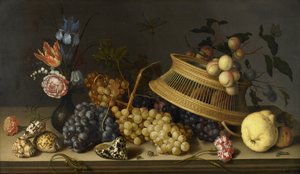
In the golden light of the seventeenth-century Netherlands, a period defined by unprecedented prosperity and scientific curiosity, Balthasar van der Ast emerged as a virtuoso of the small-scale masterpiece. Born in Middelburg around 1593, van der Ast did not merely paint objects; he orchestrated silent dramas upon canvas. His life was deeply intertwined with the burgeoning merchant culture of Zeeland, being the son of a prosperous wool merchant, Hans van der Ast. This background provided him with more than just social stability; it offered an early intimacy with the exotic goods and precious specimens that would later become the protagonists of his celebrated still lifes.
The trajectory of his artistic soul was irrevocably shaped by his connection to the Bosschaert dynasty. Through a familial bond, van der Ast became the protégé of the legendary Ambrosius Bosschaert the Elder, his stepfather. Under this tutelage, he mastered the meticulous precision required for the "flower piece," a genre that demanded an almost microscopic level of observation. This lineage of excellence allowed him to refine a technique characterized by subtle tonal gradations and a profound respect for the physical texture of nature. He was not alone in this pursuit of perfection; alongside his brother-in-laws, he helped cultivate a stylistic movement that prioritized the delicate interplay of light and shadow, turning simple botanical studies into profound meditations on existence.
A Symphony of Shells and Flora
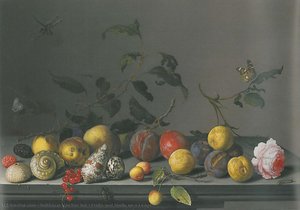
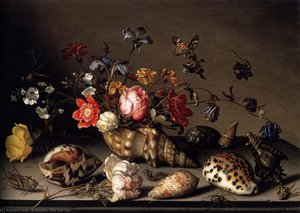
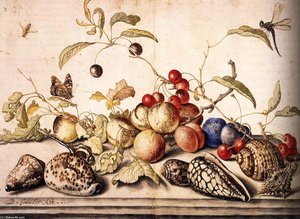
While many of his contemporaries focused solely on the ephemeral beauty of blossoms, van der Ast achieved historical immortality through his pioneering explorations into conchology. He became a pioneer of shell painting, treating the calcified remains of sea creatures with the same reverence as the softest petal. In works such as "Still-Life with Plums, Cherries, and Shells," one can witness the breathtaking marriage of different textures: the juicy, translucent skin of fruit contrasted against the hard, pearlescent surfaces of exotic shells. This fascination was not merely aesthetic; it reflected the era's burgeoning scientific interest in natural history and the global reach of Dutch maritime commerce.
His compositions often functioned as much more than mere displays of wealth or botanical accuracy. To look closely at a van der Ast painting is to engage with a complex web of symbolism rooted in humanist philosophy. Within his arrangements, one might find:
- The Ephemeral Nature of Life: Represented through wilting petals or insects that consume the very beauty they inhabit.
- Scientific Observation: A meticulous recording of species, reflecting the Age of Discovery and the era's thirst for knowledge.
- Vanitas Themes: Subtle reminders of mortality, where the decay of fruit serves as a poignant memento mori.
Legacy and Artistic Significance
The influence of Balthasar van der Ast extended far beyond his own studio in Utrecht. By welcoming artists like Roelandt Savery into the local guild, he helped foster an environment where tonality and realism could flourish. His ability to infuse inanimate objects with a sense of life—a quality seen in his depictions of lizards and insects crawling amidst fruit—set a new standard for the Dutch Golden Age. He moved the still life genre away from static arrangement toward a more dynamic, breathing reality.
Today, his works remain cornerstones of museum collections worldwide, from the British Museum to the great galleries of Europe. His legacy is found in every brushstroke that captures the dewdrop on a leaf or the iridescent sheen of a seashell. Balthasar van der Ast remains a titan of the Stilleven, an artist who taught the world to find the infinite within the infinitesimal, and who transformed the humble objects of the natural world into eternal icons of beauty.
Balthasar van der Ast
1593 - 1657 , Netherlands
Quick Facts
- Artistic Movement Or Style: Golden Age Painting
- Artists Or Movements Influenced By This Artist: Dutch Baroque
- Artists Who Influenced This Artist: Ambrosius Bosschaert
- Date Of Birth: 1593
- Date Of Death: 1657
- Full Name: Balthasar van der Ast
- Nationality: Dutch
- Notable Artworks:
- Fruits and Shells on a Ledge
- Tulip
- Lizard and Shell
- Place Of Birth: Middelburg, Netherlands
Related Articles

Dutch Masters: 10 Golden Age Paintings That Still Inspire |
Journey into the Dutch Golden Age! Explore 10 iconic paintings by Rembrandt, Vermeer & Hals. Discover the stories behind these Baroque masterpieces and find museum-quality art reproductions to elevate your home decor on .

Rembrandt's Masterpieces: Explore 25 Iconic Paintings & Prints | ArtsDot
Journey through Rembrandt van Rijn's 25 most iconic paintings & etchings. Explore Dutch Golden Age masterpieces, dramatic chiaroscuro, and timeless portraits. Find museum-quality art reproductions to elevate your home decor on ArtsDot.com.

Golden Age Reflections: Dutch Baroque Painting & Cultural Innovation
Explore the Dutch Golden Age of painting! Discover key artists like Vermeer & ter Borch, their innovative techniques, and the rich cultural context behind these Baroque masterpieces. Learn about collecting & appreciating this iconic art period.

Willem van de Velde the Elder: Master of Maritime Painting & Chronicler of the Dutch Golden Age
Discover the captivating maritime paintings of Willem van de Velde the Elder, a master chronicler of the Dutch Golden Age. Explore his unparalleled realism and lasting influence on naval art history.

Illuminating Innovation: Exploring the Dutch Golden Age of Painting
Explore the Dutch Golden Age of painting with ArtsDot. Discover Rembrandt, Vermeer & other Masters. Learn about key characteristics, iconic artworks, and lasting influence. Expert insights for collectors & enthusiasts.