

 Preview
 Send
Send Share
Share
 Details

 Download
 Similars
 X-Ray
X-Ray Diaporama
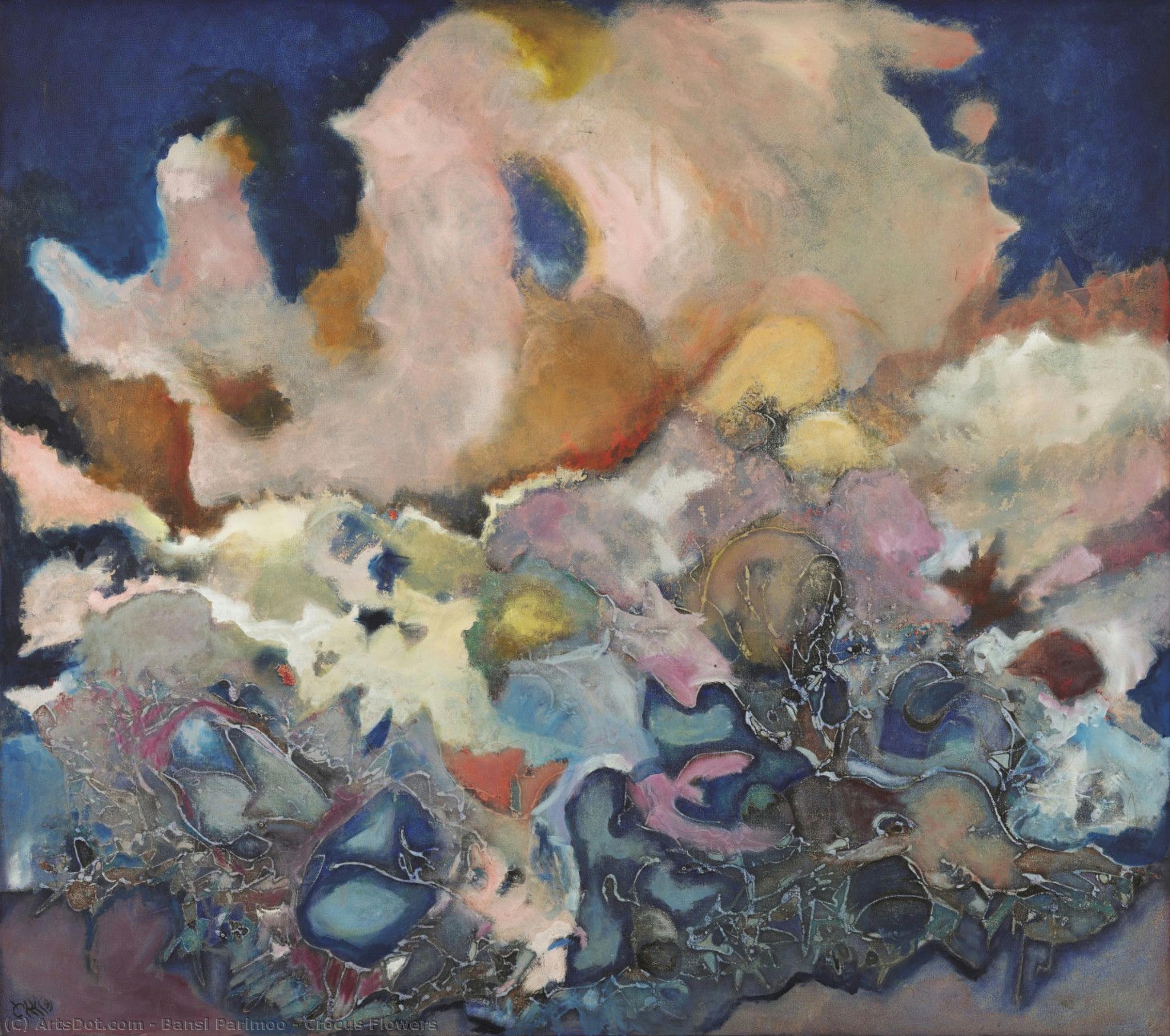
Crocus Flowers
 1991
1991 122.0 x 136.0 cm
 Kerala Museum
 Read More
Purchase a high-resolution, enhanced digital image, far superior to the online preview.
Each file is meticulously prepared by our in-house specialists using advanced tools and expert manual retouching. We ensure every image has exceptional clarity, precise color accuracy, and fine detail.
The final file is delivered via email within 72 hours, optimized for immediate use in professional, editorial, and print environments. This is the same quality trusted by top-tier design studios, publishers, and galleries.
Digital Image
Download a high-resolution file for personal display, printing, and creative projects. ( Buy Print Buy Hand Made Painting)
Included in Every Digital Image Order
Expert Digital Delivery, Guaranteed
When you choose ArtsDot.com, you're not just getting an image - you're receiving a professionally enhanced digital artwork, crafted with precision and backed by a satisfaction guarantee. Here's everything that comes with your order, automatically:

Fast Email Delivery
Your high-resolution digital image file will be emailed to you within 72 hours of ordering - ready for immediate use.

AI-Enhanced Digital File
Your artwork is professionally optimized using advanced AI tools and manual editing, ensuring maximum detail, clarity, and color accuracy.

Free Lifetime Re-Delivery
Accidentally deleted or lost your file? No worries - we'll resend it to you anytime, free of charge.

No Import Fees - Ever
Enjoy your artwork instantly with zero customs, duties, or delivery fees - digital downloads are always tax-free.

Color Accuracy Guarantee
We ensure your digital image reflects the original colors as closely as possible using professional tools and color management.

60-Day Satisfaction Guarantee
If you're not satisfied with your digital image, we'll revise it or refund 100% within 60 days - no questions asked.

100% Money-Back Guarantee
Not satisfied? Get a full refund within 60 days of receiving your digital file - no questions asked.

Bulk Order Discounts
Buy 3 images, save 10% - Buy 5, save 15% - Buy 10+, save 20%. Great for creative projects, galleries, and agencies.
Related Artworks










Artist Biography
Frank Stella: A Pioneer of Minimalism and Geometric Abstraction
Frank Stella, born in Malden, Massachusetts, on May 12, 1936, emerged as a pivotal figure in the latter half of the 20th century’s art landscape. His career spanned over six decades, marked by a relentless exploration of form, color, and materiality – ultimately shaping the trajectory of minimalism and profoundly influencing generations of artists. Stella's journey began not with formal artistic training but through a childhood steeped in his father’s carpentry and his mother’s passion for painting. This early exposure to both craft and aesthetic sensibility provided a unique foundation for his later work, fostering an appreciation for precision, construction, and the inherent qualities of materials. Stella’s initial artistic explorations were rooted in Abstract Expressionism, but he quickly distanced himself from its emotional intensity, seeking instead a more rigorously defined visual language. His early paintings, produced in the late 1950s, utilized black pinstripes on white canvases – a deceptively simple yet powerfully expressive series that challenged conventional notions of painting as a vehicle for personal expression. These works, exhibited at the Museum of Modern Art in 1959, were not merely decorative; they interrogated the very nature of the picture plane, asserting its physical presence and demanding to be seen as an object in space. This shift marked a crucial departure from the gestural brushstrokes characteristic of Abstract Expressionism and laid the groundwork for his subsequent development of minimalism.The Rise of Minimalism and Geometric Precision
In the early 1960s, Stella embarked on a radical re-evaluation of his artistic practice, moving away from the expressive qualities of paint and embracing geometric abstraction. He began creating “Structural Paintings,” characterized by precisely cut and painted boards mounted on plywood panels. These works – often featuring grids, stripes, or simple geometric shapes – were conceived as self-contained entities, devoid of illusionistic depth or narrative content. Stella’s intention was to strip painting down to its essential components: color, shape, and surface. He famously declared that his paintings were “nothing more” than a flat surface with paint on it, rejecting any notion of them representing something beyond their physical form. This reductive approach, coupled with the use of industrial materials like plywood and metal, aligned perfectly with the tenets of minimalism – an art movement emphasizing simplicity, objectivity, and the reduction of form to its most basic elements.Exploring Color and Materiality
As Stella’s career progressed, he continued to experiment with color and material, pushing the boundaries of his geometric abstractions. The “Strip Paintings” (1968-73) represented a significant shift in his aesthetic vocabulary. These works featured alternating bands of black and white paint applied with meticulous precision, creating complex visual rhythms and patterns. The use of industrial paint rollers and masking tape further emphasized the mechanical aspects of the process, highlighting Stella’s interest in the relationship between art and craft. Later, he explored the use of iridescent paints and reflective surfaces, adding a layer of shimmering complexity to his compositions. His work during this period demonstrated an increasing awareness of the materiality of painting – how color interacts with surface, and how light reflects off its edges.Sculptural Contributions and Legacy
While primarily known for his paintings, Stella’s artistic practice extended into sculpture. Beginning in the late 1960s, he created a series of “Lip Paintings,” which were essentially three-dimensional versions of his two-dimensional stripe paintings. These sculptures, constructed from plywood and painted with black and white stripes, explored the relationship between painting and sculpture, blurring the boundaries between these traditional art forms. Stella’s sculptural work demonstrated a continued commitment to geometric abstraction and a fascination with the physical properties of materials. Frank Stella died on May 4, 2024, in New York City at the age of 87. His legacy as one of the most influential artists of the 20th century is firmly established. He not only pioneered minimalism but also fundamentally altered our understanding of what painting could be – a self-contained object, a study in form and color, and a testament to the power of precise execution. Stella’s work continues to inspire artists today, demonstrating that simplicity can be profoundly expressive and that the most powerful art often lies in its ability to challenge conventional assumptions about representation and perception.
bansi parimoo
1936 - 2013 , India
Quick Facts
- Artistic Movement Or Style:
- Minimalism
- Post-painterly abstraction
- Artists Or Movements Influenced By This Artist:
- Minimalism
- Post-painterly abstraction
- Artists Who Influenced This Artist:
- Franz Kline
- Jackson Pollock
- Date Of Birth: May 12, 1936
- Date Of Death: May 4, 2024
- Full Name: Frank Philip Stella
- Nationality: American
- Notable Artworks: ['Various paintings and prints']
- Place Of Birth: Malden, Massachusetts

