 Preview
 Send
Send Share
Share
 Details

 Download
 Similars
 X-Ray
X-Ray Diaporama
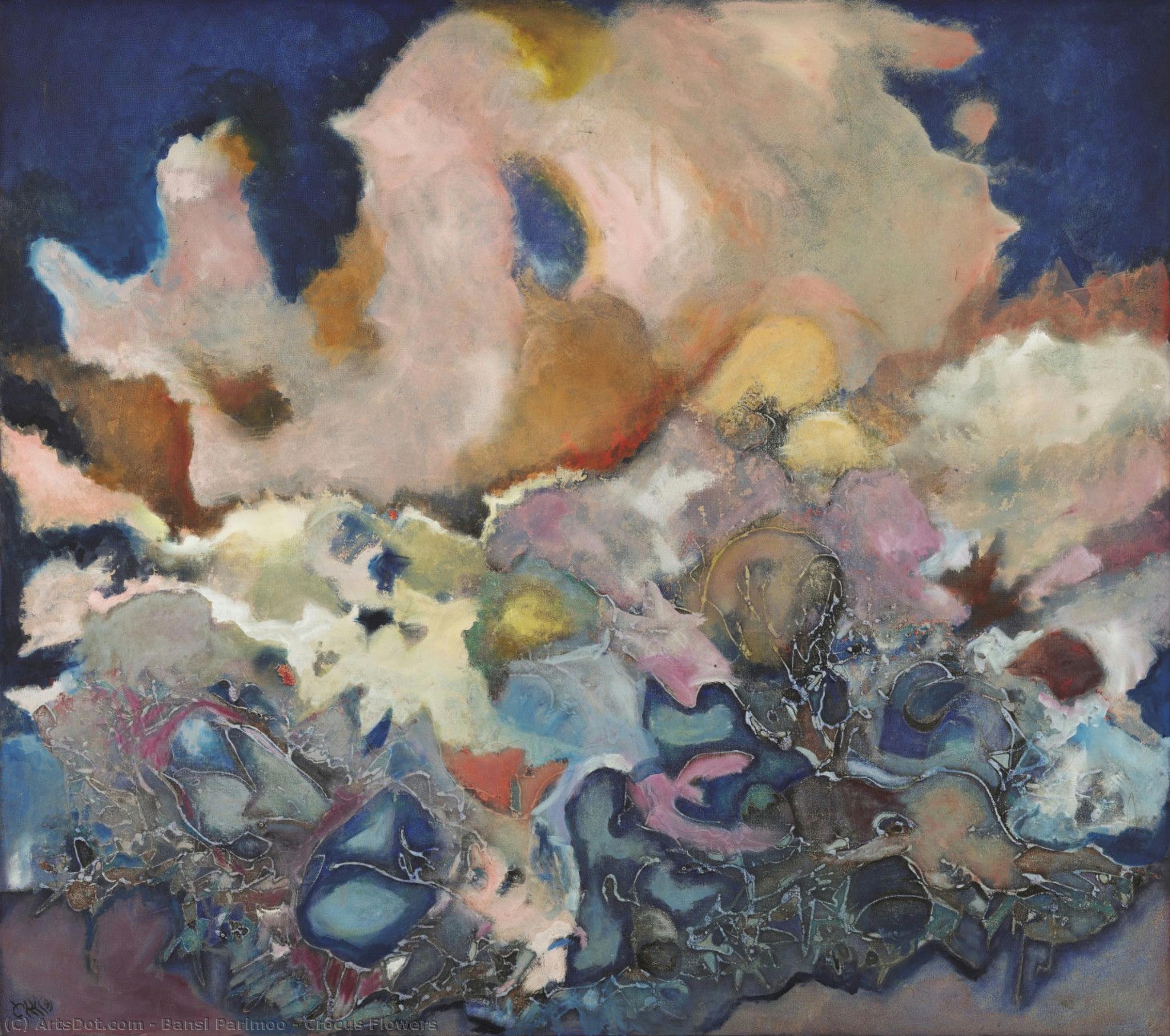
Crocus Flowers
 1991
1991 122.0 x 136.0 cm
 Kerala Museum
 Read More
Giclée / Art Print
Museum-quality giclée or canvas print with fast production and flexible finish options. ( Buy Hand Made Painting Buy Image)




































Pick from our preset sizes that match the artwork's original proportions.

You may enter your own dimensions to fit a specific frame or space. If your selected size does not match the original image's proportions, we will either crop the artwork or extend the image with a mirrored or solid-fill edge. A digital mockup will be sent for your approval before production begins.
Please note that the on-screen preview does not reflect the actual cropping or extension. Only the mockup will accurately show the final composition.
While custom sizes are available, we recommend selecting a dimension from the predefined list to preserve the original proportions.
Worldwide Delivery () in 2 weeks instead of standard 4/5 weeks. (18 August)

Free Worldwide Express Shipping

High-Quality Linen Canvas

Full Shipping Insurance

Customs Tax Refund Guarantee

True Color Matching Guarantee

60-Day Return Policy (Defects Only)

100% Money-Back Guarantee

Bulk Discount Offer
 Glass option is only available in size under 110 CM

Crocus Flowers
Giclée / Art Print
Reproduction Size
-


Total Price
$ 63
Related Artworks








Artist Biography
Frank Stella: A Pioneer of Minimalism and Geometric Abstraction
Frank Stella, born in Malden, Massachusetts, on May 12, 1936, emerged as a pivotal figure in the latter half of the 20th century’s art landscape. His career spanned over six decades, marked by a relentless exploration of form, color, and materiality – ultimately shaping the trajectory of minimalism and profoundly influencing generations of artists. Stella's journey began not with formal artistic training but through a childhood steeped in his father’s carpentry and his mother’s passion for painting. This early exposure to both craft and aesthetic sensibility provided a unique foundation for his later work, fostering an appreciation for precision, construction, and the inherent qualities of materials. Stella’s initial artistic explorations were rooted in Abstract Expressionism, but he quickly distanced himself from its emotional intensity, seeking instead a more rigorously defined visual language. His early paintings, produced in the late 1950s, utilized black pinstripes on white canvases – a deceptively simple yet powerfully expressive series that challenged conventional notions of painting as a vehicle for personal expression. These works, exhibited at the Museum of Modern Art in 1959, were not merely decorative; they interrogated the very nature of the picture plane, asserting its physical presence and demanding to be seen as an object in space. This shift marked a crucial departure from the gestural brushstrokes characteristic of Abstract Expressionism and laid the groundwork for his subsequent development of minimalism.The Rise of Minimalism and Geometric Precision
In the early 1960s, Stella embarked on a radical re-evaluation of his artistic practice, moving away from the expressive qualities of paint and embracing geometric abstraction. He began creating “Structural Paintings,” characterized by precisely cut and painted boards mounted on plywood panels. These works – often featuring grids, stripes, or simple geometric shapes – were conceived as self-contained entities, devoid of illusionistic depth or narrative content. Stella’s intention was to strip painting down to its essential components: color, shape, and surface. He famously declared that his paintings were “nothing more” than a flat surface with paint on it, rejecting any notion of them representing something beyond their physical form. This reductive approach, coupled with the use of industrial materials like plywood and metal, aligned perfectly with the tenets of minimalism – an art movement emphasizing simplicity, objectivity, and the reduction of form to its most basic elements.Exploring Color and Materiality
As Stella’s career progressed, he continued to experiment with color and material, pushing the boundaries of his geometric abstractions. The “Strip Paintings” (1968-73) represented a significant shift in his aesthetic vocabulary. These works featured alternating bands of black and white paint applied with meticulous precision, creating complex visual rhythms and patterns. The use of industrial paint rollers and masking tape further emphasized the mechanical aspects of the process, highlighting Stella’s interest in the relationship between art and craft. Later, he explored the use of iridescent paints and reflective surfaces, adding a layer of shimmering complexity to his compositions. His work during this period demonstrated an increasing awareness of the materiality of painting – how color interacts with surface, and how light reflects off its edges.Sculptural Contributions and Legacy
While primarily known for his paintings, Stella’s artistic practice extended into sculpture. Beginning in the late 1960s, he created a series of “Lip Paintings,” which were essentially three-dimensional versions of his two-dimensional stripe paintings. These sculptures, constructed from plywood and painted with black and white stripes, explored the relationship between painting and sculpture, blurring the boundaries between these traditional art forms. Stella’s sculptural work demonstrated a continued commitment to geometric abstraction and a fascination with the physical properties of materials. Frank Stella died on May 4, 2024, in New York City at the age of 87. His legacy as one of the most influential artists of the 20th century is firmly established. He not only pioneered minimalism but also fundamentally altered our understanding of what painting could be – a self-contained object, a study in form and color, and a testament to the power of precise execution. Stella’s work continues to inspire artists today, demonstrating that simplicity can be profoundly expressive and that the most powerful art often lies in its ability to challenge conventional assumptions about representation and perception.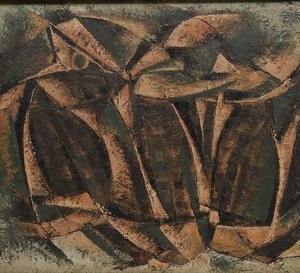
bansi parimoo
1936 - 2013 , India
Quick Facts
- Artistic Movement Or Style:
- Minimalism
- Post-painterly abstraction
- Artists Or Movements Influenced By This Artist:
- Minimalism
- Post-painterly abstraction
- Artists Who Influenced This Artist:
- Franz Kline
- Jackson Pollock
- Date Of Birth: May 12, 1936
- Date Of Death: May 4, 2024
- Full Name: Frank Philip Stella
- Nationality: American
- Notable Artworks: ['Various paintings and prints']
- Place Of Birth: Malden, Massachusetts