 Preview
 Send
Send Share
Share
 Details

 Download
 Similars
 X-Ray
X-Ray Diaporama
Anuncio Publicitario. Elizabeth Arden Inc.
 Oil On Canvas
- WallArt
- Surrealism
 1946
1946- Modern
 27.0 x 35.0 cm
 Museum of the Purpose of the Object
 Read More
Hand Made Oil Reproduction
Hand-painted oil on canvas in your size and frame, made to order by our artists. ( Buy Print Buy Image)




P118B $10

P118H $10

P118W $10

P438Z $10

P508JH $12

P508YH $12

P805H $10

P805Z $10

P919BZ $10

P919G $10

P919XJ $10

P959ZH $10

P968JZ $12

W106C $8

W218G $10

W218JH $8

W218Y $10

W307PJ $10

W316G $10

W316PJ $8

W316Y $10

W398PJ $8

W4111J $10

W500HY $15

W500JH $15

W692G $12

W849H $8

W940BG $15

W953PJ $8




Pick from our preset sizes that match the artwork's original proportions.

You may enter your own dimensions to fit a specific frame or space. If your selected size does not match the original image's proportions, we will either crop the artwork or extend the painting with additional hand-painted elements. A digital mockup will be sent for your approval before production begins.
Please note that the on-screen preview does not reflect the actual cropping or extension. Only the mockup will accurately show the final composition.
While custom sizes are available, we recommend selecting a dimension from the predefined list to preserve the original proportions.
After order, ArtsDot.com team will email client for instructions and provide a mockup preview
Worldwide Delivery () in 3/4 weeks instead of standard 5 weeks. (22 August). No compromise on quality.

Free Worldwide Express Shipping

High-Quality Linen Canvas

Full Shipping Insurance

Customs Tax Refund Guarantee

True Color Matching Guarantee

60-Day Return Policy (Defects Only)

100% Money-Back Guarantee

Bulk Discount Offer
 Glass option is only available in size under 110 CM

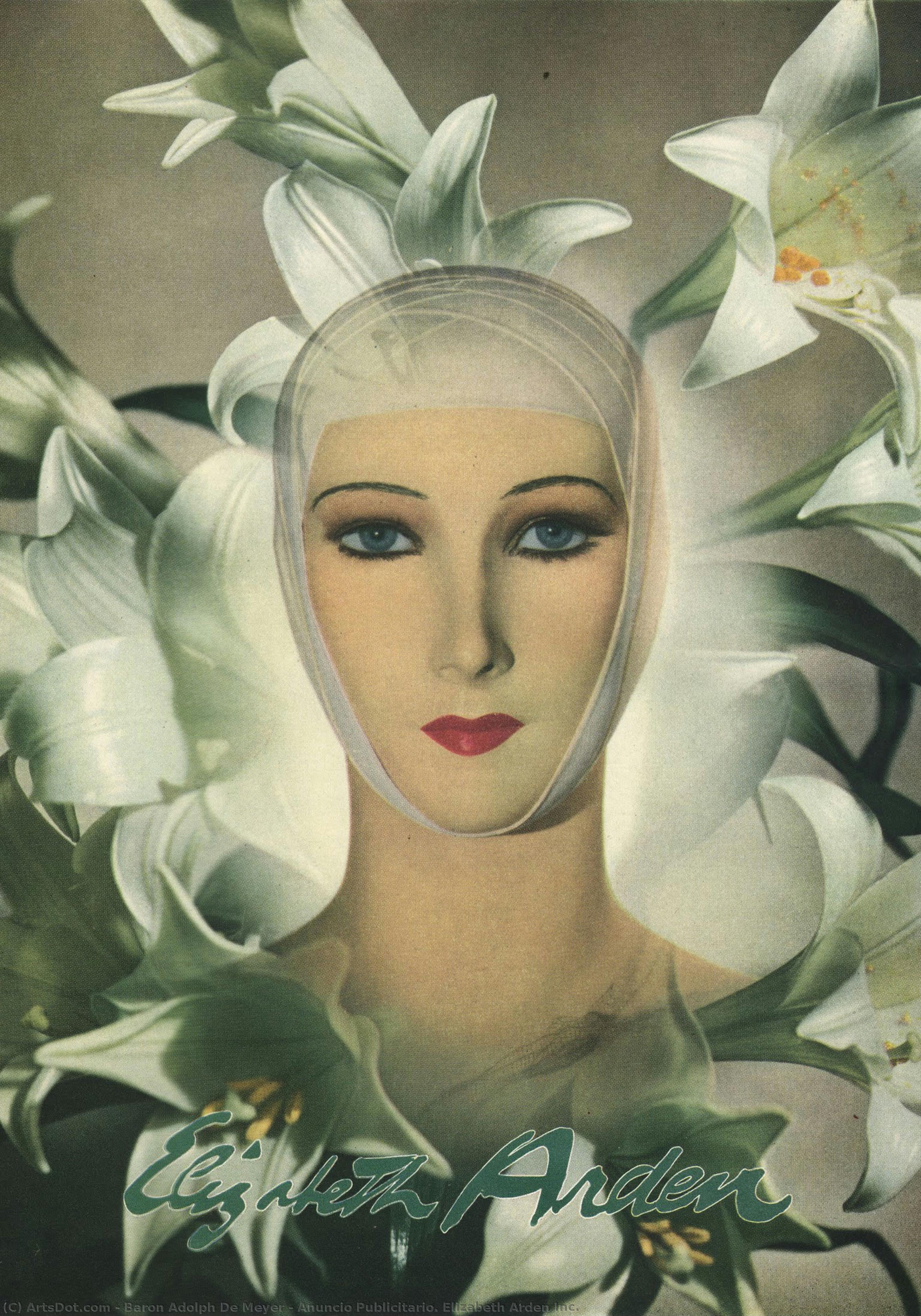
Anuncio Publicitario. Elizabeth Arden Inc.
Reproduction Medium
Reproduction Size
-


Total Price
$ 263
Artwork Description
A Dreamscape of Elegance: The Ethereal Vision of Baron Adolph de Meyer
In the intersection of high fashion and fine art lies a singular, hauntingly beautiful masterpiece titled Anuncio Publicitario. Elizabeth Arden Inc. Created in 1946 by the legendary Baron Adolph de Meyer, this work transcends its origins as an advertisement to become a profound exploration of femininity and the surreal. The painting presents a dreamlike portrait of a woman, her features delicately poised amidst a lush, overwhelming abundance of white lilies. There is an immediate sense of intimacy and quiet isolation in the composition; the viewer is drawn into a shallow, soft-focus world where the boundaries between reality and fantasy begin to dissolve. It is a piece that does not merely depict a subject but invites the observer into a private, melancholic sanctuary.
The technique employed here speaks to the mastery of a man who was as much a painterly soul as he was Vogue’s first official fashion photographer. Executed with the rich, layered textures characteristic of traditional oil on canvas, the artwork possesses a tactile depth that invites close inspection. One can observe the subtle, visible brushstrokes that define the soft curves of the woman’s face and the delicate, organic edges of the lily petals. The lighting is masterfully diffused, casting a gentle glow that softens the contours of the subject, contributing to an ethereal atmosphere. This soft-focus approach, reminiscent of the Pictorialist movement in photography, creates a sense of timelessness, as if we are peering through a veil of memory or a dream.
Symbolism and the Language of Flowers
Beyond its aesthetic splendor, the artwork is steeped in a complex layer of symbolism. The choice of white lilies is particularly poignant; in the lexicon of art history, these blooms often represent purity and rebirth, yet they are also inextricably linked to themes of mortality and the transition between worlds. By surrounding the central figure with such an overwhelming floral presence, de Meyer creates a tension between life and decay, beauty and the ephemeral nature of existence. The woman’s pale complexion, contrasted sharply by her striking red lips and deep, soulful eyes, serves as a focal point of vitality amidst the cool, muted tones of the greenery and white petals. This interplay of color and subject matter evokes a sense of Romanticism, where emotion and nature are inextricably entwined.
For the discerning collector or interior designer, this piece offers more than just visual appeal; it offers an emotional resonance that can transform a space. The muted, slightly aged palette—featuring subtle greenish undertones and soft shadows—lends itself beautifully to sophisticated, classical, or even contemporary avant-garde interiors. It serves as a conversation piece that bridges the gap between the historical elegance of the early 20th century and a modern appreciation for surrealist beauty. Whether placed in a quiet study or a grand salon, this reproduction captures the haunting, transformative power of de Meyer’s vision, making it an enduring choice for those who seek art that speaks to the soul.
Related Artworks

![Vida De Miguel De Cervantes Saavedra (life Of Miguel De Cervantes Saavedra). Book V Of The Edition Of Don Quixote (biblioteca Nacional De España)\n\n[7] — Martín Fernández De Navarrete Y Ximénez De Tejada, Academic Art](/media/artworks/images-thumb/8c/b6/8cb67a4dd450447373a546c8dd039e57.jpg)
Artist Biography
Early Life and Background
- Born: Paris, France (1868)
- Died: 1946
- Baron Adolph de Meyer was born in the 16th arrondissement of Paris. He received his education in Dresden, Germany.
- His parents were Adolphus Louis Meyer, a German Jewish father, and Adele Watson, a Scottish mother.
- He joined the Royal Photographic Society in 1893 and moved to London in 1895.
- Throughout his life, he used various surnames including Meyer, von Meyer, de Meyer, de Meyer-Watson, and Meyer-Watson. He was known as Baron Adolph Edward Sigismond de Meyer from 1898. The origin of the title is debated, with some sources claiming it was granted by Frederick Augustus III of Saxony, while others suggest it was inherited.
Marriage and Social Circle
- In 1899, he married Donna Olga Caracciolo, an Italian noblewoman. She was rumored to be a goddaughter of King Edward VII.
- Their marriage was considered a social event within London's high society.
- The couple’s relationship navigated the complexities of their time, with speculation about their individual sexualities and the societal constraints they faced.
Photography Career: Pictorialism to Fashion Icon
- De Meyer initially worked as a Pictorialist photographer, emphasizing artistic expression through darkroom techniques and manipulation of light and tone.
- He became associated with the Photo-Secession movement in 1903.
- Vogue Appointment: In 1913, he was appointed as the first official fashion photographer for *Vogue*, revolutionizing the genre. He also contributed to *Vanity Fair*.
- He moved away from traditional studio photography, experimenting with artificial lighting, diffused light using gauze, and differential focusing to create a more artistic and evocative style.
- His work during World War I was characterized by a queer counterculture aesthetic.
- From 1922 to 1936, he served as the chief photographer and Parisian fashion correspondent for *Harper's Bazaar*.
Style and Influences
- Pictorialism: His early work was rooted in Pictorialism, emphasizing artistic expression over mere documentation.
- Gustav Klimt: De Meyer’s portraits often reflected the influence of Gustav Klimt's paintings, particularly his use of reflective backgrounds and emphasis on psychological depth.
- Luminosity: He was known for creating a distinctive luminous effect in his photographs, which was innovative for fashion photography at the time.
- Celebrity Portraits: De Meyer photographed numerous celebrities including Mary Pickford, Rita Lydig, Luisa Casati, Billie Burke, Irene Castle, John Barrymore, Lillian Gish, Ruth St. Denis, King George V, and Queen Mary.
Legacy and Historical Significance
- De Meyer is considered a pioneer of fashion photography, establishing many of the conventions that continue to shape the genre today.
- His innovative use of lighting, composition, and post-processing techniques set him apart from his contemporaries.
- He documented a pivotal era in history, capturing the elegance and social changes of the early 20th century.
- Despite a period of relative obscurity later in life, his work has been rediscovered and celebrated for its artistic merit and historical significance.
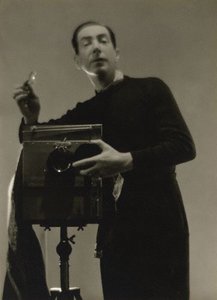
baron adolph de meyer
1868 - 1946 , France
Quick Facts
- Artistic Movement Or Style: Pictorialism, Fashion photography
- Date Of Birth: September 1, 1868
- Date Of Death: January 6, 1946
- Full Name: Baron Adolph de Meyer
- Nationality: French-American
- Notable Artworks: ['Anuncio Publicitario. Elizabeth Arden Inc.']
- Place Of Birth: Paris, France
Related Articles

Goya's Masterpieces: Explore 25 Iconic Paintings & Art Prints | ArtsDot
Delve into the world of Francisco Goya with ArtsDot. Explore 25 iconic paintings – from 'The Third of May' to his haunting Black Paintings. Discover the stories, techniques & emotions behind these Spanish masterpieces. Find museum-quality art reproductions for your home at ArtsDot.com!

About Us
Discover our story! We bring world-class art into your life through expert curation, personalized creations, and free previews. Trusted by individuals and businesses since 2000.
Pieter de Hooch: Illuminating Dutch Domestic Life & Golden Age Charm
Explore the captivating world of Pieter de Hooch, a master of Dutch Golden Age painting. Discover his innovative use of light, intimate domestic scenes, and lasting influence on art history. Learn more at ArtsDot.
Philip de László: A Portrait of Aristocratic Society & the Cosmopolitan Painter's Evolution
Explore the life & art of Philip de László, master portraitist of European aristocracy. Discover his stunning paintings, royal commissions, and enduring legacy. A guide for discerning collectors.
Águeda Ruiz de la Prada: A Study of Eclecticism & Emotional Resonance in Contemporary Spanish Painting
Discover the vibrant world of Ágatha Ruiz de la Prada, a leading figure in contemporary Spanish art. Explore her eclectic style, emotional depth & legacy – a must-read for discerning collectors.