 Preview
 Send
Send Share
Share
 Details

 Download
 Similars
 X-Ray
X-Ray Diaporama
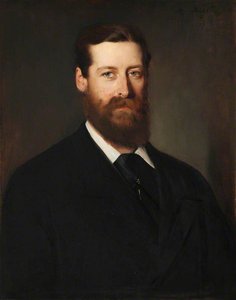
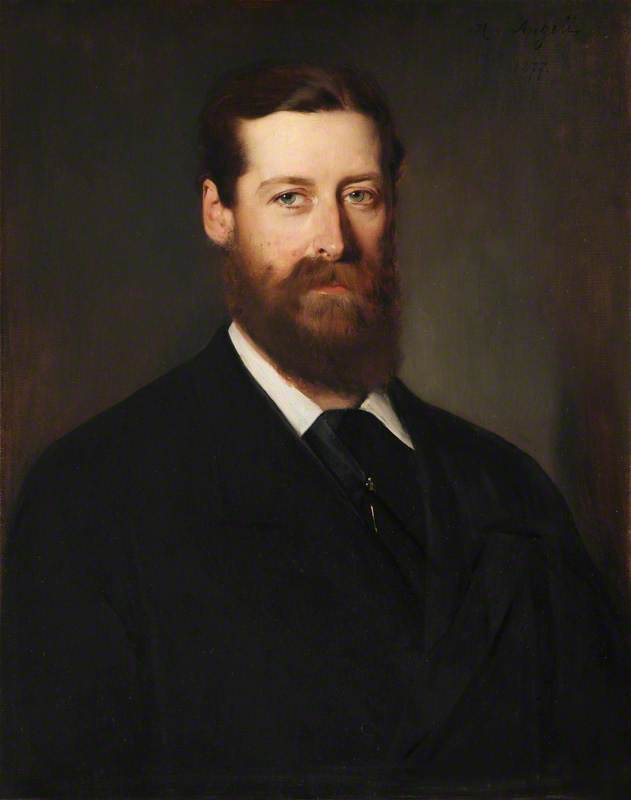
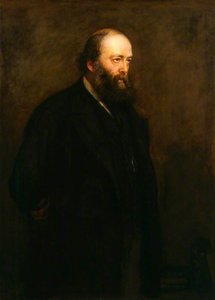
Montagu William Lowry Corry (1838–1903), Baron Rowton
 Academic Realism
 1877
1877 92.0 x 79.0 cm
 Національний траст
 Read More
Hand Made Oil Reproduction
Hand-painted oil on canvas in your size and frame, made to order by our artists. ( Buy Print Buy Image)




































Pick from our preset sizes that match the artwork's original proportions.

You may enter your own dimensions to fit a specific frame or space. If your selected size does not match the original image's proportions, we will either crop the artwork or extend the painting with additional hand-painted elements. A digital mockup will be sent for your approval before production begins.
Please note that the on-screen preview does not reflect the actual cropping or extension. Only the mockup will accurately show the final composition.
While custom sizes are available, we recommend selecting a dimension from the predefined list to preserve the original proportions.
After order, ArtsDot.com team will email client for instructions and provide a mockup preview
Worldwide Delivery () in 3/4 weeks instead of standard 5 weeks. (21 August). No compromise on quality.

Free Worldwide Express Shipping

High-Quality Linen Canvas

Full Shipping Insurance

Customs Tax Refund Guarantee

True Color Matching Guarantee

60-Day Return Policy (Defects Only)

100% Money-Back Guarantee

Bulk Discount Offer
 Glass option is only available in size under 110 CM

Montagu William Lowry Corry (1838–1903), Baron Rowton
Reproduction Medium
Reproduction Size
-


Total Price
$ 263
Related Artworks
Artist Biography
The Soul of an Era: The Life and Art of Baron Heinrich von Angeli
Heinrich Anton von Angeli stands as a luminous figure in the grand tapestry of nineteenth-century European art, a painter whose brush captured not just the likenesses of the powerful, but the very essence of an age caught between the fading echoes of Romanticism and the rising clarity of Realism. Born in 1840 in Ödenburg—a region then part of the Austrian Empire, now known as Sopron in Hungary—Angeli emerged from an aristocratic lineage with a profound connection to the cultural heart of Europe. His family roots traced back to Venice, having been ennobled by the Holy and Roman Emperor Maximilian II in 1565, providing him with a social standing that would later facilitate his access to the most prestigious courts of the continent. His artistic journey was one of disciplined movement across the great intellectual hubs of Europe. After beginning his formal training at the Academy of Fine Arts Vienna, he sought further refinement at the Kunstakademie Düsseldorf and in Munich. These formative years allowed him to absorb a diverse range of influences; while he drew deep inspiration from the atmospheric, emotive landscapes of Caspar David Friedrich and the dramatic intensity of Eugène Delacroix, he ultimately forged a path that favored a more naturalistic truth. By 1862, having returned to Vienna, Angeli began to establish himself as a master of his craft, eventually traveling between Berlin, London, and Vienna from 1870 onwards to fulfill the demands of an international clientele.A Master of Majesty and Meticulous Detail
The brilliance of Angeli’s work lies in his uncanny ability to navigate the delicate balance between the grandiosity of his subjects and a profound commitment to technical precision. He was particularly celebrated for his skill in depicting the textures of power—the heavy weight of velvet, the crisp starch of military uniforms, and the breathtaking shimmer of pearls and jewels. His technique was a marvel of patience, characterized by the meticulous layering of thin glazes over a toned ground, a method that allowed him to achieve a luminous depth that seemed to breathe within the canvas itself. Unlike some of his contemporaries who favored a more idealized or theatrical presentation, Angeli preferred to portray his sitters with an honest, naturalistic dignity. This approach made him the preferred chronicler for the era's most influential figures. His portfolio is a "who's who" of nineteenth-century history, featuring:- Queen Victoria, captured in both her regal splendor and her more somber, private moments as a widow.
- Kaiser Wilhelm I, rendered with the authority befitting the German Emperor.
- Statesmen and aristocrats such as Benjamin Disraeli and the Duke of Connaught.
- Military figures like Herbert Kitchener, where his mastery of uniform detail could truly shine.
Legacy and Historical Significance
The historical significance of Heinrich von Angeli extends far beyond the mere documentation of faces. His portraits serve as visual archives of the Victorian and Edwardian eras, embodying the stability, power, and social hierarchies of a period that shaped the modern world. Through his eyes, we see the transition from the romanticized ideals of the early century to the more grounded, realistic observations of the late nineteenth century. Today, his works reside in some of the most prestigious institutions in the world, including the British Royal Collection, the Victoria and Albert Museum, and the Wallace Collection. These paintings are not merely relics of a bygone age; they are enduring testaments to an artist who possessed the rare ability to translate the fleeting light of history into permanent, breathing masterpieces. His legacy remains that of a visual chronicler who, through unparalleled skill and a dedication to truth, immortalized the very soul of an era.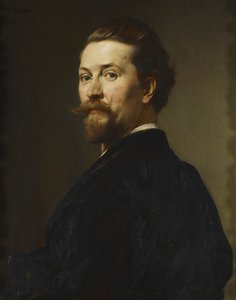
Heinrich von Angeli
1840 - 1925
Quick Facts
- Artistic Movement Or Style: Neoclassical Romanticism
- Artists Who Influenced This Artist:
- Jean Auguste Dominique Ingres
- Gustav Klimt
- Date Of Birth: 1840
- Date Of Death: 1925
- Full Name: Heinrich Anton von Angeli
- Nationality: Austrian
- Notable Artworks:
- Untitled (AQZPEC)
- Untitled (AQZPE8)
- Prince Henry (1858–1896) in Military Uniform
- Place Of Birth: Ödenburg (Sopron)
Related Articles

19th Century Masterpieces: 10 Paintings That Defined an Era | ArtsDot
Journey through 19th century art with ArtsDot! Explore 10 iconic paintings – from Monet & Renoir to Courbet – and discover the stories behind Romanticism, Realism & Impressionism. Find museum-quality reproductions for your home decor. Explore the full collection online!
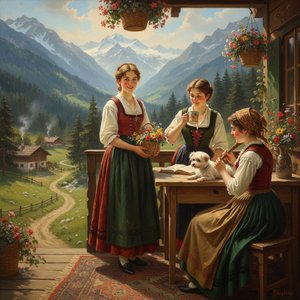
Eugen von Blaas: Capturing Alpine Life & Sentiment in 19th-Century Austrian Painting
Discover the captivating world of Eugen von Blaas! Explore his exquisite 19th-century paintings capturing Venetian life & Alpine beauty. Learn about his Academic Classicism style and find museum-quality reproductions at ArtsDot.
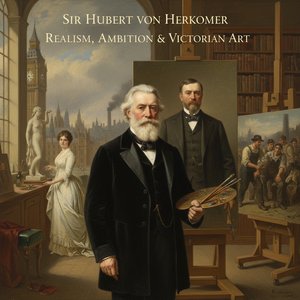
Sir Hubert von Herkomer: A Life Painted with Realism, Ambition & Victorian Art
Explore the life & art of Sir Hubert von Herkomer, a pivotal Victorian realist painter. Discover his powerful portraits, social commentary & pioneering film work. Learn about his legacy and find high-quality reproductions at ArtsDot.
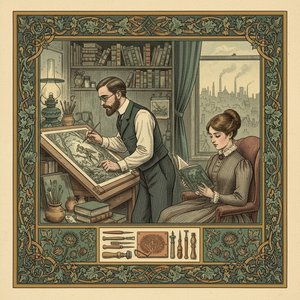
The Refined Aesthetic of Victorian Illustration: A Study in Narrative & Technique
Explore the captivating world of Victorian illustration! Discover Pre-Raphaelite influences, key artists like Rossetti & Stephens, and the era's rich narrative detail. A deep dive for art enthusiasts.
William Powell Frith: Narratives of Victorian Society & the Rise of Realist Painting
Explore the life & works of William Powell Frith, the 'greatest British painter of social scenes.' Discover his iconic Victorian genre paintings and learn about his lasting impact on realist art. Hand-painted reproductions available.