 Preview
 Send
Send Share
Share
 Details

 Download
 Similars
 X-Ray
X-Ray Diaporama
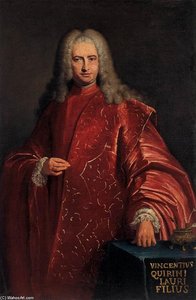
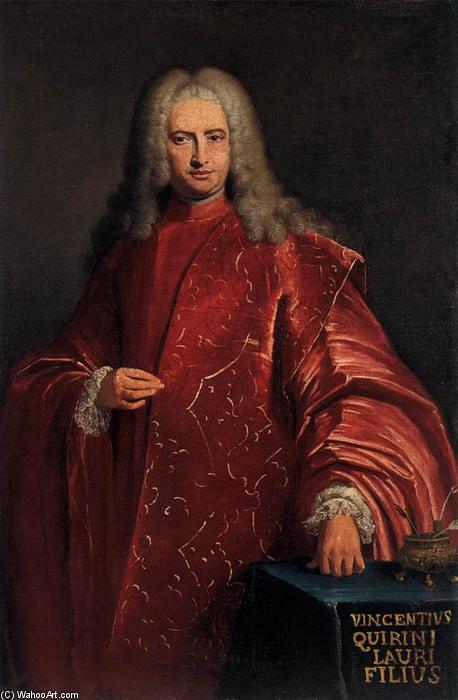
Portrait of Doge Vincenzo Querini


 Read More
Giclée / Art Print
Museum-quality giclée or canvas print with fast production and flexible finish options. ( Buy Hand Made Painting Buy Image)




































Pick from our preset sizes that match the artwork's original proportions.

You may enter your own dimensions to fit a specific frame or space. If your selected size does not match the original image's proportions, we will either crop the artwork or extend the image with a mirrored or solid-fill edge. A digital mockup will be sent for your approval before production begins.
Please note that the on-screen preview does not reflect the actual cropping or extension. Only the mockup will accurately show the final composition.
While custom sizes are available, we recommend selecting a dimension from the predefined list to preserve the original proportions.
Worldwide Delivery () in 2 weeks instead of standard 4/5 weeks. (24 August)

Free Worldwide Express Shipping

High-Quality Linen Canvas

Full Shipping Insurance

Customs Tax Refund Guarantee

True Color Matching Guarantee

60-Day Return Policy (Defects Only)

100% Money-Back Guarantee

Bulk Discount Offer
 Glass option is only available in size under 110 CM

Portrait of Doge Vincenzo Querini
Giclée / Art Print
Reproduction Size
-


Total Price
$ 63
Related Artworks
Artist Biography
The Grandeur of the Venetian Baroque: The Life of Bartolomeo Nazari
In the luminous era of the 18th century, few artists captured the theatrical splendor and aristocratic poise of the Venetian Baroque as masterfully as Bartolomeo Nazari. Born in the quiet town of Clusone, near Bergamo, Nazari’s journey from a provincial upbringing to the glittering heart of Venice is a testament to his profound talent and ambition. His early years were shaped by rigorous classical training, beginning with an apprenticeship under Angelo Trevisani. This formative period was further enriched by vital encounters with influential masters such as Francesco Trevisani and Benedetto Luti, mentors who provided him with the technical vocabulary necessary to navigate the complex emotional landscapes of late-Baroque portraiture. As he refined his craft, Nazari also drew inspiration from the celebrated Bergamo portraitist Fra Galgario, whose influence is whispered in the precision and character found within Nazari’s most intimate works.
The year 1724 marked a pivotal turning point in Nazari's career when he relocated to Venice. This move was not merely a change of scenery but an immersion into the epicenter of European artistic prestige. By joining the Fraglia dei Pittori, the prestigious guild of Venetian painters, Nazari secured his place within a network of elite creators and patrons. His artistry flourished in this vibrant atmosphere, characterized by a unique ability to blend the dramatic chiaroscuro of the Baroque with the delicate elegance that would soon define the Rococo transition. His reputation for capturing both the physical likeness and the inner spirit of his subjects allowed him to transcend simple documentation, turning each portrait into a narrative of status, grace, and historical permanence.
A Legacy of Portraits and Prestigious Commissions
Nazari’s career was defined by an extraordinary ability to command the attention of the era's most powerful figures. His technical prowess and diplomatic sensitivity were perhaps most evident during his travels to Frankfurt in 1744, where he undertook the monumental task of depicting Emperor Charles VII and his imperial court. Such a commission required more than just skill; it demanded an understanding of the weight of sovereignty and the intricate etiquette of the Habsburg court. This period of international exposure solidified his standing as a painter of European significance, capable of translating the grandeur of empire onto canvas.
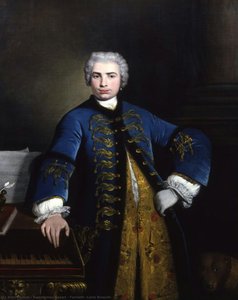
Beyond the halls of emperors, Nazari found immense success in capturing the cultural icons of his time. He achieved particular acclaim for his portraits of celebrated operatic singers, most notably the legendary castrato Farinelli. In these works, Nazari did not merely paint a face; he sought to evoke the very essence of vocal artistry and the magnetic charisma that captivated audiences across the continent. His ability to render the textures of silk, the shimmer of jewels, and the ephemeral glow of stage lighting made him a favorite among the cultural elite. His patronage extended to notable figures such as Consul Joseph Smith and General Johann Matthias von der Schulenburg, individuals whose commissions reflected the sophisticated tastes of the 18th-century international aristocracy.
The breadth of his artistic impact can be seen through the following highlights of his repertoire:
- Portrait of Doge Vincenzo Querini: A stunning display of Venetian opulence and political dignity.
- Farinelli (Carlo Broschi): An evocative study of one of history's most famous musical virtuosos.
- Imperial Portraits: Grand-scale works depicting the court of Emperor Charles VII.
- The Continuation of Tradition: The passing of his stylistic lineage to his son, Nazario Nazari, ensuring the family name remained synonymous with Venetian excellence.
As Nazari’s life drew to a close in Genoa, where he worked to immortalize the Doge Giovanni Giacomo, he left behind a legacy that remains a cornerstone of the Venetian Baroque tradition. His induction into the Accademia di Belle Arti of Venice in 1756 served as the ultimate institutional recognition of a life dedicated to the pursuit of beauty and the preservation of historical grandeur. Through his brush, the elegance of a bygone era continues to breathe, offering modern viewers a window into the soul of the 18th century.

Bartolomeo Nazari
1699 - 1758 , Italy
Quick Facts
- Artistic Movement Or Style: Late Baroque
- Artists Or Movements Influenced By This Artist: ['Rococo']
- Artists Who Influenced This Artist:
- Angelo Trevisani
- Francesco Trevisani
- Benedetto Luti
- Date Of Birth: 1693
- Date Of Death: 1758
- Full Name: Bartolomeo Nazari
- Nationality: Italian
- Notable Artworks:
- Portrait of Doge Querini
- Nazzari, Bartolomeo
- Place Of Birth: Clusone, Italy
Related Articles

Jacopo Tintoretto's Masterpieces: 25 Paintings That Define Venetian Drama | ArtsDot
Explore 25 breathtaking masterpieces by Jacopo Tintoretto, the Venetian master of drama and light. Discover the stories behind iconic Renaissance paintings & find museum-quality art reproductions to elevate your home decor on ArtsDot.com.

Baroque Drama: Bringing Opulence & Emotion into Contemporary Interiors
Explore the opulent world of Baroque interior design! Discover key elements, modern applications & how to bring dramatic elegance into your home with 's authentic reproductions.

The Dramatic Flourish: Exploring the Baroque Movement's Enduring Legacy in Art History
Explore the dramatic world of Baroque art! Discover iconic artists like Caravaggio & Rubens, defining techniques, and its lasting impact on art history. Expert insights for collectors & enthusiasts at ArtsDot.

Baroque Masterpieces: 10 Paintings That Defined an Era |
Journey through the drama & grandeur of Baroque art! Explore 10 masterpieces by Caravaggio, Rembrandt, Rubens & more. Discover stunning oil paintings, rich colors & timeless stories. Find museum-quality reproductions at .
Sebastiano Ricci: Venetian Master of Baroque Illusionism & Rococo Grace
Explore the captivating world of Sebastiano Ricci, a leading Venetian Baroque painter renowned for his luminous frescoes & illusionistic masterpieces. Discover his life, techniques, and lasting influence on art history.