 Preview
 Send
Send Share
Share
 Details

 Download
 Similars
 X-Ray
X-Ray Diaporama
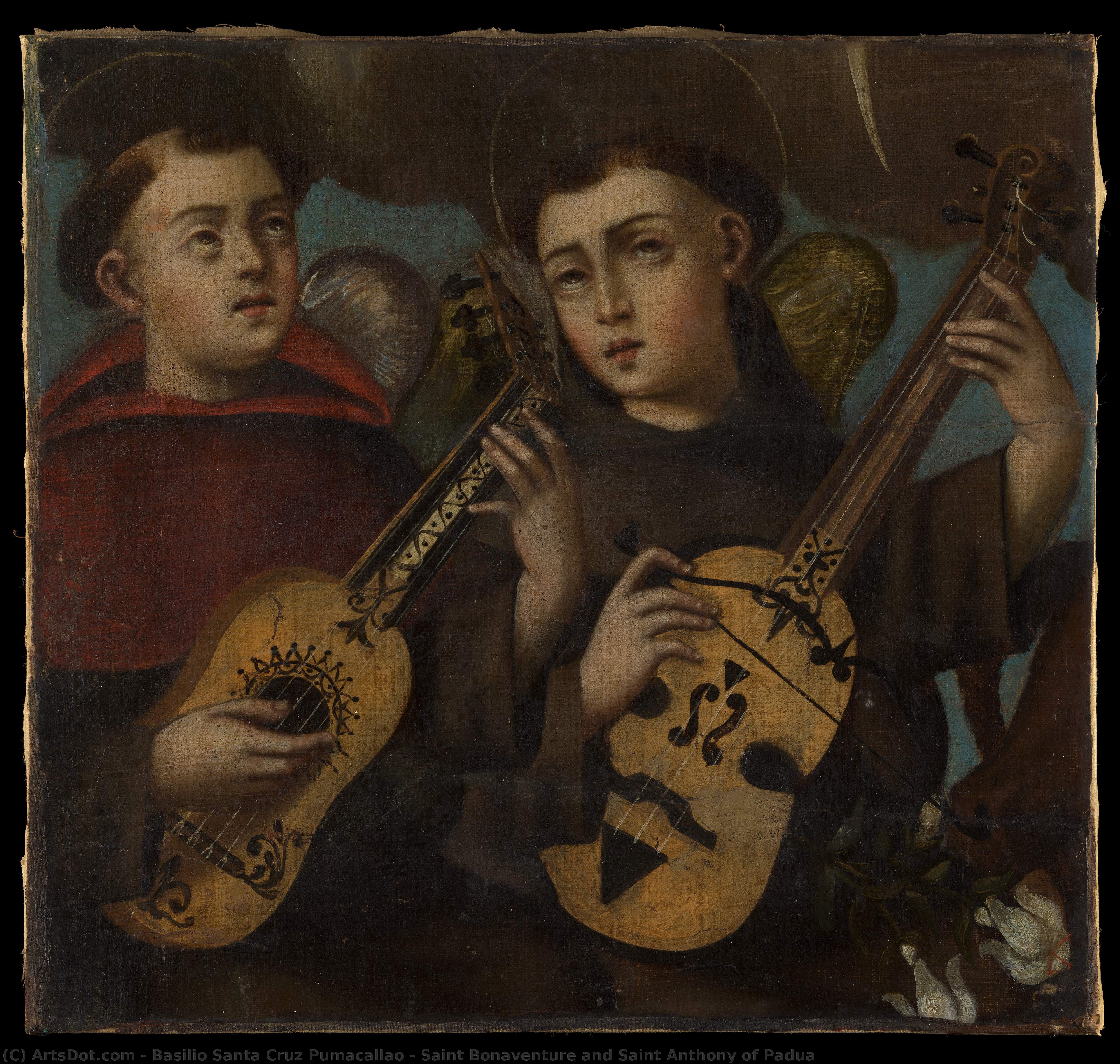
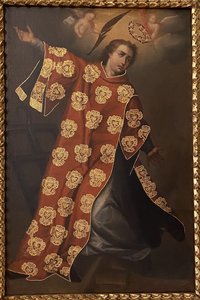
Saint Bonaventure and Saint Anthony of Padua
 Oil On Canvas
- WallArt
- Baroque
 1670
1670- Early Modern
 30.0 x 30.0 cm
 Metropolitan Museum of Art
 Read More
Giclée / Art Print
Museum-quality giclée or canvas print with fast production and flexible finish options. ( Buy Hand Made Painting Buy Image)




P118B $10

P118H $10

P118W $10

P438Z $10

P508JH $12

P508YH $12

P805H $10

P805Z $10

P919BZ $10

P919G $10

P919XJ $10

P959ZH $10

P968JZ $12

W106C $8

W218G $10

W218JH $8

W218Y $10

W307PJ $10

W316G $10

W316PJ $8

W316Y $10

W398PJ $8

W4111J $10

W500HY $15

W500JH $15

W692G $12

W849H $8

W940BG $15

W953PJ $8




Pick from our preset sizes that match the artwork's original proportions.

You may enter your own dimensions to fit a specific frame or space. If your selected size does not match the original image's proportions, we will either crop the artwork or extend the image with a mirrored or solid-fill edge. A digital mockup will be sent for your approval before production begins.
Please note that the on-screen preview does not reflect the actual cropping or extension. Only the mockup will accurately show the final composition.
While custom sizes are available, we recommend selecting a dimension from the predefined list to preserve the original proportions.
Worldwide Delivery () in 2 weeks instead of standard 4/5 weeks. (3 September)

Free Worldwide Express Shipping

High-Quality Linen Canvas

Full Shipping Insurance

Customs Tax Refund Guarantee

True Color Matching Guarantee

60-Day Return Policy (Defects Only)

100% Money-Back Guarantee

Bulk Discount Offer
 Glass option is only available in size under 110 CM

Saint Bonaventure and Saint Anthony of Padua
Giclée / Art Print
Reproduction Size
-


Total Price
$ 63
A Celestial Duet in Gold and Shadow
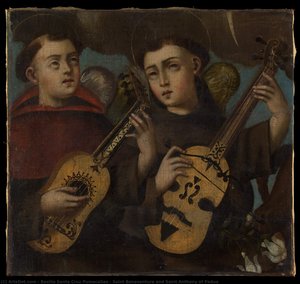
In the heart of the seventeenth century, within the vibrant colonial atmosphere of Cusco, Peru, a profound spiritual melody was captured on canvas by the master Basilio Pacheco de Santa Cruz Pumacallao. His masterpiece, Saint Bonaventure and Saint Anthony of Padua, is far more than a mere religious portrait; it is a window into a world where the divine and the earthly harmonize through the language of music. The painting presents an intimate, serene encounter between two pillars of the Franciscan order, depicted in a moment of shared devotion. As Saint Bonaventure holds a vihuela de mano and Saint Anthony plays a vihuela de arco, the viewer is invited into a sacred space where the boundaries between prayer and art dissolve, creating an atmosphere of deep contemplation and peace.
The technical brilliance of Pumacallao lies in his masterful command of the Spanish Baroque aesthetic, specifically through the use of dramatic chiaroscuro. By employing intense contrasts between deep, velvety shadows and brilliant highlights, the artist breathes life into the figures, giving their forms a sculptural presence that commands attention. The palette is a rich tapestry of liturgical significance, dominated by regal reds and luminous golds that reflect the sunlight of the Andes. Every fold of the heavy drapery is rendered with meticulous care, adding a tactile depth to the saints' robes, while the stark, deep blue background serves as a celestial void, pushing the subjects forward and focusing the viewer’s gaze entirely upon their spiritual communion.
Symbolism and the Legacy of the Cusco School
Every element within this composition is steeped in theological meaning, designed to instruct and inspire the faithful. The red robes of Saint Bonaventure signify his high status as a Cardinal and Doctor of the Church, while the humble brown and black attire of Saint Anthony speaks to the Franciscan vow of poverty. The inclusion of musical instruments is not merely decorative; it symbolizes the harmony of the spheres and the idea that beauty is a direct path to the divine. For the collector or the interior designer, this piece offers a profound sense of gravity and historical weight, making it an ideal centerpiece for spaces that require an aura of sophistication, intellect, and quiet strength.
As a quintessential product of the Cusco School, this artwork represents a unique cultural synthesis—the meeting of indigenous Peruvian artistry with European Baroque traditions. Commissioned originally for the Convent of San Francisco in Santiago de Chile, the painting carries with it the echoes of colonial devotion and the enduring legacy of the Inca-descended masters. To possess a reproduction of such a work is to bring a piece of history into the modern home, offering an evocative focal point that transcends time, inviting anyone who gazes upon it to pause, reflect, and listen to the silent music of the saints.
Related Artworks




Artist Biography
early life and training
basilio pacheco de santa cruz pumacallao, a renowned peruvian painter, was born in 1635 in cusco, peru. as a member of the cuzco school, a colonial movement of indigenous painters, he was educated in the baroque religious painting tradition of spain.artistic style and notable works
pacheco de santa cruz pumacallao's artwork is characterized by its dramatic and emotional style, rich colors, intense light, and dark shadows. his paintings evoke a deep sense of passion and emotion, reflecting the baroque art movement's influence.- oil on canvas was his preferred medium, which he used to create masterpieces that continue to inspire artists today.
- his work is part of the syracuse university art collection, showcasing his significance in the art world. /en/art/show/art-d3bb8p-en/
- the butler institute of american art has also featured his work, highlighting his impact on american art. (https://ArtsDot.com/@@/d26s72-the-butler-institute-of-american-art-(united-states))
legacy and influence
pacheco de santa cruz pumacallao's contributions to the peruvian art scene are undeniable. his work has influenced generations of artists, including luz negib torres, a peruvian painter known for her abstract and figurative forms. (https://ArtsDot.com/@/luz-negib-torres) as a key figure in the cuzco school, pacheco de santa cruz pumacallao's paintings continue to be celebrated for their emotional depth and technical mastery. his legacy serves as a testament to the enduring power of baroque art.key dates
- 1635: born in cusco, peru
- 1710: passed away, leaving behind a rich artistic legacy
basilio pacheco de santa cruz pumacallao
1635 - 1710 , Peru
Quick Facts
- Artistic Movement Or Style: Baroque printmaker
- Artists Or Movements Influenced By This Artist: ['Rembrandt']
- Artists Who Influenced This Artist: ['Philippe Thomassin']
- Date Of Death: 1635
- Full Name: Jacques Callot
- Nationality: French
- Notable Artworks:
- The Triumph of Pan
- The Triumph of Bacchus
- Place Of Birth: Nancy, France
Related Articles

Giclée Prints: Archival Quality & Aesthetic Nuances for the Discerning Collector
Explore the world of giclée prints with ArtsDot. Learn about archival quality, aesthetic nuances & investment potential. Expert guidance for discerning art collectors seeking museum-quality reproductions and lasting value.

The Dramatic Flourish: Exploring the Baroque Movement's Enduring Legacy in Art History
Explore the dramatic world of Baroque art! Discover iconic artists like Caravaggio & Rubens, defining techniques, and its lasting impact on art history. Expert insights for collectors & enthusiasts at ArtsDot.

Baroque Masterpieces: 10 Paintings That Defined an Era |
Journey through the drama & grandeur of Baroque art! Explore 10 masterpieces by Caravaggio, Rembrandt, Rubens & more. Discover stunning oil paintings, rich colors & timeless stories. Find museum-quality reproductions at .

The Visceral Stage: Exploring Dramatic Narratives & Emotional Intensity in Baroque Art
Explore the dramatic world of Baroque art! Discover iconic masters like Caravaggio & Rembrandt, their techniques, and the movement's lasting impact. Expert insights for collectors & enthusiasts at ArtsDot.

The Enduring Legacy of Fine Art Prints: Technique, History & Aesthetic Impact
Explore the rich history & techniques of fine art prints. Discover investment potential, assess authenticity, and learn how to preserve your collection with expert guidance. Trusted insights for discerning collectors.