

 Preview
 Send
Send Share
Share
 Details

 Download
 Similars
 X-Ray
X-Ray Diaporama
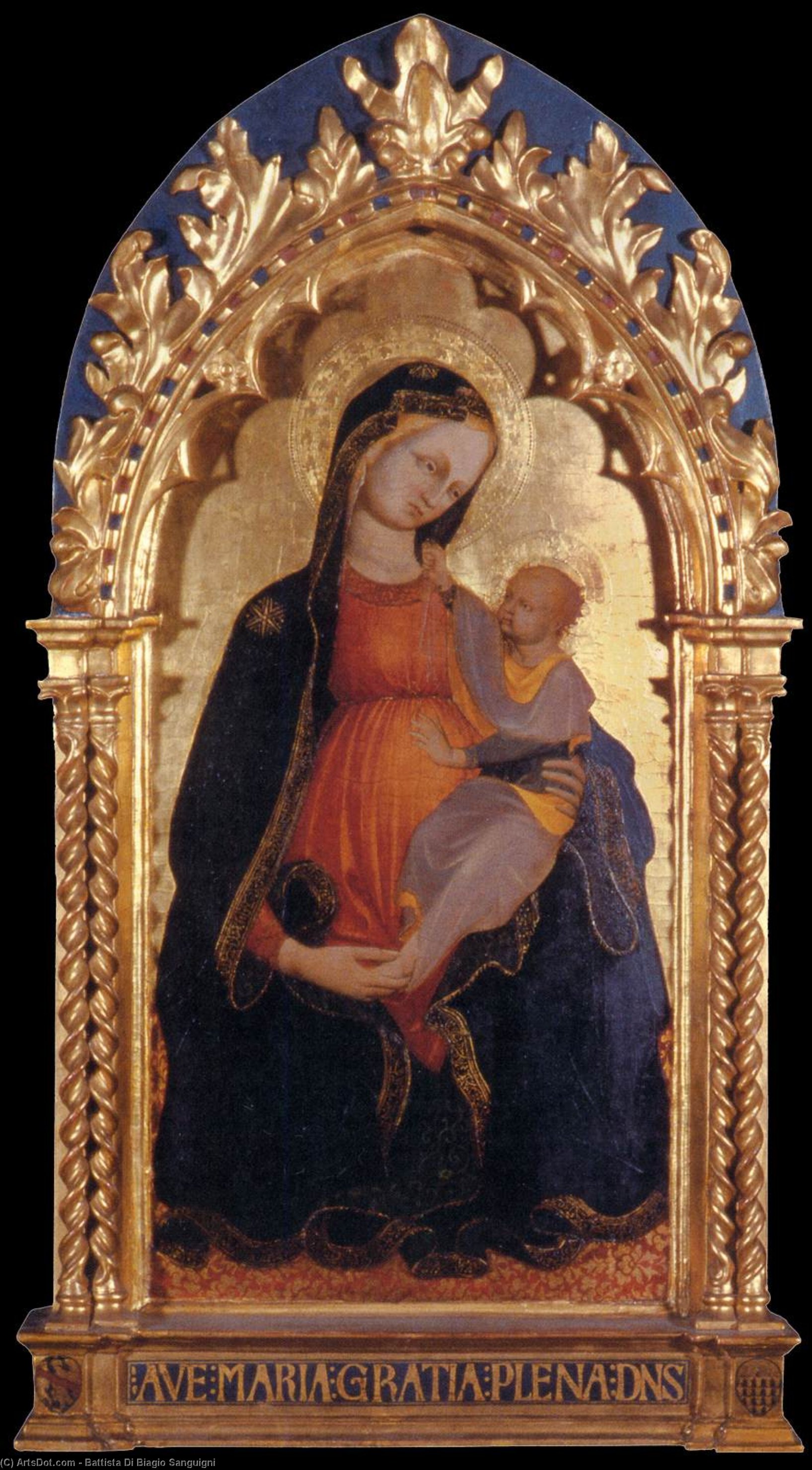
Madonna of Humility
 1420
1420 116.0 x 54.0 cm
 Ackland Art Museum
 Read More
Purchase a high-resolution, enhanced digital image, far superior to the online preview.
Each file is meticulously prepared by our in-house specialists using advanced tools and expert manual retouching. We ensure every image has exceptional clarity, precise color accuracy, and fine detail.
The final file is delivered via email within 72 hours, optimized for immediate use in professional, editorial, and print environments. This is the same quality trusted by top-tier design studios, publishers, and galleries.
Digital Image
Download a high-resolution file for personal display, printing, and creative projects. ( Buy Print Buy Hand Made Painting)
Included in Every Digital Image Order
Expert Digital Delivery, Guaranteed
When you choose ArtsDot.com, you're not just getting an image - you're receiving a professionally enhanced digital artwork, crafted with precision and backed by a satisfaction guarantee. Here's everything that comes with your order, automatically:

Fast Email Delivery
Your high-resolution digital image file will be emailed to you within 72 hours of ordering - ready for immediate use.

AI-Enhanced Digital File
Your artwork is professionally optimized using advanced AI tools and manual editing, ensuring maximum detail, clarity, and color accuracy.

Free Lifetime Re-Delivery
Accidentally deleted or lost your file? No worries - we'll resend it to you anytime, free of charge.

No Import Fees - Ever
Enjoy your artwork instantly with zero customs, duties, or delivery fees - digital downloads are always tax-free.

Color Accuracy Guarantee
We ensure your digital image reflects the original colors as closely as possible using professional tools and color management.

60-Day Satisfaction Guarantee
If you're not satisfied with your digital image, we'll revise it or refund 100% within 60 days - no questions asked.

100% Money-Back Guarantee
Not satisfied? Get a full refund within 60 days of receiving your digital file - no questions asked.

Bulk Order Discounts
Buy 3 images, save 10% - Buy 5, save 15% - Buy 10+, save 20%. Great for creative projects, galleries, and agencies.
The Painting's Significance
The Madonna of Humility is a representation of the Virgin Mary as a humble figure, sitting on the ground with the infant Jesus on her lap. This depiction of the Madonna became popular in the late 1300s and early 1400s in Italy, Flanders, and Germany. The painting's natural setting and sweetness of the facial types are characteristics of the early Renaissance period in Italian painting. Key Features of the painting include:- The use of tempera on a panel, which was a common medium for religious art during this period.
- The intricate details of the Virgin's robe and the infant Jesus' clothing.
- The gentle expression on the Virgin's face, which conveys a sense of humility and devotion.
Artist's Style and Influences
Battista Di Biagio Sanguigni's style is characterized by his use of gold leaf and elegant finery in his paintings. He was influenced by the painters Lorenzo Monaco and Gentile da Fabriano, and worked as a manuscript illuminator and painter in Florence. His works can be found in various museums, including the Ackland Art Museum and the Cleveland Museum of Art. For more information on Battista Di Biagio Sanguigni and his works, visit /art/list/?Filter=8Y3H5N-Battista-Di-Biagio-Sanguigni-Madonna-of-Humility and https://en.wikipedia.org/wiki/Battista_di_Biagio_Sanguigni.The Madonna of Humility is a beautiful example of the artist's skill and devotion to his craft. As a handmade oil painting reproduction, it can be found on https://ArtsDot.com, where you can discover more about this stunning work of art and other masterpieces from the Renaissance period.
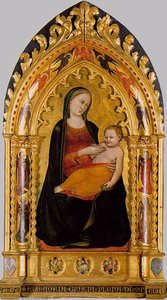
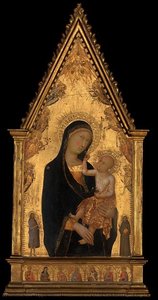
Related Artworks
Artist Biography
The Gothic Echo in the Florentine Renaissance
In the vibrant, transformative landscape of early fifteenth-century Florence, few artists capture the delicate transition from medieval tradition to Renaissance innovation as poignantly as Battista di Biagio Sanguigni. Known for much of his career as the Master of 1419, Sanguigni operated during a pivotal era when the rigid, gilded grandeur of the Gothic style began to breathe with the new, humanistic light of the Renaissance. His life and work serve as a bridge between two worlds, embodying the spiritual intensity of the Middle Ages while embracing the burgeoning naturalism that would soon define the Italian masters.
Born around 1393 in the scenic region of Vicchio, near Florence, Sanguigni’s early years were steeped in the rich religious and artistic atmosphere of Tuscany. While the precise details of his apprenticeship remain shrouded in the mists of history, his professional trajectory was deeply anchored by his membership in the Florentine confraternity of San Niccolò al Carmine, which he joined in 1415. This affiliation was more than a mere social milestone; it provided him with a spiritual foundation and a direct connection to the religious patronage that fueled the era's greatest artistic achievements. As an illuminator and painter, his hands were trained to treat every surface—whether a manuscript page or a wooden panel—as a sacred space for storytelling.
A Synthesis of Grace and Ornamentation
The artistry of Sanguigniod is characterized by a breathtaking synthesis of styles. To look upon his work is to witness the lingering elegance of Lorenzo Monaco and the opulent decorative flair of Gentile da Fabriano, yet there is an unmistakable movement toward the grounded realism pioneered by artists like Masaccio. His technique often utilized tempera on panel, a medium that allowed for the meticulous application of gold leaf and the creation of intricate, flowing drapery that seemed to shimmer with divine light.
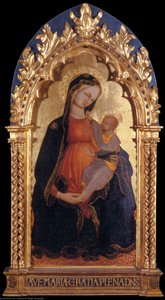
One of his most profound achievements lies in his ability to balance the ethereal with the earthly. This is perhaps best exemplified in his celebrated Madonna of Humility, created around 1420. In this masterpiece, Sanguigni departs from the stiffly enthroned icons of previous centuries, instead presenting the Virgin Mary in a moment of tender, grounded intimacy. The painting captures a sweetness of facial expression and a naturalistic setting that signaled the dawn of a new era, where the divine was no longer distant but intimately connected to the human experience.
His repertoire also included monumental altarpieces that showcased his command over complex compositions, such as:
- Madonna and Child Enthroned (1419): A central panel of a dismantled triptych commissioned by Antonio di Domenico Giugni, now held in the Cleveland Museum of Art, which provided the very clue used to identify him.
- Triptych Outer Panels (circa 1415): Featuring Saint James the Greater and Less alongside John the Baptist and Anthony Abbot, demonstrating his skill in religious iconography.
- Manuscript Illuminations: Reflecting his early mastery of fine detail and delicate, rhythmic line work.
Legacy of a Transitional Master
The historical significance of Battista di Biagio Sanguigni resides in his role as a stylistic conduit. He did not merely replicate the past; he prepared the Florentine eye for the future. By weaving the decorative splendor of the Gothic tradition with the nascent perspectival innovations and emotional depth of the early Renaissance, he helped cultivate the intellectual and aesthetic climate that allowed the Renaissance to flourish. His work remains a testament to a time of profound change, reminding us that the greatest leaps in art often occur when the old and the new meet in a harmonious, golden embrace.
Battista di Biagio Sanguigni
1393 - 1451 , Italy
Quick Facts
- Artistic Movement Or Style: Gothic painting style & Masaccio influence
- Artists Or Movements Influenced By This Artist: ['']
- Artists Who Influenced This Artist:
- Lorenzo Monaco
- Gherardo Starnina
- Alvaro Pirez
- Masolino da Panicale
- Date Of Birth: Florence, Italy (1393)
- Date Of Death: 1451
- Full Name: Battista di Biagio Sanguigni
- Nationality: Italian
- Notable Artworks: ['Madonna and Child Enthroned']
- Place Of Birth: Florence

