 Preview
 Send
Send Share
Share
 Details

 Download
 Similars
 X-Ray
X-Ray Diaporama
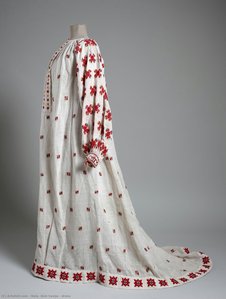
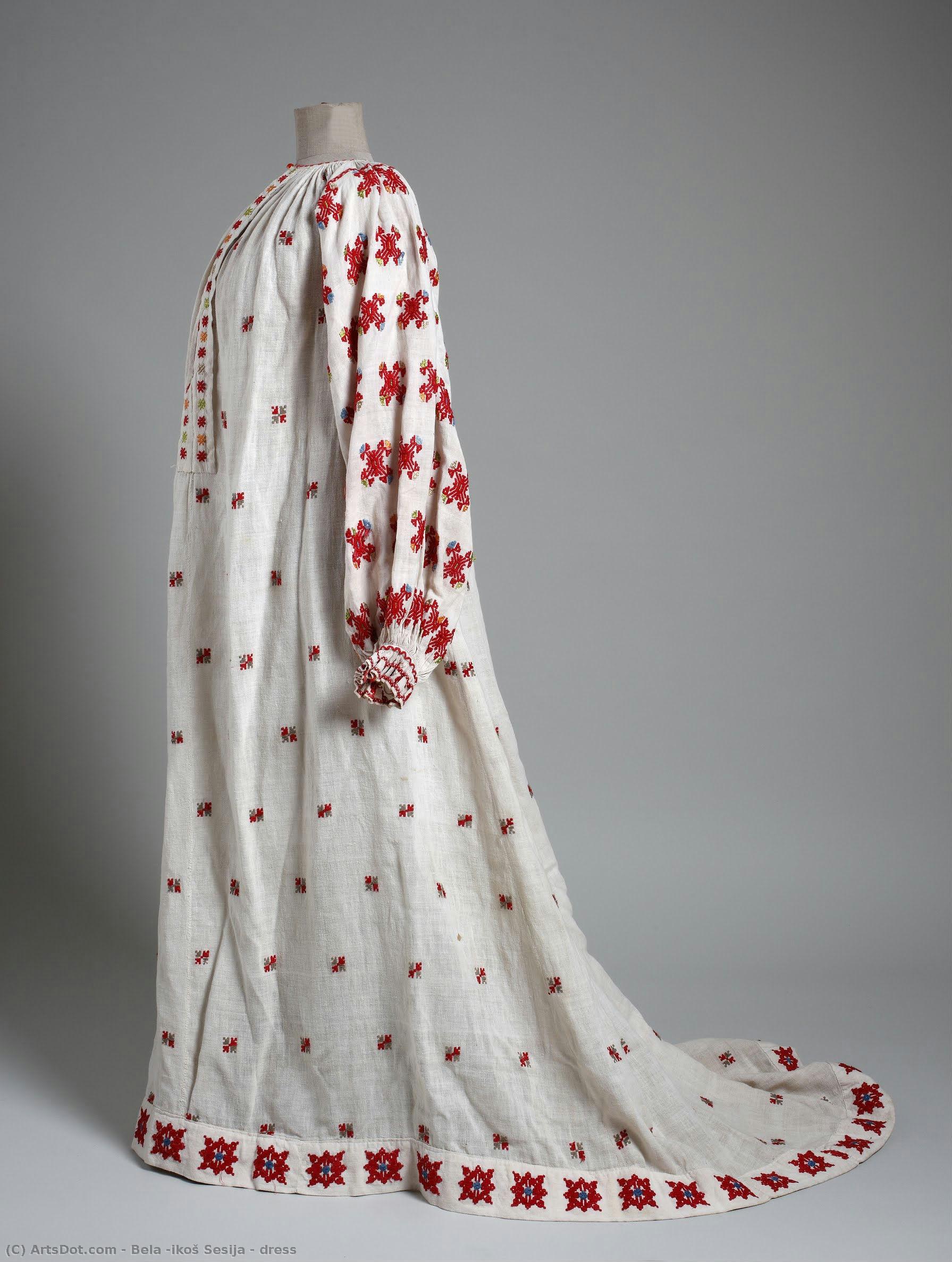
dress


 Read More
Hand Made Oil Reproduction
Hand-painted oil on canvas in your size and frame, made to order by our artists. ( Buy Print Buy Image)




































Pick from our preset sizes that match the artwork's original proportions.

You may enter your own dimensions to fit a specific frame or space. If your selected size does not match the original image's proportions, we will either crop the artwork or extend the painting with additional hand-painted elements. A digital mockup will be sent for your approval before production begins.
Please note that the on-screen preview does not reflect the actual cropping or extension. Only the mockup will accurately show the final composition.
While custom sizes are available, we recommend selecting a dimension from the predefined list to preserve the original proportions.
After order, ArtsDot.com team will email client for instructions and provide a mockup preview
Worldwide Delivery () in 3/4 weeks instead of standard 5 weeks. (29 August). No compromise on quality.

Free Worldwide Express Shipping

High-Quality Linen Canvas

Full Shipping Insurance

Customs Tax Refund Guarantee

True Color Matching Guarantee

60-Day Return Policy (Defects Only)

100% Money-Back Guarantee

Bulk Discount Offer
 Glass option is only available in size under 110 CM

dress
Reproduction Medium
Reproduction Size
-


Total Price
$ 263
Related Artworks






Artist Biography
A Pioneer of Croatian Symbolism: The Life and Art of Bela Čikoš Sesija
Bela Čikoš Sesija, born Adalbert Csikos Sessia in Osijek on January 27th, 1864, stands as a pivotal figure in the development of modern art within Croatia. His life was one marked by both artistic dedication and a complex relationship with the political currents of his time. Descended from a family distinguished by an ancestor knighted at the Battle of Sesia in 1524 – hence the adopted name “Sesija” – Bela’s early years were shaped by frequent relocations due to his father's position as a Captain in the Austro-Hungarian border patrol. This nomadic upbringing initially disrupted his formal education, though he eventually entered the Cadet School at Karlovac in 1874.
Despite an initial career path within the military – rising quickly to Lieutenant by 1886 – Čikoš Sesija harbored a growing passion for art. A decisive moment came with his resignation from the army in 1887, fueled by his refusal to support the Magyarization policies of Károly Khuen-Héderváry. This act of principle signaled a complete commitment to his artistic pursuits. He enrolled at the Academy of Fine Arts Vienna, where he studied under Julius Victor Berger and Leopold Karl Müller, receiving gold medals in 1889 and 1891 for scenes rooted in ancient history. A subsequent special course in Orientalist painting with Müller further broadened his artistic horizons.
From Academic Training to Symbolist Vision
Returning to Zagreb in 1892, Čikoš Sesija became involved in the decoration of the “Pompeian Room” at the local offices of the Department of Education and Religious Affairs. This project brought him under the mentorship of Izidor Kršnjavi, a key figure who would profoundly influence his artistic direction. Kršnjavi’s patronage led to study trips to Venice with Robert Frangeš-Mihanović and Ferdo Kovačević, followed by further training at the Academy of Fine Arts in Munich under Wilhelm Lindenschmit and later Carl von Marr. These experiences exposed him to diverse styles and techniques, yet he began forging a unique path—one increasingly aligned with the burgeoning Symbolist movement.
His early work demonstrated technical skill honed through rigorous academic training. However, Čikoš Sesija soon moved beyond mere imitation of classical forms, embracing a more evocative and emotionally charged aesthetic. A period of artistic tension arose from his association with Vlaho Bukovac, whom Kršnjavi viewed as a negative influence. This conflict prompted a temporary departure from Zagreb in 1895, taking up a teaching position in Ogulin before returning the following year to establish his own studio.
Founding Father and Pedagogical Legacy
The turn of the century saw Čikoš Sesija’s influence expand beyond his personal artistic practice. Economic pressures led him to America with Robert Auer in 1902, though this venture proved largely unsuccessful. Upon his return, he co-founded a private art school with Menci Klement Crnčić. This collaborative spirit culminated in the creation of the “Royal College for Arts and Crafts” in 1906 – an institution that would later evolve into the Academy of Fine Arts at the University of Zagreb. Čikoš Sesija’s role as a professor from 1907 was instrumental in shaping generations of Croatian artists.
His pedagogical approach emphasized not only technical mastery but also the importance of intellectual and emotional depth. He encouraged students to explore literary themes and embrace Symbolist principles, fostering a creative environment that valued individual expression. His later years were marked by increasing withdrawal, yet he continued to paint until his sudden death at his easel on February 11th, 1931.
Themes, Technique, and Lasting Significance
Čikoš Sesija’s artistic output is characterized by a fascination with literary subjects, particularly those drawn from Dante's *Inferno*. His pastel works from the early 20th century exemplify his mature style—a blend of subdued chromatic ranges, linear brushwork reminiscent of Divisionism, and a distinctly Symbolist sensibility. He wasn’t simply illustrating stories; he was attempting to capture the emotional weight and psychological complexities inherent within them.
His *From Dante’s Inferno* (1904) is a prime example, depicting a kneeling Dante before stone steps guarded by angelic figures. The indistinct pastel tones and luminous halos create an atmosphere of ethereal mystery, inviting contemplation rather than direct narrative interpretation. While influenced by the Divisionist techniques popularized by Bukovac, Čikoš Sesija infused his work with a unique literary depth that set him apart.
Bela Čikoš Sesija’s legacy extends far beyond his paintings. He was a true pioneer of Symbolism in Croatia, a dedicated art teacher who nurtured generations of artists, and one of the founding fathers of the nation's premier art academy. His work continues to resonate today as a testament to the power of artistic vision, intellectual curiosity, and unwavering commitment to creative expression.
Quick Facts
- Artistic Movement Or Style: Symbolism
- Artists Who Influenced This Artist:
- Julius Victor Berger
- Leopold Müller
- Wilhelm Lindenschmit
- Date Of Birth: January 27, 1864
- Date Of Death: February 11, 1931
- Full Name: Bela Čikoš Sesija
- Nationality: Croatian
- Notable Artworks:
- Dante series
- Bukovac While Painting
- Walpurgis Night
- Athena Kissing Psyche
- Place Of Birth: Osijek, Croatia