 Preview
 Send
Send Share
Share
 Details

 Download
 Similars
 X-Ray
X-Ray Diaporama
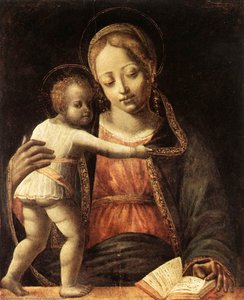
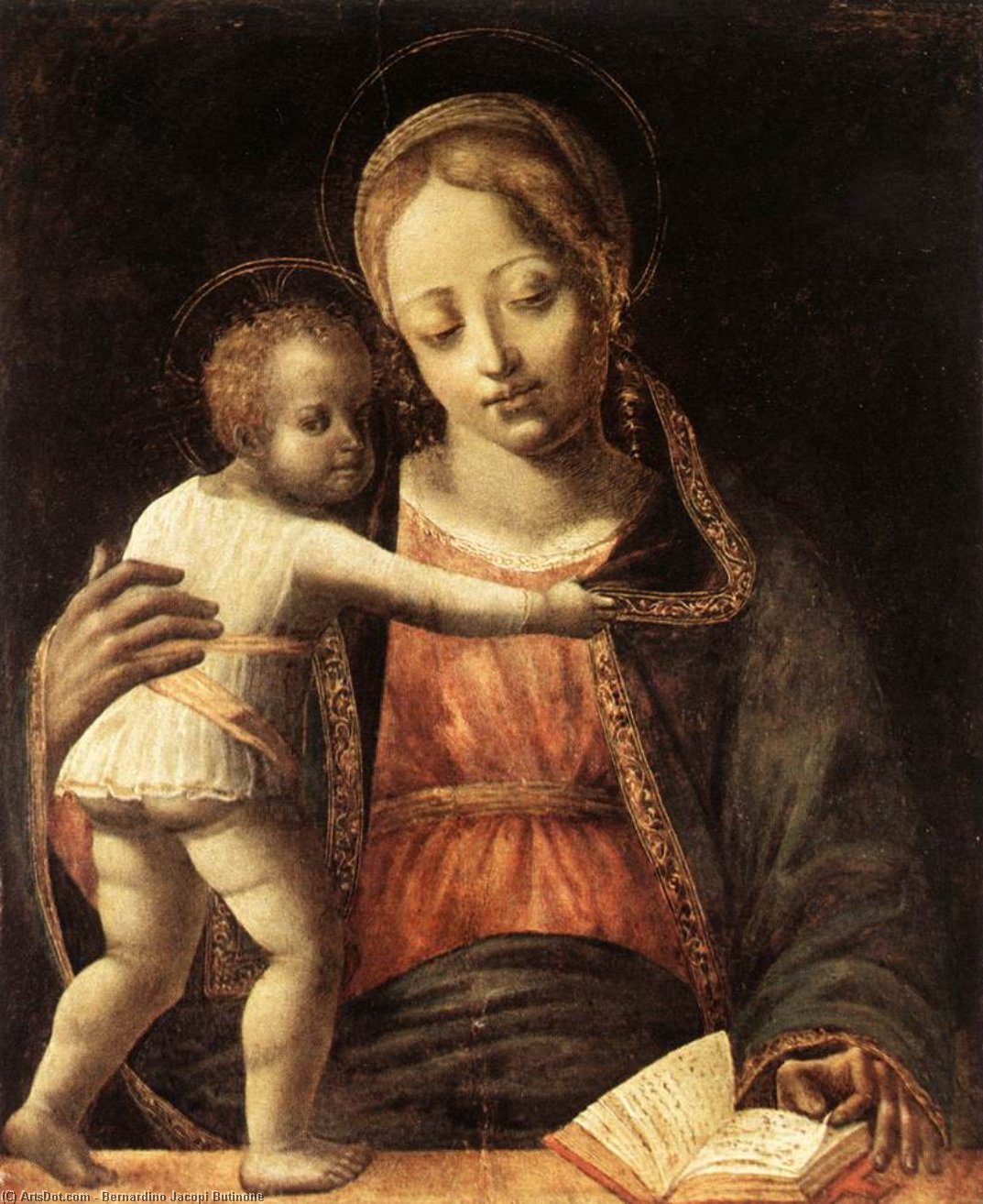
Madonna and Child
 Oil On Canvas
- WallArt
- Renaissance
 1490
1490- Renaissance
 33.0 x 28.0 cm
 Pinacoteca di Brera
 Read More
Hand Made Oil Reproduction
Hand-painted oil on canvas in your size and frame, made to order by our artists. ( Buy Print Buy Image)




P118B $10

P118H $10

P118W $10

P438Z $10

P508JH $12

P508YH $12

P805H $10

P805Z $10

P919BZ $10

P919G $10

P919XJ $10

P959ZH $10

P968JZ $12

W106C $8

W218G $10

W218JH $8

W218Y $10

W307PJ $10

W316G $10

W316PJ $8

W316Y $10

W398PJ $8

W4111J $10

W500HY $15

W500JH $15

W692G $12

W849H $8

W940BG $15

W953PJ $8




Pick from our preset sizes that match the artwork's original proportions.

You may enter your own dimensions to fit a specific frame or space. If your selected size does not match the original image's proportions, we will either crop the artwork or extend the painting with additional hand-painted elements. A digital mockup will be sent for your approval before production begins.
Please note that the on-screen preview does not reflect the actual cropping or extension. Only the mockup will accurately show the final composition.
While custom sizes are available, we recommend selecting a dimension from the predefined list to preserve the original proportions.
After order, ArtsDot.com team will email client for instructions and provide a mockup preview
Worldwide Delivery () in 3/4 weeks instead of standard 5 weeks. (23 August). No compromise on quality.

Free Worldwide Express Shipping

High-Quality Linen Canvas

Full Shipping Insurance

Customs Tax Refund Guarantee

True Color Matching Guarantee

60-Day Return Policy (Defects Only)

100% Money-Back Guarantee

Bulk Discount Offer
 Glass option is only available in size under 110 CM

Madonna and Child
Reproduction Medium
Reproduction Size
-


Total Price
$ 263
Artwork Description
A Tender Gaze Across Centuries
To stand before this depiction of the Madonna and Child is to step directly into the hushed reverence of the late Quattrocento Italian Renaissance. Bernardino Jacopi Butinone, working in the year 1490, has captured not merely a portrait, but an eternal moment of maternal devotion. The Virgin Mary gazes outward, her expression a masterful blend of profound love and gentle contemplation, drawing the viewer into the intimate circle formed by mother and child. Her embrace of the young boy is rendered with such palpable care that one can almost feel the softness of the drapery and the warmth emanating from their connection. It is a scene steeped in quiet dignity, characteristic of Lombard painting during this pivotal era.
The Language of Symbolism
Butinone’s genius shines through in the subtle inclusion of symbolic elements that elevate this piece beyond mere portraiture. Notice the presence of two books; one resting to the right and another positioned further back to the left. These volumes are not decorative afterthoughts, but potent signifiers. They speak eloquently of knowledge, wisdom, and perhaps the divine scriptures that underpin Mary’s role as a figure of profound spiritual understanding. The inclusion of these scholarly objects grounds the sacred subject matter within an intellectual framework, suggesting that the love depicted is also one informed by divine truth and human learning.
Mastery in Lombard Technique
The technical brilliance evident in this work speaks to Butinone’s deep immersion in the artistic currents of Lombardy. Influenced by masters like Vincenzo Foppa, the painting exhibits a remarkable linear precision coupled with an elegant compositional flow. The handling of light and shadow models the figures with a soft yet defined realism, allowing the viewer's eye to wander naturally across the rich textures—from the folds of Mary’s gown to the smooth skin of the child. This sophisticated technique ensures that while the emotion is immediate and deeply personal, the execution remains academically masterful.
An Echo for the Modern Collector
For the contemporary collector or designer seeking a piece imbued with history and soulful depth, this Madonna and Child offers unparalleled resonance. Its emotional impact—that perfect balance between divine mystery and tender humanity—makes it a captivating focal point for any space. Owning a reproduction of this work is not simply acquiring art; it is curating a moment of timeless grace. It invites quiet reflection, prompting the viewer to pause and consider the enduring bonds of family, wisdom, and unwavering devotion.
Related Artworks
Artist Biography
Early Life and Formation in Lombardy
Bernardino Jacopi Butinone, a name resonating softly through the annals of Renaissance art, emerged from the vibrant artistic milieu of 15th-century Lombardy. Born around 1435 or 1436 in Treviglio – a town northeast of Milan – he was initially known as Bernardo da Treviglio, a designation reflecting his familial roots and geographic origins. His father, Jacopo da Treviglio, instilled an early appreciation for the burgeoning artistic spirit of the region. The precise details of Butinone’s earliest training remain somewhat elusive, yet it is widely accepted that he entered the workshop of Vincenzo Foppa, a pivotal figure in Lombard painting whose influence would profoundly shape the young artist's style. Foppa’s emphasis on linear precision, elegant compositions, and subtle emotionality laid the foundation for Butinone’s own developing aesthetic. Some accounts suggest an additional apprenticeship under Vincenzo Civerchio, further enriching his technical skills and broadening his artistic perspective through collaborative projects in Milan, notably the decoration of the Grifi Chapel in San Pietro in Gessate between 1491 and 1493.A Master of Religious Narrative
Butinone’s oeuvre is overwhelmingly dedicated to religious subjects, reflecting the deeply spiritual climate of his time and the patronage demands of the Lombard churches and confraternities. He excelled at depicting scenes from the life of Christ, the Virgin Mary, and various saints with a quiet dignity and heartfelt devotion. His most celebrated work, the polyptych of San Martino commissioned in 1485 for the church in his native Treviglio, stands as a testament to his mature style. This ambitious altarpiece showcases Butinone’s mastery of composition, color, and narrative detail. Beyond this monumental commission, he became particularly renowned for a series of smaller panels illustrating episodes from Christ's life. These intimate works, now scattered across prominent collections worldwide, reveal a remarkable ability to convey profound emotion through delicate gestures, expressive faces, and luminous colors. The *Adoration of the Shepherds* (National Gallery, London), the *Adoration of the Magi* (Brooklyn Museum of Art), and the *Massacre of the Innocents* (Detroit Institute of Arts) are particularly compelling examples of his skill in capturing moments of both tenderness and tragedy.Influences and Artistic Development
Butinone’s artistic journey was not one of radical innovation but rather a refined synthesis of existing traditions. The influence of Foppa is readily apparent in the elegant linearity and sophisticated drapery that characterize his early works. However, Butinone gradually developed a more personal style, incorporating elements from other Lombard masters such as Bernardo Zenale – with whom he collaborated extensively – and perhaps even hints of Venetian colorism. His work demonstrates a keen awareness of contemporary developments in Florence and Umbria, though he never fully abandoned the distinctly Northern Italian aesthetic that defined his region. He also played an important role as a teacher himself, notably mentoring Bramantino, who would go on to become one of the leading architects and painters of the High Renaissance. This pedagogical aspect of Butinone’s career underscores his position within the Lombard artistic network and his commitment to transmitting knowledge and skills to the next generation.Technique and Style
Butinone's technique was characterized by meticulous attention to detail, a refined use of color, and a subtle modeling of forms. He favored tempera on panel as his primary medium, achieving a smooth, polished surface that enhanced the clarity and luminosity of his compositions. His figures are typically graceful and elongated, with expressive faces that convey a range of emotions – from serene piety to profound sorrow. While he employed perspective, it was often used in a restrained manner, prioritizing clarity and narrative coherence over strict mathematical accuracy. His palette tended towards rich, saturated colors, particularly blues, reds, and golds, which contributed to the overall sense of solemnity and spiritual depth. He also demonstrated considerable skill as a fresco painter, adorning the pilasters of Santa Maria delle Grazie in Milan with vibrant depictions of religious scenes.Historical Significance and Legacy
Bernardino Jacopi Butinone occupies a significant, though often understated, position within the history of Renaissance art. While he may not have achieved the widespread fame of Leonardo da Vinci or Michelangelo, his work represents a crucial link between the late Gothic tradition and the High Renaissance style that flourished in Lombardy. His influence on Bramantino and other local artists helped to shape the artistic landscape of Milan and beyond. Butinone’s paintings offer valuable insights into the religious beliefs and cultural values of 15th-century Italy, providing a glimpse into the devotional practices and artistic patronage patterns of the period. Today, his works are cherished for their quiet beauty, technical mastery, and heartfelt expression of faith, ensuring that his legacy continues to resonate with art lovers and scholars alike.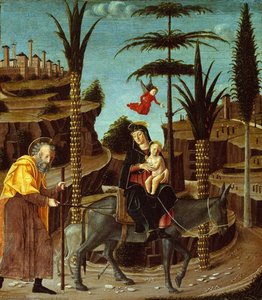
bernardino jacopi butinone
1436 - 1507 , Italy
Quick Facts
- Artistic Movement Or Style: Renaissance
- Artists Or Movements Influenced By This Artist: ['Francesco di Giorgio Martini']
- Artists Who Influenced This Artist: ['Vincenzo Foppa']
- Date Of Birth: 1436 Treviglio Italy
- Date Of Death: c. 1507 or 1508
- Full Name: Bernardino Jacopi Butinone
- Nationality: Italian Renaissance
- Notable Artworks:
- Madonna and Child
- The Adoration of the Magi
- Place Of Birth: Treviglio Lombardy Italy
Related Articles

The Enduring Legacy of Oil on Canvas: Technique, History & Aesthetic Impact
Explore the rich history & techniques of oil painting – from Renaissance masters to Impressionism. Discover pigments, layering methods, and why this timeless medium endures. Expert insights for artists & art enthusiasts.

Oil on Canvas: A Historical & Technical Exploration of a Timeless Artistic Medium
Explore the rich history & enduring techniques of oil painting on canvas. Discover the science behind its longevity, conservation practices, and contemporary relevance. Expert insights for art enthusiasts.
Raphael's Masterpieces: 25 Iconic Paintings & Renaissance Art for Your Home
Explore 25 breathtaking Raphael paintings! Journey through the Italian Renaissance with masterpieces like 'School of Athens' & iconic Madonnas. Find museum-quality art reproductions and elevate your home decor on ArtsDot.com.

The Enduring Power of Painting: A Historical & Contemporary Exploration of Form and Emotion
Explore the rich history & enduring techniques of oil painting with ArtsDot. Discover masterpieces, learn about art collecting, and find authentic handmade reproductions crafted by skilled artists.

The Enduring Legacy of Oil on Canvas: Technique, History & Contemporary Practice
Explore the rich history & enduring techniques of oil painting on canvas. Discover the science behind its longevity, conservation practices, and contemporary relevance. Expert insights for art enthusiasts.