

 Preview
 Send
Send Share
Share
 Details

 Download
 Similars
 X-Ray
X-Ray Diaporama
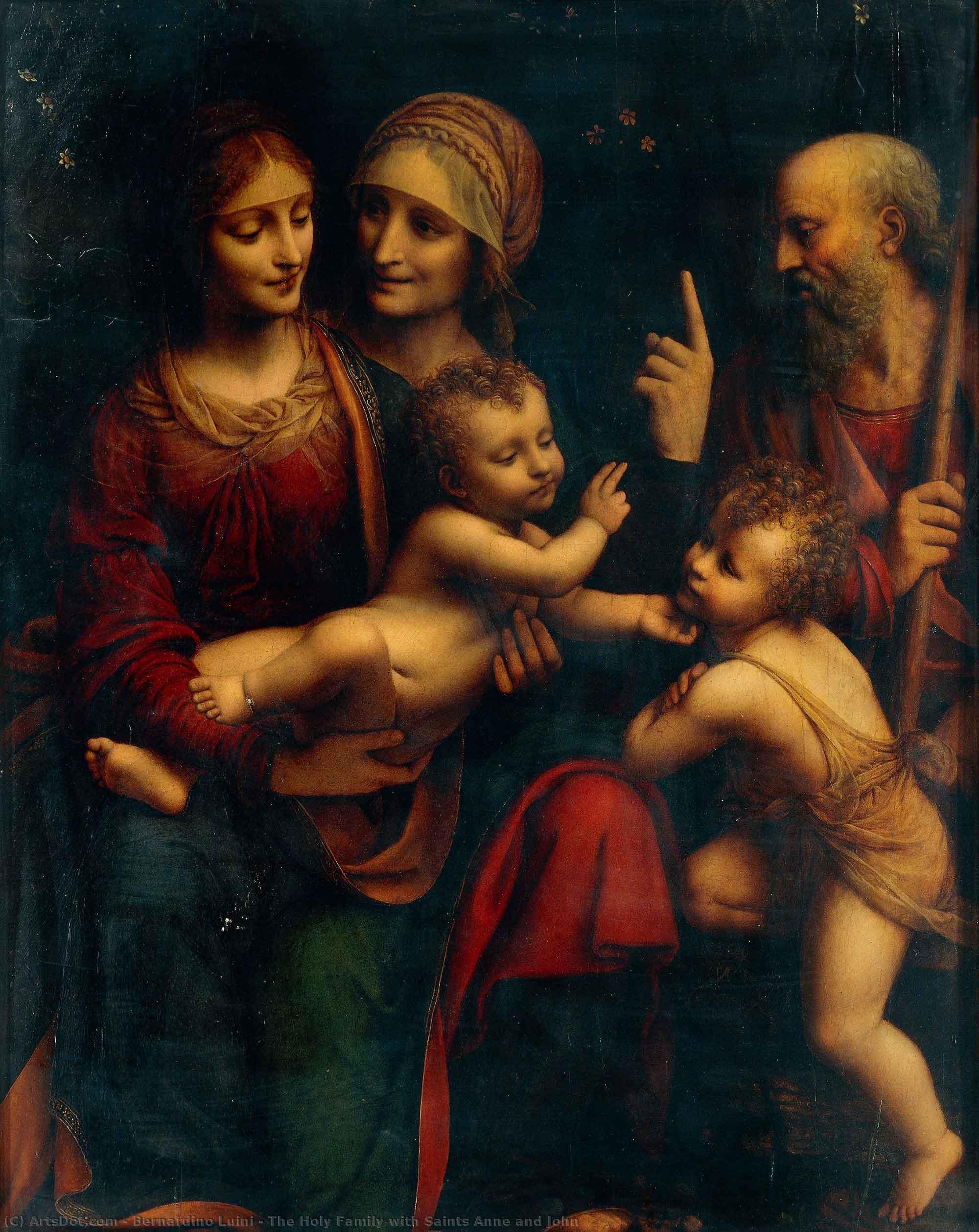
The Holy Family with Saints Anne and John
 Oil On Canvas
- WallArt
- High Renaissance
 1520
1520 118.0 x 92.0 cm
 Biblioteca Ambrosiana
 Read More
Purchase a high-resolution, enhanced digital image, far superior to the online preview.
Each file is meticulously prepared by our in-house specialists using advanced tools and expert manual retouching. We ensure every image has exceptional clarity, precise color accuracy, and fine detail.
The final file is delivered via email within 72 hours, optimized for immediate use in professional, editorial, and print environments. This is the same quality trusted by top-tier design studios, publishers, and galleries.
Digital Image
Download a high-resolution file for personal display, printing, and creative projects. ( Buy Print Buy Hand Made Painting)
Included in Every Digital Image Order
Expert Digital Delivery, Guaranteed
When you choose ArtsDot.com, you're not just getting an image - you're receiving a professionally enhanced digital artwork, crafted with precision and backed by a satisfaction guarantee. Here's everything that comes with your order, automatically:

Fast Email Delivery
Your high-resolution digital image file will be emailed to you within 72 hours of ordering - ready for immediate use.

AI-Enhanced Digital File
Your artwork is professionally optimized using advanced AI tools and manual editing, ensuring maximum detail, clarity, and color accuracy.

Free Lifetime Re-Delivery
Accidentally deleted or lost your file? No worries - we'll resend it to you anytime, free of charge.

No Import Fees - Ever
Enjoy your artwork instantly with zero customs, duties, or delivery fees - digital downloads are always tax-free.

Color Accuracy Guarantee
We ensure your digital image reflects the original colors as closely as possible using professional tools and color management.

60-Day Satisfaction Guarantee
If you're not satisfied with your digital image, we'll revise it or refund 100% within 60 days - no questions asked.

100% Money-Back Guarantee
Not satisfied? Get a full refund within 60 days of receiving your digital file - no questions asked.

Bulk Order Discounts
Buy 3 images, save 10% - Buy 5, save 15% - Buy 10+, save 20%. Great for creative projects, galleries, and agencies.
A Moment of Grace: Bernardino Luini’s ‘Holy Family’
Bernardino Luini's “The Holy Family with Saints Anne and John the Baptist,” painted around 1530, isn’t merely a depiction of a biblical scene; it’s a profound meditation on family, faith, and the quiet dignity of everyday life. Born in Runo, Italy, Luini spent his career primarily within the confines of Milanese churches and private collections, yet his work possesses an extraordinary emotional resonance that transcends its historical context. This particular painting, housed within the Pinacoteca di Brera in Milan, offers a glimpse into the artist’s unique vision – a world imbued with a gentle melancholy and a remarkable sensitivity to human form.
The composition itself is deceptively simple. At the heart of the scene stands the Holy Family: Mary, Joseph, and the infant Jesus, rendered not in the vibrant colors often associated with Renaissance depictions, but rather in a muted palette of browns, ochres, and subtle blues. Luini eschews dramatic gestures or elaborate drapery; instead, he favors a restrained elegance, focusing on the quiet intimacy of their shared space. The figures are presented within a modest interior setting – a room bathed in diffused light, suggesting a humble dwelling rather than a grand palace. A simple bench anchors the scene, drawing the eye towards the central family unit and subtly hinting at the domesticity of their lives.
The Influence of Leonardo: A Master’s Apprentice
Luini's artistic journey is inextricably linked to that of Leonardo da Vinci. While the precise nature of their relationship remains debated, it’s widely accepted that Luini served as a direct pupil of the master, absorbing not just technical skills but also Leonardo’s profound understanding of human anatomy and his innovative approach to sfumato – the subtle blurring of lines and colors that creates an atmospheric effect. This influence is particularly evident in Luini's masterful rendering of Mary's face, which possesses a remarkable softness and depth, mirroring Leonardo’s celebrated portraits. The elongated eyes, a characteristic feature often attributed to Luini (and dubbed “Luinesque” by art historian Vladimir Nabokov), contribute to the figures’ expressive quality, conveying a sense of vulnerability and profound emotion.
Furthermore, Luini's use of light is remarkably subtle. He avoids harsh contrasts, opting instead for a diffused illumination that gently wraps around the figures, creating an atmosphere of serenity and contemplation. This technique, reminiscent of Leonardo’s work in paintings like “The Virgin of the Rocks,” emphasizes the emotional depth of the scene rather than its visual spectacle.
Symbolism and Spiritual Depth
Beyond its technical brilliance, "The Holy Family" is rich in symbolic meaning. The inclusion of Saints Anne and John the Baptist underscores the importance of lineage and spiritual guidance within the family narrative. Saint Anne, Mary’s mother, represents the continuity of faith across generations, while Saint John the Baptist embodies humility and prophetic wisdom. The positioning of these figures – Anne kneeling beside Mary, John standing slightly apart – suggests a complex interplay of familial bonds and spiritual mentorship.
The painting's overall mood is one of quiet reverence and profound tenderness. Luini doesn’t depict a grand, theatrical scene; instead, he captures a fleeting moment of domestic harmony—a testament to the enduring power of family love and faith. The simplicity of the setting, combined with the figures’ understated expressions, invites viewers to contemplate their own relationships and values.
A Legacy of Grace: Reproductions and Artistic Inspiration
Bernardino Luini's “The Holy Family” remains a beloved masterpiece, admired for its emotional depth, technical skill, and enduring spiritual resonance. High-quality reproductions offer an accessible way to experience the beauty and serenity of this extraordinary painting. Whether displayed in a private home or a public gallery, this work continues to inspire contemplation and evoke a sense of profound peace – a timeless reminder of the simple grace at the heart of the human story.
Related Artworks
Artist Biography
A Lombard Luminary: The Life and Art of Bernardino Luini
Bernardino Luini, a name resonating softly within the annals of Italian Renaissance painting, emerged from the picturesque region surrounding Lake Maggiore around 1480. Born in Runo, a small *frazione* near Dumenza, his early life remains shrouded in some mystery, yet it’s clear that destiny propelled him towards Milan, the vibrant artistic heartland of northern Italy. By 1500, he had relocated with his father, poised to absorb the burgeoning creative energy of the city. While accounts vary regarding his initial training—some credit Giovan Stefano Scotto, others Ambrogio Bergognone—a more profound influence was undoubtedly on the horizon: Leonardo da Vinci. The precise nature of their relationship remains debated, but it’s widely believed Luini worked directly under the master, a formative experience that would indelibly shape his artistic trajectory. This apprenticeship wasn't merely technical; it was an immersion into a world of subtle observation, innovative composition, and the elusive quality known as *sfumato*, which Luini would skillfully integrate into his own unique style.The Embrace of Leonardo and the Birth of a Style
Luini’s artistic development wasn't simply imitation; it was a sensitive assimilation of Leonardo’s techniques filtered through his own Lombard sensibility. He didn’t strive to replicate Da Vinci’s intellectual rigor or anatomical precision, but rather embraced the softer, more lyrical aspects of his style. This is particularly evident in his depictions of women—graceful figures with elongated eyes, often described as “Luinesque” by the discerning eye of Vladimir Nabokov. These captivating gazes possess a gentle melancholy, an inwardness that invites contemplation. Early works like the *Adoration of the Magi* (c. 1505) in San Pietro, Luino, already hint at this emerging style, showcasing a delicate handling of light and shadow and a growing mastery of composition. His frescoes for the Oratory of Santa Maria Nuova in Pilastrello and the subsequent commissions throughout Milan solidified his reputation as a leading artist of the region. The influence of Bernardino Zenale’s *Cantù Polyptych* is also visible in works like *St. Anthony of Padua* (1510s), demonstrating Luini's ability to synthesize diverse influences into a cohesive artistic vision.Frescoes, Palaces, and the Flourishing of Creativity
The first two decades of the 16th century witnessed a period of intense creative activity for Luini. He wasn’t confined to religious subjects; his talents were sought after for secular commissions as well. The frescoes he created between 1509 and 1514 for Villa Pelucca in Sesto San Giovanni stand as a testament to his versatility, depicting mythological scenes with a refined elegance that graced the walls of this aristocratic residence. These works, now housed in Milan’s Pinacoteca di Brera, reveal a painter equally adept at capturing the dynamism of classical narratives and the intimate beauty of human form. He continued to receive prestigious commissions, adorning churches and palaces throughout Lombardy with his distinctive style. His ability to imbue even grand-scale frescoes with an air of intimacy and emotional resonance cemented his position as one of the most sought-after artists of his time.Legacy and Enduring Appeal
Bernardino Luini passed away in Milan in June 1532, leaving behind a legacy that extended beyond his own lifetime. His son, Aurelio, followed in his footsteps, continuing the family’s artistic tradition. However, it is Bernardino who remains the more celebrated figure, remembered for his graceful figures, delicate *sfumato*, and the uniquely captivating quality of his “Luinesque” women. His work served as an inspiration to subsequent generations of artists, influencing the development of Lombard painting and contributing to the broader currents of Italian Renaissance art. Today, Luini’s masterpieces can be found in museums and churches throughout Italy—the Pinacoteca di Brera being a particularly rich repository of his works. His paintings continue to enchant viewers with their beauty, grace, and enduring emotional power, offering a glimpse into the artistic sensibilities of a bygone era. Salome with the Head of John the Baptist, for example, continues to captivate audiences with its dramatic intensity and masterful execution, while Holy Family with Saints Anne and John the Baptist exemplifies his serene and harmonious compositions.
Bernardino Luini
1480 - 1532 , Italy
Quick Facts
- Artistic Movement Or Style: Renaissance, Mannerism
- Artists Or Movements Influenced By This Artist: ['Luinesque style painters']
- Artists Who Influenced This Artist: ['Leonardo da Vinci']
- Date Of Birth: c. 1480
- Date Of Death: 1532
- Full Name: Bernardino Luini
- Nationality: Italian
- Notable Artworks:
- Adoration of the Magi
- St. Anthony of Padua
- Frescoes for Villa Pelucca
- Salome with Head of John
- Holy Family w/ Saints
- Place Of Birth: Reno, Italy

