 Preview
 Send
Send Share
Share
 Details

 Download
 Similars
 X-Ray
X-Ray Diaporama
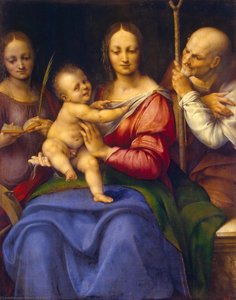
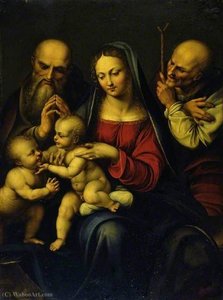
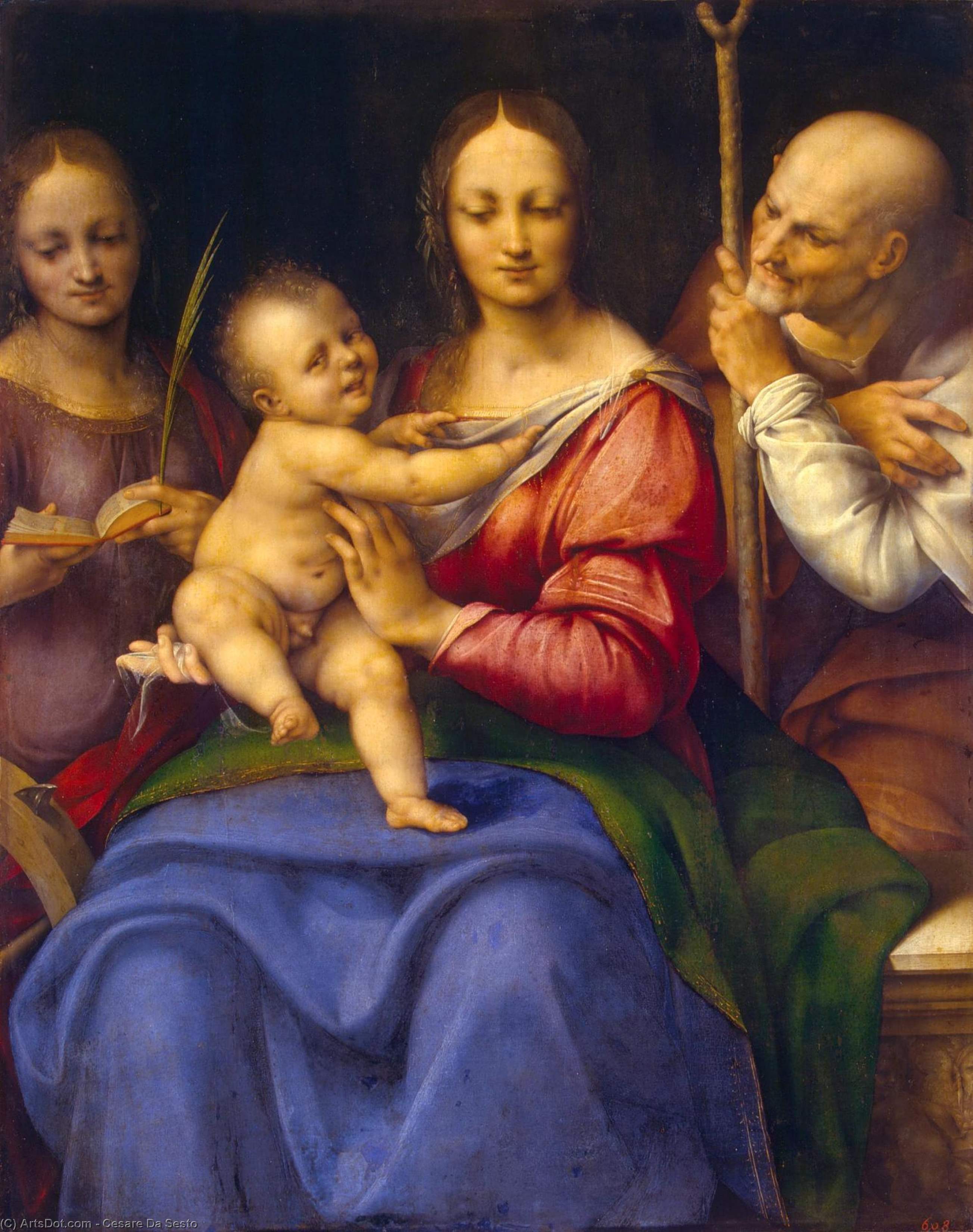
Holy Family with St Catherine
 Oil On Canvas
- WallArt
- High Renaissance
 1515
1515 89.0 x 71.0 cm
 Hermitage Museum
 Read More
Hand Made Oil Reproduction
Hand-painted oil on canvas in your size and frame, made to order by our artists. ( Buy Print Buy Image)




P118B $10

P118H $10

P118W $10

P438Z $10

P508JH $12

P508YH $12

P805H $10

P805Z $10

P919BZ $10

P919G $10

P919XJ $10

P959ZH $10

P968JZ $12

W106C $8

W218G $10

W218JH $8

W218Y $10

W307PJ $10

W316G $10

W316PJ $8

W316Y $10

W398PJ $8

W4111J $10

W500HY $15

W500JH $15

W692G $12

W849H $8

W940BG $15

W953PJ $8




Pick from our preset sizes that match the artwork's original proportions.

You may enter your own dimensions to fit a specific frame or space. If your selected size does not match the original image's proportions, we will either crop the artwork or extend the painting with additional hand-painted elements. A digital mockup will be sent for your approval before production begins.
Please note that the on-screen preview does not reflect the actual cropping or extension. Only the mockup will accurately show the final composition.
While custom sizes are available, we recommend selecting a dimension from the predefined list to preserve the original proportions.
After order, ArtsDot.com team will email client for instructions and provide a mockup preview
Worldwide Delivery () in 3/4 weeks instead of standard 5 weeks. (16 August). No compromise on quality.

Free Worldwide Express Shipping

High-Quality Linen Canvas

Full Shipping Insurance

Customs Tax Refund Guarantee

True Color Matching Guarantee

60-Day Return Policy (Defects Only)

100% Money-Back Guarantee

Bulk Discount Offer
 Glass option is only available in size under 110 CM

Holy Family with St Catherine
Reproduction Medium
Reproduction Size
-


Total Price
$ 313
Artwork Description
A Renaissance Reverie: Exploring the Depths of Cesare da Sesto’s “Holy Family with St Catherine”
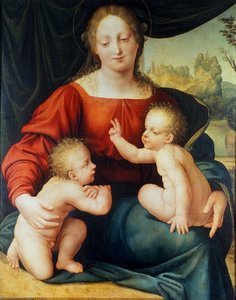
Cesare da Sesto's "Holy Family with St Catherine," painted in 1515, is more than just a depiction of a sacred scene; it’s a window into the heart of the Florentine Renaissance and a testament to the enduring power of artistic lineage. This oil on canvas masterpiece, measuring 89 x 71 cm, immediately draws the viewer into a world of serene contemplation, a space where faith, familial love, and divine grace converge with remarkable realism and subtle artistry. The painting’s quiet grandeur speaks volumes about its creator, Cesare da Sesto, an artist deeply influenced by the revolutionary techniques of Leonardo da Vinci, yet forging his own distinct voice within the vibrant artistic landscape of Milan.
The composition itself is a masterclass in Renaissance design. Centered around the Virgin Mary, Jesus, and Saint Joseph, the figures are arranged within a carefully constructed pyramidal form – a compositional device favored by artists seeking to achieve balance and harmony. The receding background, rendered in deep, atmospheric tones, creates an illusion of vast space, drawing the eye towards the central family group. Notice how Sesto utilizes linear perspective, subtly diminishing the size of objects as they recede into the distance, lending a convincing sense of depth to the scene. The deliberate placement and interaction of the figures – Mary’s gentle gaze upon her son, Joseph’s protective stance – evoke a palpable sense of familial devotion, a cornerstone of Christian belief.
The Secrets of Sfumato: Technique and Light
Sesto's mastery lies not only in his compositional skills but also in his technical prowess. He expertly employs the *sfumato* technique, famously pioneered by Leonardo da Vinci – a subtle blurring of lines and edges that creates an ethereal quality, softening contours and lending a sense of atmospheric depth. This is particularly evident in Mary’s face, where delicate gradations of tone create an almost luminous effect, conveying both serenity and maternal tenderness. The artist's layering of thin glazes of oil paint – a hallmark of Renaissance painting – allows for incredible luminosity and richness of color. The careful manipulation of light and shadow not only sculpts the figures but also imbues the scene with a profound sense of drama and realism. Observe how the single, unseen light source casts soft shadows that define the folds of drapery and accentuate the three-dimensionality of each figure.
Symbolism Woven into Sacred Cloth
Beyond its aesthetic beauty, “Holy Family with St Catherine” is rich in symbolic meaning. The prominent palm branch held by Jesus – a recurring motif in Renaissance art – represents his future kingship and resurrection. The inclusion of Saint Catherine, the patron saint of artists, adds another layer of significance, suggesting Sesto’s own dedication to his craft and perhaps even a subtle self-portrait within the larger narrative. The setting itself, though unnamed, evokes a sense of timelessness and spiritual contemplation – a space where earthly concerns fade away in the face of divine grace. The painting speaks to universal themes of faith, family, and redemption, resonating with viewers across centuries.
A Legacy Forged in Florence: Cesare da Sesto’s Artistic Journey
Cesare da Sesto's artistic journey is inextricably linked to the legacy of Leonardo da Vinci. Born in Sesto Calende, a region steeped in artistic tradition, he was undoubtedly influenced by Da Vinci’s innovative techniques and humanist ideals. His early training under Peruzzi in Rome exposed him to the burgeoning spirit of the papal court, while his time in Milan allowed him to flourish within a vibrant artistic community. Sesto's work demonstrates a remarkable ability to synthesize these diverse influences, creating a style that is both deeply rooted in tradition and distinctly his own. Reproductions of “Holy Family with St Catherine” offer a captivating glimpse into this artist’s world – a world where beauty, faith, and technical mastery converge to create an enduring masterpiece.
Related Artworks

Artist Biography
The Florentine Master Shaped by Leonardo
Cesare da Sesto (1477–1523) stands as a pivotal figure in the Florentine Renaissance, an artist whose legacy resides primarily within the vibrant artistic milieu of Milan and its surrounding territories. Born in Sesto Calende, Lombardy—a region renowned for its patronage of the arts—Sesto’s formative years coincided with the zenith of Leonardo da Vinci's influence, fostering a stylistic kinship that would permeate his entire oeuvre. As part of the influential Leonardeschi group, artists like Bernardino Luini and Marco d’Oggione similarly absorbed Da Vinci’s innovative approaches to perspective and chiaroscuro, establishing Sesto firmly within this prestigious artistic lineage.
His journey was one of constant movement and profound immersion in the great centers of Italian culture. Evidence suggests he honed his skills under Baldassare Peruzzi in Rome during 1505, immersing himself in the burgeoning humanist spirit of the papal court. This period yielded notable commissions, such as a lunette adorning the Sant’Onofrio Basilica and several paintings executed in Campagnano Romano, demonstrating Sesto's early aptitude for capturing emotive narratives within meticulously crafted compositions. His artistic evolution was marked by an ability to blend the soft, atmospheric sfumato of the Milanese tradition with the structural grandeur found in Roman classicism.
A Legacy of Devotion and Drama
The breadth of Sesto's talent is perhaps most visible in his mastery of both monumental religious narratives and intimate, detailed studies. His work often captures a sense of profound spiritual weight, balanced by a classical beauty that defines the High Renaissance. Notable examples of his skill include:
- Holy Family with St Catherine: A stunning oil painting that serves as a masterpiece of the era, showcasing a perfectly balanced composition and the delicate use of sfumato to create lifelike, tender figures.
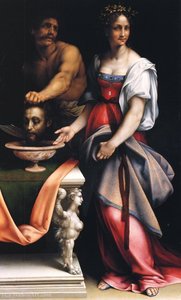
- Salomè with head of John the Baptist: A hauntingly beautiful exploration of grief and loss, where rich colors and masterful technique bring a dramatic, classical tragedy to life.
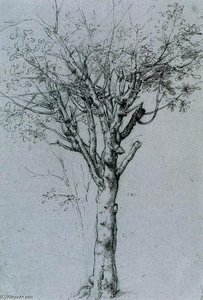
- Study of a Tree: A testament to his dedication to naturalism, this meticulous black and white sketch reveals his ability to capture textural bark rendering and subtle tonal variations through a radial composition.
A significant chapter of his career unfolded in Naples between 1514 and 1515, where Sesto undertook a prolific artistic output that cemented his reputation as a versatile painter. The culmination of this period arrived with the completion of the monumental Adoration of the Magi, an artwork that profoundly impacted subsequent artists operating within Southern Italy—a piece now housed in the Museo Nazionale di Napoli.
Final Years and Historical Significance
Returning to Milan in 1520, Sesto embarked on yet another ambitious undertaking: the fresco cycle for San Rocco Church, a collaborative effort with Bernardino Bernazzano. Although much of his original work from certain projects has sadly vanished over the centuries, his impact on the development of the Lombard school remains undeniable. He successfully bridged the gap between the experimental innovations of Leonardo and the more structured, classical demands of the later Renaissance.
Today, Cesare da Sesto is remembered not merely as a follower of Da Vinci, but as a master in his own right who brought a unique emotional depth to the religious and naturalistic subjects of his time. His ability to navigate the complex demands of papal commissions, large-scale polyptychs, and delicate sketches ensures his place in the pantheon of the great Italian Renaissance masters.
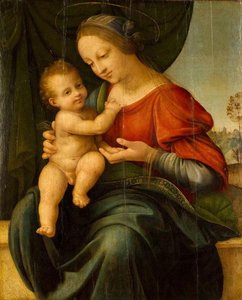
Cesare da Sesto
1477 - 1523 , Italy
Quick Facts
- Artistic Movement Or Style: Leonardoesque
- Artists Or Movements Influenced By This Artist: ['Bernardino Luini']
- Artists Who Influenced This Artist: ['Leonardo da Vinci']
- Date Of Birth: 1477
- Full Name: Cesare da Sesto
- Nationality: Italian
- Notable Artworks:
- Salomè
- Holy Family with St Catherine
- Study of a Tree
- Place Of Birth: Sesto Calende, Italy
Related Articles
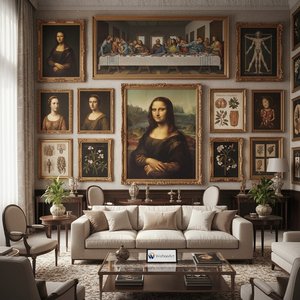
Leonardo da Vinci's Masterpieces: Explore 25 Iconic Artworks for Your Home | ArtsDot
Journey through Leonardo da Vinci's genius with our curated selection of 25 iconic artworks. Explore the stories behind Mona Lisa, The Last Supper & more Renaissance masterpieces. Find museum-quality art reproductions for your home at ArtsDot.com.

Leonardo da Vinci: A Renaissance Master’s Synthesis of Art, Science & Human Observation – Reinterpreted for the Collector
Explore Leonardo da Vinci’s timeless masterpieces with ArtsDot. Discover insights into his art, science, and legacy – trusted expertise for discerning collectors seeking authentic reproductions & investment opportunities.

El Greco's Masterpieces: Explore 25 Iconic Paintings & Spiritual Visions | ArtsDot
Journey through El Greco's 25 most iconic paintings! Explore the spiritual depth & dramatic beauty of this Spanish Renaissance master. Discover art history, techniques & find museum-quality reproductions for your home at ArtsDot.com.
Uffizi's 25 Masterpieces: Renaissance Art & Timeless Decor Inspiration
Journey through the Uffizi Gallery's 25 most iconic Renaissance artworks! Explore Botticelli, Leonardo da Vinci & Michelangelo’s masterpieces. Find museum-quality art reproductions and curated decor ideas to bring timeless Italian beauty into your home. Discover all masterpieces on ArtsDot.com
Evolving Portraits: Personalized Art as a Chronicle of Family Life Across Generations
Create a timeless family legacy with custom portraits! ArtsDot connects you with skilled artists for heirloom-quality paintings & prints. Explore styles, commission your unique artwork today.