 Preview
 Send
Send Share
Share
 Details

 Download
 Similars
 X-Ray
X-Ray Diaporama
Temptations of St Anthony
 Renaissance
 1494
1494- Renaissance
 46.0 x 58.0 cm
 Galleria Doria Pamphilj
 Read More
Hand Made Oil Reproduction
Hand-painted oil on canvas in your size and frame, made to order by our artists. ( Buy Print Buy Image)




P118B $10

P118H $10

P118W $10

P438Z $10

P508JH $12

P508YH $12

P805H $10

P805Z $10

P919BZ $10

P919G $10

P919XJ $10

P959ZH $10

P968JZ $12

W106C $8

W218G $10

W218JH $8

W218Y $10

W307PJ $10

W316G $10

W316PJ $8

W316Y $10

W398PJ $8

W4111J $10

W500HY $15

W500JH $15

W692G $12

W849H $8

W940BG $15

W953PJ $8




Pick from our preset sizes that match the artwork's original proportions.

You may enter your own dimensions to fit a specific frame or space. If your selected size does not match the original image's proportions, we will either crop the artwork or extend the painting with additional hand-painted elements. A digital mockup will be sent for your approval before production begins.
Please note that the on-screen preview does not reflect the actual cropping or extension. Only the mockup will accurately show the final composition.
While custom sizes are available, we recommend selecting a dimension from the predefined list to preserve the original proportions.
After order, ArtsDot.com team will email client for instructions and provide a mockup preview
Worldwide Delivery () in 3/4 weeks instead of standard 5 weeks. (17 August). No compromise on quality.

Free Worldwide Express Shipping

High-Quality Linen Canvas

Full Shipping Insurance

Customs Tax Refund Guarantee

True Color Matching Guarantee

60-Day Return Policy (Defects Only)

100% Money-Back Guarantee

Bulk Discount Offer
 Glass option is only available in size under 110 CM

Temptations of St Anthony
Reproduction Medium
Reproduction Size
-


Total Price
$ 263
Artwork Description
A Spiritual Battleground in Pigment and Light
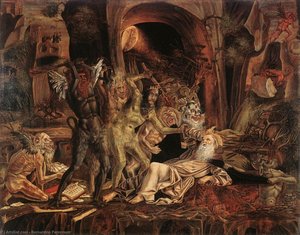
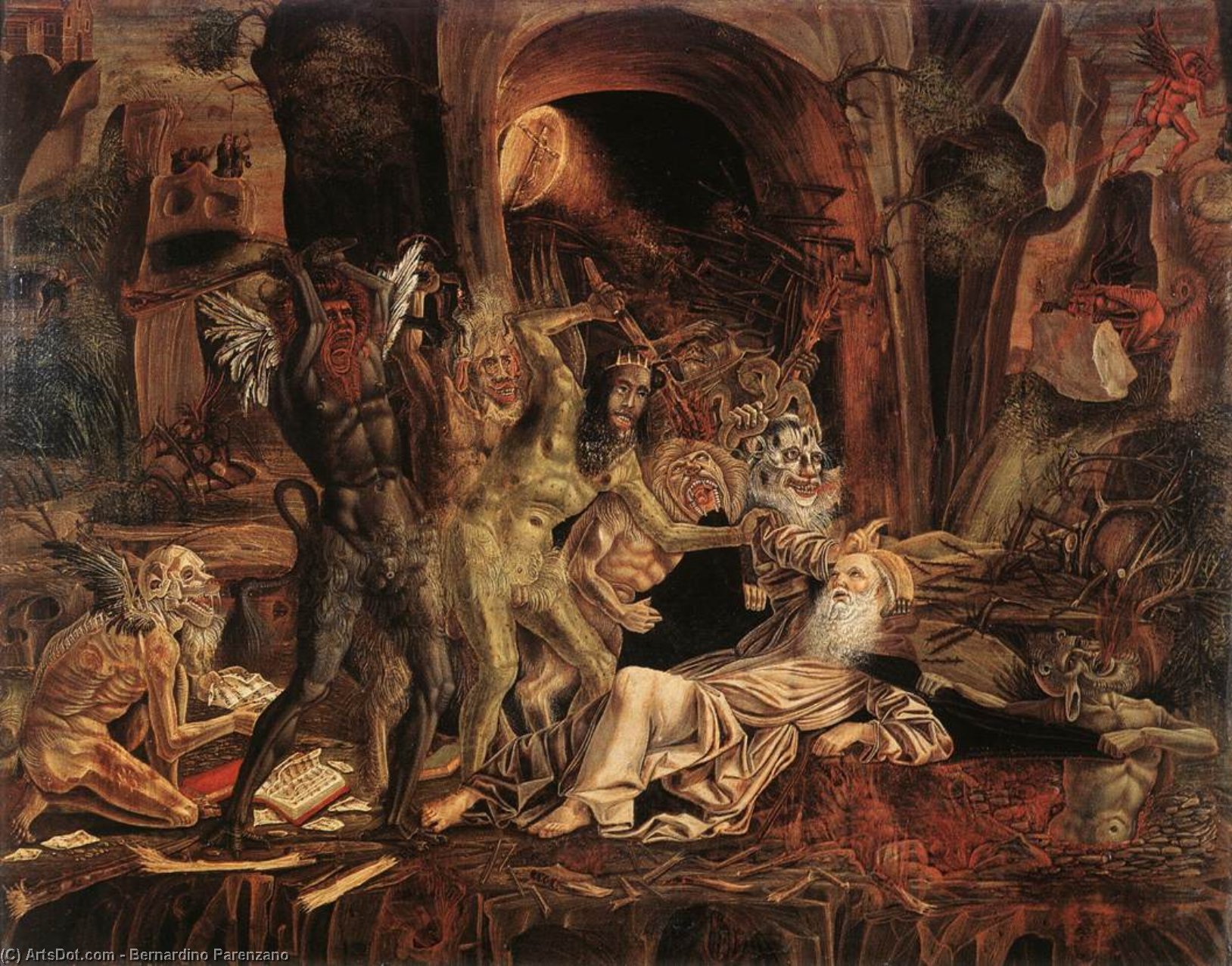
In the hauntingly beautiful Temptations of St. Anthony, painted around 1494 by the enigmatic Bernardino Parenzano, we are transported to the desolate, windswept fringes of the Paduan Renaissance. This masterpiece serves as a visceral window into the soul of a saint under siege. The composition is a swirling vortex of spiritual warfare, where the quietude of monastic devotion meets the grotesque chaos of the supernatural. At the heart of this tempest stands St. and Anthony, a figure of resolute stillness amidst a sea of encroaching shadows. Parenzano masterfully captures the tension between the earthly and the divine, inviting the viewer to witness not just a historical religious narrative, but a universal struggle against the darker impulses of the human psyche.
The artist’s technique reflects the profound influence of the Mantegna workshop, characterized by a sharp, almost sculptural precision that gives every creature a terrifyingly tangible presence. As your eyes traverse the canvas, you encounter a menagerie of at least thirteen distinct figures—monsters, demons, and hybrid beasts that emerge from the periphery like fever dreams made flesh. Some creatures loom large and menacing, their forms heavy with shadow, while smaller, more insidious spirits skitter through the composition. This meticulous attention to detail creates a sense of claustrophobia, effectively simulating the psychological pressure of the desert solitude. The interplay of light and dark does not merely illuminate the scene; it acts as a narrative force, highlighting the saint's vulnerability while emphasizing the encroaching darkness of his trials.
Symbolism and the Weight of Knowledge
Beyond the immediate spectacle of the demonic horde, Parenzano weaves a complex web of symbolism that rewards deep contemplation. Scattered throughout this chaotic landscape are several books, placed with deliberate intent near the saint's feet and at the edges of the frame. In the context of 15th-century iconography, these volumes represent more than mere literacy; they symbolize the weight of theological knowledge and the profound danger of intellectual pride. These books serve as a silent commentary on the duality of wisdom—how the pursuit of truth can be both a shield for the faithful and a gateway to the very temptations that threaten to corrupt the spirit. The presence of these objects adds a layer of intellectual gravity to the painting, transforming a scene of physical struggle into one of profound philosophical inquiry.
For the discerning collector or interior designer, this work offers an unparalleled opportunity to introduce a piece of profound historical depth and emotional resonance into a curated space. A high-quality reproduction of this painting does more than decorate a wall; it anchors a room with its dramatic intensity and classical elegance. The muted, earthy tones and the intricate, Renaissance-era linework provide a sophisticated focal point that complements both traditional period rooms and contemporary minimalist settings. To possess such a piece is to hold a fragment of the Paduan Renaissance, bringing the timeless drama of St. Anthony’s endurance into the modern home, serving as a permanent reminder of the strength found in steadfastness amidst life's inevitable storms.
Related Artworks
Artist Biography
A Venetian Hand in the Paduan Renaissance: The Life and Art of Bernardino Parenzano
Bernardino Parenzano, also known as Bernardo Parentino or Bernardo da Parenzo, remains a somewhat enigmatic figure within the vibrant tapestry of 15th-century Italian painting. Born around 1450 in Parenzo – modern Poreč, Croatia – then a flourishing Venetian possession in Istria, his life and career unfolded primarily in Padua, leaving behind a legacy marked by religious devotion and a distinctive artistic voice. While biographical details are scarce, the available evidence suggests a painter deeply immersed in the stylistic currents of the Renaissance, particularly those emanating from Andrea Mantegna’s workshop. The confusion surrounding his identity with another contemporary named Bernardo Parentino, an Augustinian monk active in Vicenza, has further complicated efforts to reconstruct a complete picture of his artistic journey. However, through surviving artworks and historical records, we can begin to appreciate the unique contributions of this Istrian master.Early Influences and Paduan Commissions
Parenzano’s formative years likely saw him absorbing the artistic principles prevalent in Venice – a city renowned for its rich color palettes and dynamic compositions. The influence of Andrea Mantegna, whose workshop exerted a powerful sway over artists throughout the Veneto region, appears to have been particularly significant. Mantegna's emphasis on classical antiquity, anatomical precision, and dramatic perspective would become defining characteristics of Parenzano’s own style. His relocation to Padua brought him into contact with a thriving artistic community and secured important commissions that established his reputation. The most notable of these early works are the *Scenes of the Life of Saint Benedict* adorning the cloister of Santa Giustina in Padua. These frescoes, though fragmented today, reveal a painter adept at narrative storytelling, employing robust figures and carefully constructed architectural settings to convey the saint’s biography with clarity and emotional resonance. The scenes demonstrate a keen understanding of spatial recession and a growing confidence in depicting complex compositions.Religious Themes and Artistic Style
Parenzano dedicated his artistic energies almost exclusively to religious subjects, reflecting the devotional climate of the period. His paintings are characterized by a profound sense of piety and an earnest attempt to capture the spiritual essence of biblical narratives. The *Temptations of Saint Anthony*, arguably his most celebrated work, exemplifies this focus. The painting depicts the harrowing trials endured by the saint – beset by demons, fantastical creatures, and worldly temptations – with striking intensity. Unlike some depictions that emphasize the grotesque or sensational aspects of these encounters, Parenzano’s version conveys a sense of psychological torment and spiritual struggle. His palette is typically rich and varied, employing deep reds, blues, and golds to create a visually arresting effect. He skillfully uses light and shadow to heighten dramatic tension and draw the viewer's attention to key elements within the composition. The *Nativity*, once housed in the Accademia Gallery in Venice, further illustrates his mastery of religious iconography and his ability to imbue traditional subjects with fresh emotional depth.Later Works and Historical Context
The latter part of Parenzano’s career saw him continue to explore themes of faith and devotion. An *Adoration of the Magi* now residing in the Louvre Museum reveals a stylistic shift, incorporating elements reminiscent of Giovanni Bellini's more lyrical approach. This suggests an openness to diverse artistic influences and a willingness to adapt his style over time. The *Temptation of St Anthony Abbot*, found at the Doria Pamphilj Gallery in Rome, is another compelling example of his mature work, showcasing a nightmarish vision that underscores the saint’s internal battle against evil. Parenzano's career unfolded during a period of significant artistic innovation and change. The High Renaissance was on the horizon, with artists like Leonardo da Vinci and Raphael pushing the boundaries of realism and composition. While he did not fully embrace the radical departures of these later masters, his work represents an important link between the Early Renaissance traditions of Mantegna and the evolving aesthetic sensibilities of the 16th century. He died around 1500, leaving behind a body of work that continues to captivate viewers with its emotional power and technical skill.Legacy and Rediscovery
For centuries, Bernardino Parenzano remained a relatively obscure figure in art historical scholarship, often overshadowed by more celebrated contemporaries. The confusion surrounding his identity compounded this neglect. However, recent research has begun to shed new light on his life and work, revealing him as a significant painter of the Paduan Renaissance. His paintings offer valuable insights into the artistic climate of the region and demonstrate a unique blend of Mantegnesque precision and personal emotional expression. His legacy lies not in groundbreaking innovation but in the skillful execution of traditional themes and his ability to convey profound religious feeling. The rediscovery of his works has enriched our understanding of 15th-century Italian art, reminding us that even lesser-known artists can contribute significantly to the cultural heritage of their time.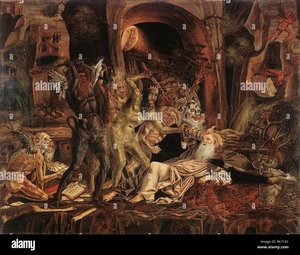
bernardino parenzano
1450 - 1500 , Croatia
Quick Facts
- Artistic Movement Or Style: Renaissance
- Artists Or Movements Influenced By This Artist: ['Renaissance']
- Artists Who Influenced This Artist: ['Northern European painters']
- Date Of Birth: c. 1450
- Date Of Death: c. 1500
- Full Name: Bernardino Parenzano
- Nationality: Italian
- Notable Artworks: ['Temptations of St Anthony']
- Place Of Birth: Poreč, Croatia
Related Articles

El Greco's Masterpieces: Explore 25 Iconic Paintings & Spiritual Visions | ArtsDot
Journey through El Greco's 25 most iconic paintings! Explore the spiritual depth & dramatic beauty of this Spanish Renaissance master. Discover art history, techniques & find museum-quality reproductions for your home at ArtsDot.com.

Spiritual Art: 10 Masterpieces to Inspire Your Soul |
Explore 10 spiritual art masterpieces – from Da Vinci to Van Gogh – that ignite inner peace & reflection. Discover their stories, techniques & emotional power. Find museum-quality reproductions & curated decor ideas at .

Fra Angelico's Masterpieces: 25 Renaissance Paintings for Your Home | ArtsDot
Explore 25 breathtaking masterpieces by Fra Angelico, a Renaissance master. Discover the stories behind his iconic frescoes, Annunciations & religious art. Find museum-quality reproductions and elevate your home decor with ArtsDot.com.

The Inner Journey Depicted: Exploring Spiritual Quest Themes in Art History
Explore the rich history of spiritual quests in art! Discover iconic paintings & symbolism from Christian, Renaissance, Pre-Raphaelite & Russian traditions. Deepen your understanding with ArtsDot.
Transcendent Visions: Exploring Spirituality Through Art History & Contemporary Practice
Explore the rich history of spirituality in art! Discover iconic masterpieces, symbolism & contemporary artists evoking transcendence. Expert insights for collectors seeking emotional resonance and lasting value.