 Preview
 Send
Send Share
Share
 Details

 Download
 Similars
 X-Ray
X-Ray Diaporama
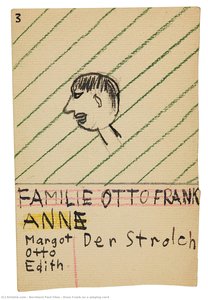
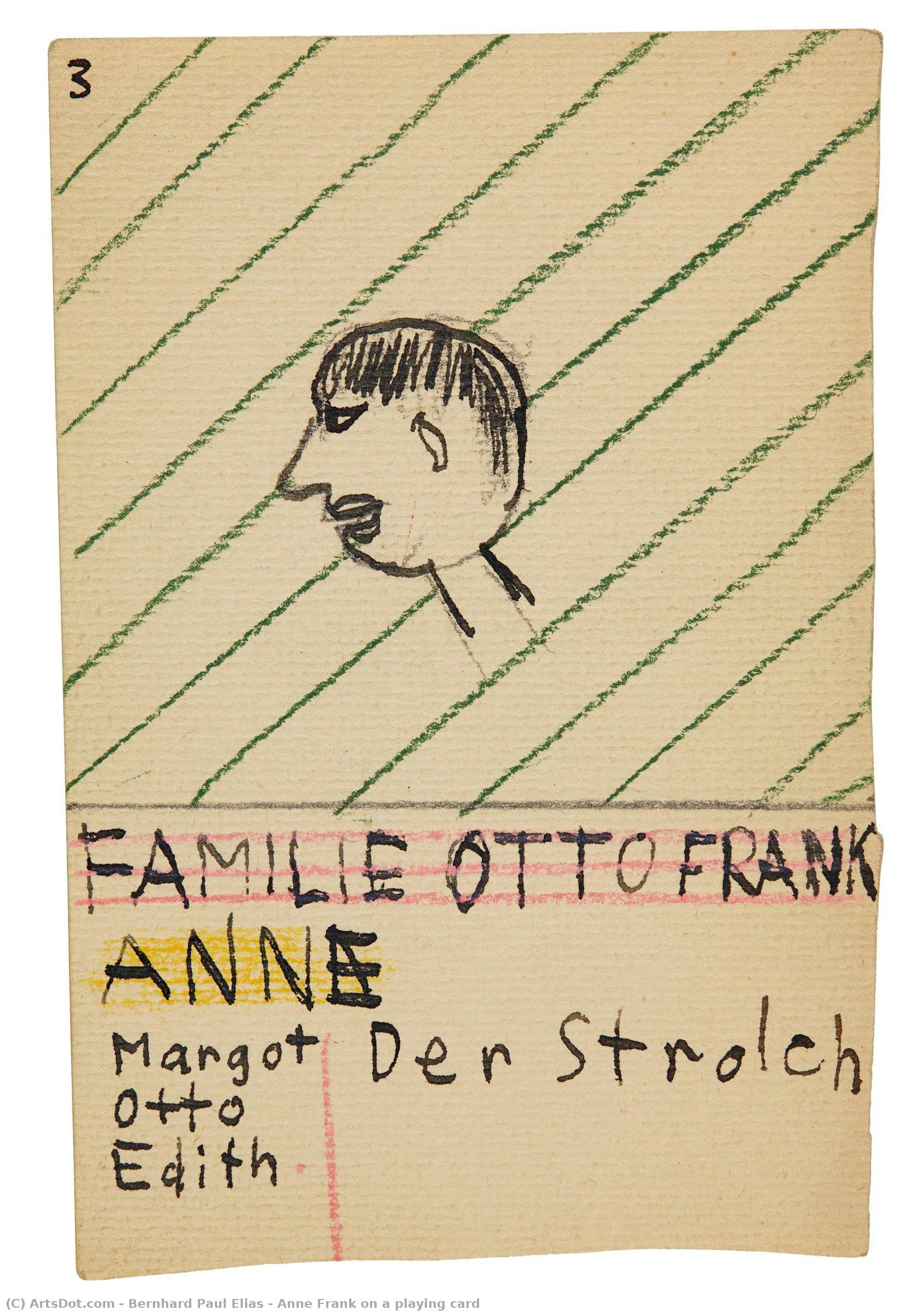
Anne Frank on a playing card
 Paper
Paper- WallArt
 1934
1934- Modern
 12.0 x 7.0 cm
 Jewish Museum Frankfurt
 Read More
Hand Made Oil Reproduction
Hand-painted oil on canvas in your size and frame, made to order by our artists. ( Buy Print Buy Image)




P118B $10

P118H $10

P118W $10

P438Z $10

P508JH $12

P508YH $12

P805H $10

P805Z $10

P919BZ $10

P919G $10

P919XJ $10

P959ZH $10

P968JZ $12

W106C $8

W218G $10

W218JH $8

W218Y $10

W307PJ $10

W316G $10

W316PJ $8

W316Y $10

W398PJ $8

W4111J $10

W500HY $15

W500JH $15

W692G $12

W849H $8

W940BG $15

W953PJ $8




Pick from our preset sizes that match the artwork's original proportions.

You may enter your own dimensions to fit a specific frame or space. If your selected size does not match the original image's proportions, we will either crop the artwork or extend the painting with additional hand-painted elements. A digital mockup will be sent for your approval before production begins.
Please note that the on-screen preview does not reflect the actual cropping or extension. Only the mockup will accurately show the final composition.
While custom sizes are available, we recommend selecting a dimension from the predefined list to preserve the original proportions.
After order, ArtsDot.com team will email client for instructions and provide a mockup preview
Worldwide Delivery () in 3/4 weeks instead of standard 5 weeks. (22 August). No compromise on quality.

Free Worldwide Express Shipping

High-Quality Linen Canvas

Full Shipping Insurance

Customs Tax Refund Guarantee

True Color Matching Guarantee

60-Day Return Policy (Defects Only)

100% Money-Back Guarantee

Bulk Discount Offer
 Glass option is only available in size under 110 CM

Anne Frank on a playing card
Reproduction Medium
Reproduction Size
-


Total Price
$ 263
Artwork Description
A Fragment of Memory: The Intimacy of Anne Frank on a Playing Card
In the delicate intersection of personal history and artistic expression lies Bernhard Paul Elias’s poignant work, Anne Frank on a Playing Card. This miniature masterpiece, dating back to 1934, serves as more than just a portrait; it is a hauntingly beautiful window into a vanished era. The artwork, measuring a mere 12 x 7 cm, captures the likeness of Anne Frank through a medium that suggests both playfulness and permanence. By utilizing the format of a playing card, Elias creates a profound tension between the triviality of a game and the gravity of the subject matter. The viewer is immediately drawn into a moment frozen in time, where the soft lines of the portrait meet the stark reality of historical memory.
The technique employed by Elias reflects a masterful command over small-scale composition. Though presented through a vintage black and white photographic lens, the underlying painting reveals a meticulous attention to detail. The subject’s distinctive hairstyle and the presence of glasses lend an air of unmistakable authenticity, grounding the piece in a recognizable reality. There is a quiet, understated elegance in the way the light interacts with the paper medium, creating a sense of depth that belies its diminutive size. For collectors of historical fine art, this work offers a rare opportunity to possess a piece that functions as both a technical study in portraiture and a deeply personal relic.
The Weight of Legacy and Symbolism
To understand the emotional resonance of this piece, one must look toward the profound connection between the artist and his subject. As the cousin of Anne Frank, Elias—often known as Buddy Elias—did not merely paint a figure; he channeled a shared family legacy. The choice of a playing card as the canvas is deeply symbolic. A card is something meant to be handled, shuffled, and passed between hands, yet here, it holds an image that is irreplaceable and sacred. This juxtaposition invites the observer to contemplate the fragility of life and the enduring power of art to preserve those whom history has nearly erased.
For interior designers and curators of meaningful spaces, this artwork offers a compelling focal point for collections centered on themes of human rights, historical biography, or 20th-century European history. The monochrome palette provides a sophisticated versatility, allowing it to integrate seamlessly into minimalist, contemporary, or classic gallery-style decors. It is a piece that demands contemplation, acting as a silent storyteller within a room. When choosing a high-quality reproduction of this work, one is not merely selecting a decoration, but inviting a profound narrative of resilience and remembrance into the home.
Related Artworks

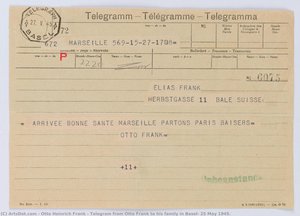
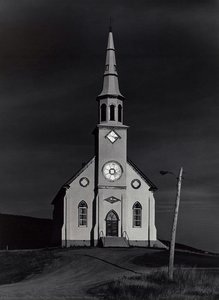

Artist Biography
A Legacy of Memory: The Art and Life of Buddy Elias
The life of Bernhard Paul Elias, known to the world as Buddy Elias, was a profound tapestry woven from threads of historical tragedy, familial devotion, and creative expression. Born in Frankfurt, Germany, in 1925, his early years were shadowed by the rising darkness of the Second World War and the pervasive antisemitism of the era. As the first cousin of the legendary Anne Frank, Elias occupied a unique position in history—not merely as a witness to the unfolding Holocaust, but as a guardian of a legacy that would eventually define his life's mission. Moving to Basel, Switzerland, in 1931, he carried with him the weight of a displaced heritage, a reality that would later infuse his artistic endeavors with a deep sense of nostalgia and a yearning for preserved connection.
Before he was recognized as a custodian of history, Elias navigated the vibrant, often whimsical world of performance. His early career was marked by a remarkable versatility, ranging from the physical grace of an ice clown and comedian with Holiday on Ice to the nuanced demands of Swiss-German film and television productions. This period of his life, characterized by movement and public persona, provided a rhythmic contrast to the more introspective, quietude found in his later years. The discipline of the stage and the expressive nature of acting served as a precursor to his visual artistry, where the mask of the performer was replaced by the intimate brushstroke of the painter.
The Canvas of Connection: Artistic Vision and Themes
Elias’s transition into painting allowed him to explore themes that were often too delicate for the stage. His work is deeply rooted in the concept of memory, acting as a visual bridge between the past and the present. He possessed a singular ability to capture moments of quiet contemplation and familial warmth, creating works that felt less like mere depictions and more like cherished recollections. His artistic style often leaned toward surrealist influences, where he subtly blended dreamlike imagery with the tangible reality of human connection. This technique allowed him to navigate the boundary between the historical truth of his lineage and the emotional truth of his personal experience.
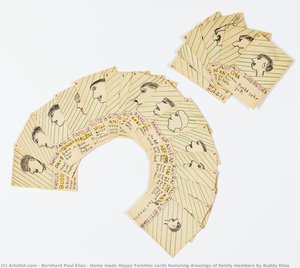
One of his most poignant contributions to the realm of folk-inspired art was his series of "Home Made Happy Families Cards." These pieces, featuring drawings of family members, were far more than simple decorations; they were vessels of affection. Through these works, Elias emphasized the sanctity of familial bonds, using art to reconstruct the sense of togetherness that history had so cruelly attempted to sever. His ability to imbue even small-scale, reproducible objects with profound emotional depth demonstrates a mastery of symbolic intimacy, making his art accessible yet deeply moving.
A Guardian’s Final Act: Historical Significance
Beyond the borders of his canvases, Elias’s most significant achievement lay in his leadership as the President of the Anne Frank Fonds. In this role, he became a pivotal figure in the ethical dissemination of Anne Frank's writings and the protection of her intellectual property. His work was not merely administrative; it was an extension of his artistic soul—a way to ensure that the light of Anne’s voice would never be extinguished by the shadows of the past. Through his dedication, he supported educational initiatives that promoted tolerance and remembrance, turning a personal family tragedy into a global lesson in humanity.
The historical significance of Buddy Elias resides in this duality: he was both a creator of beauty and a protector of truth. His life stands as a testament to the power of resilience, showing how an individual can take the fragments of a broken history and reshape them into a legacy of peace and art. Whether through the whimsical charm of his playing card illustrations or his solemn stewardship of the Frank family archives, Elias remained forever anchored to the belief that memory, when nurtured through art and action, has the power to heal the wounds of time.

bernhard paul elias
1925 - 2015 , Germany
Quick Facts
- Artistic Movement Or Style: Surrealist Drawings
- Date Of Birth: 1925
- Full Name: Bernhard Paul Elias (Buddy Elias)
- Nationality: Swiss
- Notable Artworks:
- Home made Happy Families cards featuring drawings of family members by Buddy Elias
- Anne Frank on a playing card
- Place Of Birth: Frankfurt, Germany
Related Articles
White on Canvas: 10 Masterpieces & Timeless Elegance for Your Home Decor
Explore 10 iconic white paintings by Monet, Whistler & Rothko! Discover the stories behind these serene masterpieces and their impact on art history. Find museum-quality reproductions for your home decor at .

Dark Masterpieces: 10 Iconic Paintings Dominated by Black Tones |
Explore 10 iconic paintings dominated by black tones, from Rembrandt’s chiaroscuro to Goya's dark expressions. Discover the stories behind these masterpieces & find museum-quality art reproductions for your home at .

Monochrome Visions: Exploring the Aesthetic & Historical Significance of Black & White Photography
Explore the rich history & artistic power of black and white photography. From early techniques to iconic masters like Ansel Adams, discover why monochrome continues to captivate art lovers today. Expert insights for collectors.

Playful Masterpieces: Top 10 Artworks for a Joyful Home | ArtsDot
Find joy & inspiration! Explore 10 playful masterpieces by Monet, Matisse & more. Discover art history, vibrant colors & uplifting stories behind these iconic paintings. Museum-quality reproductions at ArtsDot.com – explore the full collection online!

The Subtleties of White: Exploring Absence, Light & Symbolism in Art History
Explore the profound symbolism & history of white in art! From ancient purity to modern abstraction, discover how artists have used absence & light. Expert insights from ArtsDot.