 Preview
 Send
Send Share
Share
 Details

 Download
 Similars
 X-Ray
X-Ray Diaporama
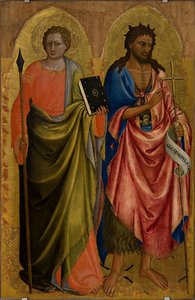
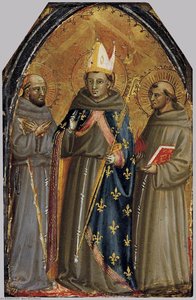
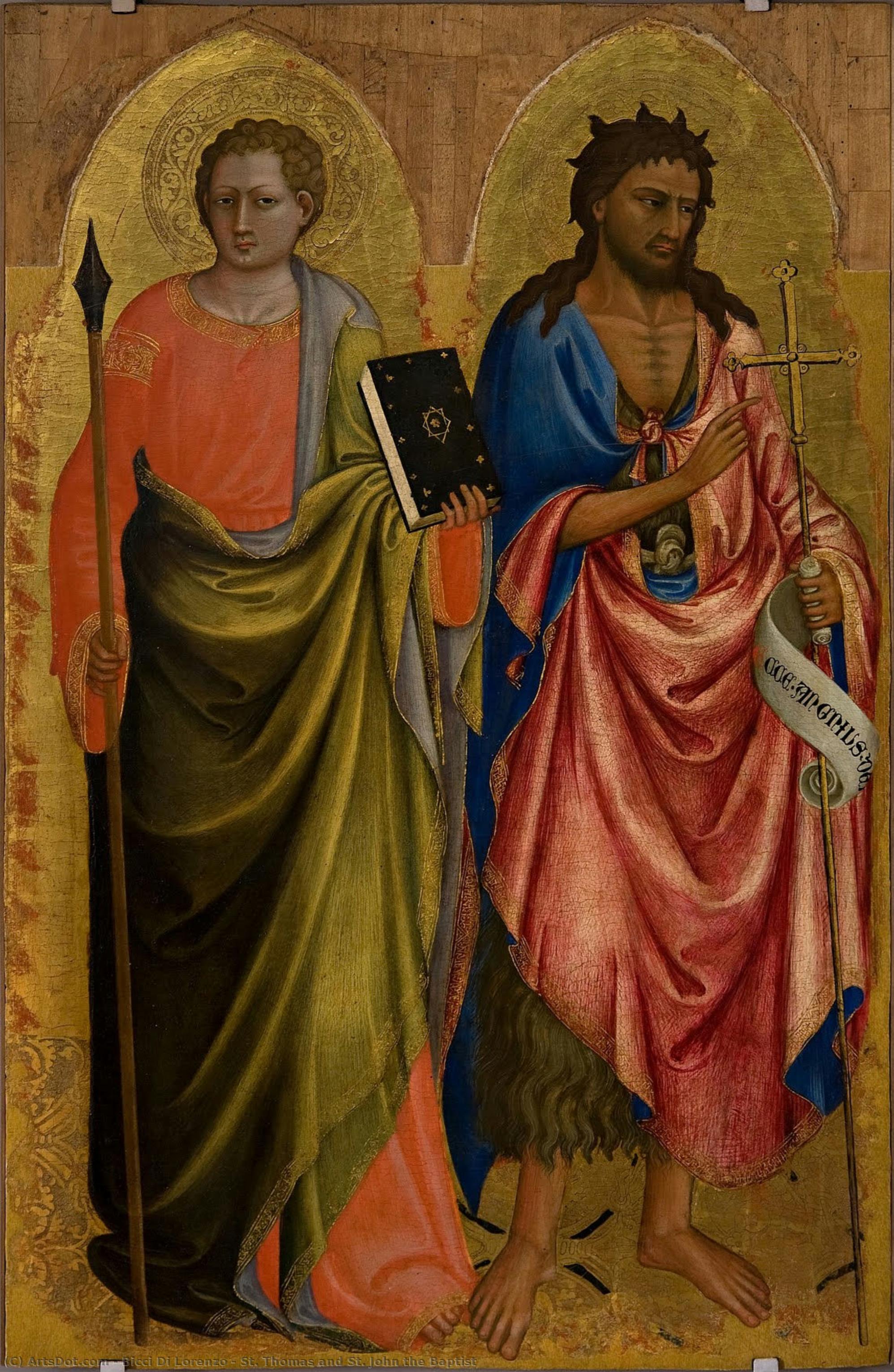
St. Thomas and St. John the Baptist


 Read More
Hand Made Oil Reproduction
Hand-painted oil on canvas in your size and frame, made to order by our artists. ( Buy Print Buy Image)




P118B $10

P118H $10

P118W $10

P438Z $10

P508JH $12

P508YH $12

P805H $10

P805Z $10

P919BZ $10

P919G $10

P919XJ $10

P959ZH $10

P968JZ $12

W106C $8

W218G $10

W218JH $8

W218Y $10

W307PJ $10

W316G $10

W316PJ $8

W316Y $10

W398PJ $8

W4111J $10

W500HY $15

W500JH $15

W692G $12

W849H $8

W940BG $15

W953PJ $8




Pick from our preset sizes that match the artwork's original proportions.

You may enter your own dimensions to fit a specific frame or space. If your selected size does not match the original image's proportions, we will either crop the artwork or extend the painting with additional hand-painted elements. A digital mockup will be sent for your approval before production begins.
Please note that the on-screen preview does not reflect the actual cropping or extension. Only the mockup will accurately show the final composition.
While custom sizes are available, we recommend selecting a dimension from the predefined list to preserve the original proportions.
After order, ArtsDot.com team will email client for instructions and provide a mockup preview
Worldwide Delivery () in 3/4 weeks instead of standard 5 weeks. (17 August). No compromise on quality.

Free Worldwide Express Shipping

High-Quality Linen Canvas

Full Shipping Insurance

Customs Tax Refund Guarantee

True Color Matching Guarantee

60-Day Return Policy (Defects Only)

100% Money-Back Guarantee

Bulk Discount Offer
 Glass option is only available in size under 110 CM

St. Thomas and St. John the Baptist
Reproduction Medium
Reproduction Size
-


Total Price
$ 263
Artwork Description
A Divine Encounter in Florentine Gold
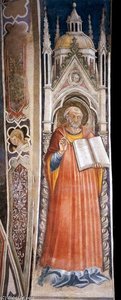
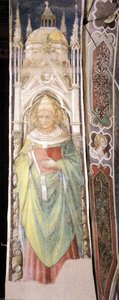
In the quiet, hallowed atmosphere of the early fifteenth century, the brush of Bicci di Lorenzo captured a moment of profound spiritual stillness. His masterpiece, St. Thomas and St. John the Baptist, serves as a breathtaking window into the devotional heart of Florence. The painting presents a sacred dialogue between two pillars of Christian tradition, rendered with the meticulous grace characteristic of the Florentine School. As one gazes upon the composition, the eye is immediately drawn to the interplay between the figures; one saint holds a book, symbolizing the weight of scripture and divine wisdom, while the other clutches a cross, a poignant emblem of sacrifice and faith. This silent communion between the saints transcends the canvas, inviting the viewer into a space of deep contemplation and reverence.
The technique employed by Bicci di Lorenzo reflects the transition from the late Gothic elegance to the burgeoning clarity of the Early Renaissance. There is a rhythmic fluidity in the drapery and a deliberate use of color that breathes life into the holy figures. The artist masterfully integrates smaller, peripheral figures and subtle details—such as the sharp presence of a knife near the center—to create a layered narrative that suggests a larger, unfolding historical or biblical event. This complexity ensures that the painting is not merely a portrait of two men, but a rich tapestry of theological significance, where every shadow and highlight serves to reinforce the sanctity of the scene.
Symbolism and the Soul of the Renaissance
Beyond its visual splendor, the artwork is a profound study in religious symbolism. The presence of the book and the cross acts as a visual shorthand for the dual nature of the Christian experience: the intellectual pursuit of divine truth through study and the emotional journey of faith through suffering. The composition, though seemingly static, vibrates with an underlying tension, as if the very air around the saints is charged with the presence of the Holy Spirit. For the discerning collector or interior designer, this piece offers more than just aesthetic beauty; it provides a focal point of historical gravity and spiritual depth that can anchor a room with a sense of timelessness.
Integrating such a high-quality reproduction into a contemporary space allows for a sophisticated dialogue between the past and the present. Whether placed in a sunlit gallery or a moody, classical study, the painting’s warm tones and intricate details command attention. It serves as an evocative piece of decor that inspires conversation, reminding all who encounter it of the enduring power of art to bridge the gap between the earthly and the divine. To possess such a work is to hold a fragment of Florentine history, a testament to the era when beauty and devotion were inextricably linked.
Related Artworks
Artist Biography
Lorenzo di Bicci (c. 1373–1452): A Florentine Master of Devotion
Lorenzo di Bicci, born around 1373 in Florence, stands as a pivotal figure within the burgeoning Florentine School of painting during the second half of the fourteenth century and early fifteenth. While biographical details remain scarce—his father’s identity shrouded in obscurity—scholarly consensus firmly establishes Lorenzo's apprenticeship under Jacopo di Cione and Andrea di Cione, artists whose stylistic innovations profoundly shaped his artistic trajectory. This lineage cemented him within a vibrant milieu characterized by experimentation with color palettes and compositional fluidity, mirroring the broader trends of the era.- Early Life & Training: Lorenzo’s formative years were spent immersed in the workshop of his father, Jacopo di Bicci—a craftsman whose own artistic endeavors foreshadowed Lorenzo's distinctive approach. Membership in the Guild of Saint Luke by 1370 provided him with invaluable access to artistic knowledge and fostered connections within Florence’s burgeoning cultural landscape.
- Early Career & Patronage: His debut commission, a panel depicting St. Martin Enthroned for the Arte dei Vinattieri guild, exemplifies Lorenzo's commitment to serving the Florentine citizenry—particularly the clergy and guilds—a pattern that would define his artistic career. Collaborations with Agnolo Gaddi and Corso di Jacopo further honed his skills and exposed him to influential artistic currents.
- Style & Technique: Lorenzo’s style is instantly recognizable for its restrained elegance and masterful execution. Unlike many contemporaries who embraced grand narratives and elaborate ornamentation, he favored compositions characterized by balanced symmetry and a deliberate avoidance of complexity. Figures possessed serene expressions—often devoid of emotion—and were rendered with exceptional anatomical precision, reflecting the influence of Andrea di Cione’s meticulous draughtsmanship.
- Notable Works: Lorenzo’s artistic legacy is cemented by several iconic paintings that continue to captivate audiences today. The *Saints John the Baptist and Minias*, housed in San Francisco's Legion of Honor Museum, showcases his ability to convey spiritual depth through subtle color harmonies and architectural detail. Similarly, the *Four Evangelists* fresco—a testament to Lorenzo’s technical prowess—demonstrates a masterful command of perspective and shading techniques.
- Legacy & Influence: Lorenzo di Bicci's artistic output profoundly impacted subsequent generations of Florentine painters, notably his son Neri di Bicci, who carried forward the family tradition of devotional art. His unwavering dedication to portraying religious themes—coupled with his commitment to serving the Florentine community—solidifies his position as a cornerstone of Renaissance artistic development and an enduring symbol of Florentine piety.
The Frescoes of Palazzo Medici: A Reflection of Patronage & Artistic Innovation
Lorenzo’s most ambitious undertaking was undoubtedly the cycle of frescoes adorning Palazzo Medici—commissioned by Cosimo I de' Medici—a project that cemented his reputation as a leading artist of his time. These monumental paintings, depicting scenes from biblical history and mythological narratives, represent a pinnacle of Florentine Renaissance art, showcasing Lorenzo’s mastery of color, composition, and perspective. The frescoes served not only as decorative embellishments but also as powerful statements of Medici patronage—demonstrating the transformative role that aristocratic commissions played in shaping artistic trends.Exploring Lorenzo's Artistic Connections: Influences & Collaborations
Lorenzo’s artistic development was inextricably linked to his interactions with fellow masters and craftsmen, fostering a dynamic exchange of ideas within Florence’s artistic ecosystem. His apprenticeship under Jacopo di Cione instilled in him an appreciation for expressive color palettes—a characteristic that would permeate his own paintings—while collaborations with Andrea di Cione honed his draughtsmanship skills and exposed him to innovative compositional strategies. Furthermore, Lorenzo's engagement with the Guild of Saint Luke facilitated access to artistic resources and fostered connections within Florence’s vibrant cultural milieu.A Painter Dedicated to Faith: Themes & Symbolism in Lorenzo’s Oeuvre
Lorenzo di Bicci’s artistic output consistently centered on religious themes—primarily depictions of saints, biblical narratives, and liturgical scenes—reflecting the pervasive influence of piety within Florentine society during his lifetime. His paintings employed symbolic imagery—drawing upon established conventions of medieval iconography—to convey spiritual truths and evoke emotional responses from viewers. The serene expressions of his figures—often devoid of overt emotion—underscored a contemplative aesthetic that distinguished Lorenzo’s work from more flamboyant artistic endeavors prevalent elsewhere in Europe.Concluding Reflections: Lorenzo di Bicci's Enduring Significance
Lorenzo di Bicci’s contribution to Florentine art transcends mere stylistic innovation; he embodies the humanist spirit of his era—characterized by a profound engagement with classical ideals and a commitment to portraying human experience with dignity and compassion. His unwavering dedication to serving the Florentine community—coupled with his mastery of artistic technique—solidifies his position as one of the most influential painters of the fourteenth century, ensuring that his legacy continues to inspire artists and scholars alike.
bicci di lorenzo
1350 - 1427 , Italy
Quick Facts
- Artistic Movement Or Style: Florentine School
- Artists Or Movements Influenced By This Artist: ['Gentile da Fabriano']
- Artists Who Influenced This Artist:
- Andrea di Cione
- Jacopo di Cione
- Date Of Birth: c. 1373
- Date Of Death: 1452
- Full Name: Lorenzo di Bicci
- Nationality: Italian
- Notable Artworks:
- St Martin Enthroned
- Saints John & Matthew
- The Four Evangelists (detail)
- Saint Nicholas Resuscitating Three Youths
- Place Of Birth: Florence, Italy
Related Articles

John Constable's Masterpieces: Explore 25 Iconic Landscapes for Your Home
Journey through John Constable's 25 most celebrated landscapes. Explore Romanticism, Dedham Vale & his masterful use of light in iconic paintings like 'Hay Wain'. Find museum-quality art reproductions and elevate your home decor on ArtsDot.com.
John Singer Sargent's 25 Masterpieces: Portraits & Beyond | ArtsDot
Explore 25 iconic John Singer Sargent paintings – from dazzling portraits to Impressionist landscapes. Discover the stories behind Madame X, El Jaleo & more! Find museum-quality art reproductions and elevate your home decor with ArtsDot.com.
El Greco's Masterpieces: Explore 25 Iconic Paintings & Spiritual Visions | ArtsDot
Journey through El Greco's 25 most iconic paintings! Explore the spiritual depth & dramatic beauty of this Spanish Renaissance master. Discover art history, techniques & find museum-quality reproductions for your home at ArtsDot.com.

Hudson River School: 10 Masterpieces That Capture America's Wild Beauty | ArtsDot
Journey through America's breathtaking landscapes with our guide to the Top 10 Hudson River School masterpieces. Explore Thomas Cole, Frederic Church & more! Find museum-quality art reproductions and elevate your home decor at ArtsDot.com.
Gwen John: Intimacy, Modernity & the Quiet Power of Welsh Portraiture
Explore the captivating world of Gwen John, a pioneering Welsh artist renowned for her intimate portraits & subtle style. Discover her life, legacy, and how to bring her timeless beauty into your home with ArtsDot.