 Preview
 Send
Send Share
Share
 Details

 Download
 Similars
 X-Ray
X-Ray Diaporama
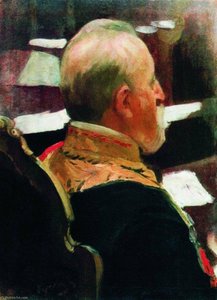
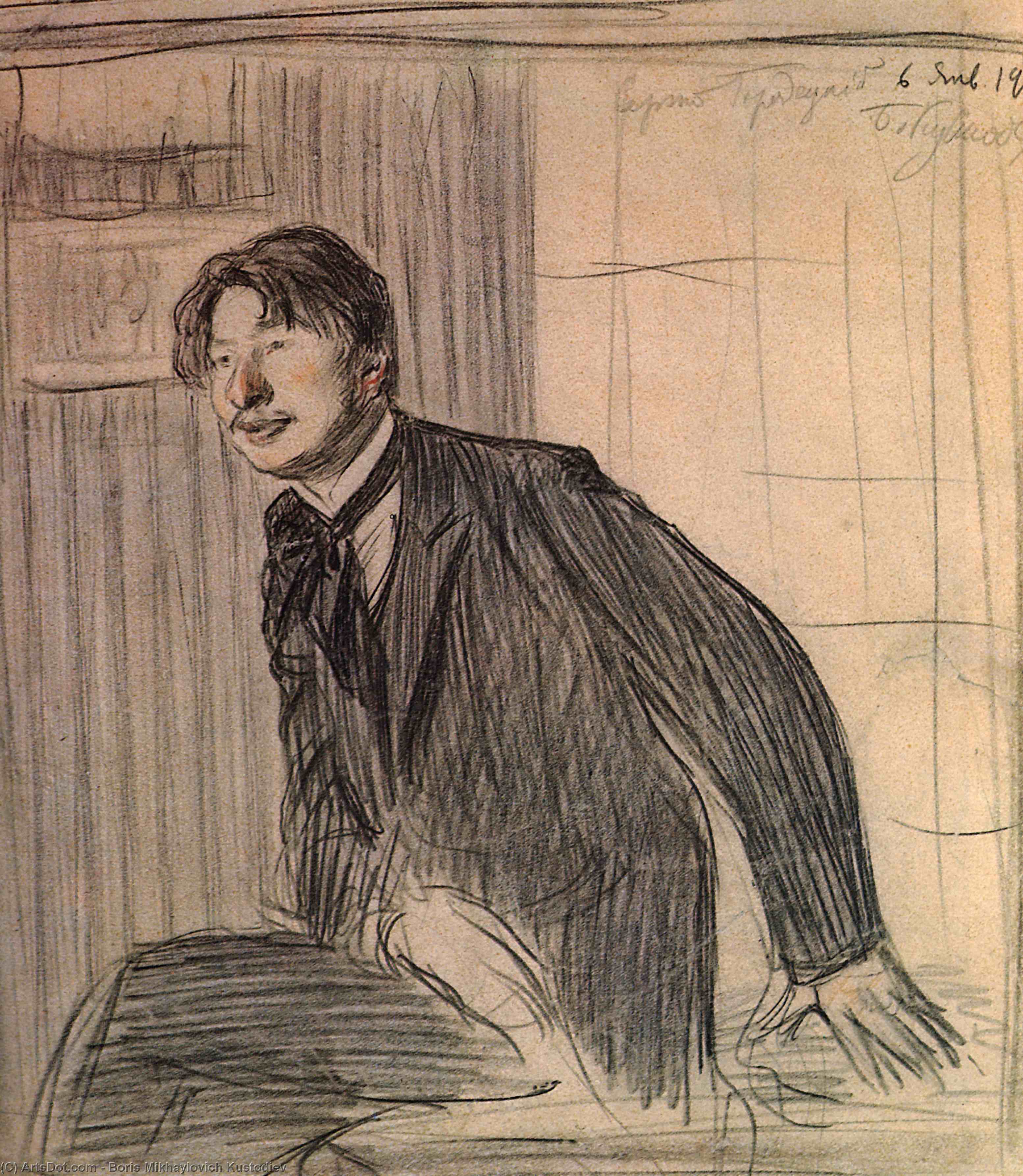
Portrait of the poet Sergey Gorodetsky


 Read More
Hand Made Oil Reproduction
Hand-painted oil on canvas in your size and frame, made to order by our artists. ( Buy Print Buy Image)




P118B $10

P118H $10

P118W $10

P438Z $10

P508JH $12

P508YH $12

P805H $10

P805Z $10

P919BZ $10

P919G $10

P919XJ $10

P959ZH $10

P968JZ $12

W106C $8

W218G $10

W218JH $8

W218Y $10

W307PJ $10

W316G $10

W316PJ $8

W316Y $10

W398PJ $8

W4111J $10

W500HY $15

W500JH $15

W692G $12

W849H $8

W940BG $15

W953PJ $8




Pick from our preset sizes that match the artwork's original proportions.

You may enter your own dimensions to fit a specific frame or space. If your selected size does not match the original image's proportions, we will either crop the artwork or extend the painting with additional hand-painted elements. A digital mockup will be sent for your approval before production begins.
Please note that the on-screen preview does not reflect the actual cropping or extension. Only the mockup will accurately show the final composition.
While custom sizes are available, we recommend selecting a dimension from the predefined list to preserve the original proportions.
After order, ArtsDot.com team will email client for instructions and provide a mockup preview
Worldwide Delivery () in 3/4 weeks instead of standard 5 weeks. (17 August). No compromise on quality.

Free Worldwide Express Shipping

High-Quality Linen Canvas

Full Shipping Insurance

Customs Tax Refund Guarantee

True Color Matching Guarantee

60-Day Return Policy (Defects Only)

100% Money-Back Guarantee

Bulk Discount Offer
 Glass option is only available in size under 110 CM

Portrait of the poet Sergey Gorodetsky
Reproduction Medium
Reproduction Size
-


Total Price
$ 263
Artwork Description
A Glimpse into Early Twentieth Century Russian Portraiture
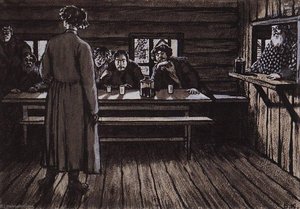
This evocative drawing, dating from 1907, presents us with a compelling study of character set against the backdrop of early twentieth-century urban life. At its heart stands the portrait of Sergey Gorodetsky, a figure whose stern gaze seems to hold the weight of unspoken narratives. Dressed in the formal attire of the era—the suit and tie suggesting an occasion of some gravity or importance—he confronts the viewer with an intensity that is both challenging and deeply engaging. The artist has captured not merely a likeness, but a moment suspended in time, allowing us a privileged look into the social strata and psychological undercurrents of the period.
The Masterful Hand of Kustodiev
While the subject matter speaks to the life of a poet, the execution channels the dramatic flair characteristic of Boris Mikhailovich Kustodiev. Though his most famous works often burst with the vibrant colors and robust energy associated with Russian folk life, this monochromatic drawing retains an undeniable connection to his mastery of human form and emotional depth. The technique employed here—a detailed black and white rendering—forces the viewer to concentrate solely on line, shadow, and expression. Kustodiev’s background in the Imperial Academy of Arts provided him with a rigorous foundation, which is evident in the careful delineation of the man's suit lapels and the subtle musculature visible beneath his formal wear. The contrast between the sharply rendered foreground subject and the more loosely sketched figures receding into the background adds a sophisticated layer of compositional complexity.
Symbolism and the Weight of Observation
The composition itself is rich with symbolic resonance. The central figure, the poet, embodies intellectual gravity; his direct stare suggests a man accustomed to being observed, perhaps even scrutinized by the very art that seeks to capture him. Meanwhile, the peripheral figures—those indistinct forms in the background—act as silent witnesses. They anchor the scene in reality, suggesting that the life of the prominent individual is always framed by the mundane activity of others. This interplay between the singular focus and the surrounding bustle speaks volumes about the isolation inherent even within a crowd, a theme deeply resonant in the cultural atmosphere leading up to the tumultuous years that followed this date.
Bringing History Home: Decorating with Narrative
For the collector or designer seeking art that transcends mere decoration, this piece offers profound narrative depth. Reproducing such an artwork allows one to integrate a piece of Russian artistic history into a modern interior space. The stark contrast of black and white lends itself beautifully to various decor schemes, from minimalist modernism to richly paneled traditional drawing rooms. It serves not just as a portrait, but as a conversation starter—a quiet prompt for contemplation regarding ambition, observation, and the enduring spirit captured by an artist like Kustodiev.
Related Artworks
Artist Biography
A Life Immersed in Russian Spirit
Boris Mikhailovich Kustodiev, born on March 7, 1878, in Astrakhan, Russia, was an artist whose work became synonymous with a vibrant and often idealized depiction of Russian life. His early years were marked by a sense of provinciality, shaped by the financial struggles following his father’s untimely death – a professor of philosophy, history, and logic. This exposure to the lives of merchants and common folk would deeply influence the themes that permeated his art throughout his career. Kustodiev's formative education began within the theological seminary in Astrakhan, yet it was private lessons with Pavel Vlasov, a student of Vasily Perov, that truly ignited his artistic passion. This foundation led him to St. Petersburg and the prestigious Imperial Academy of Arts, where he studied under the renowned Ilya Repin from 1896 to 1903. Repin recognized Kustodiev’s talent early on, even inviting him to assist with a monumental commemorative painting, providing invaluable experience and mentorship. This period was crucial in honing his skills and establishing his commitment to capturing the essence of Russian identity.Artistic Development and Key Themes
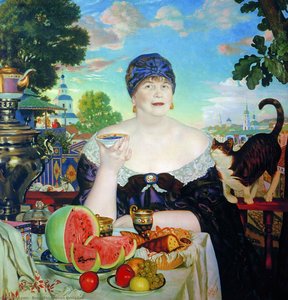
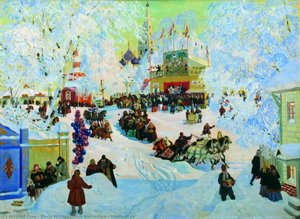
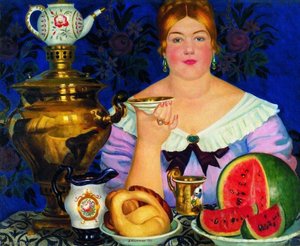
Kustodiev's artistic journey unfolded across various genres – portraiture, genre scenes, and book illustration – but he consistently returned to portraying the richness and complexity of Russian culture. His style evolved over time, initially influenced by Realism and later embracing elements of Art Nouveau. He possessed a remarkable ability to depict not just *what* he saw, but also the atmosphere and spirit of a place or moment. The merchant class, with their traditions and customs, became a recurring motif in his work, reflecting those early impressions from his childhood. Paintings like The Merchant’s Wife, completed in 1918, stand as powerful testaments to this fascination, showcasing the dignity and character of these often-overlooked figures. Beyond portraits, Kustodiev masterfully captured scenes of everyday life – bustling marketplaces, lively festivals such as Maslenitsa (Pancake Week) depicted vividly in his 1916 painting of the same name, and serene landscapes that evoked a deep sense of national pride. His work wasn’t merely representational; it was infused with a palpable love for Russia and its people. He traveled extensively throughout Europe – France, Spain, Italy – but always felt drawn back to his homeland, believing that true artistic inspiration lay within the Russian soul.Overcoming Adversity: Art as Resilience
In 1916, Kustodiev’s life took a dramatic turn when he was struck with paraplegia. Confined to a wheelchair, his physical suffering could have easily extinguished his creative flame. However, it instead fueled an even greater artistic output and a remarkable shift in perspective. Despite the immense challenges, he continued to paint prolifically, his later works characterized by an intensified joyfulness and vibrant color palette. It’s as if, unable to physically experience life fully, he poured all of his energy into recreating its beauty on canvas. This period saw him further refine his style, embracing a more decorative approach that celebrated the simple pleasures of life. His resilience in the face of adversity became an integral part of his artistic legacy, demonstrating the power of art as a source of strength and solace. The market painting by Alexey Petrovich Bogolyubov is a testament to this enduring influence.Legacy and Historical Significance
Boris Kustodiev’s contribution to Russian art lies in his ability to capture the spirit of an era – a time of immense social change, political upheaval, and cultural awakening. He wasn't simply documenting reality; he was interpreting it through a lens of nostalgia, affection, and profound understanding. His paintings offer invaluable insights into the lives of ordinary Russians during the late 19th and early 20th centuries, preserving their traditions, customs, and values for posterity. His work resonated deeply with audiences then and continues to captivate viewers today. Kustodiev’s influence can be seen in the works of subsequent generations of Russian artists who sought to celebrate their national identity and depict the beauty of everyday life. His paintings are now held in prominent collections across Russia, including the Kramskoy Museum of Fine Arts in Voronezh and the Kharkov Museum of Art in Ukraine, ensuring that his artistic vision will continue to inspire and enrich for years to come.Notable Works & Collections
- The Merchant’s Wife (1918): A seminal work embodying Kustodiev's mastery of Russian realism and his affectionate portrayal of the merchant class.
- Fontanka (1916): A vibrant depiction of St. Petersburg life, showcasing his ability to capture atmosphere and movement.
- Pancake Tuesday/Maslenitsa (1916): A joyous celebration of a traditional Russian festival, brimming with color and energy.
- Trinity Day: Captures the lively spirit of a Russian religious celebration.
- The Attack on the Wedding Carriage: A dramatic woodcut illustrating a historical conflict with striking intensity.
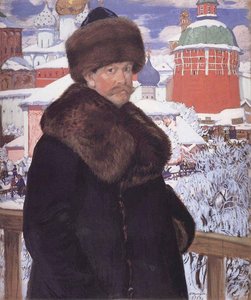
Boris Mikhailovich Kustodiev
1878 - 1927 , Russia
Quick Facts
- Artistic Movement Or Style: Realism, Art Nouveau
- Artists Who Influenced This Artist:
- Ilya Repin
- Vasily Perov
- Date Of Birth: March 7, 1878
- Date Of Death: May 28, 1927
- Full Name: Boris Mikhailovich Kustodiev
- Nationality: Russian
- Notable Artworks:
- The Merchant's Wife
- Fontanka
- Maslenitsa
- Place Of Birth: Astrakhan, Russia
Related Articles

White on Canvas: 10 Masterpieces & Timeless Elegance for Your Home Decor
Explore 10 iconic white paintings by Monet, Whistler & Rothko! Discover the stories behind these serene masterpieces and their impact on art history. Find museum-quality reproductions for your home decor at .

Dark Masterpieces: 10 Iconic Paintings Dominated by Black Tones |
Explore 10 iconic paintings dominated by black tones, from Rembrandt’s chiaroscuro to Goya's dark expressions. Discover the stories behind these masterpieces & find museum-quality art reproductions for your home at .
Ivan Bilibin: A Synthesis of Folklore, Modernism & National Identity in Russian Illustration
Explore the enchanting world of Ivan Bilibin, a master Russian illustrator who synthesized folklore, Art Nouveau & national identity. Discover his iconic fairy tale illustrations and legacy with ArtsDot.

Monochrome Visions: Exploring the Aesthetic & Historical Significance of Black & White Photography
Explore the rich history & artistic power of black and white photography. From early techniques to iconic masters like Ansel Adams, discover why monochrome continues to captivate art lovers today. Expert insights for collectors.
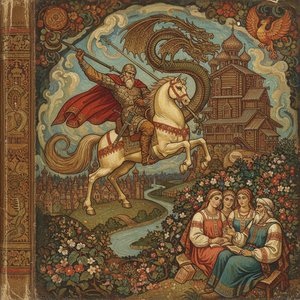
Victor Vasnetsov: Myth, Nationalism & the Revival of Russian Fairy Tale Painting
Explore the captivating world of Victor Vasnetsov, a co-founder of Russian folklorist painting. Discover his iconic works, influence on national identity, and lasting legacy in this expert guide.