 Preview
 Send
Send Share
Share
 Details

 Download
 Similars
 X-Ray
X-Ray Diaporama
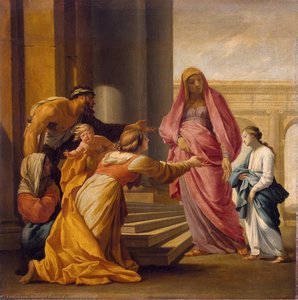
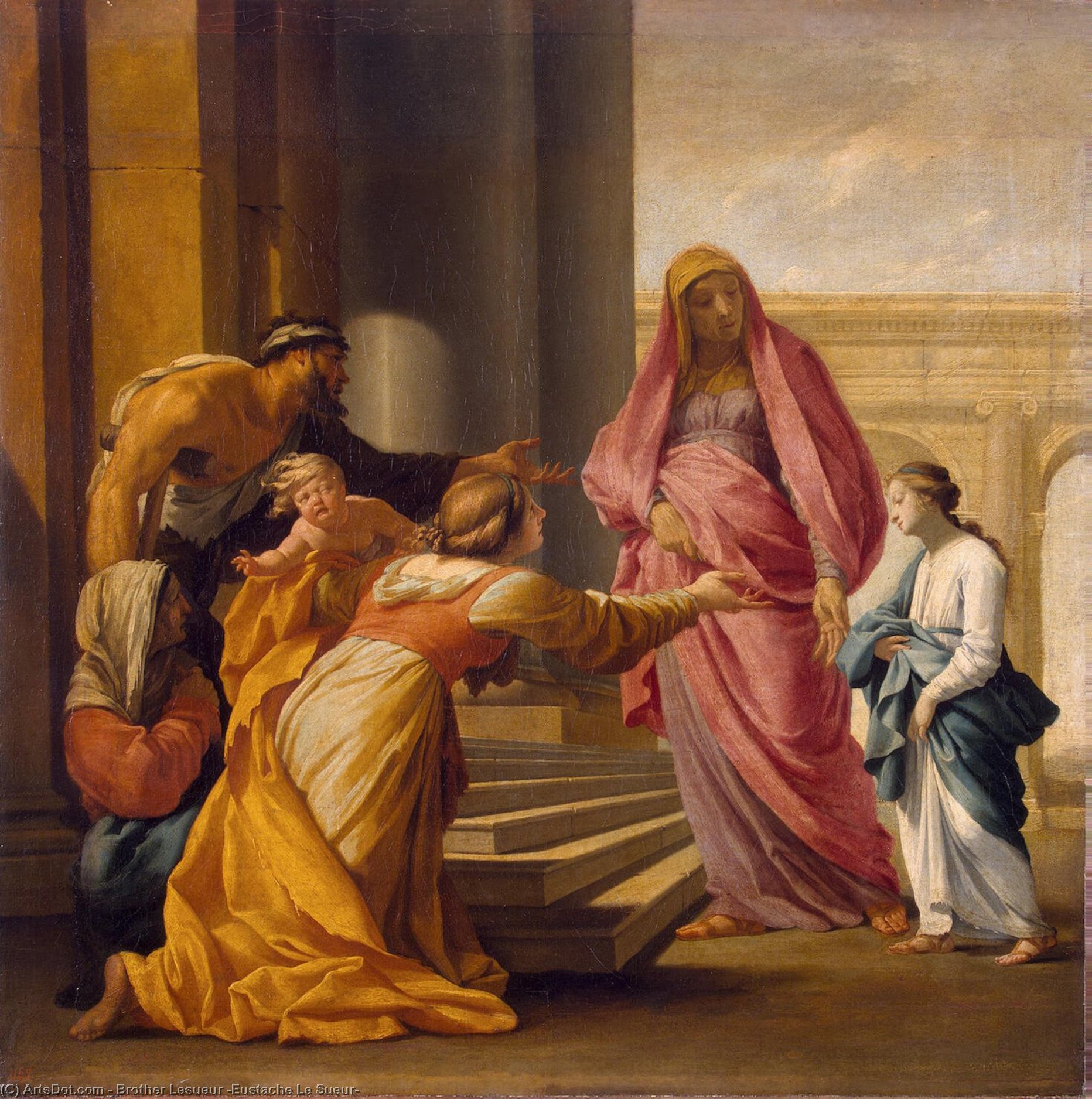
Presentation of the Virgin
 Oil On Canvas
- WallArt
- Baroque
 1641
1641- Renaissance
 103.0 x 102.0 cm
 Hermitage Museum
 Read More
Hand Made Oil Reproduction
Hand-painted oil on canvas in your size and frame, made to order by our artists. ( Buy Print Buy Image)




P118B $10

P118H $10

P118W $10

P438Z $10

P508JH $12

P508YH $12

P805H $10

P805Z $10

P919BZ $10

P919G $10

P919XJ $10

P959ZH $10

P968JZ $12

W106C $8

W218G $10

W218JH $8

W218Y $10

W307PJ $10

W316G $10

W316PJ $8

W316Y $10

W398PJ $8

W4111J $10

W500HY $15

W500JH $15

W692G $12

W849H $8

W940BG $15

W953PJ $8




Pick from our preset sizes that match the artwork's original proportions.

You may enter your own dimensions to fit a specific frame or space. If your selected size does not match the original image's proportions, we will either crop the artwork or extend the painting with additional hand-painted elements. A digital mockup will be sent for your approval before production begins.
Please note that the on-screen preview does not reflect the actual cropping or extension. Only the mockup will accurately show the final composition.
While custom sizes are available, we recommend selecting a dimension from the predefined list to preserve the original proportions.
After order, ArtsDot.com team will email client for instructions and provide a mockup preview
Worldwide Delivery () in 3/4 weeks instead of standard 5 weeks. (21 August). No compromise on quality.

Free Worldwide Express Shipping

High-Quality Linen Canvas

Full Shipping Insurance

Customs Tax Refund Guarantee

True Color Matching Guarantee

60-Day Return Policy (Defects Only)

100% Money-Back Guarantee

Bulk Discount Offer
 Glass option is only available in size under 110 CM

Presentation of the Virgin
Reproduction Medium
Reproduction Size
-


Total Price
$ 263
Artwork Description
A Pioneer of Naturalism: Brother Lesueur’s “Presentation of the Virgin”
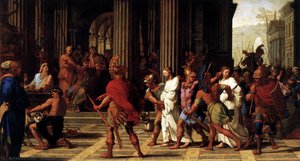
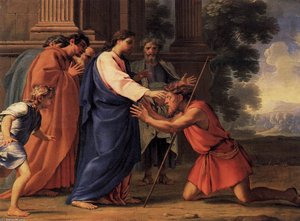
Eustache Le Sueur's "Presentation of the Virgin," painted in 1641, is more than just a religious depiction; it’s a pivotal moment in art history – a testament to a radical shift in artistic focus. Born in Paris during a period of intense artistic experimentation, Le Sueur defied the prevailing trends of grand mythological scenes and elaborate court portraits, choosing instead to dedicate his considerable skill to meticulously documenting the natural world. This painting stands as one of his earliest and most compelling works, showcasing his burgeoning talent for scientific observation and his nascent approach to animal representation that would later define him as a pioneer.
The scene itself is deceptively simple yet profoundly rich in detail. A young woman, dressed in a flowing pink gown – a color suggestive of both innocence and divine grace – presents the infant Jesus to an unseen recipient. The composition draws the eye through a carefully orchestrated arrangement of figures and objects. To the left, a man kneels in anticipation, while others stand nearby, creating a sense of communal reverence. A book rests on a table at the bottom-left corner, hinting at scholarly contemplation, and a bowl sits prominently near the upper right, perhaps symbolizing nourishment or offering. These seemingly minor details contribute to a carefully constructed narrative that invites interpretation.
The Influence of Baroque Masters & Poussin’s Legacy
While undeniably rooted in the traditions of the Baroque period – particularly evident in the dramatic lighting and dynamic poses – “Presentation of the Virgin” reveals a subtle departure from the typical stylistic conventions. The influence of Simon Vouet, Le Sueur's former teacher, is palpable in the soft modeling and atmospheric perspective. However, Le Sueur transcends mere imitation, injecting his own distinct vision into the work. Notably, elements of Nicolas Poussin’s classical style are interwoven throughout, particularly in the carefully balanced composition and the emphasis on idealized forms. This fusion of influences demonstrates Le Sueur's intellectual curiosity and his desire to synthesize diverse artistic traditions.
The painting’s technical execution is remarkable for its time. Le Sueur employed a meticulous layering technique, building up color and form through numerous thin glazes – a method that allowed him to achieve an astonishing level of detail and luminosity. The rendering of the fabrics, particularly the woman's gown, is exquisite, capturing both their texture and their movement with subtle grace. The artist’s attention to anatomical accuracy, especially in depicting the infant Jesus, further underscores his commitment to realism.
A Scientific Approach & Zoological Beginnings
What truly distinguishes “Presentation of the Virgin” is Le Sueur's pioneering approach to art as a form of scientific documentation. He transformed his studio into a makeshift laboratory, meticulously studying and illustrating animals – a practice largely unprecedented in the 17th century. This painting represents an early manifestation of this passion, demonstrating his ability to capture the essence of a subject with remarkable precision. The detailed observation of the figures’ clothing and gestures suggests a desire to understand not just their appearance but also their social context and emotional state.
Le Sueur's work laid the foundation for modern animal painting, influencing generations of artists who followed. His dedication to scientific accuracy paved the way for future naturalists and illustrators, establishing a crucial link between art and science. His legacy extends far beyond the confines of religious painting; he is recognized today as one of France’s foremost zoologists and a true innovator in the field of artistic representation.
Symbolism & Emotional Resonance
Beyond its technical merits, “Presentation of the Virgin” resonates with profound symbolic meaning. The act of presentation itself – the offering of the infant Jesus – represents divine grace, humility, and the promise of salvation. The pink gown worn by the woman evokes notions of purity and maternal love, while the kneeling figure suggests reverence and devotion. The overall composition creates a sense of quiet contemplation and spiritual significance.
Despite its formal elegance, the painting also possesses an undeniable emotional depth. The tender interaction between mother and child, coupled with the palpable atmosphere of faith and anticipation, evokes feelings of warmth, hope, and serenity. “Presentation of the Virgin” is not merely a depiction of a biblical scene; it’s a powerful meditation on themes of love, sacrifice, and divine grace – a timeless masterpiece that continues to captivate viewers centuries after its creation.
Related Artworks


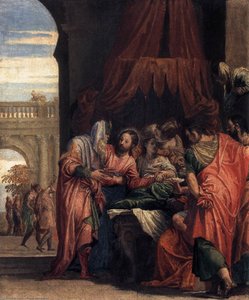
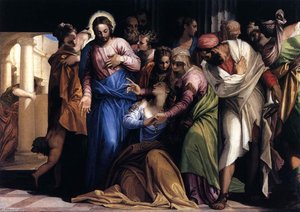
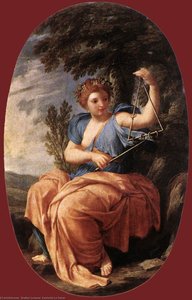
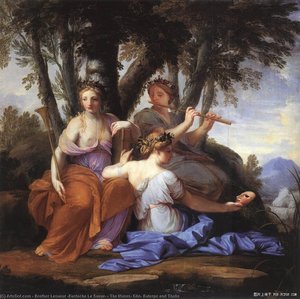
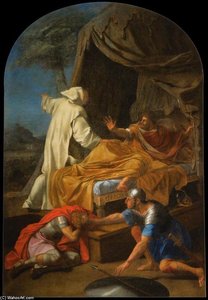
Artist Biography
A Pioneer of the Natural World
In the vibrant and often dramatic landscape of the 17th-century French Baroque, few figures stand as uniquely as Brother Lesueur, known to history as Eustache Le Sueur. While his contemporaries were frequently swept up in the grand, sweeping narratives of mythology or the opulent displays of royal portraiture, Le Sueur turned his gaze toward a different kind of majesty: the intricate, often overlooked wonders of the animal kingdom. Born in Paris around 1617, he emerged not merely as a painter, but as a precursor to the scientific illustrators who would later define the Age of Enlightenment. His life’s work represents a profound intersection where the delicate touch of fine art meets the rigorous scrutiny of biological inquiry.
Le Sueur's artistic journey began with a foundation in classical discipline. He underwent an apprenticeship under Nicolas Boutet de Valois, a sculptor renowned for his allegorical works commissioned by the court of Louis XIII. This early exposure to the principles of proportion, anatomy, and classical beauty provided him with the technical vocabulary necessary to render form with absolute precision. However, where his mentor sought to idealize the human figure through stone, Le Suelar sought truth through the living—and sometimes the deceased—specimens of the natural world. This transition from the sculptural ideals of the academy to the empirical observations of a naturalist marked the beginning of a revolutionary artistic evolution.
The Art of Anatomical Precision
What truly distinguishes the work of Le Sueur is his uncompromising commitment to realism, a quality that transformed his studio into a space of scientific discovery. He did not merely paint what he imagined; he painted what he understood through direct observation. To achieve this level of unparalleled detail, Le Sueur engaged in a method that was radical for the 1600s: the study of anatomy via the dissection of carcasses obtained from royal hunts. This painstaking process allowed him to master the complex architecture of musculature, the delicate texture of feathers, and the rugged patterns of scales.
His technique was characterized by an extraordinary ability to capture the essence of life through physical accuracy. In his renderings, one can sense the weight of a limb, the sheen of wet fur, and the tension in a predator's stance. This dedication meant that his paintings functioned as both aesthetic triumphs and vital biological records. By integrating anatomical sketches with finished oil works, he bridged the gap between the artistic impulse and the scientific method, creating a legacy that predated the formal establishment of modern zoological illustration.
A Legacy of Sacred and Natural Splendor
While his contributions to animal painting are his most enduring scientific legacy, Le Sueur's repertoire was not limited to the wild. He possessed a remarkable versatility that allowed him to navigate the sacred themes prevalent in Baroque art. His religious compositions, such as the Presentation of the Virgin, demonstrate how he applied his mastery of detail and light to biblical narratives. In these works, the same meticulous attention to texture and form used for a bird's plumage was applied to the folds of holy drapery and the soft glow of divine light, creating a sense of profound, tangible presence.
The historical significance of Eustache Le Sueur lies in his role as a bridge between eras. He stood at the crossroads of the Baroque's emotional intensity and the burgeoning scientific curiosity of the next century. His ability to find the sublime within the anatomical has left an indelible mark on the history of French art. Through his eyes, the natural world was not just a backdrop for human drama, but a subject worthy of intense, reverent, and scientifically accurate study, cementing his reputation as a true pioneer of zoological art.
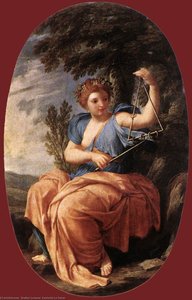
brother lesueur (eustache le sueur)
1616 - 1655 , France
Quick Facts
- Artistic Movement Or Style: Baroque Painting
- Artists Or Movements Influenced By This Artist: ['Rembrandt']
- Artists Who Influenced This Artist: ['Peter Paul Rubens']
- Date Of Birth: November 19, 1617
- Date Of Death: April 30, 1655
- Full Name: Eustache Le Sueur
- Nationality: French
- Notable Artworks:
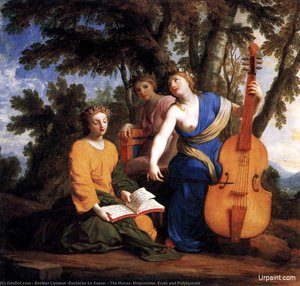
- The Muses: Melpomene, Erato and Polyhymnia
- The Muses: Clio, Euterpe and Thalia
- Presentation of the Virgin
- Place Of Birth: Paris, France
Related Articles
Henri Le Sidaner: Evoking Atmosphere & Intimacy in Post-Impressionist Landscapes
Discover the evocative world of Henri Le Sidaner, a master of Intimist painting. Explore his tranquil landscapes & atmospheric interiors – a celebration of light and intimacy. Learn about his life, style, and lasting legacy.
Charles Le Brun: Master of French Baroque Classicism & His Enduring Legacy
Explore the life & art of Charles Le Brun, master of French Baroque Classicism. Discover his royal commissions, influence on Versailles, and enduring legacy through detailed analysis & stunning artworks.
Vigée Le Brun: Portraiture, Patronage & Feminine Identity in 18th-Century France
Explore the life & art of Louise Élisabeth Vigée Le Brun, Marie Antoinette’s renowned portraitist. Discover her Rococo style, self-portraits, and influence on 18th-century French painting. A deep dive into patronage & feminine identity.

F.A.Q.: Gift Services – Elevate Your Art Delivery with Personalized Presentation
Discover 's exquisite gift services for discerning collectors. Secure delivery, personalized touches & museum-quality presentation ensure a lasting impression. Elevate your art gifting experience today.

F.A.Q.: Gift Packaging & Presentation – Elevating Art for Elite Collectors
Discover 's exquisite gift packaging for discerning art collectors. Secure delivery, personalized touches & museum-quality presentation ensure a lasting impression. Find the perfect heirloom art gift today.