 Preview
 Send
Send Share
Share
 Details

 Download
 Similars
 X-Ray
X-Ray Diaporama
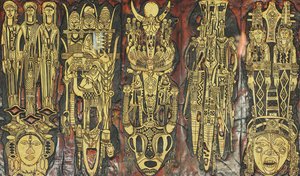
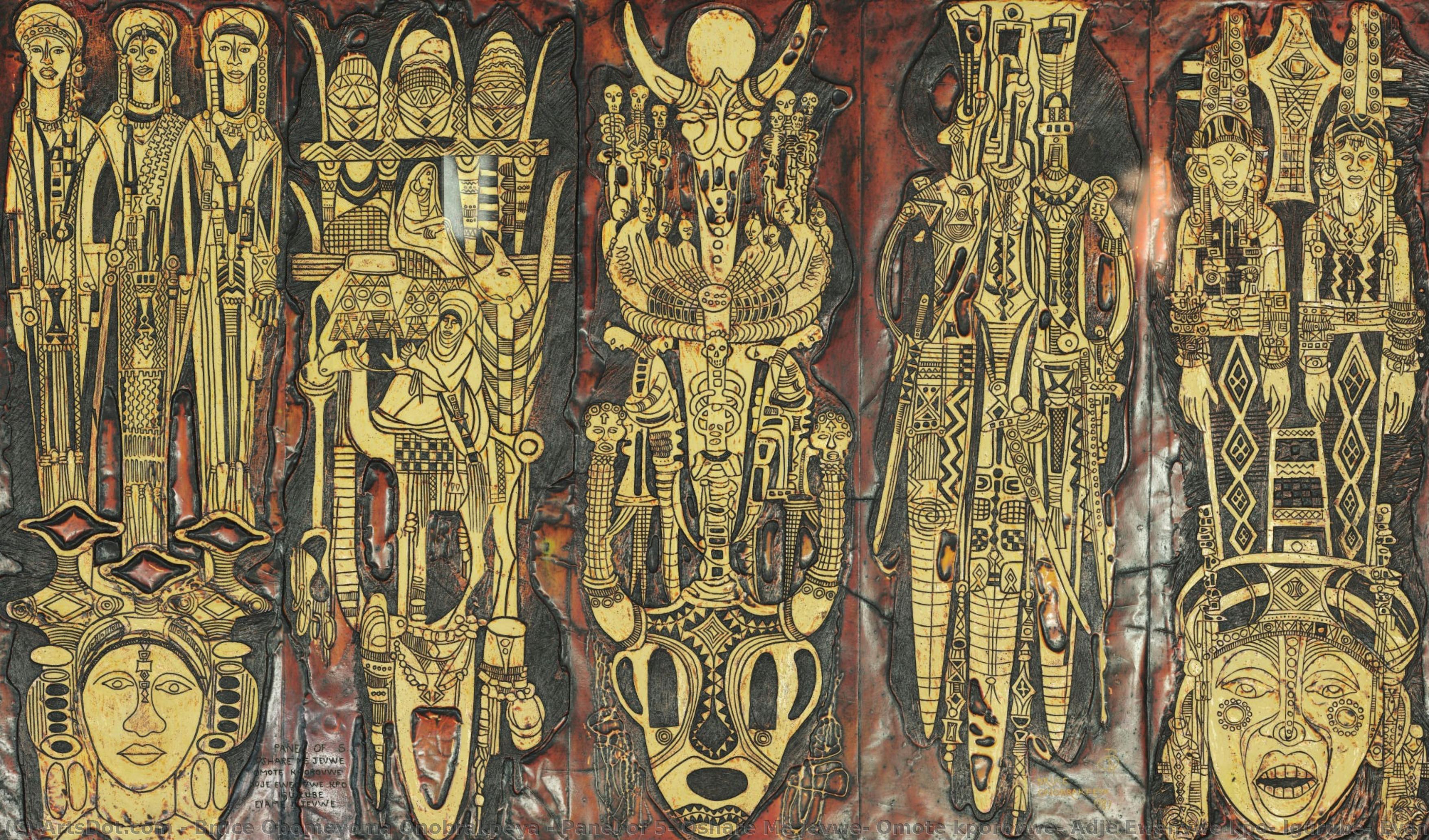
Panel of 5: Oshare Me jevwe, Omote kporovwe, Adje Ewenvwe kpo, Igurube, Eyame Jevwe
 Painting
- Contemporary African Art
 1987
1987- Contemporary
 126.0 x 80.0 cm
 Yemisi Shyllon Museum of Art
 Read More
Giclée / Art Print
Museum-quality giclée or canvas print with fast production and flexible finish options. ( Buy Hand Made Painting Buy Image)




P118B $10

P118H $10

P118W $10

P438Z $10

P508JH $12

P508YH $12

P805H $10

P805Z $10

P919BZ $10

P919G $10

P919XJ $10

P959ZH $10

P968JZ $12

W106C $8

W218G $10

W218JH $8

W218Y $10

W307PJ $10

W316G $10

W316PJ $8

W316Y $10

W398PJ $8

W4111J $10

W500HY $15

W500JH $15

W692G $12

W849H $8

W940BG $15

W953PJ $8




Pick from our preset sizes that match the artwork's original proportions.

You may enter your own dimensions to fit a specific frame or space. If your selected size does not match the original image's proportions, we will either crop the artwork or extend the image with a mirrored or solid-fill edge. A digital mockup will be sent for your approval before production begins.
Please note that the on-screen preview does not reflect the actual cropping or extension. Only the mockup will accurately show the final composition.
While custom sizes are available, we recommend selecting a dimension from the predefined list to preserve the original proportions.
Worldwide Delivery () in 2 weeks instead of standard 4/5 weeks. (5 September)

Free Worldwide Express Shipping

High-Quality Linen Canvas

Full Shipping Insurance

Customs Tax Refund Guarantee

True Color Matching Guarantee

60-Day Return Policy (Defects Only)

100% Money-Back Guarantee

Bulk Discount Offer
 Glass option is only available in size under 110 CM

Panel of 5: Oshare Me jevwe, Omote kporovwe, Adje Ewenvwe kpo, Igurube, Eyame Jevwe
Giclée / Art Print
Reproduction Size
-


Total Price
$ 63
Related Artworks
Artist Biography
Bruce Onobrakpeya: A Nigerian Visionary Bridging Tradition and Modernity
Born in Agbara Otor, Delta State, Nigeria, in 1932, Bruce Obomeyoma Onobrakpeya is a towering figure in contemporary African art. His journey as an artist is inextricably linked to the rich cultural tapestry of his Urhobo heritage and the burgeoning artistic landscape of post-colonial Nigeria. From humble beginnings – learning carving techniques from his father and absorbing the visual narratives of traditional folklore – Onobrakpeya’s career blossomed through a deliberate fusion of indigenous aesthetics with innovative printmaking methods, establishing him as a uniquely Nigerian voice on the global art stage.
Early influences were deeply rooted in the traditions of his region. The Urhobo people, known for their intricate wood carvings and vibrant storytelling, provided a foundational understanding of symbolism and visual communication. This connection to ancestral practices would later inform much of his work, particularly his exploration of mythology and religious themes. Simultaneously, he received formal artistic training at the Nigerian College of Arts, Science and Technology in Zaria, where he honed technical skills but also became increasingly aware of the need to forge a distinct artistic identity beyond simply replicating European styles. It was within this environment that he encountered the Zaria Art Society, a pivotal group dedicated to “decolonizing” art by embracing indigenous forms and challenging Western artistic conventions.
The Development of a Unique Style: Printmaking Innovations
Onobrakpeya’s artistic evolution is most dramatically illustrated through his groundbreaking techniques in printmaking. Initially trained in traditional block printing, he quickly moved beyond established methods, experimenting with innovative approaches that would become hallmarks of his style. Crucially, he encountered the Mbari Club workshops in Ibadan and Oshogbo, where he was introduced to copper engraving and etching – processes that allowed him to achieve a level of detail and tonal control previously unattainable through traditional relief printing. His most celebrated innovations include ‘relief lino en bronze’ and ‘deep etching on metal foil,’ techniques that combined the tactile qualities of woodcut with the precision of metal engraving, resulting in richly textured surfaces and complex imagery.
These experimental methods weren't merely technical exercises; they were integral to his artistic vision. Onobrakpeya sought to capture the dynamism and layered symbolism inherent in Urhobo culture – a world rich in mythology, spiritual beliefs, and social structures. His prints frequently depict masked figures, ancestral spirits, and scenes from traditional ceremonies, rendered with an arresting blend of realism and abstraction. The use of bold colors, intricate patterns, and symbolic motifs creates a visual language that is both deeply rooted in Nigerian tradition and strikingly modern.
Themes and Influences: Urhobo Culture and Beyond
Onobrakpeya’s work is profoundly shaped by his connection to Urhobo culture. He frequently draws upon the mythology, folklore, and religious beliefs of his people, weaving these elements into complex visual narratives. The recurring motif of the mask, for example, holds significant meaning within Urhobo tradition – representing spiritual power, ancestral authority, and the ability to traverse between worlds. His prints often depict scenes from traditional ceremonies, such as initiation rites and harvest festivals, offering a glimpse into the social and spiritual life of the Urhobo people.
However, Onobrakpeya’s artistic vision extends beyond mere representation of his cultural heritage. He was also deeply influenced by Western art movements, particularly Cubism and Surrealism, which he integrated into his own unique style. His work reflects a conscious effort to synthesize traditional African aesthetics with modern European techniques, creating a distinctly Nigerian form of abstract expressionism. The influence of the Harmattan Workshop group, another influential artistic collective in Nigeria, further shaped his approach, encouraging experimentation and a rejection of rigid stylistic conventions.
Recognition and Legacy: A Lasting Impact
Bruce Onobrakpeya’s contributions to Nigerian art have been widely recognized through numerous awards and accolades. He was awarded the UNESCO Living Human Treasure Award in 2010, a testament to his enduring influence as an artist and cultural ambassador. In 2010 he also received the National Creativity Award from the Federal Government of Nigeria, alongside Chinua Achebe, solidifying his position as one of Nigeria’s most celebrated artists. His work has been exhibited internationally at prestigious institutions such as the Tate Modern in London, the National Museum of African Art in Washington D.C., and the Malmö Konsthall in Sweden.
Beyond individual achievements, Onobrakpeya's legacy lies in his pioneering spirit and his ability to bridge traditional and modern artistic practices. He has inspired generations of Nigerian artists and continues to be a vital force in contemporary African art. His work serves as a powerful reminder of the richness and diversity of Nigerian culture, and his innovative techniques have had a lasting impact on the world of printmaking.
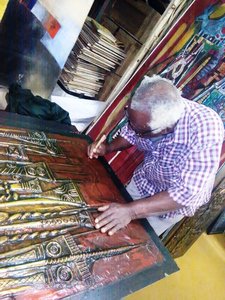
bruce obomeyoma onobrakpeya
1932 - , Nigeria
Quick Facts
- Artistic Movement Or Style: Printmaking, African art
- Artists Or Movements Influenced By This Artist:
- Zaria Art Society
- Urhobo art
- Artists Who Influenced This Artist:
- Ben Enwonwu
- Emmanuel Erabor
- Date Of Birth: 1932-08-30
- Full Name: Bruce Obomeyoma Onobrakpeya
- Nationality: Nigerian
- Notable Artworks:
- Ugborogho
- Greg Motives VIII
- Emeranvwe Phru Go-o
- Place Of Birth: Agbara Otor, Nigeria
Related Articles
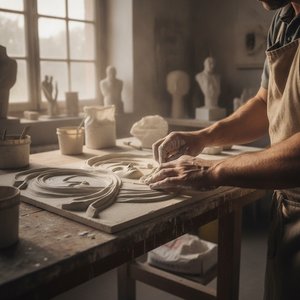
Sculpting with Soul: An Expert Guide to the Tactile Elegance of Plaster Relief Art
Discover the captivating world of plaster relief art. Our expert guide explores the history, techniques, and curation of textured bas-relief, helping collectors bring depth, light, and soulful dimension to their modern interiors through sophisticated sculptural masterpieces.
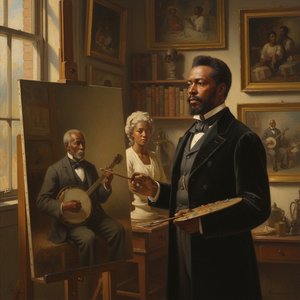
Henry Ossawa Tanner: Pioneering African American Representation in 19th-Century Art
Explore the life and groundbreaking work of Henry Ossawa Tanner, a pioneering African American artist who achieved international acclaim with his deeply spiritual and realistic paintings. Discover his legacy at ArtsDot.
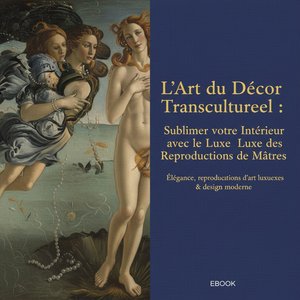
Harmonizing Heritage: A Cross-Cultural Approach to Interior Design with Asian, European, and African Art Reproductions
Discover the art of cross-cultural interior design with ArtsDot.com. Explore museum-quality reproductions & expert guidance to create a globally inspired, sophisticated home. Shop now!
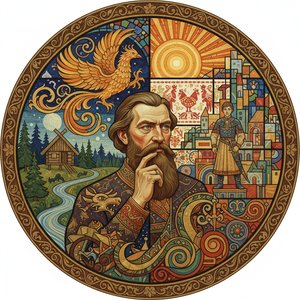
Ivan Bilibin: A Synthesis of Folklore, Modernism & National Identity in Russian Illustration
Explore the enchanting world of Ivan Bilibin, a master Russian illustrator who synthesized folklore, Art Nouveau & national identity. Discover his iconic fairy tale illustrations and legacy with ArtsDot.
Modigliani's Masterpieces: 25 Iconic Paintings & Sculptures | ArtsDot
Explore 25 iconic artworks by Amedeo Modigliani, from his haunting portraits to captivating sculptures. Discover the stories behind these masterpieces of early 20th-century art & find museum-quality reproductions at ArtsDot.com.
![Emeranvwe Phru Go-o (42/45) [Hail New Moon]](/media/artworks/images-thumb/ec/14/ec144a4ab0effcc87b2fb86509a84c5a.jpg)