 Preview
 Send
Send Share
Share
 Details

 Download
 Similars
 X-Ray
X-Ray Diaporama
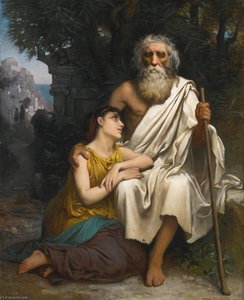
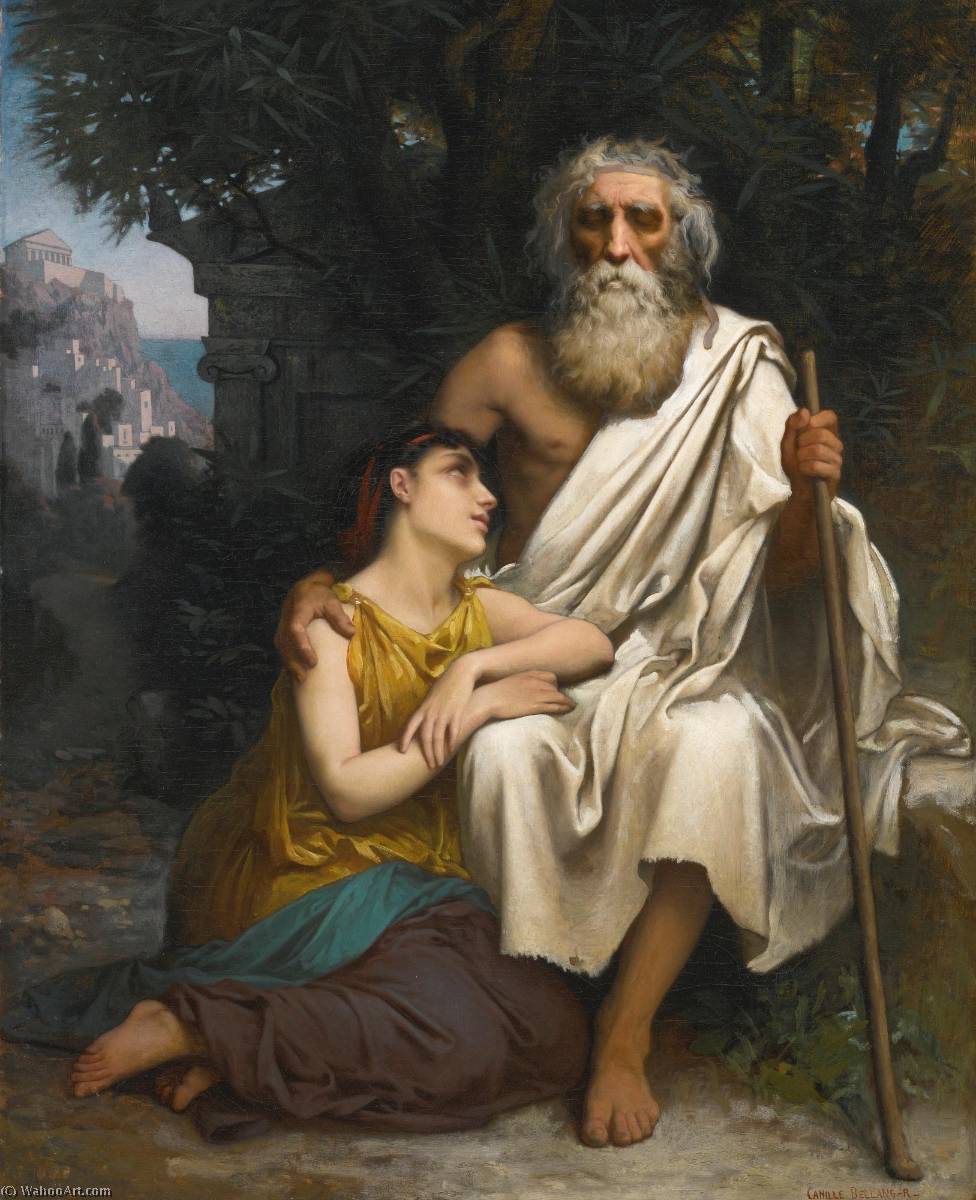
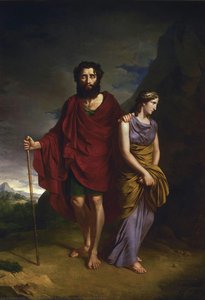
Oedipus and Antigone
 100.0 x 81.0 cm
 Read More
Hand Made Oil Reproduction
Hand-painted oil on canvas in your size and frame, made to order by our artists. ( Buy Print Buy Image)




































Pick from our preset sizes that match the artwork's original proportions.

You may enter your own dimensions to fit a specific frame or space. If your selected size does not match the original image's proportions, we will either crop the artwork or extend the painting with additional hand-painted elements. A digital mockup will be sent for your approval before production begins.
Please note that the on-screen preview does not reflect the actual cropping or extension. Only the mockup will accurately show the final composition.
While custom sizes are available, we recommend selecting a dimension from the predefined list to preserve the original proportions.
After order, ArtsDot.com team will email client for instructions and provide a mockup preview
Worldwide Delivery () in 3/4 weeks instead of standard 5 weeks. (21 August). No compromise on quality.

Free Worldwide Express Shipping

High-Quality Linen Canvas

Full Shipping Insurance

Customs Tax Refund Guarantee

True Color Matching Guarantee

60-Day Return Policy (Defects Only)

100% Money-Back Guarantee

Bulk Discount Offer
 Glass option is only available in size under 110 CM

Oedipus and Antigone
Reproduction Medium
Reproduction Size
-


Total Price
$ 263
Related Artworks



Artist Biography
Camille Félix Bellanger (1853 – 1923): Bridging Romantic Idealism and Impressionistic Observation
Camille Félix Bellanger’s artistic journey unfolded against the backdrop of a transformative era—the Second Empire in France, marked by ambitious urban renewal spearheaded by Baron Haussmann and fueled by an unwavering belief in academic art. Born in Paris in 1853, Bellanger's formative years coincided with the zenith of Beaux-Arts style, where Alexandre Cabanel and William Bouguereau reigned supreme as masters of classical form and idealized representation. This influence is palpable in his early oeuvre, notably *The Death of Abel,* a Second Class Medal winner at the Prix de Rome competition of 1875—a pivotal moment for aspiring artists seeking recognition within the established artistic hierarchy. The painting’s dramatic composition and meticulous anatomical detail exemplify Cabanel's signature approach, mirroring Bouguereau’s penchant for serene beauty and sculptural precision. Bellanger’s training at the École des Beaux-Arts cemented his commitment to academic tradition, shaping his stylistic preferences throughout his career. His subjects leaned heavily toward religious iconography and mythological narratives—themes favored by Bouguereau—often imbued with moral lessons and rendered in a style that prioritized clarity of form and harmonious color palettes. Works like *The Death of Demosthenes* and *Chalonidas’ Last Appeal,* commissioned to commemorate heroic figures who sacrificed their lives for the nation, underscore Bellanger's dedication to upholding classical ideals of heroism and virtue. These canvases demonstrate Bouguereau’s masterful technique in capturing human anatomy with sculptural accuracy—a hallmark of his artistic vision. However, Bellanger’s artistic sensibilities broadened beyond purely academic confines as he accepted a professorship at the École Spéciale Militaire de St. Cyr, establishing himself amidst a burgeoning movement toward realism and Impressionism. Situated in Brittany, this institution attracted artists eager to explore the region's rugged landscapes and traditions—a trend mirrored by contemporaries like Paul Gauguin and Emile Bernard. Bellanger’s Breton paintings reveal a newfound appreciation for capturing fleeting moments of rural life with visible brushstrokes and nuanced tonal gradations—a deliberate departure from Bouguereau’s polished surfaces and idealized depictions. *Brunette,* for instance, portrays a peasant woman carrying sheaves of wheat with understated grace—a scene rendered in muted colors that convey both the physical exertion of labor and the inherent beauty of the Breton countryside. This shift reflects Bellanger's engagement with Impressionistic principles, prioritizing atmospheric effects and capturing the immediacy of sensory experience. His later masterpiece, *Carrying in the Sheaves,* exemplifies this artistic evolution—a poignant portrayal of a Breton woman burdened by the weight of agricultural labor. Unlike Bouguereau’s idealized figures, Bellanger’s brunette embodies the hardships faced by rural communities—yet she retains an undeniable allure, rendered with meticulous attention to detail and bathed in soft light. This painting underscores Bellanger's ability to synthesize Impressionistic observation with classical sculptural form—a testament to his artistic versatility and enduring legacy. Bellanger’s contribution to French art extends beyond individual paintings; he served as a mentor to younger artists, fostering the development of Impressionist techniques and promoting a more nuanced understanding of artistic expression. His influence can be discerned in the works of numerous painters who embraced Breton landscapes and explored themes of rural life—solidifying his place as a pivotal figure in shaping the trajectory of French art at the dawn of the twentieth century. Camille Félix Bellanger’s enduring fascination with classical ideals combined with his embrace of Impressionistic innovation ensured that he would be remembered as one of France's most distinguished artists, leaving an indelible mark on the artistic landscape of his time.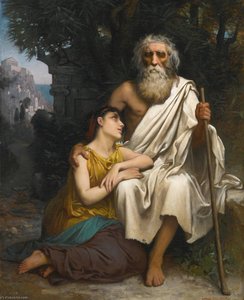
camille félix bellanger
1853 - 1923
Quick Facts
- Artistic Movement Or Style: Academic Style
- Artists Or Movements Influenced By This Artist: ['Neo-classical Sculpture']
- Artists Who Influenced This Artist:
- Alexandre Cabanel
- William Bouguereau
- Date Of Death: 1923
- Full Name: Camille Félix Bellanger
- Nationality: French
- Notable Artworks:
- Idylle
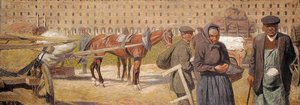
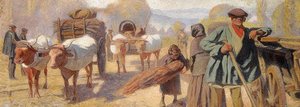
- Marché au bois, place de Verdun (1)
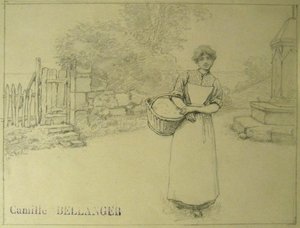
- Fermière
- Place Of Birth: Paris